




Commentary: Are We Moving Too Fast on Autonomous Vehicles?
We can’t afford to be afraid of change, especially not these days when anything seems possible – but we also can’t afford to be cavalier about the path we take in finding new and better ways to do things. Commentary by Executive Contributing Editor Rolf Lockwood.
We can’t afford to be afraid of change, especially not these days when anything seems possible – but we also can’t afford to be cavalier about the path we take in finding new and better ways to do things.

Rolf Lockwood
Case in point: the testing and occasional use of autonomous and semi-autonomous vehicles on public roads. So far it’s been mostly cars, but heavy trucks are out there pretty often, too. And in a couple of recent cases, mayhem ensued.
First we had the Arizona fatality involving an Uber car in autonomous mode. The facts are a bit sketchy, but in a sense they don’t matter. It’s about the optics.
The vehicle was doing 40 mph, 5 mph under the speed limit, apparently in Level Four autonomous mode, and simply failed to “see” a woman crossing the roadway at night. She walked into the car’s path, allegedly jay-walking, according to published reports. A driver was present, though not actively driving. Confusing the issue somewhat, the vehicle’s proprietary collision-avoidance system had apparently been turned off in favor of Uber’s own technology.
I’d venture a guess that autonomy actually had little to do with this accident, and that nothing could have prevented the woman’s death. There simply wasn’t time for any reaction, human or otherwise.
More recently, a California man in a Tesla X running in Autopilot mode died when the car drove itself straight at one of those awful concrete lane dividers. The man’s hands had apparently been off the wheel for at least six seconds, despite warnings from the car. Did its systems fail? Or is this essentially a new variation on the theme of driver error? It’s not clear.
Regardless, whatever trust had been built up in the idea of vehicular automation has been severely damaged by these incidents. That was bound to happen at some point, but Uber was probably right to suspend its autonomous testing after the Arizona tragedy, even though I don’t think its autonomous technology failed. Optics again.
The public seems to have little confidence in the autonomous idea in cars, and a lot less when it comes to trucks. It will take time to restore the average person’s willingness to entertain the concept of vehicles driving themselves. Confidence in the idea? Think at least a decade or two.
There’s no surprise there, and this really isn’t a setback for proponents of automation, because it was never going to be a slam dunk. The technology is well advanced (though clearly imperfect), but the social and legal aspects of this were always going to be the bigger challenges by a very wide margin. In a sense, then, nothing has changed, despite these fatalities that have drawn so much public attention.
Not surprisingly, there are an increasing number of calls for more rigorous testing of autonomous technology on test tracks before such vehicles are let loose on public roads. California, on the other hand, is steadily making public testing easier.
So who’s right? Should we be more cautious than we’ve been so far? I tend to think so, not just because of the recent fatalities. I simply think we’re moving too fast.
I’m certainly not afraid of change, and not of the autonomous one in particular, but I really do think we’re being cavalier. It forces me to ask: What’s the rush?
Related: Uber Suspends Self-Driving Tests After Vehicle Kills Pedestrian
More Safety & Compliance

FMCSA Pauses Biennial-Update Enforcement Amid Motus Transition
Carriers whose updates were due on or after June 1 have more time, while FMCSA works to stabilize its new registration system and warns of phishing sites impersonating its new carrier registration system, Motus.
Read More →
ZF Expands Commercial Vehicle Push in North America
ZF is expanding its North American commercial-vehicle presence with new transmission applications, electrification, trailer technology and autonomous-driving systems.
Read More →
Truck Drivers Need More Than Another Alert
Fleets have more visibility into truck health, safety events, and driver activity than ever. The next challenge is turning all that information into useful guidance for the person who has to decide what to do next.
Read More →
Tesla Wants a Self-Driving Semi. Are Cameras Enough?
Could Tesla’s camera-only autonomous driving technology work on an 80,000-pound Semi? In this commentary, HDT's Deborah Lockridge takes a look at Tesla, Cybercab, and how autonomous trucks see the road.
Read More →
What DOT’s Automated Vehicle Strategy Means for Trucking
The U.S. Department of Transportation issued a new automated-vehicle strategy that outlines plans for driverless-truck regulations, cross-state freight corridors, and federal safety standards.
Read More →
NYC Expands Speed, Pedestrian Safety Tech Across Fleet
New York City is expanding intelligent speed assistance and pedestrian-alert systems across its municipal fleet, moving the technologies from pilot programs into vehicle procurement and retrofit requirements.
Read More →
FMCSA Removes 110 Truck Driver Training Schools from Certified ELDT List
Federal regulators also are targeting more than 160 additional training providers and launching a nationwide audit of third-party CDL skills testers as part of a broader crackdown on trucking fraud.
Read More →
Beyond DOT Compliance: What Makes a Trucking Fleet Truly Safe?
A trucking fleet can follow every rule and still make unsafe decisions. The real test comes when safety conflicts with freight, productivity, or cost.
Read More →
Hours of Service Pilot Programs: FMCSA Readies for 2027 Rollout
Two pilot programs could eventually reshape hours-of-service rules, giving truck drivers options to pause their 14-hour clock or use longer split sleeper rest periods.
Read More →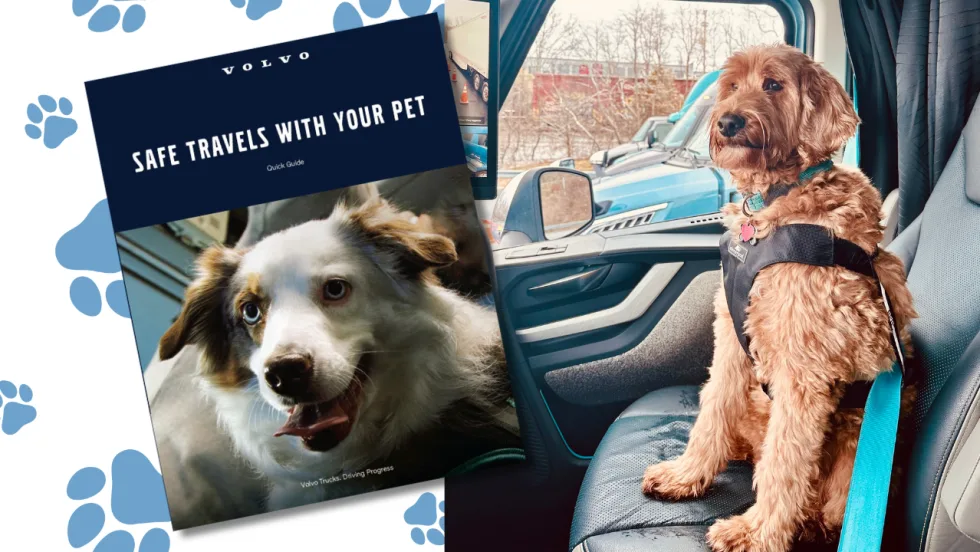
New Guide Offers Pet Safety Tips for Truck Drivers
Hundreds of thousands of pets travel in truck cabs. A new safety guide from Volvo Trucks and the Center for Pet Safety offers practical advice for truck drivers who bring dogs and cats along for the ride.
Read More →