





Related: Mesilla Valley Transportation Swears by Its B20 Biodiesel Blend
CNG: From an Idea to a Solution
Before starting down the path of alternative fuels Ryder System had the benefit of a deep understanding of diesel technologies, which led them to research some alternatives.
September 23, 2015
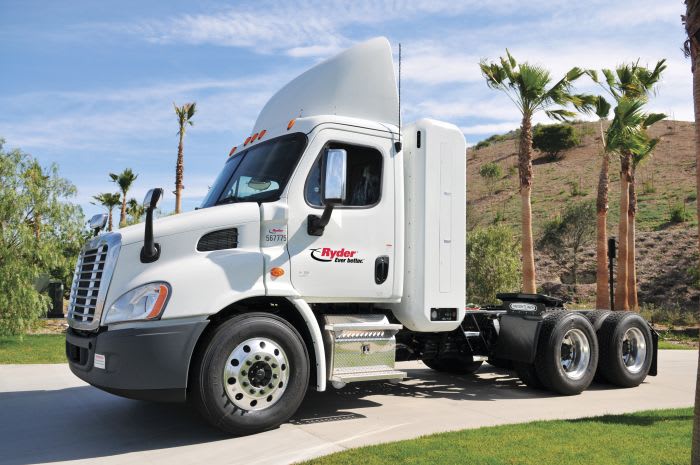
Photo: Ryder
2 min to read
Photo: Ryder
Before starting down the path of alternative fuels, commercial transportation, logistics, and supply chain management solution provider Ryder System had the benefit of a deep understanding of diesel technologies, which led them to research some alternatives.
“We wanted to make sure we were prepared to support advanced fuels as part of a broader portfolio of services to support the energy diversification that we felt was imminent,” says Scott Perry, vice president of supply management and global fuel products for the company’s fleet management solutions business segment. The result is one of the largest natural gas fleets in North America.
Perry points to the number of different duty cycles or segments that Ryder supports through this fleet, adding that “it’s that multi-use, multi-customer mix that makes our experience so unique.”
When first looking into natural gas as an option, Perry and his team focused on reliability, maintenance costs, fuel economy, durability, residual values, driver acceptance, fuel availability, fuel network accessibility, vehicle range, and safety. As a result, the company has seen a significant savings in fuel expense by introducing natural gas into their operations in most instances.
“The duty cycle and annual mileage utilization is a key determining factor in how large those savings are, so that’s a key determining factor for anyone looking at the overall value proposition,” says Perry.
When it comes to the biggest sticking point for most fleets — infratructure — Ryder continues to focus on the issue as the network continues to evolve. Every new station that opens makes the total network that much more efficient.
“We’ve been fortunate in that we’ve been able to develop some very strategic relationships in the fuel infrastructure space and have been able to introduce those to our customers to help in developing the business case to build and open new stations to support those fleet deployments,” says Perry.
Ryder has also developed an expertise in pursuing local, state, and federal incentives where available. The company has been able to include those as part of the value proposition for its customers’ benefit in many cases. Ryder has also been able to use its natural gas solutions as a key element of many of its customers’ pursuit of sustainability objectives, and the company expects that trend to continue.
Subscribe to Our Newsletter
More Fuel Smarts

How GP Transco Builds Fuel Savings a Fraction at a Time
Aerodynamic specs, solar panels, and driver incentives help GP Transco turn small efficiency gains into savings it can reinvest in its people.
Read More →
Trucking’s Diesel Squeeze Isn’t Letting Up
With diesel topping $6 a gallon nationally, ATA's Bob Costello explains why fleets should prepare for continued pressure at the pump.
Read More →
FlowBelow Redesigns Trailer AeroSlider to Cut Fuel Use
The lighter trailer aerodynamic system installs in less than 45 minutes, according to the company, with potential payback in under a year depending on fuel prices and trailer mileage.
Read More →
Why Diesel Price Relief Efforts May Fall Short
Diesel prices have eased from September’s record high, but doubts about additional Russian supply and limits on dyed-diesel tax relief mean trucking fleets still face expensive fuel. And prices could go higher.
Read More →
Why Small Fuel Savings Matter in Trucking
Can better fuel economy help pay for driver raises? In this podcast, GP Transco explains how small efficiency gains create room to reinvest in its people.
Read More →
How GP Transco Cuts Trucking Fuel Costs, a Tenth of a Gallon at a Time
What’s another tenth of a mile per gallon worth? GP Transco shares how equipment upgrades and driver coaching turn small gains into meaningful fuel savings.
Read More →
Electric Yard Tractors Move Beyond Pilots
Operating-cost savings have overtaken sustainability goals as the leading reason surveyed fleets are adopting battery-electric terminal tractors, according to new NACFE research.
Read More →
Geotab Links Fleet Card to Vehicle Data
The new card combines fuel discounts with telematics-based purchase controls. Geotab’s analysis also points to potential savings from choosing lower-priced fuel stops.
Read More →
Fleet Economics Shape Electric Truck Outlook
ACT Research expects costs, charging infrastructure, and technology improvements to drive zero-emission commercial vehicle adoption as federal regulations and incentives retreat.
Read More →
Wex Adds Cardless Fuel Payments for Over-the-Road Customers
A new fuel card feature for Wex customers offers convenience and security.
Read More →