





Related: Emissions Yesterday, Today and Tomorrow: Changing the Focus
California Aims to Regulate Sustainability Into Freight System
Trucking stakeholders across the country will be keenly watching developments in California after a recent proclamation by Gov. Jerry Brown called for zero-emission technologies in vehicles.
August 13, 2015

Image: California State Transportation Agency
5 min to read

Image: California State Transportation Agency
When it comes to rolling out regulations, California leads the nation. Rules written by the Golden State, due to its immense population and gargantuan economic might, tend to be adopted sooner or later by other states and to influence federal rulemaking. This is especially so when it comes to rules aimed at environmental protection and sustainability.
That’s why trucking stakeholders across the country will be keenly watching developments in California that will determine the potentially sweeping impact of a recent proclamation by Gov. Edmund G. ("Jerry") Brown, Jr.
Brown’s Executive Order B-32-15 directs state agencies to craft an “integrated action plan” by next July that would set “clear targets to improve freight efficiency, transition to zero-emission technologies [for cars and trucks] and increase competitiveness of California's freight system.”
The action plan, also referred to by state agency executives as the California Sustainable Freight Strategy, will identify policies, programs and investments to achieve the state targets.
The final plan will be informed by several existing agency strategies, including the California Freight Mobility Plan and the Sustainable Freight Pathways to Zero and Near-Zero Emissions Discussion Document, as well as by stakeholder input.
California ranks as the eighth-largest economy in the world. No wonder that in his July 17 proclamation, the Democratic governor made it clear that he views freight efficiency and environmental sustainability as mutually supportive.
Noting that the freight transportation system accounts for a third of the state's economy and jobs, “with freight-dependent industries accounting for over $700 billion in revenue and over 5 million jobs in 2013,” Brown stated that “significant investments in freight infrastructure are necessary to ensure the continued economic competitiveness of our state.”
He also stressed that “the policies and investments of state transportation and environmental agencies can influence California's freight system to become more efficient, competitive, and environmentally sustainable.
“To ensure progress towards a sustainable freight system,” Brown ordered state agencies to work this year on “corridor-level freight pilot projects within the state's primary trade corridors that integrate advanced technologies, alternative fuels, freight and fuel infrastructure, and local economic development opportunities.”
The executive order follows one Brown issued in April that sets a California greenhouse gas reduction target of 40% below 1990 levels by 2030. According to the governor’s office, this is “the most aggressive benchmark enacted by any government in North America to reduce dangerous carbon emissions over the next decade and a half” and will make it possible to reach the ultimate goal of reducing emissions 80% under 1990 levels by 2050.
Executive Order B-32-15 is one avenue to meeting those targets, and one that is aimed squarely at how freight can be moved more efficiently and sustainably.
The Sustainable Freight Pathways to Zero and Near-Zero Emissions Discussion Document noted in the executive order is something of a blueprint for what rules may be developed.
According to the California Air Resources Board, the Pathways report presents “a vision of a clean freight system” along with the immediate and near-term steps that CARB will take to support use of zero and near-zero emission technology.
Immediate actions that CARB said it is taking focus on increasing enforcement and incentives:
Staff will maximize compliance and enforcement efforts at freight hubs by conducting over 50% of heavy-duty diesel truck inspections at seaports, intermodal railyards, and distribution centers in or near disadvantaged communities.
To increase the efficiency of enforcement of the Statewide Truck and Bus Rule, CARB is focusing on larger truck fleets and brokers first.
Staff is developing a pilot program to use remote imaging and sensing to identify non-compliant trucks and target them for compliance assistance.
Through the state-funded incentive programs administered by CARB and the local air districts, 1,500-1,700 new trucks and other freight equipment are expected to be put into service in 2015. These include zero emission and hybrid truck, as well as diesel and natural gas trucks, locomotives, and marine vessels that are replacing older, higher-emitting models.
CARB described the near-term steps it is pursuing as measures it intends to begin developing in 2015-2016 for Board consideration within the next few years or are the near-term implementation for steps that do not require Board action. These will focus on cleaner combustion technologies and the introduction of zero-emission equipment:
Develop and propose strategies to ensure durability and in-use performance. Such strategies may include: Reduced exhaust opacity limits for PM-filter-equipped trucks; New certification and warranty requirements for low in-use emissions; Strengthen existing emission warranty information reporting and enable corrective action based on high warranty repair rates; Clarification on the state’s authority to inspect heavy-duty warranty repair facilities to ensure proper emission warranty repairs are being conducted. (2015-17)
Develop and propose new, stringent California Phase 2 GHG requirements to reduce emissions from trucks and trailers, and provide fuel savings. (2016-17)
Petition the U.S. EPA to develop lower NOx standards for new heavy-duty truck engines for rulemaking in 2018. (2015) And if U.S. EPA does not, develop and propose California-specific standards for new heavy-duty truck engines to provide benefits above national standards. (2018)
“Addressing trade’s economic and environmental impacts is key to California’s long term growth,” California State Transportation Agency Secretary Brian Kelly observed in a statement. “If we want to effectively protect the environment and simultaneously make the movement by people and of goods easier, while expanding economic competitiveness, we must have one integrated freight strategy.”
The California Trucking Associations’ reaction to Executive Order B-32-15 was decidedly measured. While CTA said that Gov. Brown’s proclamation “demonstrates the importance of California’s freight transportation system to the state’s economy,” the association went on to caution that “as the state contemplates more costly new emissions targets, it must consider the economic impact to the trucking industry.”
Pointing out that “California truckers are already spending a billion dollars a year to reduce emissions by up to 99%” and that trucking has invested over $7 billion on clean truck technologies — equivalent to taking 1.4 million cars off the road — CTA said it “urges Gov. Jerry Brown and other applicable state agencies to work closely with all stakeholders on a plan that will allow California to continue operating smoothly and efficiently.”
To be sure, viewed from a year out, how green or blue the freight plan California is cooking up will turn out to be for trucking remains to be seen.
Subscribe to Our Newsletter
More Fuel Smarts

California Bill Could Shed Light on Electric Truck Prices
Why do battery-electric Class 8 trucks remain so expensive? A California bill headed to Gov. Gavin Newsom would give fleets and state agencies more visibility into what manufacturers charge.
Read More →
Detroit Opens Orders for EPA 2027 Engines
Detroit isn’t starting from scratch to meet EPA 2027 diesel emissions standards. Its Gen 6 DD13 and DD15 engines keep much of today’s platform while updating the fuel and aftertreatment systems.
Read More →
Zero-Emission Truck Corridor Planned for West Coast
California, Oregon, Washington, British Columbia and Baja California are coordinating plans for truck charging and hydrogen fueling from Canada to Mexico.
Read More →
A Closer Look at Kenworth’s Electric T880E Vocational Truck [Video]
Learn more about Kenworth's T880E battery-electric vocational truck at the Paccar Technical Center, including its range, applications, upfitting considerations, and PTO options, in this HDT Spotlight video.
Read More →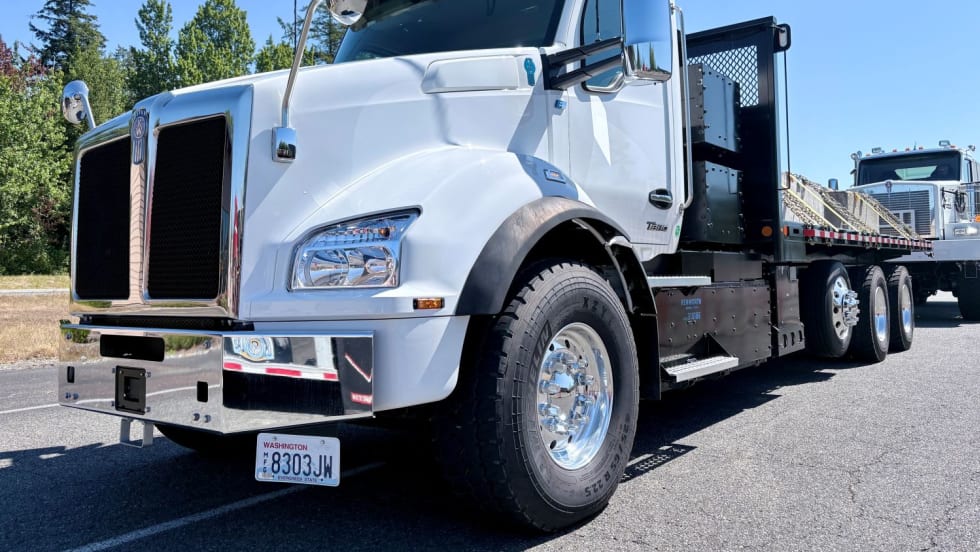
Kenworth T880E Brings EV Power to Vocational Trucks
A closer look at the Kenworth T880E’s range, charging, powertrain and upfit options — and where fleets are showing the most interest.
Read More →
Jennie Abarca Is Proving Electric Trucks Can Do the Job
HDT Truck Fleet Innovator Jennie Abarca is building confidence in fleet electrification one load at a time while openly sharing the challenges she encounters along the way as a small-fleet owner.
Read More →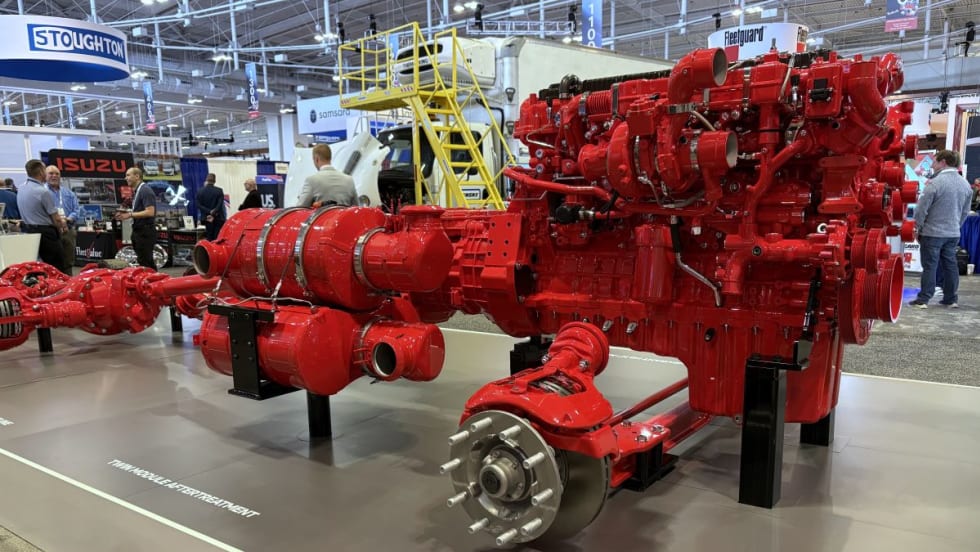
Cummins Adjusts 2027 Engine Rollout After EPA Proposal
The engine maker will gradually introduce its new Model Year 2027 diesel engines while continuing to offer current models during the transition, citing the EPA's proposed emissions rule changes.
Read More →
EPA Proposal Could Ease 2027 Truck Costs and Buying Uncertainty
The proposal doesn't change the tougher NOx standard, but it would revise key implementation requirements that manufacturers say have driven up costs and complicated fleet purchasing decisions.
Read More →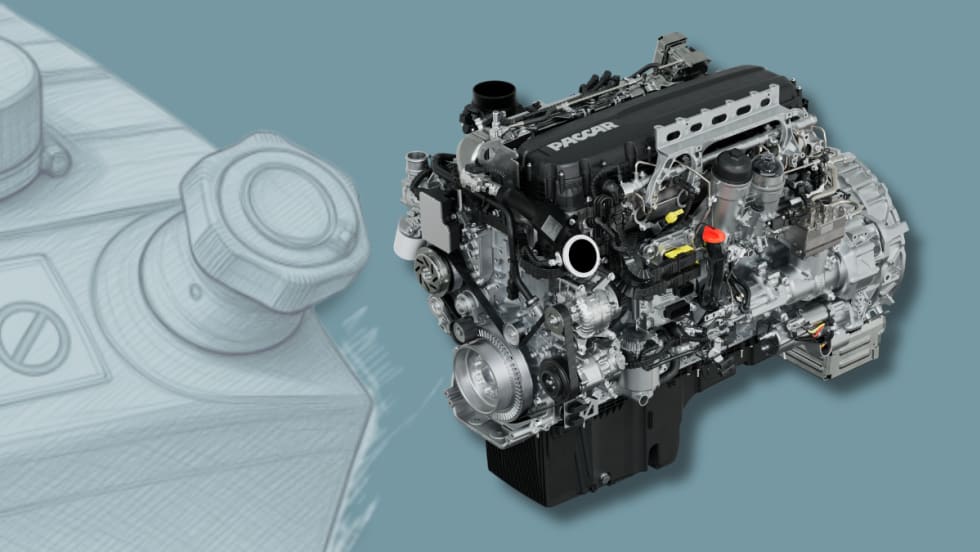
Cummins, Paccar Ease DEF Derates After EPA Guidance
Updated diesel engine software gives truck operators more time to address emissions-system issues while staying compliant with EPA emissions standards.
Read More →
Maintenance in the Messy Middle Part 3: Biodiesel
Biodiesel can reduce emissions, improve fuel-system lubricity and use existing diesel infrastructure. But NACFE’s Messy Middle maintenance report says fleets must actively manage storage, cold-weather operation, filters and oil drain intervals to avoid problems.
Read More →