




Calculate True Capacity Before Buying Your Next Trailer: Part Three
Long before a single load is booked or any wheels turn, someone – usually a fleet manager – needs to determine exactly what is going to separate the road and the load.
Long before a single load is booked or any wheels turn, someone – usually a fleet manager – needs to determine exactly what is going to separate the road and the load.
There’s a lot riding on this decision because, as much as some would like to think otherwise, a trailer is never just a trailer. It can be manufactured to many different specifications, with multiple raw material options, dozens of load and geographical considerations, various top speed requirements and hundreds of possible axle configurations coming into play. And it all comes down to one objective – the ideal trailer for an operation’s specific loads.
To select the right trailer, the one that will require the least amount of maintenance, provide the greatest lifespan and deliver the highest possible return on investment, it is vital to understand the most important factor of all – capacity.
Safety: A Crucial Multiplier
A trailer’s safety rating also comes into play when discussing capacity. Without understanding the safety rating, it’s difficult for a carrier to get a clear, comprehensive picture of true capacity.
A safety rating is an indicator of how much stress a trailer can safely handle. It encompasses the strength of the raw materials and components that a manufacturer has put into the trailer’s design and construction, how the beams and cross members are configured and so on.
A widely accepted average magnification of payload weight on a trailer due to road dynamics is 1.8 to 1 ratio. When a driver is rolling down the road, the truck is hitting chuckholes, bouncing over bumps and crossing railroad tracks along the way.
On average, the stress placed on a 50-ton-rated trailer by a 50-ton load when the rig hits those bumps, chucks and tracks equals 1.8 times 50 tons, or 90 tons.
It’s important to keep in mind that the 1.8 multiplier is only an average. On any given haul, the stress placed on the trailer can go above that level multiple times. If no cushion is built in to the trailer to handle those spikes in stress, there will be more potential for long-term, progressive structural damage.
Since there is no universally prescribed level for safety ratings, they vary from manufacturer to manufacturer. They range from a safety factor of 1.8 to 1, which allows for no margin, to an industry high of 2.5 to 1, which is considered an ample cushion for even the most extreme road dynamics a trailer might encounter.
Not only does the safety rating tell a carrier how strong his trailer is, it’s also a very good indicator of potential life. The greater the difference between the static design safety factor, be it 2.5 to 1, 2 to 1 or some other factor, and the dynamic 1.8 average multiplier, the longer one can expect a trailer’s useful life expectancy to be.
Most trailer manufacturers do not like to advertise safety ratings, often for good reason. To understand why, it’s helpful first to comprehend what a safety rating is not. A safety rating should never be used to determine how much weight can be added over the capacity rating and still keep the load, the driver and other drivers safe. In other words, a 2.5 to 1 safety rating on a 50-ton lowbed should not be used to justify loading a trailer with 125 tons of cargo. Just as the deck rating indicates, that trailer can safely handle a 50-ton payload under dynamic conditions.
Materials: The Sum of the Parts
Safety factors are strongly related to the quality of the components incorporated into the trailer, and that gets down to the nitty-gritty of the steel and the deck material.
Manufacturers have several options when choosing steel. For the most capacity and smallest impact on the trailer weight, some manufacturers use a T1 material with 100,000 psi minimum yield. T1 not only has maximum strength versus ductility, but also equates to a lighter, stronger trailer frame over other materials.
A trailer’s decking is continually exposed to the elements, making durable decking with a long wear life also crucial. Apitong decking provides a tougher, longer lasting wood in comparison to other varieties, such as oak or pine. Tightly woven and incredibly dense, apitong is less susceptible to chipping and cracking and provides some amount of traction in comparison to a smooth metal surface.
Overload at Your Own – and Others’ – Risk
Sometimes trailer owners or operators don’t completely understand the capacity rating and mistakenly put more weight on the trailer than it is built to handle, or more weight in a concentrated area than it can handle.
Overloading a trailer once is not likely to make it break. Overloading it twice probably won’t either. But do it consistently over time and eventually it will likely fail.
When a trailer breaks, the manufacturer hears about it. But often the complaint will be that a 50-ton trailer broke when it was hauling less than a full payload. For example, a 50-ton trailer might break when it’s only hauling a 40-ton payload. The reason is not in that 40-ton load, but the number of times the trailer previously was overloaded and by how much each overload exceeded the yield strength of the trailer’s load-bearing beams and cross members.
Yield strength refers to the amount of stress that the steel can withstand and still return to its original shape when unloaded. The first time a trailer is overloaded, the steel will return to something close to the shape it was in when it came off of the manufacturing line, but not exactly to that original shape. Each time it’s overloaded, the steel will return to something less than the shape it was in the time before. Eventually, the steel, and therefore the trailer, will break.
So in our example, even though the trailer only carried a 40-ton payload, it is likely that it had been overloaded to some extent at one or more points in its past. That’s when the damage was done, and that is what ultimately caused the failure. The steel got weaker and weaker and, on the day the trailer failed, it happened to be rolling with 40 tons on the deck.
Help To Be Had
It can be tempting to look at a trailer’s capacity rating and stop there. But for a true sense of how much a trailer can handle and how it will hold up under the stresses of a specific operation, with its individualized loads, geographies, weights and other variables, fleet managers need to consider everything that goes into that rating.
Purchasing the right trailers for updating a fleet can be complicated and, clearly, the decision is an important one. But there is help available. Many manufacturers have sales people who know capacity from top to bottom and can help fleet managers select exactly the right trailer with the optimal combination of load concentration, load distribution, speed and safety rating for specific applications and load types.
And having that knowledge about each specification will help ensure an investment that leads to a long, smooth ride.
Related articles:
More Drivers
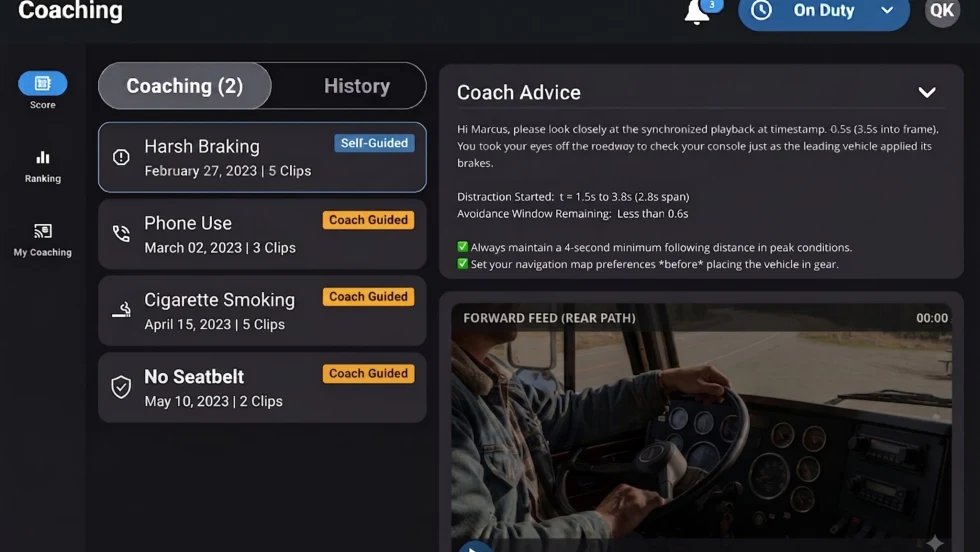
Platform Science Adds Dispatch and Safety Tools
Four additions to PS Fleet help fleets monitor loads, manage driver coaching, share truck locations and adjust video system settings.
Read More →
When Language Stops the Truck: The Return of ELP Out-of-Service Orders
English language proficiency rules for commercial drivers aren’t new, but renewed out-of-service enforcement has raised the stakes. Here’s what carriers need to know before a driver reaches a roadside inspection.
Read More →
Samsara Launches Custom AI Agent Builder
Agent Studio lets fleets create AI tools for hours-of-service monitoring, reporting and driver support, including agents that communicate by phone.
Read More →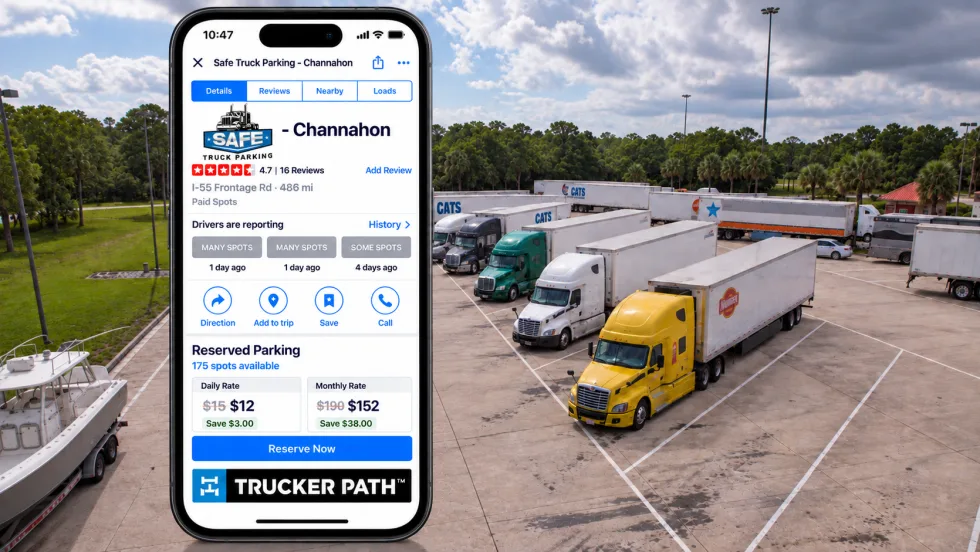
Trucker Path Expands Reserved Parking Network
Trucker Path has added close to 6,000 more truck parking spaces to its Trucker Path Reserved Parking Network with the addition of Safe Truck Parking.
Read More →
EEOC Sues Texas Trucking Company Over Driver Age Limits
The agency says Trancasa USA rejected applicants over 65 and applied tougher driving-record standards to those over 60.
Read More →
Nussbaum, Roehl Announce Second Driver Pay Increase This Year
This year has seen a swath of major truck driver pay increases as freight capacity has tightened.
Read More →
From One Generation to the Next: How Mentorship Builds Safer Truck Drivers
After three decades in trucking, Harold Perry shares what he's learned about driver safety, mentorship, and helping the next generation build confidence behind the wheel.
Read More →
Truck Drivers Need More Than Another Alert
Fleets have more visibility into truck health, safety events, and driver activity than ever. The next challenge is turning all that information into useful guidance for the person who has to decide what to do next.
Read More →
FMCSA Removes 110 Truck Driver Training Schools from Certified ELDT List
Federal regulators also are targeting more than 160 additional training providers and launching a nationwide audit of third-party CDL skills testers as part of a broader crackdown on trucking fraud.
Read More →
Hours of Service Pilot Programs: FMCSA Readies for 2027 Rollout
Two pilot programs could eventually reshape hours-of-service rules, giving truck drivers options to pause their 14-hour clock or use longer split sleeper rest periods.
Read More →