





Related: Daseke Names Chris Easter Permanent CEO
Bulldog Hiway Express CEO Keeps Safety Top of Mind
Truck driver appreciation, technology, and collaborating on new safety compliance standards are all key to meeting fleet safety goals, says Phil Byrd, CEO of Bulldog Hiway Express and head of the Daseke Leadership Council.
July 15, 2020
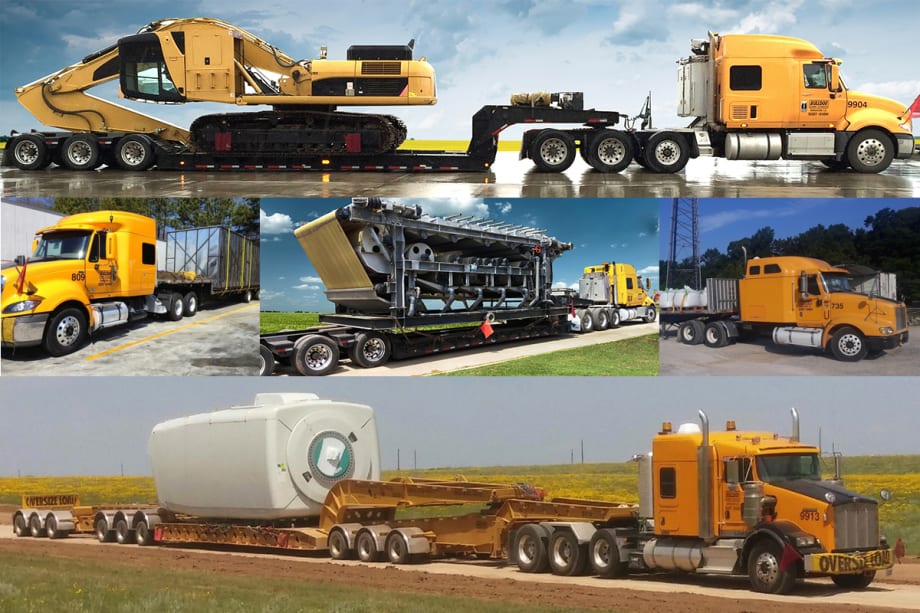
For the Bulldog Hiway Express team, safety is key to ensuring their drivers, cargo, and the motorists they share the road with all get to their destinations without a scratch on them.
Photos: Bulldog Hiway Express
5 min to read
When it comes to something as important as safety, recognition and appreciation can go a long way to reaching your ultimate goal, according to Phil Byrd, CEO of Bulldog Hiway Express and head of the Daseke Leadership Council.
“You can’t get the maximum out of any goal or cause without effective recognition,” says Byrd, highlighting that programs such as CVSA's Operation Safe Driver Week, going on this week, “are key in elevating and rallying the industry around a shared mission. People also want to be recognized for their hard work, so these weeks are an important opportunity to salute and compliment those who are making a difference.”
That recognition is shared by those at the top as well. When Byrd was leading the American Trucking Associations, Rick Whittle, a driver from Bulldog Hiway Express, was selected to be an American Road Team Captain. The Bulldog team championed his hard work and celebrated along with him when he earned the opportunity to serve as an industry representative traveling across the country to speak about public highway safety and educate the general public on commercial trucks.
“Programs like that and honorary weeks like Operation Safe Driver Week have great purpose in encouraging continued excellence and inspiring positive change and behaviors,” adds Byrd.
Technology’s Role in Safety
Technology plays a key role in how Byrd and his team approach safety. All of his trucks feature digital tools that not only assist drivers, but also help monitor speed, lane departure, and hard braking to ensure safe driving.
“As an executive, you also have to keep in mind that not all accidents happen on the highway or freeway at the maximum speed limit,” says Byrd, adding that fleets need to place emphasis on speed zones, urban areas with streetlights, and traffic congestion. “Consequently, we don’t see drivers getting speeding tickets on the road, and our accident frequency per million miles is amongst the best in the industry.”
Technology’s evolution in the trucking industry and its increasing level of integration has been the greatest change in terms of safety, according to Byrd. Not only does it improve the physical safety of the driver, it also increases environmental safety by decreasing his fleet’s carbon footprint.
“We’re also seeing great strides in safety with things like electronic logging devices, improved driver orientation programs, and the progression of intermodalism,” says Byrd. “As a fleet operator today, we’re concerned with many things like productivity, efficiency, offering good employment opportunities, and creating a working environment people enjoy.”
But no matter how much technology makes its way into every level of commercial truck safety, the main thing that Byrd worries about every night and every morning is how safely his fleet is operating on the highway.
“You have to always operate with a safety-first mentality,” he says.
Coming Together as a Team
But it’s not just the Bulldog fleet that Byrd has to worry about before bed. As head of the Daseke Leadership Council, he must also keep in mind the more than a dozen specialized trucking companies under the umbrella of Daseke.
“Since last fall, Daseke has been undergoing a transformation toward operational excellence, and with that, we are leaning into synergies between operating companies and searching for ways we can make uniformity work for the betterment of the organization,” says Byrd.
Daseke’s Leadership Council and safety leaders from each of the operating companies collaborate on establishing safety standards. Currently, the team is working on a company safety compliance manual, which Byrd believes will drive the organization’s safety performance to an all-time high. To accomplish this, they created small safety focus groups that took ownership of different safety categories to establish standards.
“It takes extensive collaboration, and it’s been a big undertaking to drill down at each operating company and formalize Daseke safety uniformity, but being able to openly discuss successes and failures across operating companies is one of the big advantages of being a part of Daseke,” adds Byrd. “It’s a work in progress, but we already see the value of our work.”
COVID-19 and Safety Training
When the COVID-19 pandemic began quickly spreading across the U.S. in mid-March, Byrd and his team had to make changes to how they conducted driver orientation. Masks are now required, as well as social distancing, limiting the numbers of participants per session, and providing wipes and gloves.
“Our safety practices and curriculum haven’t changed, but we have introduced proper pandemic protocols to protect everyone,” says Byrd.
Bulldog’s executives have also assigned a team to go building to building and clean high-touch objects like doors, coffee pots, and faucets. They’re also sanitizing all trucks, so trainees, trainers, and technicians are not affected. Additionally, when trainers go out with trainees, both are wearing masks and wiping everything down afterward. The staff is also being constantly cautioned about touching their face and being in crowds or large groups.
No matter what aspect of safety that Byrd and his team are turning their attention to, they always make sure that drivers understand they are the most valuable asset in the organization, playing a critical role in keeping communities across the U.S. running smoothly.
“I encourage everyone to be keenly aware of the important role America's truck drivers have in their daily lives,” says Byrd. “Over 70% of all goods are delivered throughout our country by trucks, so when you have the opportunity to demonstrate your appreciation for the dedicated professional work of these highway heroes, please do so with a tip of your hat, a salute, or a smile. You'll make their day, and they'll keep making your deliveries.”
Subscribe to Our Newsletter
More Safety & Compliance

FMCSA Pauses Biennial-Update Enforcement Amid Motus Transition
Carriers whose updates were due on or after June 1 have more time, while FMCSA works to stabilize its new registration system and warns of phishing sites impersonating its new carrier registration system, Motus.
Read More →
ZF Expands Commercial Vehicle Push in North America
ZF is expanding its North American commercial-vehicle presence with new transmission applications, electrification, trailer technology and autonomous-driving systems.
Read More →
Truck Drivers Need More Than Another Alert
Fleets have more visibility into truck health, safety events, and driver activity than ever. The next challenge is turning all that information into useful guidance for the person who has to decide what to do next.
Read More →
Tesla Wants a Self-Driving Semi. Are Cameras Enough?
Could Tesla’s camera-only autonomous driving technology work on an 80,000-pound Semi? In this commentary, HDT's Deborah Lockridge takes a look at Tesla, Cybercab, and how autonomous trucks see the road.
Read More →
What DOT’s Automated Vehicle Strategy Means for Trucking
The U.S. Department of Transportation issued a new automated-vehicle strategy that outlines plans for driverless-truck regulations, cross-state freight corridors, and federal safety standards.
Read More →
NYC Expands Speed, Pedestrian Safety Tech Across Fleet
New York City is expanding intelligent speed assistance and pedestrian-alert systems across its municipal fleet, moving the technologies from pilot programs into vehicle procurement and retrofit requirements.
Read More →
FMCSA Removes 110 Truck Driver Training Schools from Certified ELDT List
Federal regulators also are targeting more than 160 additional training providers and launching a nationwide audit of third-party CDL skills testers as part of a broader crackdown on trucking fraud.
Read More →
Beyond DOT Compliance: What Makes a Trucking Fleet Truly Safe?
A trucking fleet can follow every rule and still make unsafe decisions. The real test comes when safety conflicts with freight, productivity, or cost.
Read More →
Hours of Service Pilot Programs: FMCSA Readies for 2027 Rollout
Two pilot programs could eventually reshape hours-of-service rules, giving truck drivers options to pause their 14-hour clock or use longer split sleeper rest periods.
Read More →
New Guide Offers Pet Safety Tips for Truck Drivers
Hundreds of thousands of pets travel in truck cabs. A new safety guide from Volvo Trucks and the Center for Pet Safety offers practical advice for truck drivers who bring dogs and cats along for the ride.
Read More →