




Avoid These Common Truck Fleet Maintenance Mistakes
Fleets try to do a good job of keeping their trucks in top operating condition, and most recognize that maintenance plays an important role in achieving that goal. Still, there are some things that get overlooked by even the most seasoned fleet manager.

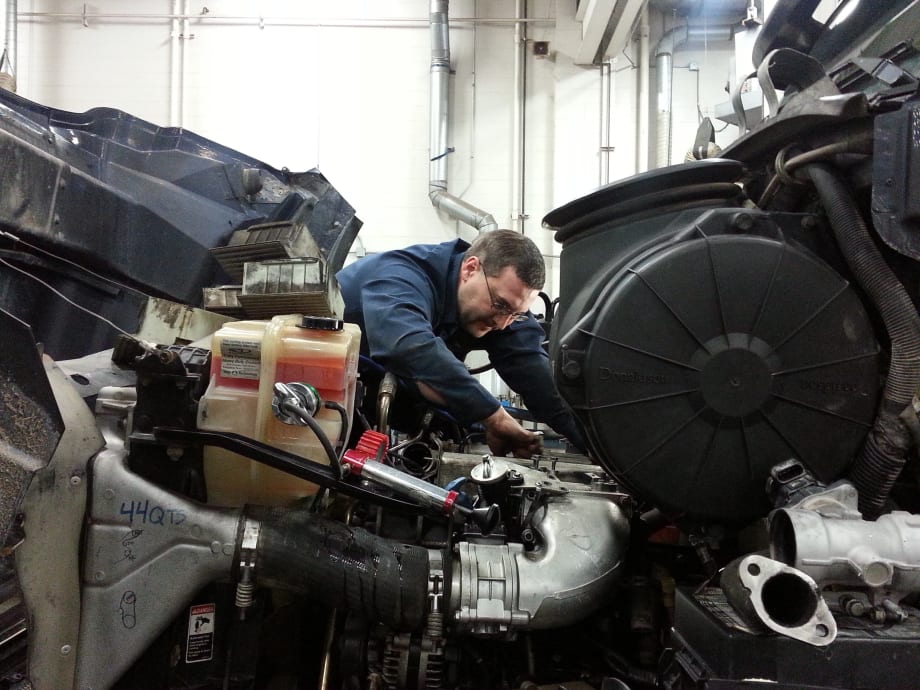
Drivers need to be trained to distinguish when a fault code means the truck needs to be brought in immediately and when it is okay to wait for the next scheduled maintenance
appointment.
Drivers need to be trained to distinguish when a fault code means the truck needs to be brought in immediately and when it is okay to wait for the next scheduled maintenance
appointment.
Fleets try to do a good job of keeping their trucks in top operating condition, and most recognize that maintenance plays an important role in achieving that goal. Still, there are some things that get overlooked by even the most seasoned fleet manager.
1. Not Having Preventive Maintenance Interval Standards in Place
Some maintenance managers try to eke out just a little more time between maintenance intervals. According to Mark Meier, total care specialist for aftermarket powertrain and alternative fuels at Smith Power Products, a member of the WheelTime national truck service network, it is important to not only set standard intervals for component maintenance, but also stick to those standards.
“Fleets are trying to utilize their equipment 24/7, so they may go a little too long on an oil change or a brake job. When they do that, damage occurs and the repairs costs more money than the maintenance would have,” he says.
Bob Merrill, operation analyst for W.W. Williams, another member of the WheelTime network with locations in a dozen states, also sees fleets pushing off maintenance.
“They find problems and say, ‘We’ll get it the next time.’ But the next time comes and they push it off again," he says.
W.W. Williams works with customers to determine which issues will result in CSA violations and repairs them first.
“We prioritize things and determine what needs to be fixed right away and what we need to fix going forward so eventually everything is fixed,” Merrill says. “Then we get them on a scheduled maintenance program to keep their vehicles operating safely and to avoid breakdowns.”
Amerit Fleet Solutions, a provider of contract maintenance, works with a wide variety of fleet accounts. Peter Souza, vice president of operations, says fleets have taken a one-size-fits-all approach to maintenance.
“They tend to look at all their equipment in the same light. But you shouldn’t maintain a road tractor the same way you do a yard switcher.”
Maintenance programs need to be designed around a specific asset, with different intervals established for different types of vehicles and even similar vehicles used in different applications.
2. Not Using PM Data to Improve Maintenance
The most common mistakes fleets make, according to Michael Riemer, vice president products and channel marketing at Decisiv, is not capturing usable data from inspections.
“Regular preventive maintenance inspections with the correct VMRS coding will provide great insight into what problems are occurring across makes, models and years in service.”
He adds, “These inspections should be generating pending work based on specific failures, so whenever and wherever that asset shows up for a [PM] service or repair event, the appropriate pending work is also completed.”
Mel Kirk, vice president of maintenance operations for Ryder Systems, is a big proponent of data mining.
“If you mine the data from CSA inspections, it will tell you what you need to do in your PM program.”
The types of breakdowns you see on the road also can be used to develop what Kirk calls “the perfect PM.”
The key to developing that “is using data that is available to figure out what systems or sub-systems are failing, and then develop a game plan so you can address those issues through your PM program,” Kirk says.
Souza adds, “I see a lot of companies that don’t measure their performance. They don’t know what their current percentage of completed PMs is. They don’t know how many breakdowns per 1,000 they are experiencing. They don’t know how many times they have had to repair a particular component.”
Bob Tyman, general manager of River States Truck and Trailer, a Freightliner dealer in Wisconsin, sees fleets misinterpreting fault codes.
"Every week we see fleets sending trucks for service with fault codes that did not require the truck or driver to stop.” He advises better training of drivers so they understand the difference between a fault code that needs to be dealt with ASAP, one that needs to be looked at in the very near future and one that can wait until the truck is in the shop for its normal maintenance.
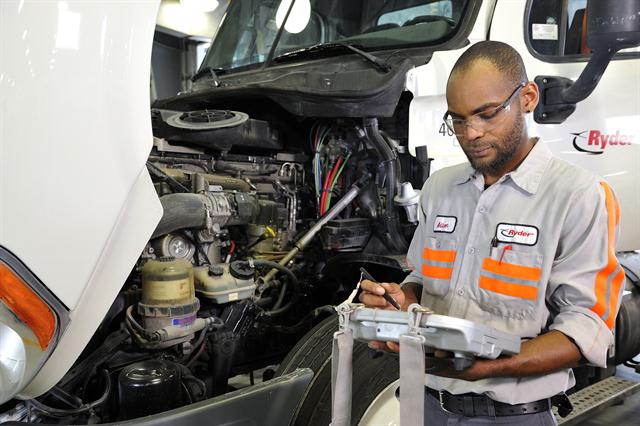
In order to be effective, your maintenance program has to be more than an exercise mandated by the law. A good preventive maintenance program assesses the current state of a vehicle.
3. Ignoring Drivers in the Maintenance Process
For Wayne Souder, branch manager at the York Haven, Pa., branch of Penn Commercial Vehicle Solutions, a member of the WheelTime network, leaving drivers out of the maintenance process is a big mistake.
“A lot of things should be detected by the driver during pre- and post-trip inspections and brought to the maintenance department,” he says.
“The driver is the one guy who has his hands on that truck every day, and he is going to notice if something is wrong, so it is important that he be brought into the maintenance process.” In addition to engaging the drivers, Souder says it is important to "inspect what you expect.”
“Techs don’t always have the same thing in mind as you do, and if you don’t look at their work periodically, then you are never going to catch the obvious things that sometimes get overlooked.”
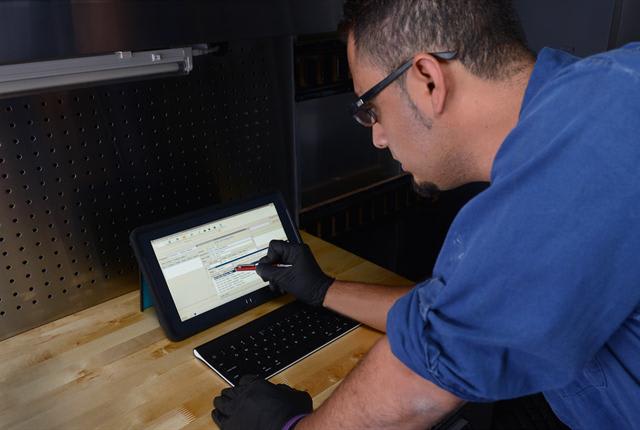
Technology can be used to capture data during a PM service. The data can then be used to further customize the inspection.
4. Viewing a Truck as Just a Tool
Meier thinks fleets make a mistake in viewing trucks as tools they need to get a job done rather than as assets that earn them money.
He says if fleets view their trucks no differently than they view their desks, it can lead to problems.
“Not that people would trash their desks, but there are not a lot of things that would get fixed on a desk. It is not important. It is not a show piece,” he says. “But if they view their trucks as assets, they want people to be impressed with them so they will take care of them.”
When a fleet changes the way it looks at its vehicles, the result is often better maintained trucks, he explains. “When a well-maintained truck pulls in, the customer is going to know that the fleet cares about its equipment. A lot of fleets don’t calculate the value of this.”
5. Doing Maintenance Just Because it's the Law
“You’re not running an effective preventive maintenance program if all you do is look at it as an exercise mandated by the law,” Kirk says. “You need to look at maintenance as an exercise that is intended to assess the current state of the vehicle and resolve any outstanding issues.”
The perfect preventive maintenance inspection, according to Kirk, entails “listening to the heartbeat of the vehicle. The vehicle will tell you what is wrong.”
Then it is the technician’s job to look beneath the surface to find the root cause of the problem and to find other areas of the vehicle that might have been affected by the initial problem.
The goal of every maintenance organization, according to Kirk, should be to do the PM routinely and then not see the truck until the next scheduled PM.
“You have to execute a much more robust maintenance program to make that happen.”
Merrill adds, “The whole goal of a scheduled maintenance program is to have no breakdowns. If they do the inspections and can avoid any other breakdowns, the program pays for itself.”
6. Failing to Look Upstream from the DPF
While there are many specific components that should be part of a good maintenance program, such as brakes, filters and tires, none is more important than the diesel particulate filter.
“All of us are struggling with the types of failures we are seeing in the emission control system,” says Mel Kirk, vice president of maintenance operations for Ryder Systems. “There needs to be a lot more attention paid to the DPF and the doser valve.”
When Ryder took a deeper look at DPF problems, it discovered that issues that lead to DPF replacement originated upstream.
“If you have an oil leak or other fluid leak that finds its way to the emissions control area, it is going to clog things up.”
A proper preventive maintenance program will find problems early and allow the technician to clean or repair rather than replace.
“Our objective is to do a clean vs. replace whenever possible because a full replacement of a part, especially for components that are intended to last a lifetime, is an unnecessary expense.”
More Maintenance

Color Match Smarter: Tools That Restore & Perform
For fleet managers and collision repair professionals keeping heavy-duty trucks on the road, getting the color right the first time isn't just about appearance — it's about efficiency, turnaround time, and bottom-line results. Discover how today's digital color tools are transforming the repair process from guesswork to precision.
Read More →
Wrong Repair Prompts Recall of Freightliner, Western Star 4x2 Trucks
DTNA is recalling more than 2,400 trucks that received an incompatible software fix instead of the hardware repair required to address brake valve corrosion.
Read More →
Truck Drivers Need More Than Another Alert
Fleets have more visibility into truck health, safety events, and driver activity than ever. The next challenge is turning all that information into useful guidance for the person who has to decide what to do next.
Read More →
The Maintenance Checks Trucking Fleets Should Prioritize Before Fall Freight Picks Up
Making it through August isn’t the same as being ready for the next several months of operation. Find out what systems may have suffered from summer heat and need to be checked out before fall.
Read More →
What Three Fleets Are Doing Differently When Buying Truck Parts in 2026
With freight improving but costs still climbing, fleet maintenance executives explain how they're balancing price, quality, and supplier relationships.
Read More →
Paccar Recalls 2027 Trucks Built This Summer for Possible Electrical Problem
The nearly 6,000 Kenworth and Peterbilt trucks in the recall could potentially lose engine power, among other things.
Read More →
Will API PC-12 Oil Change Trucking Fleet Maintenance?
The new API PC-12 heavy-duty engine oil category reflects the changing demands of modern diesel engines. But fleets like Foodliner are looking to getting their own data before making decisions on adopting the new oils and questions such as extending oil drain intervals.
Read More →
Brake Safety Week to Focus on Drums and Rotors
Commercial vehicle inspectors are focusing on truck brakes during CVSA's Brake Safety Week, August 23-29.
Read More →
Possible Battery-Cable Fires Prompt Recall of 15,000+ International MV and HV Trucks
On the recalled vehicles, manufacturing variations can cause the battery interconnect cable to contact the auxiliary stud and hold down the bracket.
Read More →
Rush, MCT Team Up to Grow Refrigeration Service Network
The joint venture will operate MCT's network of Carrier Transicold dealerships and mobile service locations, with the companies promising greater service capacity and uptime for refrigerated fleets.
Read More →