




Are You Using The Right Oil?
For two decades, we have seen a new API oil classification for on-highway heavy duty diesels every few years. This time, it's different.
For two decades, we have seen a new API oil classification for on-highway heavy duty diesels every few years. Oil formulations had to change to meet the demands of diesel engines facing ever-more-stringent emissions standards.
This time, it's different.
For the 2007-emissions engines, the industry underwent what has been called a paradigm shift in engine oil formulations. Because of concern that the diesel particulate filters would get prematurely plugged with sulfated ash, phosphorus and sulfur - ingredients traditionally used as additives in oil to neutralize acids and prevent wear - the CJ-4 oil category put numerical limits on the amount of these chemicals, something API had never done before for heavy duty engines.
Initially, there was concern that meeting these limits was going to cause problems, either with backward compatibility or with the ability of the new oils to do things like extend drain intervals. Instead, the oil companies turned to different additives. With the help of ultra-low-sulfur diesel reducing the amount of acids in the oil that had to be dealt with, they came up with oils they say perform better in every critical measurement than any previous oil.
Nevertheless, until about a year ago, it was widely expected that the chemists would have to get to work on another category for the 2010 engines. That turned out not to be the case.
"We feel that CJ-4 oil technology is going to cover us quite well," says Mark Betner, heavy duty lubricant manager for Citgo. "Recent information I've received is that we should be good through 2012 on CJ-4 oils."
There are two major approaches engine makers are using to meet 2010 emissions standards: selective catalytic reduction, which requires injection of urea into the diesel exhaust and is commonly used in Europe; and increased use of exhaust gas recirculation.
Proponents of SCR say that it will allow for a cleaner-burning engine, with less particulate matter regeneration because it can use less EGR. This in turn will make for a cleaner combustion system, keeping the oil from loading up with soot. And for engines that aren't using SCR, the industry believes the CJ-4 oils are so robust, they'll handle the extra EGR just fine.
So while you're deciding which technology to go for in your 2010 engine buys, at least you don't have to worry about yet another new oil category.
CJ-4 VS. CI-4 PLUS
In the meantime, however, there's still the question of which oil to use in your current trucks: Should you keep using CI-4 or CI-4 Plus oils or switch to the newer CJ-4 category?
One thing unique about the CJ-4 oil category was that most oil companies opted to continue offering oils that met the previous category, CI-4 Plus, alongside the newer oils. Because the new oils cost more and there was uncertainty at first about their ability to extend oil drain intervals (concerns that appear to have been overblown), oil makers wanted to give customers the option of having the older oil to use in their pre-2007 equipment, or in off-road equipment.
The DPF is what drove many of the changes in the oil. The new CJ-4 oils use different additives to handle things like heat and soot, Betner explains, "things that do not contribute to the byproduct called ash, which theoretically would tend to cause premature loading of that DPF and higher backpressure, resulting in faster regeneration and possibly [premature] cleaning. I think a lot of that was hypothetical, but they made that change in 2007 with these oils, anticipating the oil could be a contributing factor to shortened diesel particulate filter service life."
But once the 2007 engines actually appeared on the scene and engine manufacturers were able to do more testing with both the new and old oils in the new engines, some engine makers decided to allow CI-4 Plus oils in the 2007 engines. There might be a trade-off of shorter DPF life, they cautioned, and the CJ-4 oils were preferred, but they would approve either oil.
Cummins, for instance, says CJ-4 oil is the recommended oil, although CI-4 oil is permitted. "CJ-4 oil is the ideal selection and important to provide the longest life of the diesel particulate filter," they said in a statement. "Additionally, Cummins recommends the use of CJ-4 oil as it is an improved blend of oil that has many other advantages with thermal stability and other improvements. If a Cummins customer chooses to use CI-4 oil, we expect that the diesel particulate filter cleaning intervals to decrease - meaning more frequent DPF cleanings - due to the higher ash content in the CI-4 oil."
Whether there is actually any such trade-off, or how severe it will be, is yet unknown. Today's 2007 engine owners have not yet reached the 400,000-plus range where DPFs are expected to need cleaning or exchange.
THE BIG OIL SWITCH - OR NOT
So some fleets have switched to CJ-4, while others are sticking with CI-4 Plus, for a variety of reasons.
Andy Stopka, vice president of maintenance for NationaLease, explains that his organization's members are all over the board when it comes to this decision.
"In some of the facilities, they are running the two kinds of oil, and they're doing oil testing on the PM intervals to see what kind of benefit they're getting from the new oil versus the old." But so far, he says, there's not enough data to go on.
But it's not very practical for an organization to run two different types of oil. And there aren't that many 2007 engines in use because of the slow economy and the 2006 pre-buy, so many truck owners are resisting the switch to the new oil, especially when they look at the higher price. So there are fleets both large and small that have not switched.
At Penske Truck Leasing, they are using CI-4 Plus oil for both their 2007-engine vehicles, which make up about 10 percent of the fleet, as well as for the older engines.
"CI-4 is a more affordable engine oil, and it contains a higher Total Base Number than CJ-4," explains Mike Hasinec, vice president, maintenance systems/support. The fleet isn't experiencing any lubricant-related issues by sticking with the older classification. Talking to other fleets, he says, "There are mixed responses with the use of CJ-4. We are hearing both positive things, as well as a few concerns, about extended drain intervals and long-term wear.
"As time goes on and we're able to see what long-term effects CJ-4 will have on engine wear, Penske may look to switch our fleet to this classification."
Dunbar Armored, an armored-car fleet based in Maryland, is also continuing to use CI-4 oil and has no plans to change at this time. "We only have a handful of post-'07 engines," says Doug White, director of maintenance, "and we are not seeing any issues with oil at this time."
The country's largest truckload fleet, Swift Transportation, is also sticking with CI-4 Plus for now.
"We're probably a little bit unique in that we have a little over 40 shops around the nation, so when we make a switch, it's a big to-do," explains Michele Calbi,vice president of procurement and shop operations. At the time they made the decision, she says, CJ-4 was more expensive. "We talked with our engine manufacturers and they said either one will work, although the CJ-4 would be better for the DPF." Even though the price difference has narrowed, Calbi says they're reluctant to make the move because of the logistics. Swift will be running about 4,000 EPA '07 trucks by the end of the year.
Con-way Truckload is one fleet that did switch to CJ-4. They're currently running about 300 of the 2007 engines out of a fleet of 2,700, but they made the switch before they even took delivery of the first engine in December 2007.
"We went ahead back in October of '07 and changed to the CJ-4 oil," explains Bruce Stockton, vice president of maintenance and asset management. They wanted to make sure they had enough time for the bulk tank in their Joplin, Mo., shop to turn over.
One of the keys behind the decision to switch, Stockton explains, is that the company has a single shop and relies on other providers, such as MHC Kenworth's dealer network, to help handle PM work. "I asked our primary providers of PM service work, and we found they went ahead and switched over, because it is backwards-compatible. They just didn't want to take the chance of damage to the engine and then being on the hook for liability."
The other major factor, Stockton says, was drain intervals. "We're already on probably one of the longer oil drain intervals of any fleet our size - we do it at 40,000 miles. So because we were running a little longer, we just didn't want to take the chance."
Another fleet that switched is Duplainville Transport, the shipping subsidiary of Wisconsin-based Quad Graphics. Working closely with his local Chevron Delo distributor, Badger Lubrication Technologies, in 2005 fleet manager John Drake started testing four new 2007-spec Caterpillar engines.
With Badger providing the new Delo 400 LE CJ-4 formulation for the testing, Drake was pleased to discover through oil analysis that there were no signs of accelerated engine wear - in fact, he was able to push his drain intervals from 30,000 miles to 40,000 miles and is working toward 50,000. Currently 14 of his 78 power units are '07 engines, and all of them are on the CJ-4 oil. Even though the CJ-4 oil costs a little more, Drake says with the extended drain intervals, he's actually spending less on fluids and maintenance now than he did before the switch.
Owner-operators also are more likely to have switched to CJ-4 oils, says Walt Silveira, North American technical manager for Shell Lubricants, whose Rotella T product is popular among these customers.
"When we talk about owner-operators and folks that are doing their oil changes, for us the CJ-4 transition has been very successful," he says.
After all, a small price increase per gallon isn't going to make much of a difference when you're buying it by the jug, but when you multiply it by hundreds or thousands of trucks, the difference can be substantial. Some companies also have decided to offer only the CJ-4 formulation in gallon jugs in order to minimize confusion, helping to speed the transition among owner operators.
CJ-4 AND TBN
Oil companies admit that the switchover to CJ-4 oil has been slow, but say they expect that to change in the next year or two.
Customers generally are not trying to run two oils, says West Alexander, product specialist for Chevron, and many are sticking with CI-4 Plus. "The transition from CI-4 to CJ-4 has been slower than anticipated, slower than we would like to see," he says.
One of the reasons for the slow adoption, beyond the price issue, is that most people don't understand that the new oils actually perform better, even in older engines, say oil companies. And a big part of the confusion comes down to three little letters: TBN.
For years, the industry has focused on Total Base Number as a shorthand measurement of how good an oil is. TBN indicates the ability of the oil to neutralize acids - sort of like Alka-Seltzer for the oil. Higher TBN numbers, whether in new oil or when doing oil analysis, were good news.
"I think the consumer got strongly indoctrinated into things they could measure and see on paper," says Citgo's Betner - "TBN, and higher detergency, which contributes to TBN and contains higher ash. They got to believing more of that stuff makes the oil better."
However, the main reason high-TBN oils were needed was to deal with the sulfur acids in the oil formed as a combustion byproduct of diesel fuel containing sulfur. When ultra-low-sulfur diesel cut the amount of allowable sulfur in fuel from 500 ppm to 15, there was no longer as much need for high TBN numbers in the oil.
While it was a challenge to find new additives to replace the ash and phosphorus ones traditionally used, Betner says, the end result was a better product. "We see today with CJ-4 with the ashless oxidation inhibitors and ashless additives to disperse soot, we can handle the higher soot loading impact of heavier EGR without having ash-producing additives in there."
In addition, not all TBN is created equal, points out Shell's Silveira. "You can have high quality TBN or low quality TBN," he says. "Most folks used to say the higher the TBN characteristic or property of your oil, the better the oil was. That's not necessarily true, because you could have a high TBN number to start and it could be used up very quickly, depending on the quality of the additive package you were using. What we've done, we've kept the TBN level relatively robust - it doesn't use itself up very quickly, it's able to last through the life of the oil, which helps in the performance of the oil over extended drain intervals or just keeping the engine cleaner and preventing corrosion."
EXTENDING DRAIN INTERVALS
While higher TBN has traditionally been a factor in being able to extend oil drain intervals, it is not the sole factor, says Chevron's Alexander. "Our experience has been our customers are switching to the CJ-4 and have been able to maintain those intervals and in some instances extend them. So we're seeing equal or improved drain intervals."
Experts caution, however, that any time you want to extend your oil drain intervals, no matter how good the oil you use, it's crucial to use an oil analysis program to determine drain intervals. And when you switch to the new CJ-4 oil, you need to start a new baseline on your oil analysis program, because the chemistry of the oil is significantly different.
Right now it doesn't look like 2010 engine technology should have any adverse effect on extended drains, either. "From what we're seeing, from some of the things I've read, 2010 should be very positive for oil drain intervals," Silveira says. "We think some of the technology changes that are being tested right now should not affect oil drain intervals for folks that have a current engine model, and that the robustness of Rotella T for deposit control and cleanliness and viscosity control and shear stability, all those parameters seem to be such a high quality that any changes to the new engines should not impact the oils' ability to perform.
"We look forward to getting the new engines, [so we can] start testing our oil as soon as we can and actually get field performance data in those engines."
HIGHER PERFORMANCE
Oil makers say truck owners are missing out on better performance by not switching to the new CJ-4 oils.
"The CJ-4 oils are superior to the CI-4 Plus," says Citgo's Betner. "They perform better at handling soot, they handle the heat better, and much to some people's confusion they handle very well different levels of fuel sulfur. These new oils outperform the previous category in all areas of critical performance.
"Can it optimize your drain intervals? Yes, it can vs. a CI-4 Plus oil. It can reduce oil consumption and keep the engine cleaner over time. I think we did not do a good enough marketing job to communicate the advantages of these new oils. Every performance category that we use to evaluate heavy duty engine oil, the CJ-4 was better, and we have clear evidence of that - that's not just marketing hype."
CHS, maker of Cenex brand lubricants, felt the new oil category was such an improvement that they did not continue to offer CI-4 category oils after CJ-4 oils were introduced.
"The CJ-4 category was well-researched, well-developed, and is probably the most robust or highest performance diesel [engine oil] category that's ever been put out into the marketplace," says Bob Theisen, manager of technical services. "We had a lot of late-night meetings making that decision, but at the end of the day, we made it based on what we felt would make it the easiest on our customers. Because we were convinced that this was the most robust category we had ever seen, the fact that we were convinced by the data that it was fully backward compatible into older engines, we thought, and I think we were correct, that it took the confusion out of making decisions for people that had mixed fleets."
One question that still appears to be up in the air is whether buyers of 2010 engines who currently are still hanging on to their CI-4 Plus oils will at that point have to switch to CJ-4 category products.
Oil companies are convinced that as more truck owners learn about the benefits of CJ-4 oils, and as more 2007-emissions engines make their way into the nation's fleet, most truck owners will go ahead and switch, leaving very few still clinging to the previous category by the time 2010 engines get into the nation's fleet, and therefore making the question largely moot.
"I believe definitely by 2010, the CJ-4 oils will be the vast majority of oils out there," Theisen says. "Now that more 2007 engines are out there with the particulate filters I think we now will start seeing CJ-4 oils climb at a much faster rate. By the time 2010 rolls around, in my opinion, they're going to be the vast majority of oils in the marketplace."
ConocoPhillips Lubricants has made major progress in converting customers to CJ-4 from the previous CI-4 Plus engine oils, says Reginald Dias, director of commercial products.
"The API CJ-4 is the highest diesel engine oil performance category that exists today," Dias says. "That, coupled with the advantages of our synthetic blend stocks and unique additive system, has provided our customers an added incentive to move up to the CJ-4 engine oil for use in their entire fleet.
"It is a matter of performance - the latest and most up to date engine oil that surpasses all other previous service standards," Dias says. "It is a matter of convenience - having one oil for use in their entire fleet. It is a matter of safety - preventing misapplication from an inventory of multiple oils. It is a matter of protecting investment - using the best quality oil to lubricate new and old engines, protect equipment, reduce maintenance and extend equipment life."
Dias notes that the conversion to CJ-4 in the industry is influenced by market dynamics and the population of EPA '07 engines. "With increasing population of post '07 engines in the field, the demand for CJ-4 quality engine oil will increase and the market dynamics will push for even faster conversion to use of CJ-4," he says. "Also, the off-road industry is making a phased-in conversion to compliance with tailpipe emissions regulations, which further drives the dynamics for increased use of CJ-4 oils."
Citgo estimates that at least 50 percent of the oil purchased by the end of this year will be CJ-4. "By 2009 and 2010, I think CI-4 Plus will fall into the minority, in the on-road market at least," Betner says.
Betner encourages truck owners to learn more about the two oil categories. "If you don't know in your mind what the difference between CI-4 Plus and CJ-4 oil is beyond TBN, find out. People don't believe CJ-4's an upgrade, and it is."
More Fleet Management
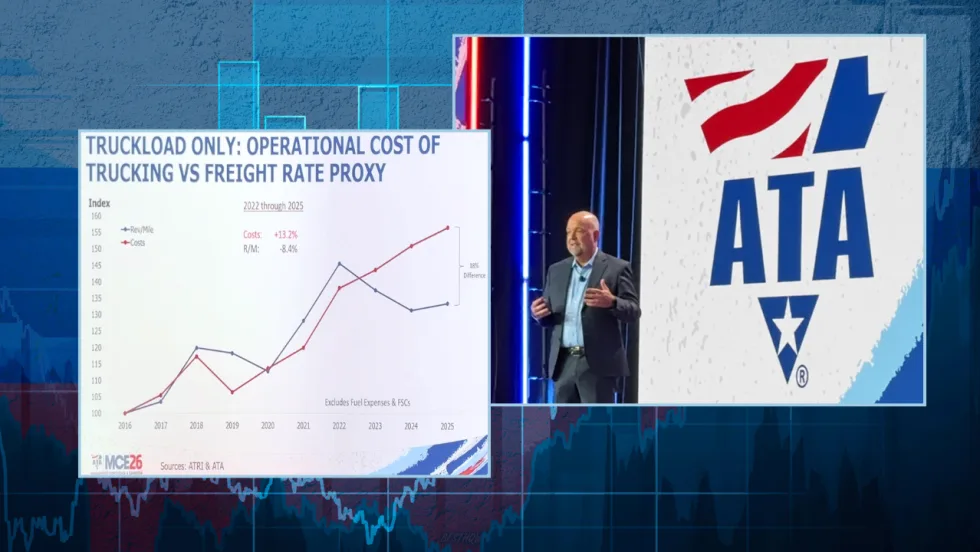
Why This Trucking Recovery Is Different
Freight demand remains sluggish, but rising costs and tougher enforcement have taken enough capacity out of the market to change the outlook for motor carriers.
Read More →
Platform Science Adds Dispatch and Safety Tools
Four additions to PS Fleet help fleets monitor loads, manage driver coaching, share truck locations and adjust video system settings.
Read More →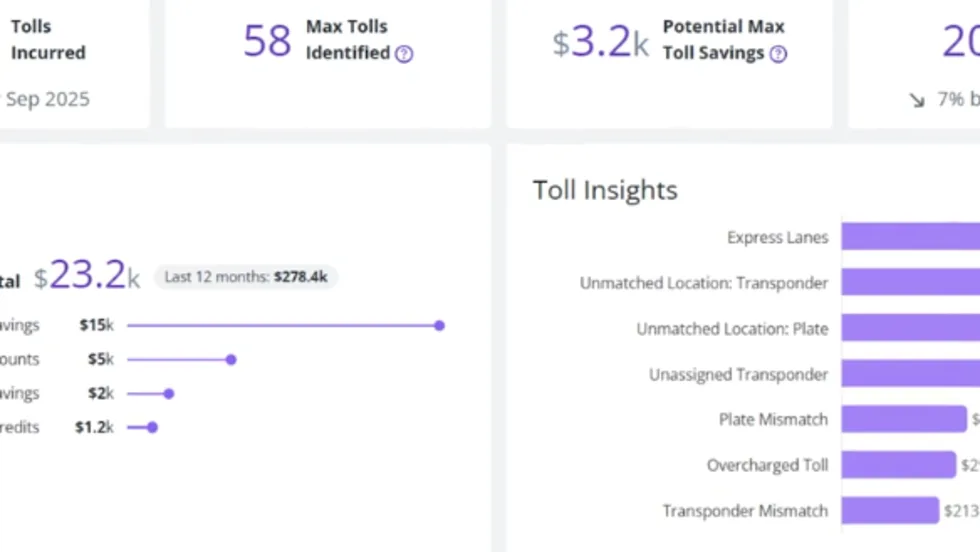
PrePass Intelligence Mines Fleet Bypass, Toll and Safety Data
PrePass Intelligence helps fleets measure bypass savings, flag potential toll overcharges, and spot suspicious transactions by combining data from separate systems.
Read More →
Motive Adds AI Agents for Fleet Operations
New tools automate follow-up on fleet data, from maintenance work orders to driver alerts, with two-way voice conversations planned for later this year.
Read More →
Can You Beat Our Trucking Trivia Challenge?
Test your truck knowledge with 19 trivia questions from Heavy Duty Trucking Exchange. Can you keep up with the fleet pros?
Read More →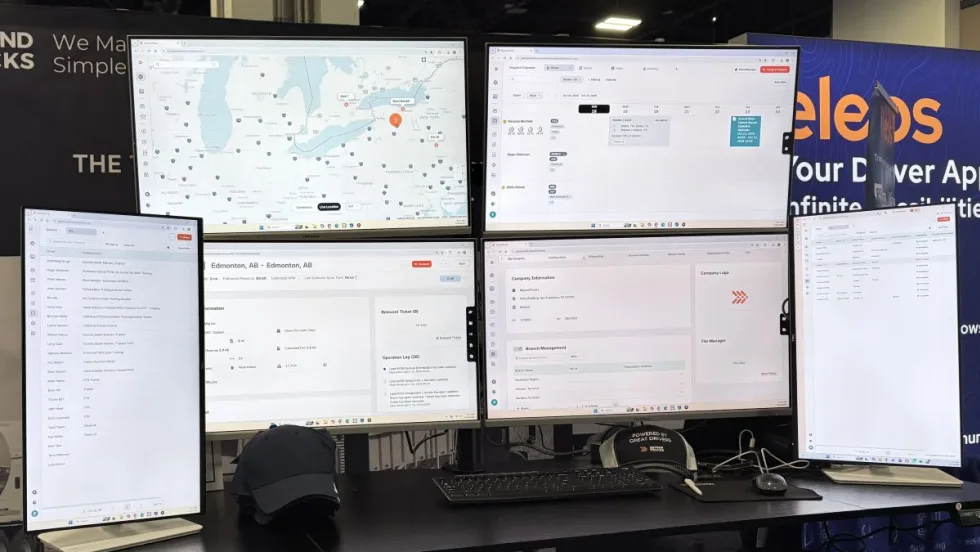
BeyondTrucks Adds Rules Checks to Dispatch
New Compatibility Engine checks driver qualifications, equipment requirements and fleet policies before loads are dispatched.
Read More →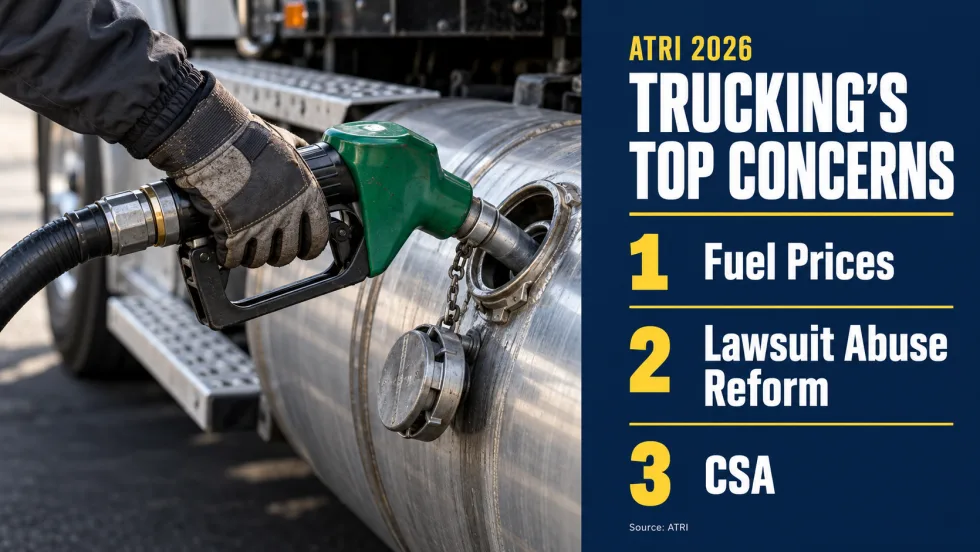
Diesel Prices Hijack Trucking’s Worry List
ATRI’s annual survey finds cautious optimism about freight, but diesel costs, litigation, and insurance continue to squeeze fleets. Drivers have different priorities on several issues.
Read More →
Nomination Deadline Extended for HDT Emerging Leaders
Just a few more days to nominate accomplished trucking fleet professionals under 40 who are making an impact and helping lead the industry forward for the HDT Emerging Leaders award. Deadline extended to October 20!
Read More →
What Will ATA’s New Leader Bring to Trucking's Table?
Incoming President and CEO Mark Colson’s record in Alabama offers clues about his priorities and approach following Chris Spear’s abrupt departure as the head of the American Trucking Associations.
Read More →
Volvo, Waabi Start Commercial Autonomous Operations in Texas
Volvo VNL Autonomous trucks, powered by the Waabi Driver, are hauling freight directly to third-party facilities for a customer in Texas.
Read More →