




Are Retreaded Tires Gaining Market Share over Replacements?
The last time retread tires outsold replacement truck tires was 2009. Before that, it was 2004. Tire market data from 2013, published by our sister publication, Modern Tire Dealer, shows replacement tires outsold retreads last year, but by a thinning margin. That leads us to the question, is a five-year cycle about to repeat itself?

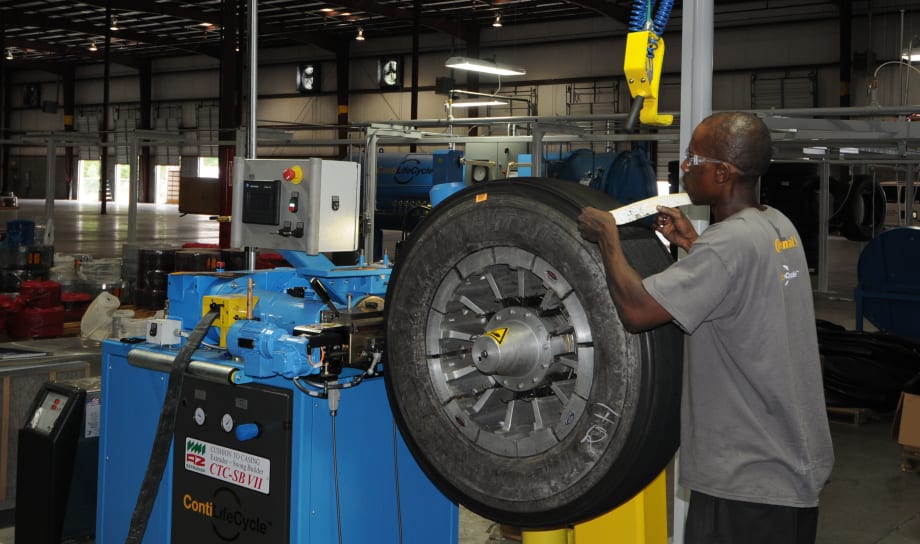
The gap between new replacement tires retread tires is narrowing despite price hikes for retreads.
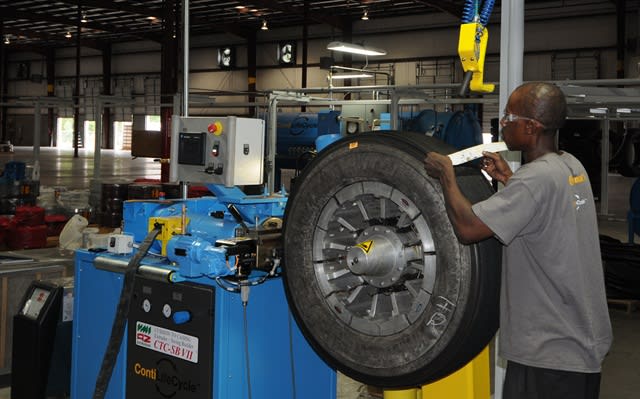
The gap between new replacement tires retread tires is narrowing despite price hikes for retreads.
The last time retread tires outsold replacement truck tires was 2009. Before that, it was 2004. Tire market data from 2013, published by our sister publication, Modern Tire Dealer, shows replacement tires outsold retreads last year, but by a thinning margin. That leads us to the question, is a five-year cycle about to repeat itself?
Between 2012 and 2013, the number of retreads sold in the United States was practically flat, while sales of replacement tires was dropping, effectively evening out the spread between to the two. MTD reports the spread between retreads (14.9 million in 2013, up 100,000 units) and new replacement truck tires (15.7 million, down 300,000 units) is only 800,000 units.
"The numbers this year do support the trend that retreads have gained slight market share," says Matt Schnedler, retread product marketing manager, Bridgestone Commercial Solutions. "Since 2009 many of the indicators, such as ton miles, truck loading and utilization, are increasing, and 2012 was a good year for OE production. Many of those trucks were due for replacement in 2013 and the retreading numbers are a reflection of that."
Cost is what is driving the uptick in retread sales, say several tire producers. Fleets have had a difficult time getting rate increases to stick in recent years, despite slight upticks in demand. With rising costs, such as fuel and driver wages, any savings opportunities are getting a higher degree of consideration, including, apparently, retreading.
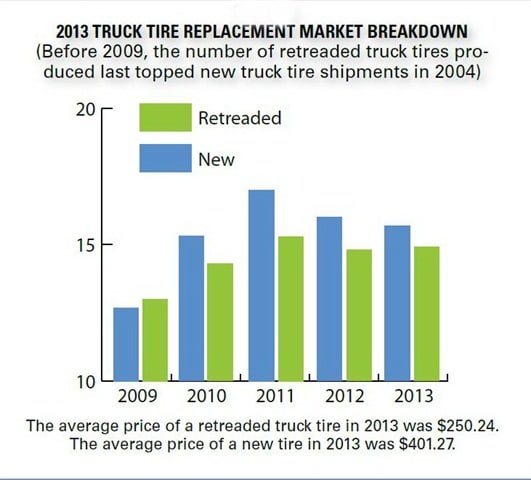
Retread sales have been fairly consistent since 2010, while sales of replacement tires has declined.
"Demand for retreads is increasing as fleet managers continue to leverage retread programs to drive lower operating costs," notes Todd Labbe, general manager of commercial retreads at Goodyear. "Retreading saves the trucking industry more than $3 billion annually. Premium casings provide multiple life cycles, saving fleet managers up to 50% of what they pay for a new truck tire each time they retread a casing."
Also included in MTD's market analysis was a peek at unit costs. That showed retreads actual rose in price 2013, narrowing the gap between replacement and retread. MTD pegged the average cost of a new replacement tire at $401.27, while the average retread price hit $250.24. The price gap between a new truck tire and a retread was nearly $200 in 2012. It had narrowed to about $150 last year. And still, demand rose.
Cost Efficiencies
Of course, it's not always only cost that drives a buying decision. Fleets reluctant to embrace retreads in the past because of "reliability" issues (usually related to maintenance issues such as underinflation) now have solutions such as automatic tire inflation systems and tire pressure monitoring systems that help mitigate tire failures.
For the record, and regular readers will have seen this dozens of times, new tires don't respond to low inflation pressure situations any better than retreads do. Underinflated tires run hot, the sidewalls flex more dramatically, and all tires in that condition tend to come to violent ends for exactly the same reasons.
So, with new tools in the inflation management game, there's pretty good reason to suspect retreads are gaining the confidence of fleets previously leery of them.
According to Paul Crehan, director of product marketing at Michelin Truck Tires, fleets should always have tire maintenance policies in place specific to their vehicles, equipment, geography, distance they travel, loads they carry, time on the road and other pertinent factors. It should also cover the specifics of new replacement tires entering their fleet as well as a retreading policy. This policy should cover the casings, number of times a quality casing will be retreaded based on the vehicle usage, casing age and condition, tire position, type and quality of the new retreads.[PAGEBREAK]
"There is a very wide variety of products in the replacement market, which range in size, wheel position, application type, tier and quality," Crehan says. "These variations all affect the 'average' cost of a replacement tire. For the fleet, a replacement tire must provide value, and this value is achieved by making the most appropriate selection for the vehicle, whether that selection is a new tire replacement or a retread."
Appreciating Assets
Regrettably, tires seldom become more valuable over time. But fleets should learn to appreciate the value of their tire and casing assets. They represent a significant part of the lifetime cost equation.
MTD pegged the value of a casing in 2013 at $78.61. That, of course, is the average price retreaders were paying for casings last year, not the value of the casings you carry on the books. A casing can be worth two or three times that to fleets, depending on how many times the tire is retreaded.
A premium casing will retread more times than a cheap one, thus extending the payback and lowering the lifetime cost per mile. But there are instances where retreading may not be cost-effective. It's really a call each fleet has to make, says Crehan.
"A fleet must determine its casing inventory and quality to determine what part of its replacement program will be in the retread area," he notes.
Lower cost remains a significant advantage of retreading and a good part of the reason retreads have been popular for many years. The retread processes and products have significantly advanced during the last 20-25 years and deliver measurable value to fleet customers. Even if the price gap is narrowing, they still represent a significant savings over new replacement tires.
"There are many different types and quality of retreads now available," says Crehan. "Fleets that choose to retread can save themselves significant amounts of money with a well managed program and good retreaders on the team."
Michelin also provided us with some data from the Rubber Manufacturers Association, showing some slightly different numbers than MTD presented. Michelin says the recent RMA information it has shows the number of replacement tires shipped in 2013 was down 1.9% from 16.3 million in 2012 to 15.85 million last year. The number of retreads produced in 2013 was down 0.3% from 14.8 million in 2012 to 14.4 million. "There does not seem to be a measurable market share gain in the retread market," Crehan pointed out.
More Equipment

PlusAI Going Public to Fund Autonomous Truck Launch
A SPAC deal could provide PlusAI with up to $300 million as it works toward a 2027 commercial launch of factory-built autonomous trucks.
Read More →
NHTSA Moves to Rewrite Truck Fuel-Economy Rules
The National Highway Traffic Safety Administration says it lacks authority to regulate medium- and heavy-duty truck engines separately from complete vehicles, but the existing standards have not yet been eliminated.
Read More →
Detroit Opens Orders for EPA 2027 Engines
Detroit isn’t starting from scratch to meet EPA 2027 diesel emissions standards. Its Gen 6 DD13 and DD15 engines keep much of today’s platform while updating the fuel and aftertreatment systems.
Read More →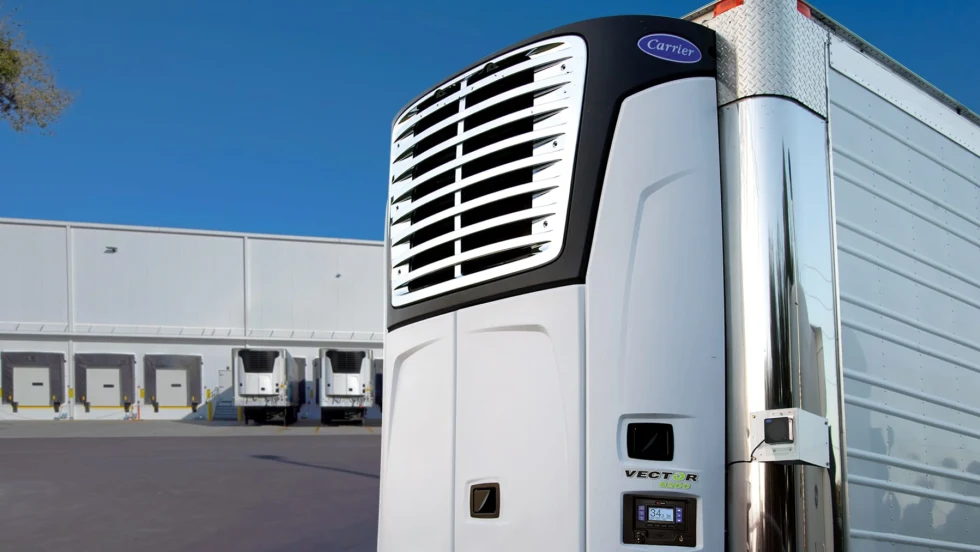
Carrier Transicold Adds All-Electric TRU for Stationary Cold Storage
Carrier Transicold’s new Vector 8200 all-electric transport refrigeration unit gives fleets a diesel-free option for temporary refrigerated and frozen trailer storage.
Read More →
A Closer Look at Kenworth’s Electric T880E Vocational Truck [Video]
Learn more about Kenworth's T880E battery-electric vocational truck at the Paccar Technical Center, including its range, applications, upfitting considerations, and PTO options, in this HDT Spotlight video.
Read More →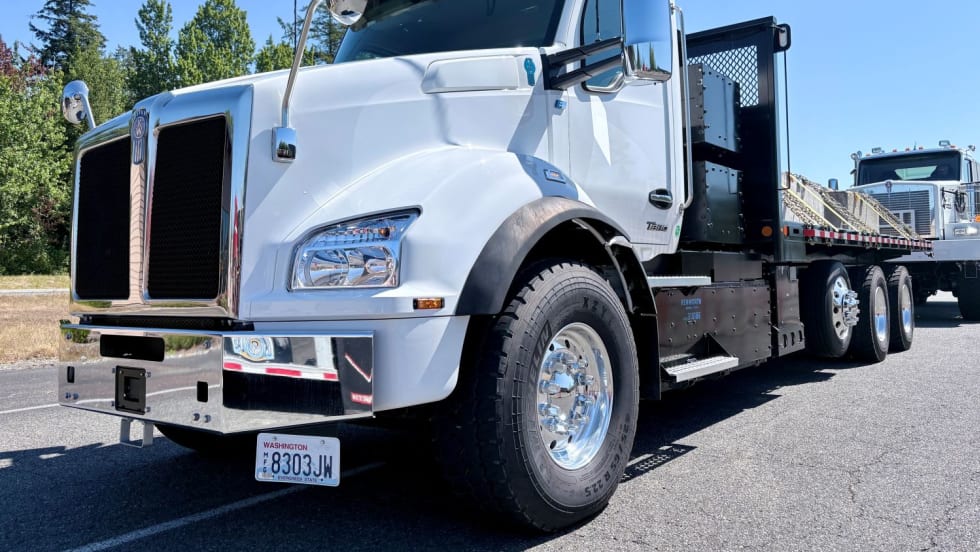
Kenworth T880E Brings EV Power to Vocational Trucks
A closer look at the Kenworth T880E’s range, charging, powertrain and upfit options — and where fleets are showing the most interest.
Read More →
What the U.S.-Canada Trade War Means for Trucking
Escalating U.S.-Canada tariffs could disrupt cross-border freight, reduce truck volumes, raise costs, and create new uncertainty for carriers on both sides of the border.
Read More →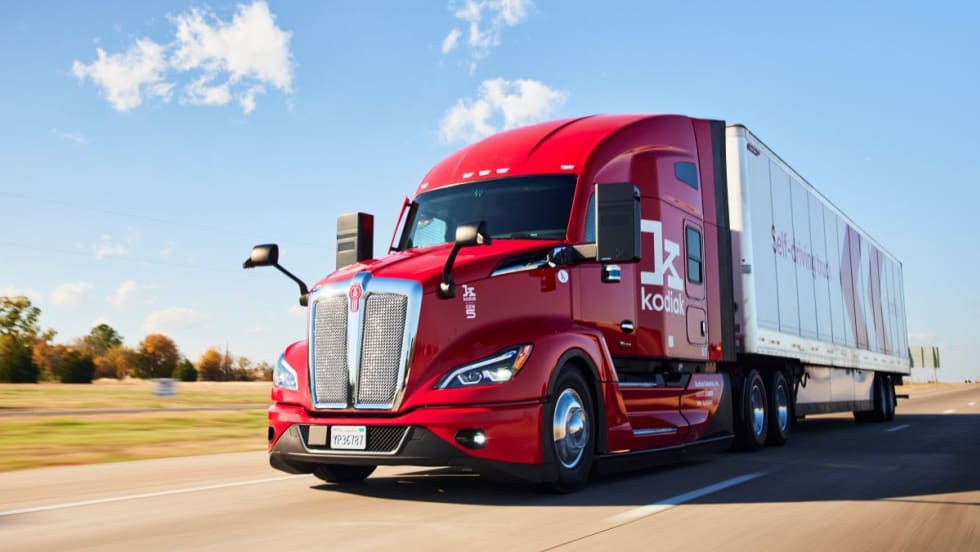
Autonomous Truck Testing Moves Ahead in California as Teamsters Challenge Rules
California has begun permitting heavy-duty autonomous truck testing, with Aurora and Kodiak among the first to receive approval, as the Teamsters sue the DMV over the new regulations.
Read More →
Behind the Wheel of the New Mack Anthem [Video]
HDT takes the new Mack Anthem around Mack’s Pennsylvania test track to see how its driver-focused design, technology, visibility and handling perform from behind the wheel.
Read More →
DTNA Plans New U.S. Truck Plant as Manufacturing Footprint Shifts
Daimler Truck North America is evaluating sites for a new assembly plant expected to open in 2029 while winding down operations at its longtime Portland manufacturing facility.
Read More →