




9 Ways to Make Your Numbers Count
When Randy Seals, customer advocate for McLeod Software, managed operations for a trucking company years ago, his boss would come in month after month asking the same question: "How are we doing?" Seals would respond, "Looks like we're doing great." He wasn't lying. They were moving a ton of freight
When Randy Seals, customer advocate for McLeod Software, managed operations for a trucking company years ago, his boss would come in month after month asking the same question: "How are we doing?" Seals would respond, "Looks like we're doing great." He wasn't lying. They were moving a ton of freight.
Inevitably, accounting would come in and say, "Randy, the numbers don't look so good." Seals wondered his this could be. As far as he could see, things looked good.
Eventually he realized he needed to see full picture. Not only did he need more data, but he also needed to know how to manage it in the right way. Here are a few tips Seals and other software providers and carriers suggest for how fleets can more efficiently use data to increase their bottom lines.
1. Start with
the big picture
Before you dive into the details, such as what type of data you want to see or what system you'll use to manage it, determine your fleet's primary goal, says Jack Jones, vice president of truckload product development for Transportation Costing Group, which offers costing and profitability management software
"The first thing any carrier should do is figure out what they're trying to accomplish," Jones says. "Are you trying to manage operating efficiency? Safety performance? Cost control? Something else entirely? If a carrier can answer that question, then they can look at it from an objective perspective."
Jones gives an example of a TCG customer that decided it wanted every conversation at every level in the company to include the topic of profitability. "They knew it was first and foremost their goal," he says.
2. Foster
communication
To get the right data to the right people, communication among departments is key.
Christian Schenk, vice president of product marketing for Xata, says one of the biggest mistakes he sees fleets make is not sharing information internally. "It comes down ensuring the data is making it back to the people who can leverage it," he says.
Al Uritis, CEO and co-founder of Operating Tax Systems, a transportation tax and consulting company, says it's helpful to have everyone together to bridge gaps and talk about what each department needs.
"What we like to do is schedule a meeting ahead of time and say 'I want someone from finance, I want someone from maintenance, driver training, accounting, dispatch, operations,'" Uritis says. "It's amazing. Between back office and operations, you'd be surprised how many walls are built up."
Mike Kelley, director of information technology for Mesilla Valley Transportation, a 1,200-truck long-haul dry-van carrier in the Southwest, says one of the company's mechanics years ago mentioned how helpful it would be to get fault code information from trucks. "That mechanic instigated the consumption of that data," Kelley says.
3. Adjust for size
(and vocation)
Take into consideration your size and vocation.
"A truckload carrier that normally runs between New York and California is going to be different than a spoke-and-hub operation, which has totally different approach," says OTS's Uritis.
Data management will be different for LTL fleets than truckload fleets.
"[For LTL], there could be hundreds of shippers on a particular schedule," says Ken Weinberg, vice president, Carrier Logistics Inc., which offer LTL transportation software. "If it's discovered a schedule is not paying its way, the fleet has to look at customers to see which ones are profitable and which ones aren't, but it's doable."
While large fleets might have IT departments that can dig deeper into data and do additional analysis, smaller fleets usually don't have that luxury.
"The best thing they can do if they don't have someone in-house is reach out and find a consultant who understands not only numbers but also how those numbers relate to service," says Kevin Avery, senior consultant at Carrier Logistics Inc.
Xata's Schenk advises small fleets to think about simplicity. "[Smaller fleets] don't want 5,000 reports, they want 15," he says. "They may think they want 5,000, but that may not advantageous or affordable."
4. Interact only with what you need
Just because the data is in front of you doesn't mean it's useful to you at that particular moment. Schenk recommends managing by exception.
"If you need to talk to 40 drivers, only look at information for 40, not 1,000," Schenk says. "You don't need to look at all the data if only 5% needs your attention."
Jim Sassen, senior manager, product marketing with Qualcomm Enterprise Services, says a great way to do this is to set up alerts for what you want to see and when. "It sends a text or email saying there's a performance issue," he explains. "It's pushing information to you, which allows you to be more efficient."
Sassen says to make sure the information is only going to the people who need it. "If they're a safety manager, they may not want [or need] to see a bunch of information about fuel."
5. Get information as soon as you can
A lot of day-to-day fleet operations happen too quickly to rely on old information, which is why a lot of systems offer fleets data in "real time."
"In trucking, you no longer have the option of waiting around to see how your loads went last week," says McLeod's Seals. "You need to have your finger on the pulse of operations today. "
This applies to safety especially. "Some of these large fleets will get hundreds of violations during the day," says Steve Bryan, CEO of Vigillo, which offers CSA scorecards. "You can't really manage this stuff unless you're looking at it all the time."
Qualcomm's Sassen uses hard braking as an example. "If someone hard brakes five times in a minute, you want that info right away so you can reach out to the driver, especially for fleets carrying cargo."
6. Know how your
information is connected
If one of your numbers isn't right, you need to understand why before you can fix it. Understanding how your data is connected, McLeod's Seals says, can help you discover the basic issues that are affecting those numbers.
"I call it the Zen of trucking," Seals says. "All this stuff is connected, and a lot of times folks forget that. "
Say you see your deadhead jump 4% in just a few hours. You check and see that your staff took loads that are out of their lane, and when you ask them why, they say it's because they were feeling desperate to book more freight. By digging deeper and finding connections, you recognize the issue and are now able to respond to it.
7. Let your
employees know
the score
Seals compares fleet operations to a football game - but in a football game, he says, players can look up at the scoreboard to see how the game's going.
"You've got to let your folks know what the score is so they know if they're winning or losing," he says. "Make that visual day after day."
Louis McAnally, vice president, operations for PeopleNet, says one customer started measuring driver fuel performance and posting the information for drivers to see Monday morning. "After a few weeks, drivers were surrounding that poster looking for their name and how they were performing."
Mesilla Valley Transportation uses motorcycles to better fuel performance. Every quarter, they give away a Harley Davidson to the driver with the best mpg. For the driver with the best mpg for the year, the company awards a $25,000 bonus. "It's competitive," Kelley says. "I know of drivers who won't use A/C or heat in the cab unless they really have to because it uses fuel."
8. Set achievable goals
It's important to make sure the goals you set are reachable.
Setting goals for your fleet is like weight loss, Seals says. "Let's talk about losing a pound a week, not a 100 a year."
Seals recommends taking a look at your data history to set those goals
More Fleet Management
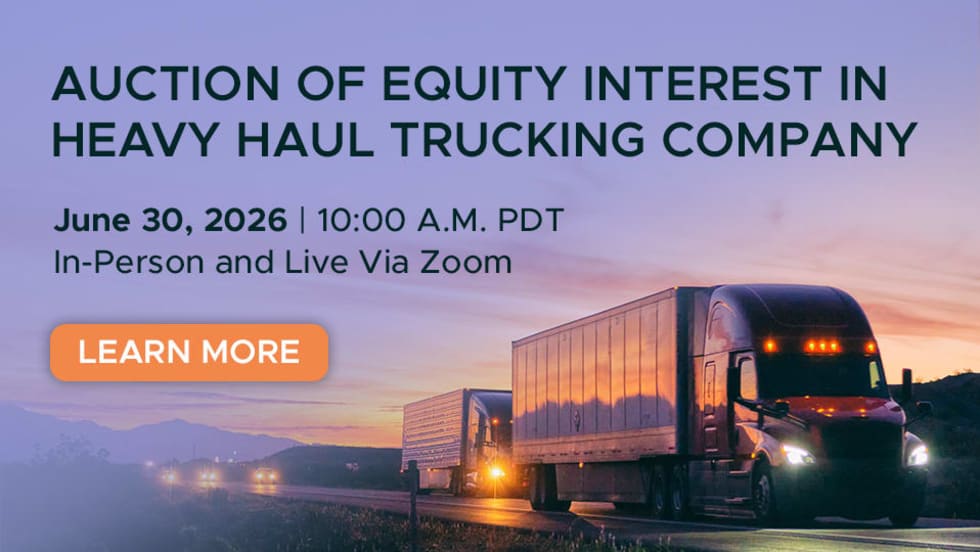
AUCTION OF EQUITY INTEREST IN HEAVY HAUL TRUCKING COMPANY!!
Mark your calendar: June 30, 2026 (10:00 a.m. PDT). MagnaTrans, LLC, a California limited liability company doing business as Magna Transportation Group is going to auction! Bid on a 37.5% ownership interest in this Rancho Cucamonga-based heavy haul and over-dimensional trucking company operating across California, Oregon, and Arizona. The equity interest will be sold to the highest bidder or bidders under Article 9 of the Uniform Commercial Code at 10:00 a.m. PDT.
Read More →
Volvo Trucks Adds Unattended Over-the-Air Software Update Capabilities
The latest evolution of Volvo’s over-the-air update technology allows software updates to run while trucks are parked, helping fleets keep vehicles current without disrupting operations.
Read More →
How Waste Connections is Using Data, Telematics, and AI
How do you manage and maintain more than 18,000 connected trucks? Data. Lots of it.
Read More →

Why Fleet Data Matters More Than Ever at Waste Connections [Watch]
Waste Connections' Chuck Palmer explains how telematics, predictive maintenance, safety analytics, and AI help keep vehicles on the road and drivers safe in this episode of HDT Talks Trucking.
Read More →
NMFTA Launches Free, Anonymous Cybersecurity Threat Report Portal
Organizations are encouraged to anonymously report freight fraud, cargo crime, and cyber threats while gaining visibility into incidents reported across the transportation sector.
Read More →
AI Can Optimize a Fleet. Can It Replace Human Judgment?
Fleets fear falling behind if they don’t adopt AI quickly enough. They also fear what happens if the technology makes the wrong decision.
Read More →
Jamie Hagen Gets Real About Running a Small Fleet in an Uncertain Economy
Small fleet owner Jamie Hagen says new legal risks, volatile fuel prices, and a changing freight market are forcing small carriers to rethink how they operate — and what they can afford.
Read More →
Jamie Hagen Gets Real About Freight, Fuel Prices, Safety, and Small-Fleet Survival
Running a small trucking fleet right now isn’t easy, especially right now. And Jamie Hagen doesn’t sugarcoat it.
Read More →
Jamie Hagen Gets Real About Freight, Fuel Prices, Safety, and Small-Fleet Survival
Running a small trucking fleet right now isn’t easy, especially right now. And Jamie Hagen doesn’t sugarcoat it.
Read More →
Data Lock‑In or Integration Lock‑Out?
Data fragmentation is costing dealerships, OEMs, fleets, and upfitters millions. Here’s why interoperability may be the fix the trucking industry needs.
Read More →