




5 Tips for More Efficient Refrigeration of Cargo
How can motor carriers reduce energy consumption while maintaining the temperatures required for safe transport of perishable products by truck or tractor-trailer?

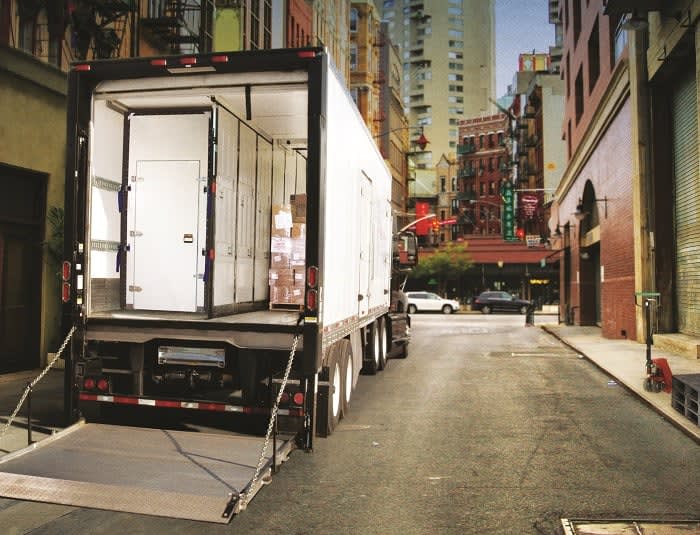
Energy-saving strategies help TRUs work better.
Photo: Utility [From HDT files]
With summer weather seemingly getting hotter every year, how can motor carriers reduce energy consumption while maintaining the temperatures required for safe transport of perishable products?
There are several factors that can impact energy consumption throughout the process of transporting temperature-sensitive goods.
Sid Gnewikow, product manager – small truck, Thermo King Americas, has the following suggestions. While these refer to the cargo box of refrigerated straight trucks, they hold true for refrigerated trailers, as well.
1. Precool Your Refrigerated Trailer or Cargo Box
One way to maximize energy efficiency is by precooling the box before loading perishable items.
“It is important to load the product at the optimal temperature so the reefer is not trying to ‘cool’ the product."
2. Don't Waste Energy During Deliveries
Use door switches to shut the TRU off when doors are open during the delivery of goods.
You also can use air curtains to hold the cold air in and prevent warm ambient air from entering the box when doors are open.
3. Spec Enough Insulation
Using adequate insulation and/or increasing insulation thickness to maintain temperatures reduces the electrical load for cooling.
4. Keep Refrigerated Trailers and Trucks in Good Repair
“It is also vital to conduct proper preventative maintenance of the vehicle box such as ensuring door seals are in good condition, the use of 'kazoos' on drain ports to prevent ambient air from entering, addressing any damage to the box such as ripped skin panels that would impact insulation properties, etc.,” Gnewikow says.
5. Consider Swing Doors vs. Roll-up Doors
Another way to decrease energy consumption is by using swing doors in place of roll-up doors on the cargo box, Gnewikow says.
More Fuel Smarts

How Volvo Updated Its D13 for EPA 2027 [Watch]
Volvo’s updated D13 promises lower emissions without sacrificing performance or fuel economy. Take a closer look at what changed inside the engine in this HDT Spotlight video.
Read More →
Diesel Price Spike Shortens Payback for Natural Gas Trucks, Report Says
Energy Vision estimates fleets could recover the higher purchase price of an RNG-fueled Class 8 tractor in 1.3 to 2.8 years under current fuel-price scenarios.
Read More →
Calstart Becomes Catalyst Mobility, Reflecting Broader Focus
Calstart is now Catalyst Mobility, reflecting the nonprofit’s growing national role in clean transportation, including zero-emission trucks, infrastructure and incentive programs.
Read More →

Record Diesel Prices Squeeze Trucking Fleets
Average U.S. diesel prices have climbed to nearly $6 a gallon, surpassing the 2022 record as tight refinery capacity and Middle East disruptions keep fuel costs elevated.
Read More →
How Fuel Delivery Shapes Engine Performance
Fuel delivery depends on more than what happens at the injector. For fleet, maintenance and technical professionals, looking at the full path from pump to injector can provide useful context for understanding engine performance.
Read More →
East Coast Port Launches $45M Electric Truck Push
The Port Authority of New York and New Jersey announced millions in incentives for zero-emission drayage trucks, yard tractors, and new charging hubs near the port.
Read More →
California Bill Could Shed Light on Electric Truck Prices
Why do battery-electric Class 8 trucks remain so expensive? A California bill headed to Gov. Gavin Newsom would give fleets and state agencies more visibility into what manufacturers charge.
Read More →
Detroit Opens Orders for EPA 2027 Engines
Detroit isn’t starting from scratch to meet EPA 2027 diesel emissions standards. Its Gen 6 DD13 and DD15 engines keep much of today’s platform while updating the fuel and aftertreatment systems.
Read More →
Zero-Emission Truck Corridor Planned for West Coast
California, Oregon, Washington, British Columbia and Baja California are coordinating plans for truck charging and hydrogen fueling from Canada to Mexico.
Read More →
A Closer Look at Kenworth’s Electric T880E Vocational Truck [Video]
Learn more about Kenworth's T880E battery-electric vocational truck at the Paccar Technical Center, including its range, applications, upfitting considerations, and PTO options, in this HDT Spotlight video.
Read More →