




About the Author: Lynn Lyon is the director of sustainable transportation for U.S. Gain, a developer and distributor of alternative fuel and renewable energy. She has managed a corporate fleet transition to alternative fuel with new truck technology and fueling infrastructure. Lyon now partners with shippers and carriers to find their best path to lower emissions. This article was authored and edited according to the standards of HDT’s editors to provide useful information to our readers.
3 Steps to Implement a Polyfuel Strategy for Your Fleet
These three steps will help fleet managers make progress in achieving a polyfuel strategy to meet long-term emissions and operations goals.
by Lynn Lyon, U.S. Gain
June 24, 2022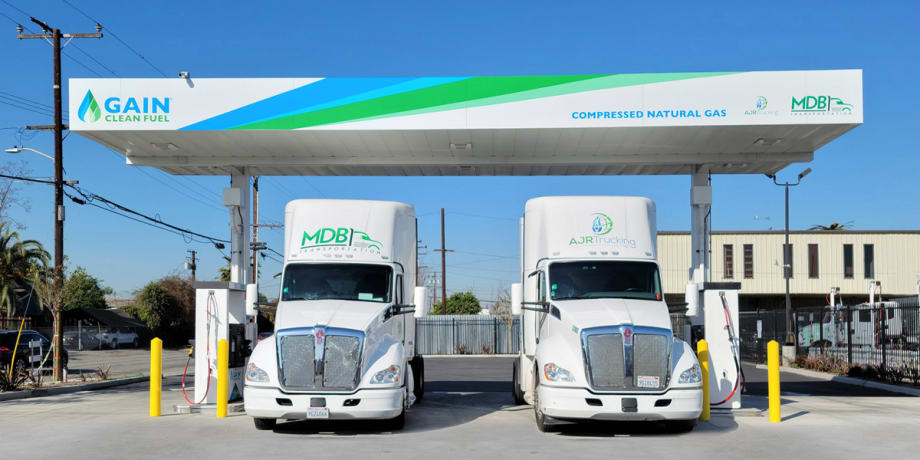
With a fleet inventory, emissions baseline, and the right partners, companies can address larger, strategic business questions
Photo: U.S. Gain
4 min to read
Fleet managers must account for much more than getting product from Point A to Point B on time and within budget. They are being asked to transition their fleet to low or zero-carbon fueling alternatives. Is a polyfuel strategy the answer?
Pressure to transition to alternative fuels is being driven by external forces including investors, customers, and their supply chain—urging companies to comply with new (or proposed) laws and regulations as well as internal stakeholders trying to align decarbonization goals with market expectations and corporate social responsibility practices. Fleet managers are tasked with lowering their company’s direct, or Scope 1 emissions—executed by reducing reliance on conventional fossil fuels like diesel and gasoline. They’re also having to account for Scope 3 emissions, or those created by others throughout their supply chain.
A polyfuel strategy considers a broad range of technologies and fuel sources that may be used in parallel paths to ultimately achieve emission goals. To many fleets, this can seem overwhelming and complex.
Establishing a long-term emissions reduction goal is an important first step but solving for where to begin in putting this into practice involves many considerations. Some fleet managers immediately look to battery-electric vehicles because it seems like a common selection, favored by the market. However, they soon realize that full fleet electrification is not as simple as it seems. There are no one-size fits all alternative fuel solutions as different fleets require different approaches that may include BEVs along with renewable natural gas, hydrogen-fuel-cell-electric vehicles (FCEV), renewable diesel, renewable propane, and biodiesel.
For fleets looking to start their decarbonization journey, three steps can help them begin crafting their long-range polyfuel strategy—one that includes a strategic portfolio of alternative fuels that meets their current needs and can easily scale to accommodate future growth. How to get started?
1. Create a Fleet Inventory
A fleet inventory is more than just a vehicle count; it documents essential information about the fleet, such as:
- How many vehicles are there?
- What types of vehicles are being used?
- What are their fuel sources?
- What is the average fuel economy?
- What is their typical daily mileage?
- How are they being used?
This is important because it provides the first level of data and variables associated to current state operations. It also explains the means to an end that have developed with the fleet based on recent history and the expected lifecycle. The inventory can also be insightful to determine if any existing vehicles are retrofit candidates for alternative fuels. hybrid electric.
2. Establish an Emissions Baseline
Fleet decarbonization is a journey, one that won’t be solved for overnight. To ensure progress can be tracked and reported, an emissions baseline provides fleet managers a starting point to measure reductions.
After a fleet inventory is completed, the information can be used to establish an estimated emissions footprint. This figure can be calculated either manually or based on an electronic data log. The objective here is to develop a starting point for ongoing measurement—making it easier to gauge progress in the months and years ahead as a polyfuel strategy is fully implemented.
3. Develop Trusted Partnerships
Fleet managers who understand the importance of a strategic approach still face the question of “Who’s going to do this work?” They’re often already tasked with ensuring their fleet is on the road, deadlines are met, and operational efficiency isn’t sacrificed, so it’s important to remember the weight of working towards emission reductions doesn’t have to fall solely on them.
Developing trusted partnerships is key in crafting and executing a fleet transition. An external partner can help create a fleet inventory and baseline as well as assist with long-term strategy—allowing internal team members to address changes to policies, procedures, and operations. Large fleets with access to corporate resources may be able to partner with their corporate sustainability office to help in the transition. In short, don’t be afraid to lean on both internal and external resources for help.
For additional guidance, look to the broader network of businesses and industries that are addressing decarbonization such as Pepsi, Amazon, and UPS with polyfuel strategies. An emerging online community can also be found in the Science Based Targets initiative (SBTi)—which drives ambitious climate action in the private sector by informing organizations on how to set science-backed reduction targets.
These three steps will help fleet managers make actionable progress. With a fleet inventory, emissions baseline, and the right partners, companies can address larger, strategic business questions, such as:
- Where do new and emerging technologies fit into a polyfuel strategy?
- Should fueling and charging stations be private (for your fleet only) or public (for others to use)?
- Can infrastructure partners help execute a plan and navigate the legal, regulatory, and policy issues at local, state, and national levels?
A polyfuel strategy will not only enable fleet managers to select the best mix of fuels for their fleet today, but into the future. The journey toward lower emissions can seem overwhelming, but it doesn’t have to be. Embracing considerations unique to an organization can lay the groundwork in developing a multi-step, data-backed approach for transitioning to optimal alternative fuel applications. By transitioning their fleet today, they can meet long-term emissions and operational goals while developing the people, processes, technologies, and infrastructure to support their operations.
Subscribe to Our Newsletter
More Fuel Smarts

Wex Adds Cardless Fuel Payments for Over-the-Road Customers
A new fuel card feature for Wex customers offers convenience and security.
Read More →
New California Law Could Shed Light on Electric Truck Prices
Why do battery-electric Class 8 trucks remain so expensive? A California bill signed by Gov. Gavin Newsom would give fleets and state agencies more visibility into what manufacturers charge.
Read More →
How Volvo Updated Its D13 for EPA 2027 [Watch]
Volvo’s updated D13 promises lower emissions without sacrificing performance or fuel economy. Take a closer look at what changed inside the engine in this HDT Spotlight video.
Read More →

Diesel Price Spike Shortens Payback for Natural Gas Trucks, Report Says
Energy Vision estimates fleets could recover the higher purchase price of an RNG-fueled Class 8 tractor in 1.3 to 2.8 years under current fuel-price scenarios.
Read More →
Calstart Becomes Catalyst Mobility, Reflecting Broader Focus
Calstart is now Catalyst Mobility, reflecting the nonprofit’s growing national role in clean transportation, including zero-emission trucks, infrastructure and incentive programs.
Read More →
Record Diesel Prices Squeeze Trucking Fleets
Average U.S. diesel prices have climbed to nearly $6 a gallon, surpassing the 2022 record as tight refinery capacity and Middle East disruptions keep fuel costs elevated.
Read More →
Sponsored•September 9, 2026
How Fuel Delivery Shapes Engine Performance
Fuel delivery depends on more than what happens at the injector. For fleet, maintenance and technical professionals, looking at the full path from pump to injector can provide useful context for understanding engine performance.
Read More →
East Coast Port Launches $45M Electric Truck Push
The Port Authority of New York and New Jersey announced millions in incentives for zero-emission drayage trucks, yard tractors, and new charging hubs near the port.
Read More →
Detroit Opens Orders for EPA 2027 Engines
Detroit isn’t starting from scratch to meet EPA 2027 diesel emissions standards. Its Gen 6 DD13 and DD15 engines keep much of today’s platform while updating the fuel and aftertreatment systems.
Read More →
Zero-Emission Truck Corridor Planned for West Coast
California, Oregon, Washington, British Columbia and Baja California are coordinating plans for truck charging and hydrogen fueling from Canada to Mexico.
Read More →