




2010 Truck Fleet Innovators: Jim Mickey, President/Co-Owner, Coastal Pacific Xpress
Jim Mickey insists he's not doing anything innovative. Trucking, he says, is a simple business: You show up on time and do a good job


Jim Mickey insists he's not doing anything innovative. Trucking, he says, is a simple business: You show up on time and do a good job.
"It's kind of embarrassing some days how simple it is," he says, even though his colleagues and customers laugh and shake their heads in disbelief.
But in a business where freight transportation is increasingly commoditized, Mickey takes being on time and doing a good job to new levels. Adapting a theme that worked well for FedEx, the co-owner of Coastal Pacific Xpress in Surrey, British Columbia, says his company's the one shippers turn to when "it absolutely positively needs to be done," and done right.
Mickey says the key to providing that level of customer service is the driver.
CPX has actively gone after freight that requires a better person behind the wheel than what's considered average. This allows the company to get higher rates, which in turn allows it to pay its drivers better, which in turn helps make sure its driver workforce will provide the kind of service the shippers are paying for. Before the recession, CPX was paying its drivers 10 percent more than the industry average. Although the company had to back away from that about a year ago when shippers were begging the company to help them find ways to cut costs, Mickey says confidently, "We'll get it back."
And it's not just better pay. "We set out to hire better and to reward the best, and we help duke it out on behalf of our drivers," Mickey says, when it comes to things like excessive waiting times to load and unload and shippers showing respect for drivers. Dispatchers are not allowed to raise their voice, coerce, hold a grudge or shade the truth with drivers. Electronic logs help keep everyone accountable and on the same page.
"I say, if I were a driver, how would I feel?" Mickey says. "If you can get a whole culture thinking about fair treatment to the driver," it makes a difference, he says.
"It amazes me that people abuse their drivers and expect to have a quality product," Mickey says. "I think we [as an industry] started to rely on a slick sales force to bring business in and forgot about having a good driver."
CPX currently has about 200 company drivers and about 200 leased owner-operators, as well as a pool of additional drivers available during the busy season.
The reluctant trucker
Although Mickey grew up in the trucking business - "Any ugly dirty old job that nobody else will do gets dumped on the boss' kid" - when his father was ready to retire in 1987, Mickey did not want to take over the business. Trucking in Canada was just going through its deregulation pains. "It looked like a pretty poor prospect," Mickey recalls. "Way too much work for nowhere near enough money." So his dad sold the Yukon-based business, Mickey moved south, and for the next 12 years worked for himself and had almost nothing to do with the trucking industry.
In most businesses, Mickey says, you figure out your costs, add on your profit, and people buy or they don't buy. Trucking, he says, is a business that would perplex an accountant if you were trying to invent the industry today.
But in the spring of 2000, things were looking up, and Glen Parsons convinced him to go in 50/50 to found Coastal Pacific Xpress. (Parsons sold his stake in the company last year to Scott McIntosh, who was the company's Prairie Region general manager.)
"Things had gotten so bad, I thought anyone with a solution to the three biggest problems - insurance, financing, and the driver shortage - would be an overnight success. Likely the largest explanation for any success we've had is how we dealt with those three things long before they were on most people's radar," Mickey says. "We made it a good place for the truck driver to show up and work, and the rest of it pretty much took care of itself."
With good drivers that can offer a higher level of service, CPX is able to go to shippers and offer to take their toughest lanes, the ones that are truly a "pain in the backside." Mickey says he tells customers, "Give us the junk that nobody else will do for you. Once we perform spectacularly on their toughest stuff, every time the other guy stumbles, they'll ask themselves, why are we using this guy when we could be using CPX?" The company's growth, he says, is largely due simply to saying 'yes' a lot to loads other fleets wouldn't.
Drivers for life
When Mickey meets new drivers during training and orientation, he looks them in the eye and tells them that as far as the company's concerned, they're hired for life.
The screening and hiring process are exacting, and the company expects a lot from its drivers. New hires are expected to perform at the same level as veteran ones.
"Trucking's not easy. It's not for somebody who's looking for a soft ride." The company monitors everything from fuel economy to panic stops and posts the results for all drivers to see. The worst performers each month are given extra attention and education to make them perform better. "You're constantly moving the average higher, because you're constantly paying attention to the guys that need help."
But the company gives a lot in return.
"My job is to give them an environment that does not cause them to think it's going to be better at another outfit," Mickey says. As a result, even in the worst driver shortage years of the last decade, CPX has never seen more than a 30 percent turnover rate in its primary fleet.
The "reluctant trucker," as he calls himself, says the last 10 years, despite "tremendous challenges and frustrations," have been "deeply satisfying." And he's very optimistic about the not-too-distant future.
"We're going to have such a mother of a labor shortage a year from now it's going to take your breath away." And CPX is uniquely positioned to take advantage of that. "In the markets we serve, I'm as optimistic today as at any point I've been in the last 10 years. The people we serve and the markets we serve have voted with their feet to maintain quality relationships with guys like ourselves."
From the March 2010 issue of Heavy Duty Trucking.
More Fleet Management

2026 Blueprint for Countering Smarter Supply Chain Theft
Cargo theft is no longer just the cost of doing business. It's a multi-billion-dollar criminal enterprise exploiting vulnerabilities across your fleet, drivers, and supply chain.
Read More →
How Telematics Improves Visibility, Control, and Performance in Refrigerated Fleets
Explore how telematics help refrigerated fleets improve visibility, uptime, efficiency, compliance, and cargo protection across connected cold chain operations.
Read More →
What the U.S.-Canada Trade War Means for Trucking
Escalating U.S.-Canada tariffs could disrupt cross-border freight, reduce truck volumes, raise costs, and create new uncertainty for carriers on both sides of the border.
Read More →

What Are Trucking’s Top Concerns for 2026?
The American Transportation Research Institute wants to know what's worrying trucking fleet managers, drivers, and other stakeholders in its annual Industry Issues survey.
Read More →
American Trucking Associations Looks for a New Leader
ATA President and CEO Chris Spear abruptly left his job at the association on August 21, at a pivotal time for the trucking industry.
Read More →
Public Wi-Fi Cybersecurity Risks: How Truck Drivers and Fleets Can Protect Their Data
Public Wi-Fi can expose truck drivers and fleets to credential theft, malware, and other cyber threats. Here’s how to reduce the risk on the road.
Read More →
For Nicky Cupp, Fleet Innovation Starts With Frustration
HDT Truck Fleet Innovator Nicky Cupp turns everyday pain points at Fraley & Schilling into opportunities for better technology and smarter processes.
Read More →
Adam Buttgenbach’s Approach to Electric Trucks: Start With Where They Fit
HDT Truck Fleet Innovator Adam Buttgenbach helped PepsiCo build one of North America’s largest EV fleets by focusing on where electric trucks make operational sense.
Read More →
Deen Albert: Let Automation Do the Math, People Make the Decisions
HDT Truck Fleet Innovator Deen Albert makes sure people are still at the heart of operations at Grand Island Express, even while adopting artificial intelligence tools. AI-assisted dispatch helped boost revenue 25% with the same number of trucks.
Read More →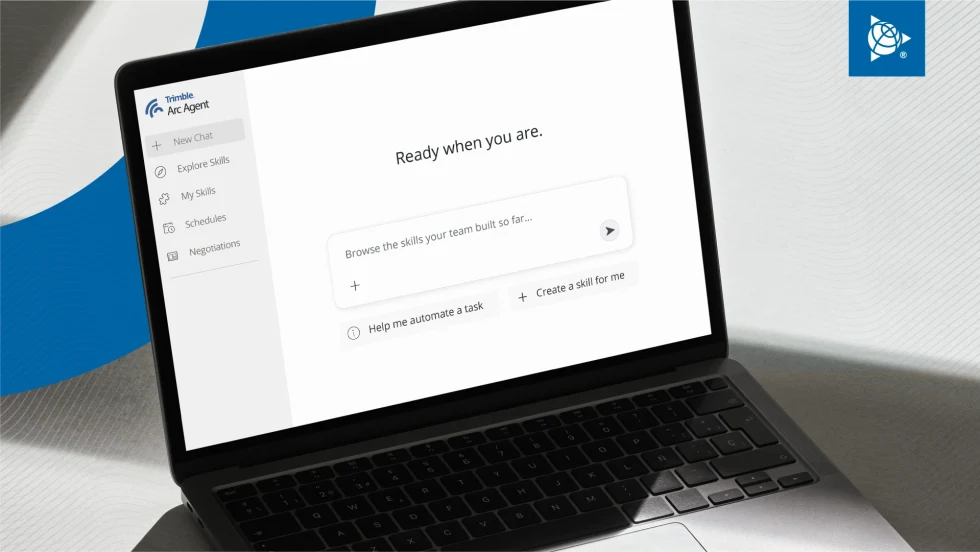
Trimble’s New AI Agent Takes Aim at Fleet Back-Office Busywork
Arc Agent works across Trimble TMS products to automate repetitive tasks such as freight orders, maintenance, invoices, fuel costs and more.
Read More →