




121 Ways to Save Fuel: Idle Reduction
From the equipment you spec and maintain, to the fuel you buy, to driver training and incentives, you’ll find tips for nearly any type of fleet.
71. Use an idle shutdown timer
Idle shutdown timers can help and are used extensively by larger fleets, but they do have some drawbacks when it comes to driver comfort and satisfaction. Ambient temperature override programs can allow the engine to idle in extreme low and high temperatures.
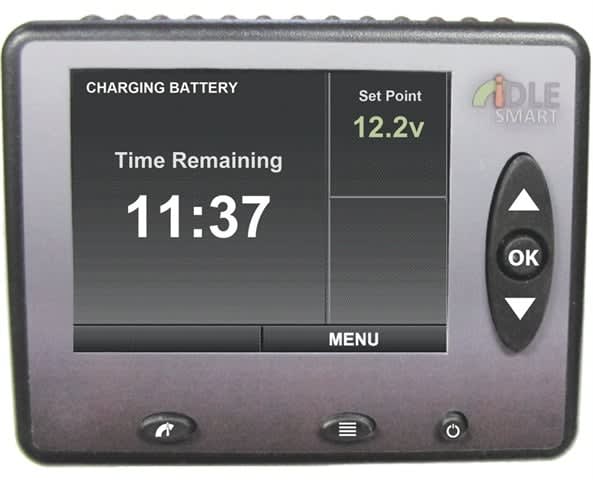
Some more sophisticated solutions, such as IdleSmart, will shut down the engine until the cab reaches certain pre-set temperatures, then run the engine for a few minutes to help warm or cool the sleeper and charge the batteries.
72. Use an auxiliary power unit
There are many auxiliary power units available, some fired by diesel, others by battery. You can get them from the truck makers, refrigeration unit manufacturers, and many independent companies. The added weight is a problem for some fleets, and if you run in California, there are emissions regulations to consider with diesel units.
73. Don’t try to keep the cab cool (or warm) while you’re gone
When parking for a rest or lunch break, shut off the engine, climb out and lock the doors behind you. When you return, restart the engine, turn on the HVAC, then do a walk-around inspection. By the time you’re done, the cab will be comfortable again.
If you’re a fleet manager trying to make sure drivers do this, technology can help. Idle Smart and Temp-A-Start continuously monitor interior and ambient temperatures, and start and stop a vehicle to maintain desired cabin temperature and reduce fuel consumption. They also monitor battery voltage levels, and will automatically start the vehicle’s engine to recharge batteries.
74. Save your batteries for hotel loads
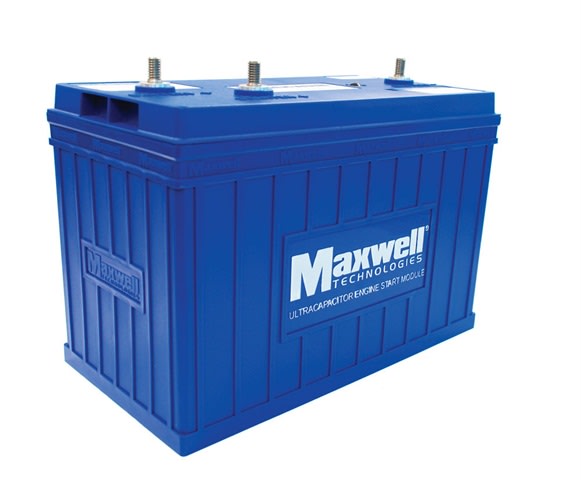
Advanced glass mat batteries, or deep cycle batteries are best for hotel loads, but will wear out prematurely when used as starting batteries. Consider switching from lead-acid batteries for starting to ultra-capacitor starting systems, and save the AGM batteries for hotel loads.
75. Turn off the engine whenever possible
Letting the engine run for more than 10 seconds without moving uses more fuel than it takes to restart the vehicle, says PHH Arval, and trucks with larger engines waste even more fuel while idling. Drivers should consider turning off their engines if they have stopped for more than a minute, except while in traffic. This action has minimal impact on the starter system.
The U.S. Department of Transportation estimates that medium-duty trucks burn about 2.5 billion gallons of fuel while idling each year, or 6.7% of the total fuel they consume.
For heavy-duty trucks, “A general rule of thumb is every extra 10% idle time equates to another percentage point in fuel economy,” says Aaron Peterson, chief engineer of vehicle performance at Navistar.
76. Stay comfortable without an APU
In moderately hot weather, try things like fans and screens for the windows for cooling. (If you’ve got the windows open, try to park away from other trucks and upwind from everyone so you don’t breathe their exhaust fumes.)
In cooler weather, try thick blankets or sleeping bags for warmth. Plug-in mattress pad heaters work well and will not drain good batteries.
77. Use auxiliary heaters and coolers
There are some heating and cooling options short of investing in a full-blown APU.
A direct-fire heater warms the engine block and provides heat to the cabin when the engine’s turned off, reducing the fuel used for idling by 75%, according to a report by Carbon War Room cited by Omnitracs.
There are also a few cooling solutions, such as Dometic’s auxiliary air-conditioning system that runs on 12-volt power from an onboard bank of batteries, and Webasto’s BlueCool Truck, which charges itself while the vehicle is in motion or can be plugged in to charge.
78. Harness the power of the sun
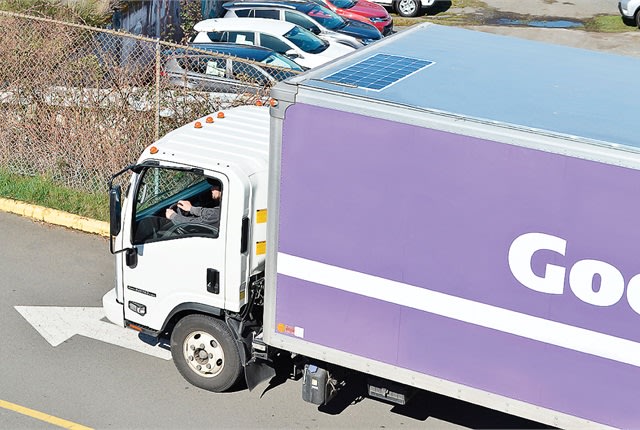
Still very new on the scene are ways to use solar panels to power auxiliary power units and liftgates instead of idling the engine.
At this year’s Mid-America Trucking Show, Solar Flex panels (thin, flexible, ultra-high-efficiency panels originally developed for the RV industry) were displayed at the Crosspoint Solutions ClimaCab booth to show how solar power can keep dedicated batteries in their cab-comfort systems fully charged and ready to start equipment.
A 53-foot trailer has the roof area to hold approximately fifty 100-watt Solar Flex panels and to generate about 5,000 watts, or about 280 amps, of DC power per hour. When combined with a Go Power inverter, a system can produce up to 3,000 watts of AC power per hour.
79. Set the parking brake, pull the keys
Get in the habit of pulling the keys and putting them in your pocket every time you set the parking brake. This way, idling will be minimized and you will always remember where your keys are, says LinkeDrive’s Jeff Baer.
80. Find out who’s idling too much
Technology makes it easy to find out which drivers are idling too much. If you use a GPS fleet management/telematics system, idle time alerts can automatically notify managers when any vehicle in your fleet idles over a designated period of time, notes NetworkFleet. In addition, reports can give you a summary of all idle time alerts that were triggered over a given time period.
81. Use electric standby for reefers
Perhaps the most significant fuel saver for refrigerated hauling is electric standby operation. By using standby power when the trailer is parked, product temps are maintained without burning diesel fuel at all.
Carrier Transicold’s Vector units have always included an electric standby feature, which provides 100% of the rated refrigeration capacity when the Vector unit is plugged into AC power. This can save 40–70%, due to the lower cost of electricity vs. diesel.
Since a large part of a refrigeration unit’s runtime can be for loading and unloading, the fuel savings over the course of a day can be significant when you can plug in at the dock.
Thermo King also offers reefers with plug-in capability, especially on recently introduced Precedent units.
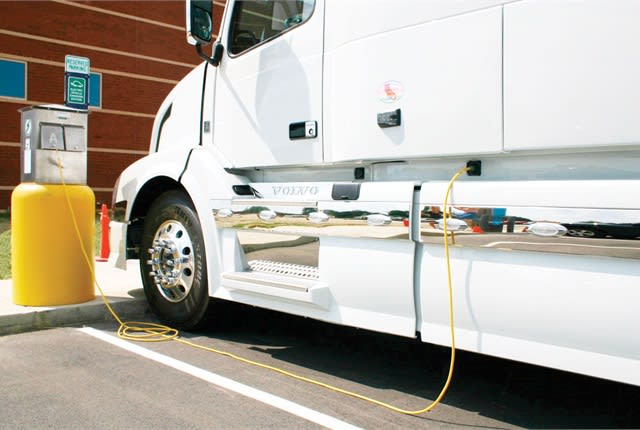
82. Use off-truck idle reduction options
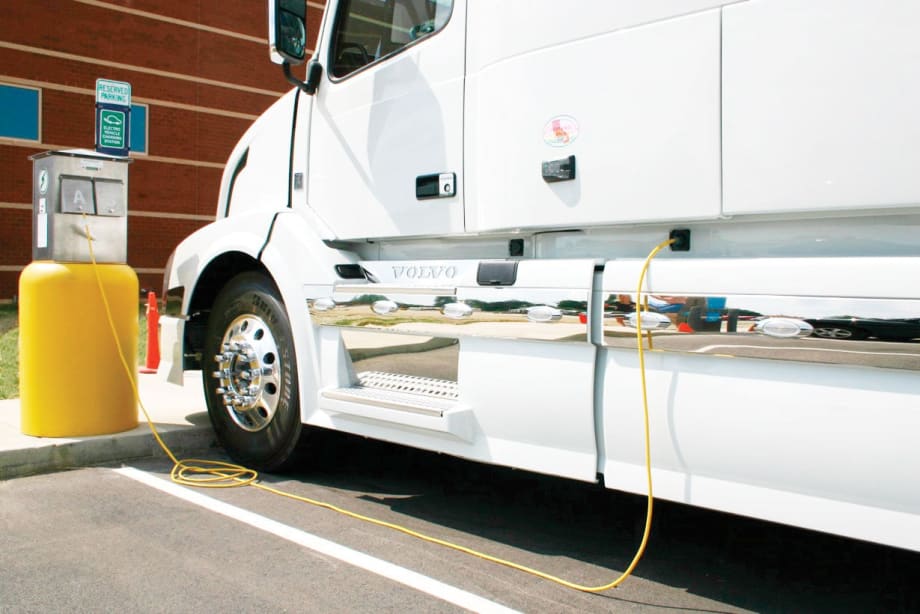
Shore power brings standard AC voltage into the truck cab so drivers can power devices for comfort and entertainment. Some trucks come equipped with shore power connections; others may need an inverter. Some APUs also have the option to plug in where available. The biggest disadvantage is there isn’t a large network of truckstops and other locations with shore power plug-ins, although it is growing. Shorepower Technologies has more than 60 locations, including all along the I-5 corridor from Seattle to San Diego.
If you have a terminal and/or warehouse network, you may want to install shore power infrastructure for your drivers to use.
IdleAir offers both shore power and systems that pump cooled or heated air into the cab through a special window adapter. There are more than 30 locations and another half-dozen in the works. AireDock is a similar system from American Idle Reduction, with 13 locations east of the Rockies.
RELATED: 121 Ways to Save Fuel
More Fleet Management

Color Match Smarter: Tools That Restore & Perform
For fleet managers and collision repair professionals keeping heavy-duty trucks on the road, getting the color right the first time isn't just about appearance — it's about efficiency, turnaround time, and bottom-line results. Discover how today's digital color tools are transforming the repair process from guesswork to precision.
Read More →
FMCSA Pauses Biennial-Update Enforcement Amid Motus Transition
Carriers whose updates were due on or after June 1 have more time, while FMCSA works to stabilize its new registration system and warns of phishing sites impersonating its new carrier registration system, Motus.
Read More →
2026 Blueprint for Countering Smarter Supply Chain Theft
Cargo theft is no longer just the cost of doing business. It's a multi-billion-dollar criminal enterprise exploiting vulnerabilities across your fleet, drivers, and supply chain.
Read More →


How Telematics Improves Visibility, Control, and Performance in Refrigerated Fleets
Explore how telematics help refrigerated fleets improve visibility, uptime, efficiency, compliance, and cargo protection across connected cold chain operations.
Read More →
What the U.S.-Canada Trade War Means for Trucking
Escalating U.S.-Canada tariffs could disrupt cross-border freight, reduce truck volumes, raise costs, and create new uncertainty for carriers on both sides of the border.
Read More →
What Are Trucking’s Top Concerns for 2026?
The American Transportation Research Institute wants to know what's worrying trucking fleet managers, drivers, and other stakeholders in its annual Industry Issues survey.
Read More →
American Trucking Associations Looks for a New Leader
ATA President and CEO Chris Spear abruptly left his job at the association on August 21, at a pivotal time for the trucking industry.
Read More →
Public Wi-Fi Cybersecurity Risks: How Truck Drivers and Fleets Can Protect Their Data
Public Wi-Fi can expose truck drivers and fleets to credential theft, malware, and other cyber threats. Here’s how to reduce the risk on the road.
Read More →
For Nicky Cupp, Fleet Innovation Starts With Frustration
HDT Truck Fleet Innovator Nicky Cupp turns everyday pain points at Fraley & Schilling into opportunities for better technology and smarter processes.
Read More →
Adam Buttgenbach’s Approach to Electric Trucks: Start With Where They Fit
HDT Truck Fleet Innovator Adam Buttgenbach helped PepsiCo build one of North America’s largest EV fleets by focusing on where electric trucks make operational sense.
Read More →