Over the years, manufacturers have designed vehicles and components to reduce weight, and fleets have tried many of them. From their wisdom, we offer a dozen lightweighting ideas for Class 8 trucks and tractors.
Diesel-powered trucks and tractors have gotten hundreds of pounds heavier in the last decade or so because of pollution-control equipment and bigger radiators. Paring tare weight can help make up for it.
Ad Loading...
A lighter vehicle costs a bit less to propel down the road, and more legal payload can be stacked, poured or piled aboard its body or in the trailer.
Lightweight components are priced higher than those made of standard materials, so it’s wise to calculate payback, in improved fuel economy and how many trips can actually be made fully loaded to generate the theoretical extra revenue. Also, are there any penalties in durability and longevity?
Ad Loading...
Over the years, manufacturers have designed vehicles and components to reduce weight, and fleets have tried many of them. From their wisdom, we offer a dozen lightweighting ideas for Class 8 trucks and tractors.
1. Choose a basic vehicle model that weighs less
Is the basic truck model the best one for the operation and what’s being hauled? A premium model may be standard with inherently lighter-weight components, like an aluminum cab. Is it therefore a wiser choice than something less pricey, which probably will come with a steel cab? Or can the money be better spent elsewhere?
2. Downsize the sleeper or day cab
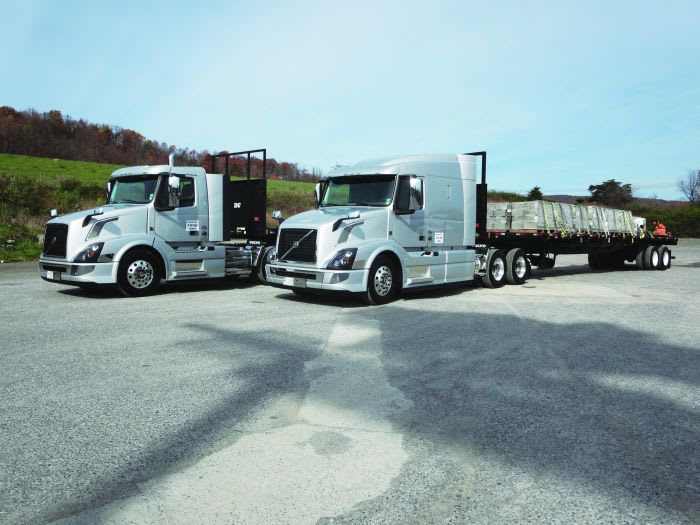
Is a day cab wiser than a sleeper cab? It is if few runs are (or are likely to be) overnighters. A large sleeper box weighs 1,500 or more pounds. If that much more product can be put in a tanker or on a flatbed most of the time, the cost of an occasional motel room may be cheap. As operators switch from long-hauling to regional runs, day cabs become more feasible.
If a sleeper is needed for extended runs, is a jumbo size really necessary? All other things being the same, a 60-inch-long box weighs 400 to 500 pounds more than a 42-incher. And the extra space will fill up with clothes closets, appliances and other stuff.
To attract and keep good drivers, a big-and-tall sleeper might seem necessary. But drivers understand what a large sleeper weighs and are likely to give up space in exchange for payload, especially if they’re paid a percentage of revenue instead of straight mileage.
Ad Loading...
Sleeper design can also matter. An integrated cab-sleeper structure saves several hundred pounds over a separate sleeper box of comparable living room. Without a cab wall or bulkhead between cab and sleeper, the integrated type also looks more spacious. On the other hand, a sleeper box can be removed if the operation changes into one favoring a day cab. Few integrated sleepers can be economically removed.
3. Invest in aero packages
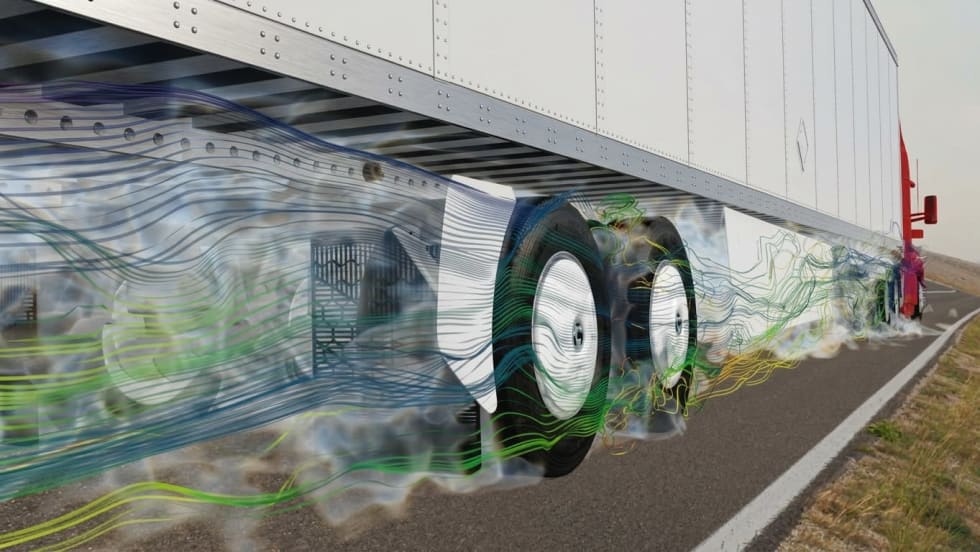
A road tractor that spends much of its time cruising at highway speeds should have an aerodynamically designed nose and cab, including mirrors. To this can be added upper and side fairings and cab extenders, with advanced designs now available from several truck builders. These have been perfected by computer research and wind-tunnel testing, and can save enough fuel to make up for their additional cost and weight.
But a tractor or truck that sits a lot or moves at urban speeds doesn’t need the aerodynamics, much less the weight that comes with them. Analyze the operation before ordering.
4. Consider smaller engines to save weight
Is 13, as in liters, your lucky number? Truck builders that have developed proprietary heavy diesels of that displacement think so.
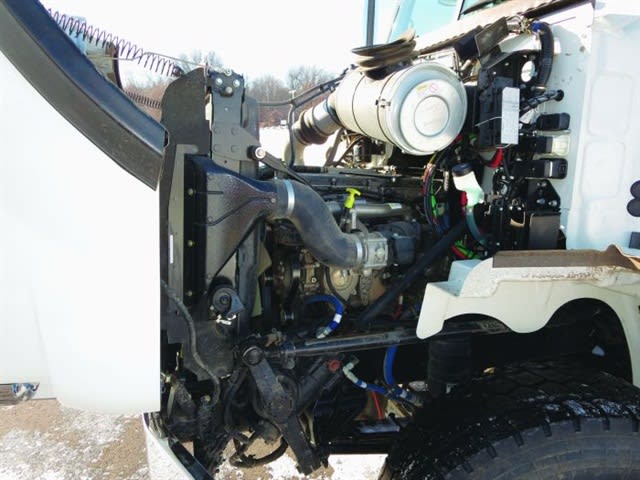
Modern 13-liter-class diesels now make all the power and torque that most operations need, and all that any reasonable driver could want. If 475 to 500 horses aren’t enough, what is? Keep output more moderate and you can save more weight with a less beefy driveline. One of these engines weighs 500 to 600 pounds less than a 15-liter model, and longevity seems good.
Ad Loading...
Heavy-duty 12-, 11- and 9-liter engines are also available from builders and from the sole remaining independent supplier, Cummins, that save even more weight and make decent power for certain applications and truck types.
However, there is still a place for big power diesels. Among them are long combination vehicles and heavy hauling, where gross weights regularly exceed the normal 80,000 pounds, and in hilly or mountainous terrain where uphill speeds must be quick to keep tight schedules. And if a guy simply must have 600 hp, then a 15- or 16-liter diesel is what he must get.
5. Spec a horizontal exhaust
A few pounds and some complexity can be saved by spec’ing a frame-mounted horizontal exhaust system instead of the vertical stack, with its extra brackets and piping.
The latest diesels burn so cleanly that exhaust can’t be seen or smelled. However, if aimed downward, the frame-mounted exhaust can kick up dust in gravel parking lots and the like. And the expensive diesel particulate filter is down in the road salt and grime, which can shorten its life. It also can get in the way of PTO equipment or if the transmission needs work.
6. Do you need that many batteries?
How many does the engine really need to crank it over? Will three or even two high-capacity batteries work instead of the traditional four? Maybe, especially with a smaller diesel. But remember that fewer batteries mean the charging system must work well all the time. Ask suppliers and colleagues.
Ad Loading...
7. Consider a 6x2 tandem
Twin-screw tandems have been the North American norm for many years, and can still provide the best traction in many circumstances. But the 6x2 tandem, which eliminates a second drive axle plus the inter-axle differential and the short drive shaft, is getting interest because it can save about 1,000 pounds, as well as deliver slightly better fuel economy.
Automatic weight-transferring suspensions can help with traction in slippery conditions. Or spec the dead axle so it’s fully driver-adjustable and even more weight can be switched to the drive axle. When running light or empty, the driver can raise the dead axle and pay less money on some toll roads.
Drawbacks to the 6x2 include lower tire-tread life on the drive axle because all torque goes through half the usual number of tires.
8. Spec lighter-weight suspensions
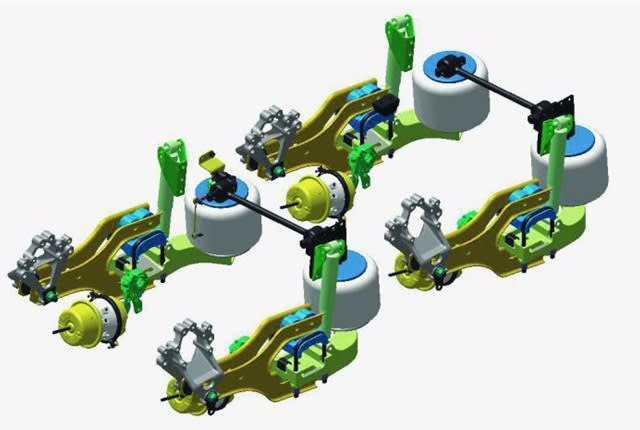
Manufacturers are introducing suspensions designed to reduce weight without sacrificing overall durability. In addition to lightweight materials like high-strength steel, finite element analysis yields carefully contoured structures that put material where it’s needed and delete some of it where stresses are less.
Results include box-shaped cross sections, Y-shaped stampings and carefully proportioned trailing arms that combine the functions of two earlier components into one.
Ad Loading...
9. Explore composite fifth wheels
Fifth wheels, as well as fifth wheel mounting brackets and slider systems, are now available in lightweight options, using aluminum, fabricated steel and synthetic facings. Operations with repeatable loads, like fuel-hauling tankers, spec fixed fifth wheels to entirely eliminate slider parts.
10. How much on-board fuel capacity does your truck really need?
Is the ability to carry 300 gallons of diesel at 7 to 7.5 pounds per gallon is worth the weight penalty? Maybe 150 or 100 gallons is enough, and topping off the tank every day isn’t such a burden.
Fewer tanks or a smaller one also leaves more room on the frame for other equipment, such as an auxiliary power unit for a long-haul tractor or an engine-coolant heater for any type.
The wheelbase and frame could be shortened to trim away more pounds and enhance maneuverability. For existing tractors with high-capacity tanks, smart operators know there’s no law that says they have to be topped off every time.
11. Wide-base single tires and wheels
One wide-base tire and wheel replacing two saves about 100 pounds per position and 400 per tandem. This can make sense for operations that are especially weight-sensitive. Big single tires also offer less rolling resistance and save fuel.
Ad Loading...
But, a flat shuts down the truck, tractor or trailer, whereas it can limp home or to its destination on three out of four dual tires. So careful tire maintenance is doubly important, and a tire monitoring and inflation system is a good investment.
12. Explore lightweight materials
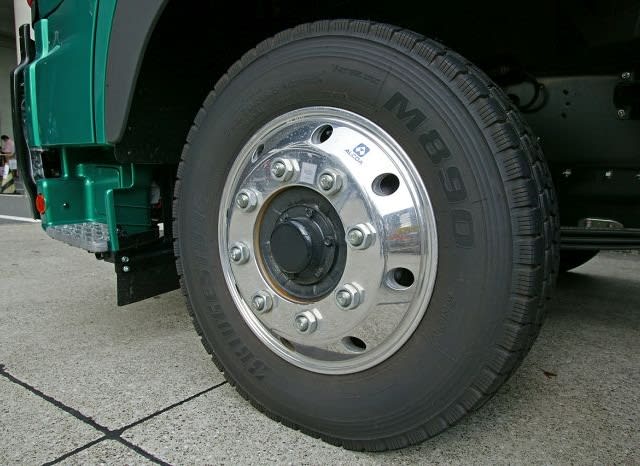
Aluminum wheels, hubs, gear cases and frame crossmembers can add up to big weight savings, even if they cost more than standard steel and iron components.
Aluminum is also better at resisting corrosion — a major issue these days of aggressive road de-icing salts.
However, high-strength steel can be a cost-effective way to do the hauling job and cut weight. And anti-corrosion treatments, from galvanizing and galvanealing to polymer coatings, can shield ferrous metals from those salts. Plate-type walls for trailers and truck bodies are thin sandwiches of metal and foam that reduce use of posts and heavy liners.
There are many ways to cut weight, and some make more sense in certain operations and applications than others.
Cutting weight at the lighter end
Light- to medium-duty trucks can also save fuel and carry more payload if they weigh less, and the latest ones do. Prime examples are the Euro-style vans now appearing on streets and highways.
As originated in North America by the Mercedes-made Sprinter van, the new products are of lightweight unibody construction, without traditional main frames, and are larger and roomier than body-on-frame cargo vans that users here have known since the 1960s.
Many delivery fleets are even replacing traditional package trucks with the Euro-style vans.
Work truck bodies can be aluminum and fiberglass rather than steel, though steel can be better for carrying heavier tools and supplies.
Meanwhile, aluminum body panels used in the new Ford F-150 may well have started a trend in ever-popular pickup trucks. Expect aluminum pickups in other series and from other builders.
The lighter trailer aerodynamic system installs in less than 45 minutes, according to the company, with potential payback in under a year depending on fuel prices and trailer mileage.
Diesel prices have eased from September’s record high, but doubts about additional Russian supply and limits on dyed-diesel tax relief mean trucking fleets still face expensive fuel. And prices could go higher.
Can better fuel economy help pay for driver raises? In this podcast, GP Transco explains how small efficiency gains create room to reinvest in its people.
What’s another tenth of a mile per gallon worth? GP Transco shares how equipment upgrades and driver coaching turn small gains into meaningful fuel savings.
Operating-cost savings have overtaken sustainability goals as the leading reason surveyed fleets are adopting battery-electric terminal tractors, according to new NACFE research.
The new card combines fuel discounts with telematics-based purchase controls. Geotab’s analysis also points to potential savings from choosing lower-priced fuel stops.
ACT Research expects costs, charging infrastructure, and technology improvements to drive zero-emission commercial vehicle adoption as federal regulations and incentives retreat.
Why do battery-electric Class 8 trucks remain so expensive? A California bill signed by Gov. Gavin Newsom would give fleets and state agencies more visibility into what manufacturers charge.