




Daimler Truck, Volvo Group Form Fuel Cell Joint Venture
In a bold move, Daimler Truck AG and the Volvo Group agreed to join forces in an effort to speed up the development, establishment and acceptance of fuel cell vehicles – at a time when much of the focus on electric trucks among legacy truck makers has been on battery-electric solutions.


Daimler Truck AG's Martin Daum (left) and the Volvo Group's Martin Lundstedt were both on hand for the virtual announcement of the fuel-cell joint venture.
Photo: Daimler/Volvo
In a bold move, Daimler Truck AG and the Volvo Group agreed to join forces in an effort to speed up the development, establishment and acceptance of fuel cell vehicles – at a time when much of the focus on electric trucks among legacy truck makers has been on battery-electric solutions. The intention is to develop, produce and commercialize fuel cell systems for heavy-duty vehicle applications and other uses.
“Making fuel cell technology work is no small undertaking for any one company, thus we are convinced that combining the experience of both Daimler and Volvo is the right thing to do for us, our customers, and for society as a whole,” said Martin Daum, chairman of the board of management at Daimler Truck AG, adding that the two companies will “remain natural competitors in all other aspects.”
Daimler will first consolidate all its current fuel cell activities in the joint venture, with the Volvo Group acquiring 50% in the JV. The two companies signed a preliminary non-binding agreement, which will have to be further reviewed and approved by certain agencies.
“We are not starting from scratch," said Daum. “We’d rather build upon a reliable, available and mature foundation.”
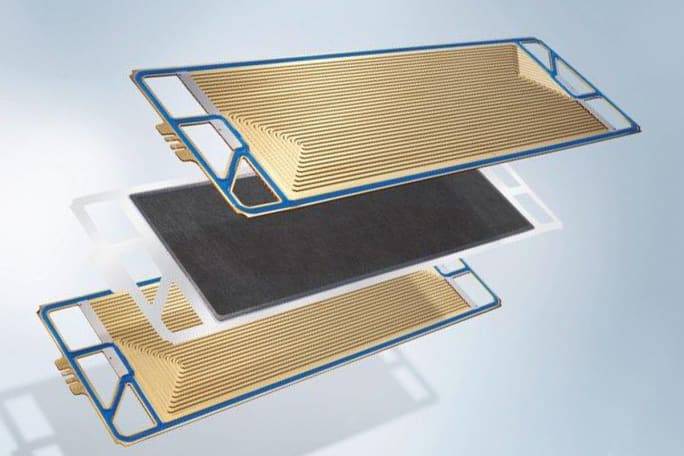
In the center of the fuel cell is a thin plastic film, the Proton Exchange Membrane (PEM), which is coated on both sides with a thin catalyst layer and a gas permeable electrode made of graphite paper. The membrane is surrounded by two bipolar plates into which gas ducts have been milled. Through these gas ducts flows hydrogen on the one side, and oxygen on the other. Several of these individual fuel cells can be stacked one behind the other to create a fuel cell stack.
Image: Daimler/Volvo
Combining the efforts of these two global OEMs will give them the ability to share the costs of developing this technology and to progress faster, according to Martin Lundstedt, Volvo Group president and CEO.
“We have not lost our sight on the long-term, strategic objective of our industry and for society – the number one issue still being climate change and reducing humanity’s carbon footprint,” said Lundstedt during an early-morning conference call timed to coincide with European markets. “We need to drive sustainable transportation to the next level. Today’s announcement is proof of our determination to contribute to this goal."
In the end, the partners plan to develop heavy-duty vehicles with fuel cells for demanding long-haul applications in series production in the second half of the decade. Also, other automotive and non-automotive use cases are also being considered for the new joint venture.
The creation of new Daimler Truck fuel cell unit will include the allocation of the operations of Mercedes-Benz Fuel Cell GmbH, which has been developing fuel cell and hydrogen storage systems for various vehicle applications, to Daimler Truck AG. Main operations will exist at Mercedes-Benz Fuel Cell GmbH location in Nabern, Germany, with production facilities in Germany and Canada. While the preliminary agreement is non-binding, a final agreement is expected by Q3, closing before the end of the year.
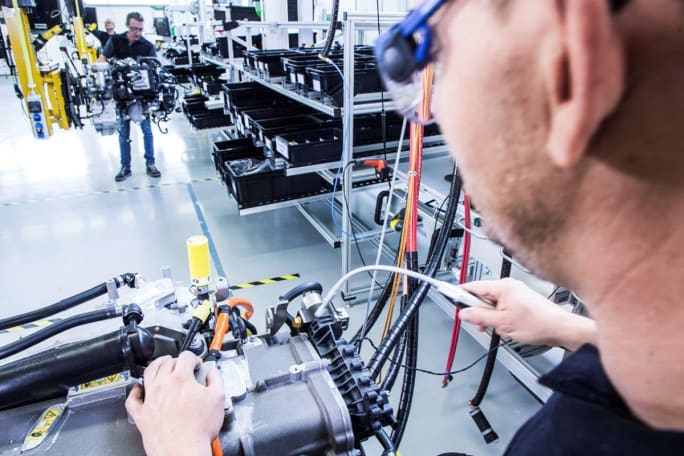
The assembly line for a fuel cell drive unit in Kirchheim-Nabern. After all the connections are double-checked, the circulation systems for the hydrogen, air and coolant are all inspected.
Photo: Daimler/Volvo
“We know transport and logistics is a key enabler for society to grow and prosper, and we know the need for transport will increase with the growing world population and urbanization. We must meet that need with solutions that are more sustainable than today’s,” said Lundstedt.
More Fuel Smarts

Record Diesel Prices Squeeze Trucking Fleets
Average U.S. diesel prices have climbed to nearly $6 a gallon, surpassing the 2022 record as tight refinery capacity and Middle East disruptions keep fuel costs elevated.
Read More →
How Fuel Delivery Shapes Engine Performance
Fuel delivery depends on more than what happens at the injector. For fleet, maintenance and technical professionals, looking at the full path from pump to injector can provide useful context for understanding engine performance.
Read More →
East Coast Port Launches $45M Electric Truck Push
The Port Authority of New York and New Jersey announced millions in incentives for zero-emission drayage trucks, yard tractors, and new charging hubs near the port.
Read More →

California Bill Could Shed Light on Electric Truck Prices
Why do battery-electric Class 8 trucks remain so expensive? A California bill headed to Gov. Gavin Newsom would give fleets and state agencies more visibility into what manufacturers charge.
Read More →
Detroit Opens Orders for EPA 2027 Engines
Detroit isn’t starting from scratch to meet EPA 2027 diesel emissions standards. Its Gen 6 DD13 and DD15 engines keep much of today’s platform while updating the fuel and aftertreatment systems.
Read More →
Zero-Emission Truck Corridor Planned for West Coast
California, Oregon, Washington, British Columbia and Baja California are coordinating plans for truck charging and hydrogen fueling from Canada to Mexico.
Read More →
A Closer Look at Kenworth’s Electric T880E Vocational Truck [Video]
Learn more about Kenworth's T880E battery-electric vocational truck at the Paccar Technical Center, including its range, applications, upfitting considerations, and PTO options, in this HDT Spotlight video.
Read More →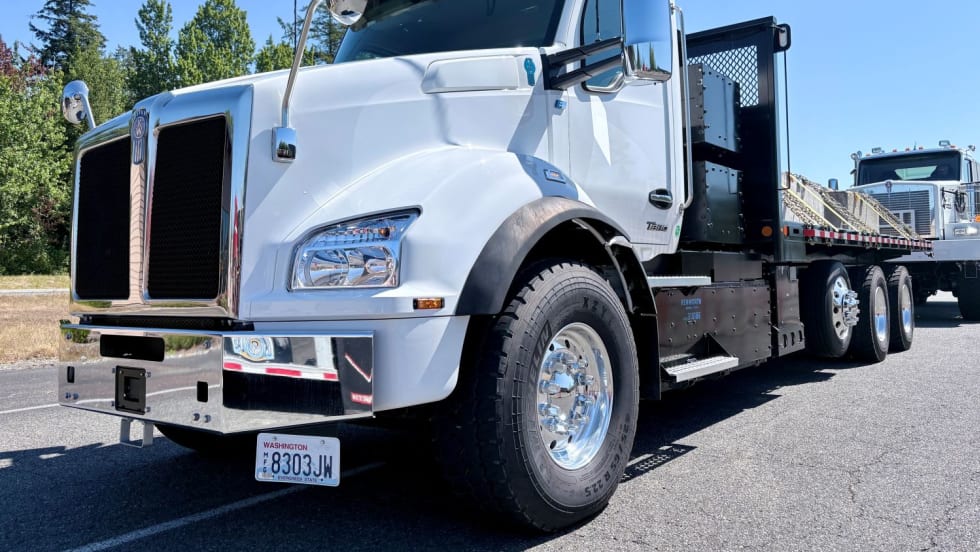
Kenworth T880E Brings EV Power to Vocational Trucks
A closer look at the Kenworth T880E’s range, charging, powertrain and upfit options — and where fleets are showing the most interest.
Read More →
Jennie Abarca Is Proving Electric Trucks Can Do the Job
HDT Truck Fleet Innovator Jennie Abarca is building confidence in fleet electrification one load at a time while openly sharing the challenges she encounters along the way as a small-fleet owner.
Read More →
Cummins Adjusts 2027 Engine Rollout After EPA Proposal
The engine maker will gradually introduce its new Model Year 2027 diesel engines while continuing to offer current models during the transition, citing the EPA's proposed emissions rule changes.
Read More →