





Related: Celadon Files Chapter 11; Shut Down of Operations Under Way
12 Trucking Takeaways from 2019
As we head into 2020, HDT Editor in Chief Deborah Lockridge shares her top takeaways from 2019 on the trends affecting trucking.
January 2, 2020
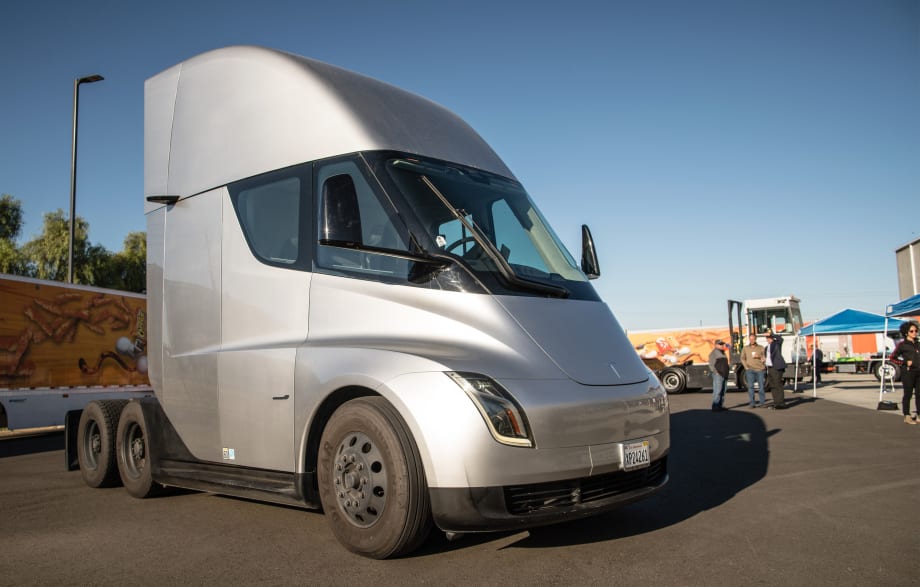
Frito-Lay is exploring emerging technologies as it works toward cutting greenhouse gas emissions.
Photo: Frito-Lay
9 min to read
The pace of change in trucking and logistics continues to accelerate, but some of the fundamentals remain with us each year. As we've looked back on our top articles, news, commentaries and photo galleries of 2019, here are some of the top trends I've observed over the past year.
1. What goes up must come down.
Some business and logistics publications that apparently aren’t familiar with the cyclical nature of the trucking business (or maybe just fishing for more clicks) have trumpeted a trucking “bloodbath” and “apocalypse” in 2019. Freight demand has softened, capacity has loosened, so rates have taken a hit. Truck orders are down from last year. There were a few big fleets that shut their doors suddenly.
But when you look at these facts in the light of last year’s record-setting numbers, and add in higher driver wages and skyrocketing insurance costs, it’s not surprising that it became a struggle for some fleets – especially those that may have overextended themselves or faced specific issues such as legal settlements, labor problems, or leadership issues. You also have to consider that nearly anything is likely to disappoint when you compare it to a record-setting 2018.
Truck makers and analysts tell us that while they’re expecting truck orders to be down further in 2020 than in 2019 – but that those numbers will be more like a “normal” year.
2. Electric trucks are hot.
There were so many announcements from truck and component manufacturers in 2019 regarding electric trucks, it’s hard to even know what to highlight in this space. It appears that every traditional medium- to heavy-duty truck maker out there is developing and testing battery-electric and/or fuel-cell electric vehicles, not to mention newcomers such as Nikola, Tesla, XOS, and Chanje. Meanwhile, component suppliers are developing e-axles, transmissions, and other items designed specifically to go into electric vehicles.
3. Hydrogen fuel cells might be the fuel of the future after all.
A longtime joke in the industry is that hydrogen fuel cells are the fuel of the future – and always will be. But at the North American Commercial Vehicle Show in Atlanta in October, we were struck by the number of booths displaying hydrogen fuel cell technology. There were trucks in concept form from Hyundai and Cummins, vehicles in testing such as the Kenworth-Toyota zero-emissions project at the California ports, and a Nikola truck on display at the Bosch booth.
4. Fuel economy is still important.
Despite all the hype about electric and hydrogen fuel cell trucks, the fact is, the vast majority of commercial trucks still use internal combustion engines. Most heavy-duty rigs still run on diesel, with a smattering of natural gas, plus gasoline becoming more popular on the medium-duty side.
Fuel, even at today’s moderate and relatively stable prices, is still one of any fleet’s top expenses. And it may get even more important; starting in 2020, ocean-going ships are going to face emissions cuts, and one option to meet those stricter standards is burning ultra-low sulfur diesel fuel. It’s quite possible that the greater demand for ULSD will affect pricing for on-highway fuel. At the same time, tighter greenhouse gas emissions/fuel economy standards are looming.
So truck, engine and component makers continue to improve the fuel efficiency of their trucks, aerodynamic devices continue to be introduced, tires continue to get more efficient, and we’re seeing the advent of more sophisticated tire pressure management and analytics systems that can help keep tire pressure optimized for fuel economy while extending tire life.
5. ELDs are not a panacea.
Many of our highly read web stories this year had to do with the electronic logging device mandate. As of Dec. 17, the grandfather clause for fleets that were using automatic onboard recording devices was over.
Critics say the devices have failed to reduce truck crashes. And on top of that, as we explored in a session on the AOBRD-to-ELD conversion during the North American Commercial Vehicle show, it’s still possible for drivers to falsify and cheat on their logs – but easier to catch, if you’re diligent. (Hint: Watch out for abuse of personal conveyance.)
One thing that ELDs have done, however, is bring attention to issues with the underlying hours of service regulations that they help enforce, and a rulemaking is currently being considered to make some changes there.
6. The line between trucking and logistics is blurring.
Once upon a time, you had trucking companies, brokers, and third-party logistics providers. Today, it’s hard to find a trucking company of any size that doesn’t at least have some brokerage operations to help fill empty backhauls. And more and more, brokerage or logistics are becoming a more significant part of many motor carriers’ operations, as technology is making it easier to meet the visibility that shippers demand from their logistics providers. The more you can meet your customers’ need, the more valuable you are.
7. It’s still hard to find good drivers.
Is there really a truck driver shortage? American Trucking Associations’ latest numbers released in 2019 said in 2018, the trucking industry was short roughly 60,800 drivers, which was up nearly 20% from 2017’s figure of 50,700 – and if current trends hold, the shortage could swell to over 160,000 by 2028.
But we’ve seen pushback on the “driver shortage” theme from some quarters. Reports on the driver shortage are always followed by comments from drivers hotly denying there's such a thing. In their view, it's a shortage of pay, or a shortage of drivers willing to work for what they consider inadequate pay. A government official expert at analyzing labor trends contends that trucking is not experiencing a driver shortage, and that the “shortage” is actually just a matter of painful turnover in one segment of the industry.
Whether you define it as a shortage or simply a turnover problem, there’s little doubt that most fleets still see hiring and keeping highly qualified truck drivers as a challenge. Driver issues dominated the American Transportation Research Institute’s annual list of top industry issues, with the driver shortage as No. 1, and driver compensation and detention/delay at customer facilities hitting the list for the first time.
8. Drugs are a concern.
In 2019, spurred by the legalization of marijuana in many states and the ongoing opioid epidemic, we planned an ambitious five-part series, “Trucking Under the Influence,” to explore these issues. Along the way, we discovered a number of concerning trends.
Among them, the urinalysis testing for drugs mandated by the federal government may be missing a significant number of drug users, according to a study by the Alliance for Driver Safety & Security, commonly known as the Trucking Alliance, which compared hair-testing and urine-testing results and concluded that “the trucking industry has no greater safety issue, than to aggressively address illegal drug use among commercial truck drivers.”
9. The independent contractor model is under fire.
Our most popular story this year by far was “California Bill Means ‘End for Independent Trucking’ in State.” My report on the passage of Assembly Bill 5 detailed how its requirement for companies to use the ABC test to determine if someone is an employee or an independent contractor could be all but impossible for motor carrier to meet. The problem is the “B” part of the test, requiring that independent contractors can only perform work that is “outside the usual course of the hiring entity’s business.”
The law was scheduled to go into effect Jan. 1, but a last-minute temporary restraining order was granted by a judge on Dec. 31 forbidding state officials from enforcing the law while the California Trucking Association’s lawsuit on the matter is heard.
The New Jersey trucking industry is also fighting expansion of the ABC test there.
10. Smart trailers are here.
When we had our HDT Truck Fleet Innovators panel discussion two years ago at our inaugural Heavy Duty Trucking Exchange, one of the things they lamented was that while there was a fire-hose worth of data coming from trucks, trailers were lagging behind. This year we’ve seen a barrage of announcements from a variety of companies that tell me the smart trailer is finally here.
Where’s your trailer, how full is it, is the door open or closed, what’s the refrigerated temperature, are the tires properly inflated, is your wheel end running hot, what are the fault codes of malfunctioning antilock braking systems – the answers to all these questions are now available at a fleet manager’s fingertips.
11. Mountain driving is hard.
If a driver lives in a state without significant grades and got his or her CDL only driving on those roads, what happens when he or she hits the mountains for the first time? Last spring, a driver made international headlines when he roared out of control down a grade on Interstate 70 in Colorado, slamming into stopped traffic in a fiery crash that claimed four lives.
HDT Equipment Editor Jim Park, a former commercial driver himself, wrote a lengthy blog looking at what went wrong, and followed it up with coverage of the art and science of mountain driving. (Watch for his forthcoming videos on mountain driving.)
12. The speed of technology change is dizzying.
In addition to the rapid development we’ve seen in electric and hydrogen-electric powertrains, in 2019 we reported on advances in autonomous truck technologies, delivery robots and drones, artificial intelligence, telematics and more.
A year ago at the CES electronics show, we saw a dog-like delivery robot navigate steps and deliver a package from a delivery van to the front door. We saw self-driving delivery vehicles. Freightliner announced what it said was the first Level 2 autonomous technology, and our editors put it to the test. In August, Amazon started testing “cooler-sized” rolling delivery bots that will navigate residential neighborhoods in Irvine, California. In November, UPS completed the first revenue-generating drone delivery of a prescription from a CVS pharmacy to a customer’s home. Last month, Plus.ai's SAE-Level-4 autonomous truck completed a coast-to-coast, 2,800-mile commercial freight run hauling a refrigerated load for Land O’Lakes. Overseas, Scania and Volvo both showed off concept driverless trucks without even a cab for the driver, designed to operate in limited areas such as ports and construction sites. Augmented and virtual reality is being used in the shop. Artificial intelligence is making information from in-cab cameras more valuable.
Not as sexy, but technology is also changing how shippers, brokers, and carriers connect. Automated freight-matching may never be as simple as using your phone to summon an Uber, but that’s not for the want of forward-thinking developers trying their best. Last month, for instance, digital freight-matching company Convoy said it’s achieved a trucking-industry first: 100% automated brokering of loads to carriers, including not only matching but also automated pricing, on lanes in top freight markets.
I could go on and on. Some of these technologies are merely concepts, “what-if” scenarios; others are already here. Some may not pan out; a few years ago many would have expected truck platooning to be a reality by now, but 2019 saw some questioning the return on investment in the real world.
The important thing for fleets to remember is to do their homework – we’ll do our best to help you keep on top of the latest news – and to be flexible and willing to adapt to the latest technology or new competitive threat.
Subscribe to Our Newsletter
More Fleet Management

Geotab Links Fleet Card to Vehicle Data
The new card combines fuel discounts with telematics-based purchase controls. Geotab’s analysis also points to potential savings from choosing lower-priced fuel stops.
Read More →
How MFA Helps Protect Trucking Fleets
Multi-factor authentication adds protection when passwords are stolen. Here’s how it works and where fleets should start.
Read More →
How Better Freight Data Helps Trucking Teams Get Ahead of Disruption
Trucking and logistics teams have plenty of data. The problem is getting the right information in front of the right people soon enough to act. Better-connected data can help teams spot trouble earlier and make smarter decisions before small problems become big ones.
Read More →

Trimble: Taking Artificial Intelligence in Trucking Beyond Faster Tasks
At Insight 2026, Trimble executives argued that fleets may need to redesign workflows to get more from AI as it introduced new products and enhancements. AI’s value will depend on how fleets combine automation with their people's knowledge.
Read More →
Sponsored•September 28, 2026
Build a bulletproof fleet: Uniting ELDs and dash cams for total compliance
An ELD can prove compliance, but it cannot always prove what happened on the road. Discover how uniting accurate ELD data with AI-powered dash cam video can help your fleet strengthen compliance, defend against liability, protect drivers and reduce operational costs.
Read More →
Nominations Open for HDT Emerging Leaders
Heavy Duty Trucking is looking for accomplished trucking fleet professionals under 40 who are making an impact and helping lead the industry forward.
Read More →
Why Private Fleets Are Taking More Freight
Private fleets are putting their own trucks on demanding customers and high-cost lanes as companies seek greater control over service, costs, and capacity.
Read More →
Sponsored•September 16, 2026
Color Match Smarter: Tools That Restore & Perform
For fleet managers and collision repair professionals keeping heavy-duty trucks on the road, getting the color right the first time isn't just about appearance — it's about efficiency, turnaround time, and bottom-line results. Discover how today's digital color tools are transforming the repair process from guesswork to precision.
Read More →
FMCSA Pauses Biennial-Update Enforcement Amid Motus Transition
Carriers whose updates were due on or after June 1 have more time, while FMCSA works to stabilize its new registration system and warns of phishing sites impersonating its new carrier registration system, Motus.
Read More →
Sponsored•September 14, 2026
2026 Blueprint for Countering Smarter Supply Chain Theft
Cargo theft is no longer just the cost of doing business. It's a multi-billion-dollar criminal enterprise exploiting vulnerabilities across your fleet, drivers, and supply chain.
Read More →