




3 Things You Might Not Know About Federal Trucking Regulations
At the NACV show in Atlanta, safety and compliance expert John Seidl shared some insight into the upcoming entry-level driver training standards, the best ways to learn about federal regulations, and an under-utilized way to improve your CSA scores.

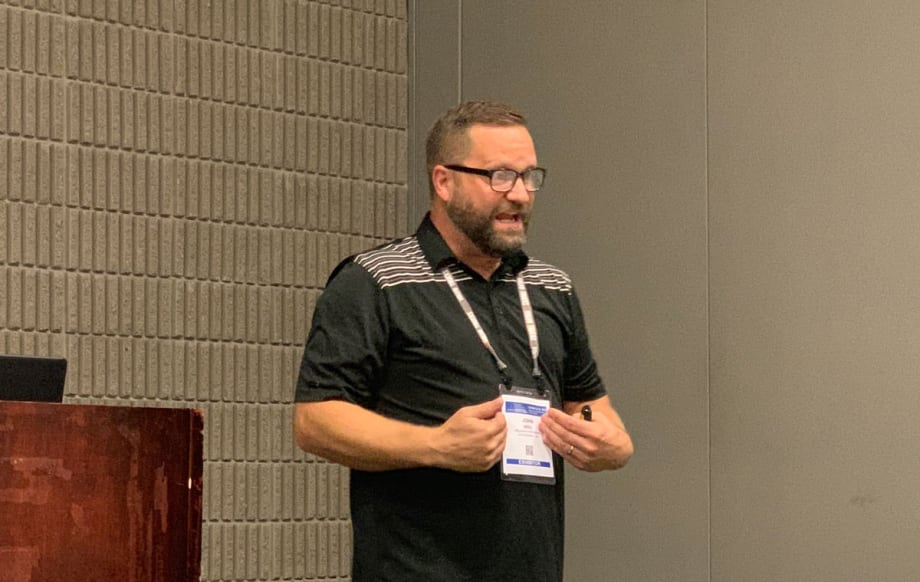
Safety and compliance expert John Seidl shares some insight into the upcoming entry-level driver training standards, the best ways to learn about federal regulations, and an under-utilized way to improve your CSA scores.
Photo: Deborah Lockridge
John Seidl has seen it all, as a roadside inspector, a DOT compliance officer, and now as a safety and compliance expert working for an insurance company to help its fleet customers. At an Ask the Expert session at the North American Commercial Vehicle Show in Atlanta Oct. 30, he shared some insight into the upcoming entry-level driver training standards, the best ways to learn about federal regulations, and an under-utilized way to improve your CSA scores.
Seidl is vice president of risk services for Reliance Partners, where he provides DOT transportation consulting based on his extensive experience in law enforcement with both the Federal Motor Carrier Safety Administration and as a Wisconsin State Patrol Motor Carrier Inspector.
1. Meeting Entry-Level Driver Training Standards Might be Easier Than You Think
Although some states are going beyond the federal regulations and requiring a certain number of hours and accredited training schools, Seidl said that while the new entry-level driver training standards that go into effect Feb. 7, 2020, are much more detailed than the previous requirements, and bring in a lot of requirements about actual safe driving that were not in the previous rule, the regulations may not be as onerous to meet as some people may think.
The new rules require both “theory” (classroom) training and behind-the-wheel training, both on a range and on the road. And it lays out exactly what must be covered. But it does not call for a minimum number of hours to accomplish this training.
Seidl pointed out that although training providers must be on Federal Motor Carrier Safety Administration’s Training Provider Registry, it is a self-certification process, and motor carriers who operate CDL training schools should be able to adjust relatively easily.
But just as there have been issues with the self-certification process for electronic logging devices, he said, this could mean some entities out there could be shortchanging drivers on training – it might be legally compliant, but another story in real life.
“If you can do it through a technical school, they’re not going to shortchange these things,” He said. “But could someone open a strip mall classroom to do the training and send them to the DOT to take their test? Sure!”
One thing that is required is that the trainer must have held a CDL for at least two years. Seidl commented that this could mean a bad driver could be a trainer, but that a compliance expert such as Seidl could not be brought in to handle the compliance part of the training, such as hours of service.
2. There Are Better Ways than the Green Book of Regulations
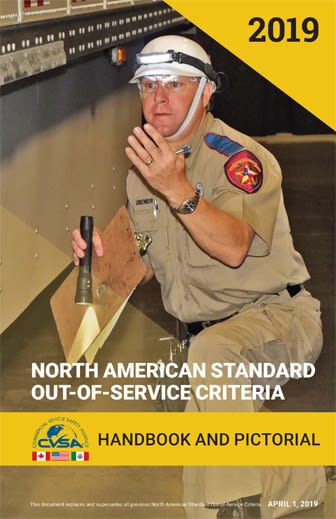
The North American Standard Out-of-Service Criteria handbook shows exactly what violations will result in being shut down. Every fleet should have one, says Seidl.
Image via CVSA
It’s not uncommon for trucking companies to buy every driver the big green book of DOT regulations. But Seidl said not only is that not required, but also that the book is hard to understand and of limited value.
He pointed the audience to two references: The Commercial Vehicle Safety Alliance’s North American Standard Out-of-Service Criteria, and the FMCSA’s Motor Carrier Safety Planner.
“Every squad car in the U.S. has both green regulation book and the out of service criteria,” Seidl said, yet he’s amazed at how few motor carriers have a copy of the book. This book shows exactly what violations will result in being shut down by the side of the road, including pictures. He even suggested putting a copy in the driver break room.
The Motor Carrier Safety Planner is an online guide that came out earlier this year that provides simple explanations and templates to help companies that operate commercial vehicles understand and comply with federal safety regulations. “I call it ‘Regulations for Dummies,’” Seidl joked.
It even includes the “guidance” or “interpretation” documents that the agency has issued clarifying the enforcement of various regulations, and free downloadable forms such as annual vehicle inspection reports.
In addition, he noted, just Google “federal regulations in PDF” and you’ll find downloadable versions of everything that’s in the green regulations book – and PDFs are searchable, so you’ll spend less time flipping through paper pages.
3. DataQs Can Improve Your CSA Scores
Seidl said he files DataQ challenges on behalf of his clients nearly every single day. The fact is, there are a lot of citations made on the side of the road that are flat-out wrong, and you can get those off your CDL scores with a DataQ challenge.
In addition, if you go to court to challenge a ticket and get it dismissed, that comes off your CSA scores. Or sometimes you can get it reduced to a lesser charge that will mean fewer CSA points charged against you.
More Safety & Compliance

FMCSA Pauses Biennial-Update Enforcement Amid Motus Transition
Carriers whose updates were due on or after June 1 have more time, while FMCSA works to stabilize its new registration system and warns of phishing sites impersonating its new carrier registration system, Motus.
Read More →
ZF Expands Commercial Vehicle Push in North America
ZF is expanding its North American commercial-vehicle presence with new transmission applications, electrification, trailer technology and autonomous-driving systems.
Read More →
Truck Drivers Need More Than Another Alert
Fleets have more visibility into truck health, safety events, and driver activity than ever. The next challenge is turning all that information into useful guidance for the person who has to decide what to do next.
Read More →
Tesla Wants a Self-Driving Semi. Are Cameras Enough?
Could Tesla’s camera-only autonomous driving technology work on an 80,000-pound Semi? In this commentary, HDT's Deborah Lockridge takes a look at Tesla, Cybercab, and how autonomous trucks see the road.
Read More →
What DOT’s Automated Vehicle Strategy Means for Trucking
The U.S. Department of Transportation issued a new automated-vehicle strategy that outlines plans for driverless-truck regulations, cross-state freight corridors, and federal safety standards.
Read More →
NYC Expands Speed, Pedestrian Safety Tech Across Fleet
New York City is expanding intelligent speed assistance and pedestrian-alert systems across its municipal fleet, moving the technologies from pilot programs into vehicle procurement and retrofit requirements.
Read More →
FMCSA Removes 110 Truck Driver Training Schools from Certified ELDT List
Federal regulators also are targeting more than 160 additional training providers and launching a nationwide audit of third-party CDL skills testers as part of a broader crackdown on trucking fraud.
Read More →
Beyond DOT Compliance: What Makes a Trucking Fleet Truly Safe?
A trucking fleet can follow every rule and still make unsafe decisions. The real test comes when safety conflicts with freight, productivity, or cost.
Read More →
Hours of Service Pilot Programs: FMCSA Readies for 2027 Rollout
Two pilot programs could eventually reshape hours-of-service rules, giving truck drivers options to pause their 14-hour clock or use longer split sleeper rest periods.
Read More →
New Guide Offers Pet Safety Tips for Truck Drivers
Hundreds of thousands of pets travel in truck cabs. A new safety guide from Volvo Trucks and the Center for Pet Safety offers practical advice for truck drivers who bring dogs and cats along for the ride.
Read More →