





Related: Technology is Changing How Carriers, Shippers, and Brokers Connect
Q&A: Lidia Yan is Changing the Drayage Market
With a background in logistics and e-commerce in both the U.S. and China, Lidia Yan recognized a market need for a simpler, technology-enabled marketplace to match freight with capacity. In 2015, she founded Next, a trucker-centric freight-matching app and marketplace. Since then, she has led the company to 500% revenue growth.
September 27, 2019
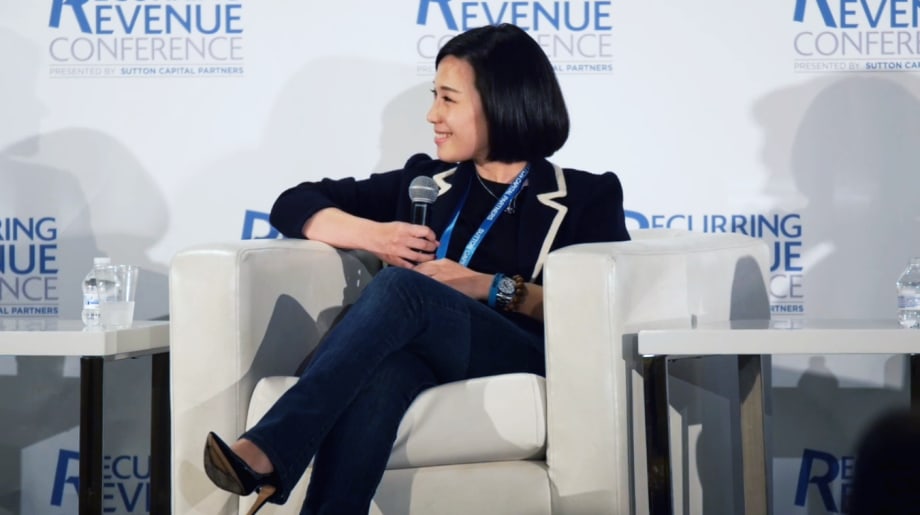
Next Trucking Co-Founder and CEO Lidia Yan joined the “Recurring Revenue Rockstars: Success Stories You Haven’t Heard” panel at the Recurring Revenue Conference last year.
Photo: Next Trucking
6 min to read
Lidia Yan is on a roll. Yan, the co-founder and CEO of freight-tech company Next Trucking, is one of just two women heading up companies on the Forbes 2019 Next Billion-Dollar Startups list, a roundup of the 25 startups most likely to achieve “unicorn” status based on their current revenue, funding and valuation.
She’s also one of six finalists for this year’s Influential Woman in Trucking award from the Women In Trucking Association and Freightliner Trucks.
With a background in logistics and e-commerce in both the U.S. and China, Yan recognized a market need for a simpler, technology-enabled marketplace to match freight with capacity. In 2015, she founded Next, a trucker-centric freight-matching app and marketplace.
Since then, she has led the company to 500% revenue growth.
Earlier this year, Next Trucking secured $97 million in new funding, bringing its total capital raised to more than $125 million. At the same time, it launched Relay, a new drayage service aimed at streamlining port trucking operations, and is opening a new 18-acre drayage yard, just 15 minutes from where container ships dock, to help make Relay possible. In July, it opened its new 25,000-square-foot headquarters in El Segundo, California, and plans to have more than 250 employees by the end of 2019.
I first talked to Lidia after the launch of Uber Freight in 2017, when I highlighted several other companies that had beat Uber to the punch when it comes to using mobile devices and technology to make matching up freight to trucks more efficient.
I caught up with her this summer to talk more about how technology is changing logistics. This interview has been lightly edited for clarity and length.
HDT: For readers who may not be familiar with your company, can you give us a short overview? When did you get into the business?
Yan: Next Trucking is an online trucking marketplace focusing on port drayage. We connect freight to available truck drivers. We allow drivers to dictate what they want, and we provide transparency and visibility to shippers into the driver’s real time location.
HDT: As I recall, your family actually is in the logistics business, so you have a background in the business, not just in tech.
Yan: My husband has been in logistics for 10 to 12 years, and my family operates warehouses in southern California – one of the largest distribution centers for TVs.
HDT: What’s the latest news from your company?
Yan: I think one is our round of funding in January led by Brookfield ventures. This brings our total funding to more than $125 million. We’re going to use it to continue to grow our team and to beef up the product, and especially the growth of our Relay program, a new drayage service. We’re going to hire an additional 200 people across operations, data science, product engineering, marketing and finance this year.
HDT: What’s this new Relay program?
Yan: A different kind of drayage.
A traditional drayage company hauls containers from the Port of Los Angeles/Long Beach to local warehouses, maybe 80 miles away in Ontario or the Inland Empire. With the Relay service, the first leg is from the port to our local yard, which is 7 miles away, and the drayage drivers drop it into our yard and pick up an empty container. Instead of hauling out two containers from the port per day on average, we can haul up to six containers a day from the port.
For the second leg, we get local drivers who don’t have to have TWIC cards to haul the container from our yard to the local warehouse. The local drivers love this program. Traditionally they call their broker trying to find another load, 50 miles away, but for us they start from our yard and do loops and can do three or four a day. Traditionally drayage drivers bobtail back, so that leg is wasted. And that also causes congestion at the terminal, because 80% of drivers have to go in and out of the port twice for one container.
We increase the driver income because we increase the efficiency about 20% so they make about 20% more.
HDT: Give us a short description about how your technology works.
Yan: Owner-operators or fleet operators have access to our mobile app. They see a load list. We offer predictive load offering – we study driver behavior and predict the loads they will like to take based on their preferences and their behavior. We give the carrier full control of their loads; that’s why we call ourselves trucker-centric.
We also have web-based fleet software so carriers can manage drivers and equipment on our platform and have visibility of drivers in real time. They can assign loads to drivers via a website or mobile app, and it’s completely free. We take a cut in between, which is different according to the season. Lower commission in lower season, peak season charge more. We charge 3% for quick pay if they want to be paid in 48 hours, but VIP drivers who deliver a certain number of loads a month with us, we give them free quick pay. Otherwise the cut comes from the shipper.
HDT: What sets you apart from the competition?
Yan: We are the first to offer a trucker-centric platform. We build the solutions according to the driver’s needs and allow them to dictate what they want. And we’re the only logistics technology company focused on port drayage. Drayage is definitely different from over-the road-trucking because it involves terminals..
HDT: From your perspective, how is the relationship changing between shippers, brokers, and carriers in terms of how they connect?
Yan: I think in the past drivers relied on traditional brokers, with phone calls, emails, text messages, a lot of back and forth. Driver can spend hours on the phone. I think with digital freight brokers, we study driver behavior and understand the marketplace a lot better, so the marketplace is painless and streamlined. The drivers get the loads they want to haul at a fair market price.
The industry is so fragmented, 90% of companies are small ones, and most of them don’t have the latest technology. Now they can take advantage of that technology and become more efficient. There’s a driver shortage, [but with this kind of technology,] more and more drivers will come back to the industry.
HDT: It seems every other day I get a release about another company that is aiming to “disrupt trucking and logistics” by using technology to totally or partially remove the middleman. Do you see any disadvantages to removing the middleman?
Yan: It’s definitely a challenge for traditional brokers; they have to charge more money to make the transaction work. I know some companies are trying to go the technology way and also want to do their own freight-matching software or TMS, but technology startups are a little more faster. We’re faster, we’re more efficient, we’re smaller and more nimble, so we can adapt to the market a lot faster, where large traditional brokers have to disrupt themselves, companies like CH Robinson have thousands of people making phone calls, so that’s a bigger challenge for them.
HDT: What else do you think fleets need to know about this technology?
Yan: I think eventually the industry will be more transparent. Right now it’s really relationship driven among traditional brokers. They have their more preferred carriers they work with. The digital brokers can bring transparency. We allow the shippers to connect directly without a lot of human intervention, and it gives more to the carriers because they will be paid a fair market price. And the shippers can trace and track, they’re not calling the broker asking for the driver location and the broker calls the driver asking for his location, a lot of back and forth. In the long run digital brokers will be able to replace traditional brokers.
Subscribe to Our Newsletter
More Fleet Management

Sponsored•September 16, 2026
Color Match Smarter: Tools That Restore & Perform
For fleet managers and collision repair professionals keeping heavy-duty trucks on the road, getting the color right the first time isn't just about appearance — it's about efficiency, turnaround time, and bottom-line results. Discover how today's digital color tools are transforming the repair process from guesswork to precision.
Read More →
FMCSA Pauses Biennial-Update Enforcement Amid Motus Transition
Carriers whose updates were due on or after June 1 have more time, while FMCSA works to stabilize its new registration system and warns of phishing sites impersonating its new carrier registration system, Motus.
Read More →
Sponsored•September 14, 2026
2026 Blueprint for Countering Smarter Supply Chain Theft
Cargo theft is no longer just the cost of doing business. It's a multi-billion-dollar criminal enterprise exploiting vulnerabilities across your fleet, drivers, and supply chain.
Read More →


Sponsored•September 1, 2026
How Telematics Improves Visibility, Control, and Performance in Refrigerated Fleets
Explore how telematics help refrigerated fleets improve visibility, uptime, efficiency, compliance, and cargo protection across connected cold chain operations.
Read More →
What the U.S.-Canada Trade War Means for Trucking
Escalating U.S.-Canada tariffs could disrupt cross-border freight, reduce truck volumes, raise costs, and create new uncertainty for carriers on both sides of the border.
Read More →
What Are Trucking’s Top Concerns for 2026?
The American Transportation Research Institute wants to know what's worrying trucking fleet managers, drivers, and other stakeholders in its annual Industry Issues survey.
Read More →
American Trucking Associations Looks for a New Leader
ATA President and CEO Chris Spear abruptly left his job at the association on August 21, at a pivotal time for the trucking industry.
Read More →
Public Wi-Fi Cybersecurity Risks: How Truck Drivers and Fleets Can Protect Their Data
Public Wi-Fi can expose truck drivers and fleets to credential theft, malware, and other cyber threats. Here’s how to reduce the risk on the road.
Read More →
For Nicky Cupp, Fleet Innovation Starts With Frustration
HDT Truck Fleet Innovator Nicky Cupp turns everyday pain points at Fraley & Schilling into opportunities for better technology and smarter processes.
Read More →
Adam Buttgenbach’s Approach to Electric Trucks: Start With Where They Fit
HDT Truck Fleet Innovator Adam Buttgenbach helped PepsiCo build one of North America’s largest EV fleets by focusing on where electric trucks make operational sense.
Read More →