





Related: Trucking under the Influence
Positive Drug Tests Rise by Double-Digits in 1/3 of Industry Sectors
According to a new analysis by Quest Diagnostics, one-third of U.S. industry sectors experienced year-over-year double-digit increases in positive workforce drug tests between 2015 and 2018, with marijuana the most commonly detected drug.
September 26, 2019
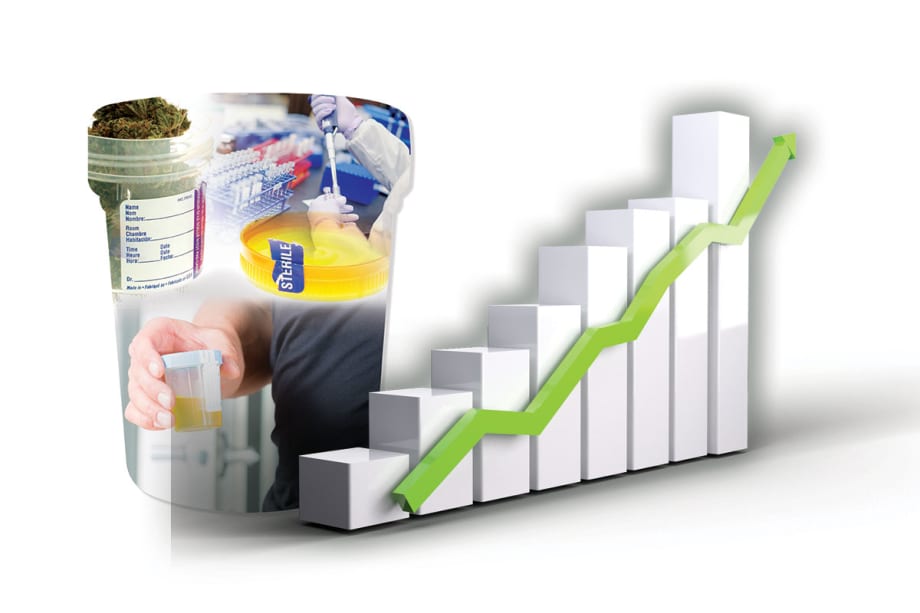
Not surprisingly, marijuana was the most commonly detected drug, with the highest positivity rates, in the majority of sectors.
Image: Armie Bautista/Mediamodifier
4 min to read
According to a new analysis by Quest Diagnostics, one-third of U.S. industry sectors experienced year-over-year double-digit increases in workforce drug positivity between 2015 and 2018, with marijuana as the most commonly detected drug. The Quest Diagnostics Drug Testing Index is an analysis of more than 14 million urine drug tests of the general U.S. workforce in 17 different sectors.
Among the sectors that recorded double-digit jumps, Transportation & Warehousing has the dubious distinction of topping the list with a 34.5% increase.
"Our longitudinal examination of drug positivity data suggests drug use by the nation's workforce is growing across a broad swath of industries," said Barry Sample, PhD, senior director, science and technology, Quest Diagnostics.
He noted that of "particular concern are sharp jumps in positivity rates seen in sectors like transportation and warehousing and construction that directly affect public safety. Staying vigilant and providing support for employees who test positive for drug use are key for employers seeking to maintain a safe, healthy workforce."
A total of six sectors saw year-over-year double-digit increases, including five that experienced an overall four-year increase in general U.S. workforce positivity more than double that of the national increase of 6.2% over the same time period:
Transportation & Warehousing (34.5%)
Other Services (except Public Administration) (33.3%)
Wholesale Trade (20.0%)
Retail Trade (14.9%)
Construction (13.2%)
Administrative Support, Waste Management and Remediation Services (12.2%)
"Our longitudinal examination of drug positivity data suggests drug use by the nation's workforce is growing across a broad swath of industries," said Barry Sample, PhD, senior director, science and technology, Quest Diagnostics.
He noted that of "particular concern are sharp jumps in positivity rates seen in sectors like transportation and warehousing and construction that directly affect public safety. Staying vigilant and providing support for employees who test positive for drug use are key for employers seeking to maintain a safe, healthy workforce."
The classifications are based on the North American Industry Classification System, which is used by the U.S. Office of Management and Budget, Canada, and Mexico to group organizations into industries based on the similarity of their production processes. Seventeen of the 20 industry sectors were included in the Quest analysis; three classifications were excluded due to insufficient testing volume.
Sample and Ashlyn Hazard, associate manager, data analytics at Quest Diagnostics, are slated to share the latest data and analysis from the report during a live webcast on Wednesday, October 9, at 2 p.m. EDT.
Not surprisingly, marijuana was the most commonly detected drug, with the highest positivity rates, in the majority of sectors, with positivity for marijuana increasing by double digits in eight of the 17 sectors for each of the years between 2015 and 2018.
Marijuana is currently legal for recreational use in 10 states and the District of Columbia.
In 12 of the sectors, the growth rate (9.1% to 25.0%) in marijuana positivity between 2017 and 2018 was higher than the overall growth rate (7.7%) observed in the general U.S. workforce during the same time period. In 10 of the sectors, the growth rate in marijuana positivity between 2015 and 2018 was greater than 25%:
Other Services (except Public Administration) (61.9%)
Transportation & Warehousing (53.3%)
Mining (50%)
Wholesale Trade (47.1%)
Construction (46.7%)
Manufacturing (38.5%)
Accommodation and Food Services (37.9%)
Administrative Support, Waste Management and Remediation Services (33.3%)
Public Administration (30.0%)
Retail Trade (29.6%)
"Marijuana use is a complex issue, and drug testing provides an objective view into its use in the workforce," said Kim Samano, PhD, scientific director, Quest Diagnostics. "Testing data reveals continual increases in positivity rates across several drug categories and industries. Our hope is that data-driven insights on drug use will inform better approaches to ensure the safety and health of the nation's workforce and the communities they serve."
A 2016 Joint Guidance Statement of the American Association of Occupational Health Nurses and the American College of Occupational and Environmental Medicine noted that the "potential consequences of marijuana use in the workplace include the risk and associated cost of adverse events and the loss of productivity."
In comparison to marijuana, positivity for opiates continued to decline. Eight of the 17 sectors showed year-over-year decreases at rates of 25% or more between 2015 and 2018. No sector experienced an increase in positivity from 2016 to 2017 or 2017 to 2018.
More Safety & Compliance
When Language Stops the Truck: The Return of ELP Out-of-Service Orders
English language proficiency rules for commercial drivers aren’t new, but renewed out-of-service enforcement has raised the stakes. Here’s what carriers need to know before a driver reaches a roadside inspection.
Read More →
Sponsored•October 6, 2026
A Camera Isn't a Safety Program. Here's What Brokers Are Screening for Now
Footage alone may not be enough to pass broker vetting processes. Here's what counts as a defensible safety program now.
Read More →
Marijuana and Trucking’s Drug-Testing Dilemma
Marijuana is getting stronger, laws are changing, and drug tests still can’t reliably establish impairment. What does that mean for truck drivers and the fleets that employ them?
Read More →
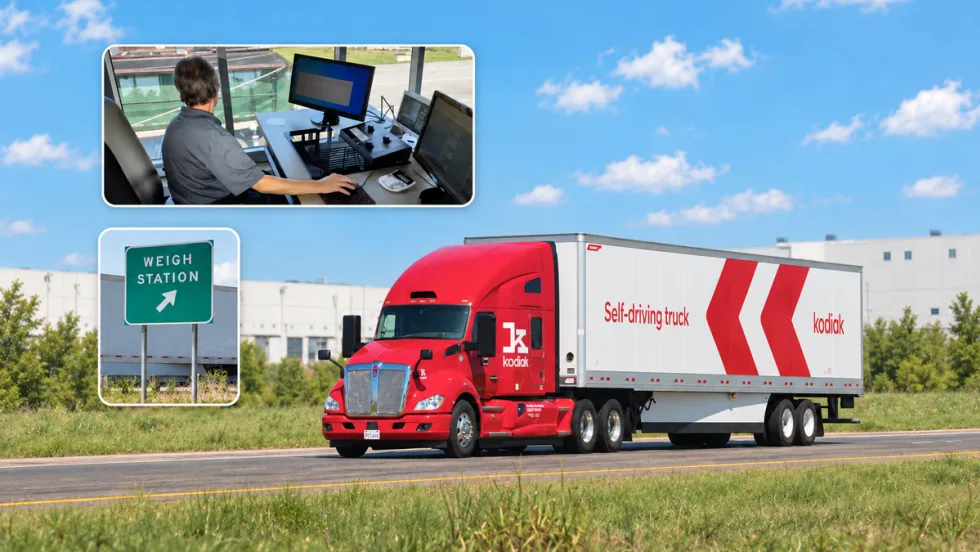
PrePass, Kodiak Connect Driverless Trucks to Roadside Enforcement
The system will allow enforcement agencies to verify Enhanced Inspection information and decide whether Kodiak’s autonomous trucks can bypass roadside screening sites.
Read More →
From One Generation to the Next: How Mentorship Builds Safer Truck Drivers
After three decades in trucking, Harold Perry shares what he's learned about driver safety, mentorship, and helping the next generation build confidence behind the wheel.
Read More →
FMCSA Pauses Biennial-Update Enforcement Amid Motus Transition
Carriers whose updates were due on or after June 1 have more time, while FMCSA works to stabilize its new registration system and warns of phishing sites impersonating its new carrier registration system, Motus.
Read More →
ZF Expands Commercial Vehicle Push in North America
ZF is expanding its North American commercial-vehicle presence with new transmission applications, electrification, trailer technology and autonomous-driving systems.
Read More →
Truck Drivers Need More Than Another Alert
Fleets have more visibility into truck health, safety events, and driver activity than ever. The next challenge is turning all that information into useful guidance for the person who has to decide what to do next.
Read More →
Tesla Wants a Self-Driving Semi. Are Cameras Enough?
Could Tesla’s camera-only autonomous driving technology work on an 80,000-pound Semi? In this commentary, HDT's Deborah Lockridge takes a look at Tesla, Cybercab, and how autonomous trucks see the road.
Read More →
What DOT’s Automated Vehicle Strategy Means for Trucking
The U.S. Department of Transportation issued a new automated-vehicle strategy that outlines plans for driverless-truck regulations, cross-state freight corridors, and federal safety standards.
Read More →