




New Law Will Smog-Check Class 4-8 Trucks in California
Even as the Trump Administration attempts to roll back California’s right to implement stricter-than-federal vehicle emission rules, the Golden State has acted to further choke off diesel emissions from trucks.

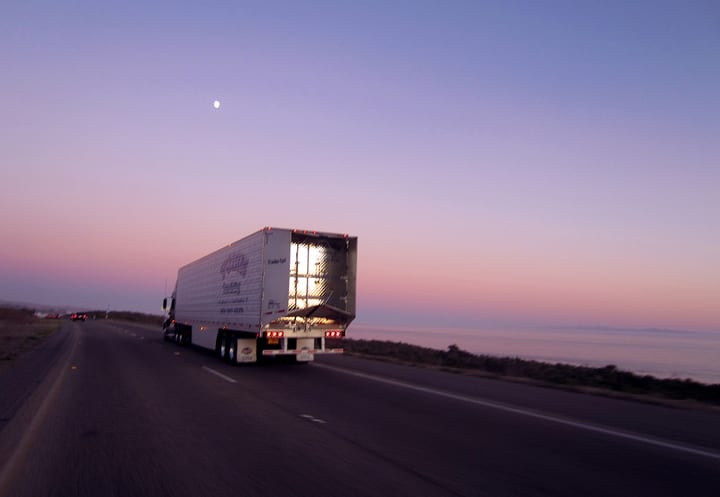
New law requires CARB “to provide mechanisms for out-of-state owners of heavy-duty vehicles to establish and verify [smog] compliance prior to entering the state.”
Photo: Jim Park
Even as the Trump Administration attempts to roll back California’s right to implement stricter-than-federal vehicle emission rules, the Golden State has acted to further choke off diesel emissions from trucks.
A bill signed into law by Governor Gavin Newsome (D) on Sept. 20 takes away the exemption from smog-compliance testing that’s long been in place for all commercial vehicles operating in California with GVW rating above 14,000 pounds. Zero-emission and certain authorized emergency and military vehicles would remain exempt from smog checks.
Under the new “Clean Trucks, Clean Air” (SB210) law, after a two-year pilot is run to develop all the specifics, vehicle inspection and maintenance program for non-gasoline heavy-duty motor vehicles with GVW ratings above 14,000 pounds (Class 4 through 8) will be put in place to regularly measure the effectiveness of their emission controls to reduce the release of particulate matter and nitrous oxide (NOx) into the air.
The bill, among other things, would:
Prohibit the “operation of a heavy-duty vehicle on a public road in this state if that vehicle has an illuminated malfunction indicator light displaying a specified engine symbol, and would make a violation of this provision subject to a notice issued by an officer to correct the violation on the basis of its designation as a mechanical violation. The bill would specify that a violation of this requirement is a correctable violation if the correction is made, as specified.”
Prohibit “the operation of a heavy-duty vehicle in a manner resulting in the escape of visible smoke, except during active regeneration. The bill would specify that a violation of this requirement is a correctable violation if the correction is made, as specified.”
In addition, the bill limits the annual “cost for compliance” to $30. It also calls for creating a Truck Emission Check fund, with all the monies deposited within to be used for the regulatory purposes of the program.
“Just as car owners have to get their own personal cars ‘smog-checked’ every two years, so too should truck operators be required to maintain their emissions controls so that we can ensure long lasting air quality improvements here in California,” said Senator Connie M. Leyva (D-Chino), who introduced the bill, in a news release.
She added that the new law “reinforces California’s leadership on improving air quality and public health, while also leveling the playing field for law-abiding truck owners and operators in our state.” The latter remark reflects Sen. Leyva’s contention that those California based truck owners that “strive to meet our nation-leading air quality standards” can be at a competitive disadvantage with non-compliant vehicles, including many out-of-state trucks.
That’s why a provision of SB10 requires the California Air Resources Board, once the new inspection program is launched, “to provide mechanisms for out-of-state owners of heavy-duty vehicles to establish and verify [smog] compliance prior to entering the state.”
As signed into law, SB201 will “certainly require big trucks be ‘smogged,’” Joe Rajkovacz, director of governmental affairs and communications for the Western States Trucking Association, told HDT.
“However,” he continued, “a lot of the details are really left up to CARB to iron out [during the two-year pilot] and as always, the ‘devil’s in the details.’ Those details may become clearer over the next two years, but in the end this law gives CARB carte blanc to really do whatever they want. We think the ultimate cost has been downplayed versus the current required smoke test protocol.”
According to a pamphlet published by CARB, the state’s Heavy-Duty Vehicle Inspection program already tests trucks and buses with a GVWRs above 6,000 pounds for excessive smoke and tampering. These tests can be performed unannounced and include testing the vehicle’s rpm at idle and at maximum speed, placing a smoke-sensing meter just above or inside the vehicle’s exhaust pipe, checking the engine for visible signs of tampering, recording engine data, and ensuring the engine has the appropriate emission control label.
Nonetheless, CARB estimates that once implemented, the new heavy-duty inspection and maintenance program will, between the years 2023 and 2031, “remove 93,000 tons of NOx and 1,600 tons of PM 2.5, equivalent to taking 145,000 and 375,000 trucks off the roads in California.”
More Fleet Management
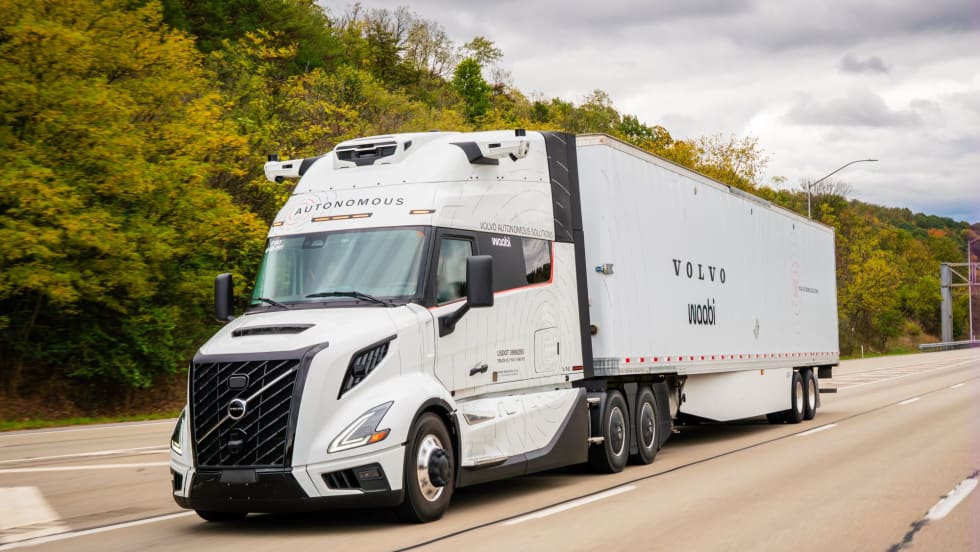
Volvo, Waabi Start Commercial Autonomous Operations in Texas
Volvo VNL Autonomous trucks, powered by the Waabi Driver, are hauling freight directly to third-party facilities for a customer in Texas.
Read More →
Samsara Launches Custom AI Agent Builder
Agent Studio lets fleets create AI tools for hours-of-service monitoring, reporting and driver support, including agents that communicate by phone.
Read More →
Geotab Links Fleet Card to Vehicle Data
The new card combines fuel discounts with telematics-based purchase controls. Geotab’s analysis also points to potential savings from choosing lower-priced fuel stops.
Read More →

How MFA Helps Protect Trucking Fleets
Multi-factor authentication adds protection when passwords are stolen. Here’s how it works and where fleets should start.
Read More →
How Better Freight Data Helps Trucking Teams Get Ahead of Disruption
Trucking and logistics teams have plenty of data. The problem is getting the right information in front of the right people soon enough to act. Better-connected data can help teams spot trouble earlier and make smarter decisions before small problems become big ones.
Read More →
Trimble: Taking Artificial Intelligence in Trucking Beyond Faster Tasks
At Insight 2026, Trimble executives argued that fleets may need to redesign workflows to get more from AI as it introduced new products and enhancements. AI’s value will depend on how fleets combine automation with their people's knowledge.
Read More →
Build a bulletproof fleet: Uniting ELDs and dash cams for total compliance
An ELD can prove compliance, but it cannot always prove what happened on the road. Discover how uniting accurate ELD data with AI-powered dash cam video can help your fleet strengthen compliance, defend against liability, protect drivers and reduce operational costs.
Read More →
Nominations Open for HDT Emerging Leaders
Heavy Duty Trucking is looking for accomplished trucking fleet professionals under 40 who are making an impact and helping lead the industry forward.
Read More →
Why Private Fleets Are Taking More Freight
Private fleets are putting their own trucks on demanding customers and high-cost lanes as companies seek greater control over service, costs, and capacity.
Read More →
Color Match Smarter: Tools That Restore & Perform
For fleet managers and collision repair professionals keeping heavy-duty trucks on the road, getting the color right the first time isn't just about appearance — it's about efficiency, turnaround time, and bottom-line results. Discover how today's digital color tools are transforming the repair process from guesswork to precision.
Read More →