





Related: Hino Focuses on Growth
Test Drive: Hino's XL 8 Class 8 Straight Truck
Hino's new forray into the Class 8 truck market is the XL 8 straight truck. Equipment Editor Jim Park was able to take it for a spin recently and found that this "Baby 8" will go head to head with any competitor and come out ahead in several ways.
September 5, 2019
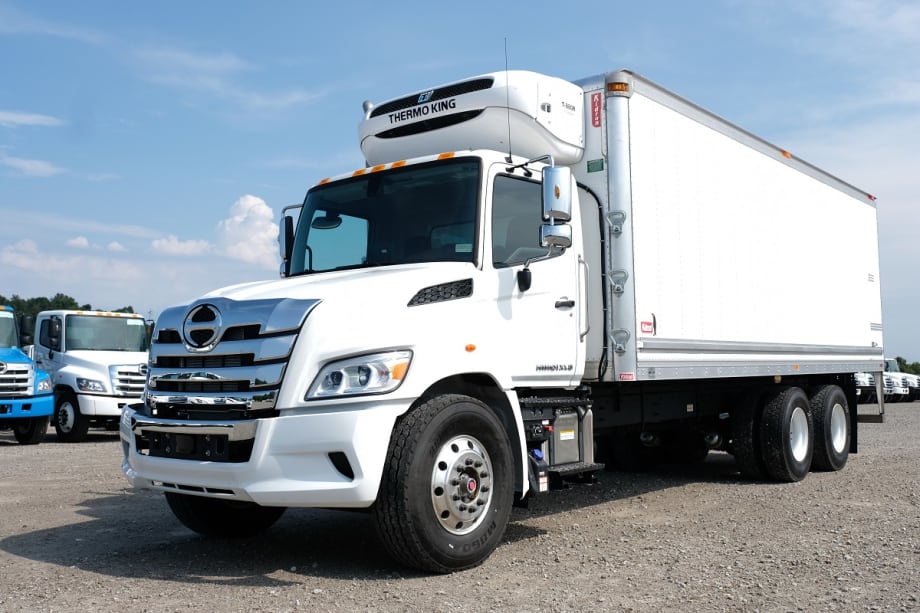
The Hino XL8 we drove was equipped with a 24-foot Kidron refrigerated cargo box with a Thermo King T-880R refrigeration unit.
Photos: Jim Park
8 min to read
We waited nearly a year and a half for a ride in one of Hino’s new XL Series trucks. This Class 8 straight truck, configured with a 24-foot reefer box, is pretty typical of the applications this truck will see when customers get their hands on them. After all that time, I have to say it was worth the wait.
According to Glenn Ellis, Hino’s senior vice president for customer experience, Hino had been toying with the idea of getting into the heavy Class 7 and Baby 8 markets for 10 years, and finally got down to serious work on the project in 2015. Three years later, in March 2018, Hino launched the XL at the Work Truck Show in Indianapolis. We hadn’t heard much about the XL Series since then, but Hino offered us a test drive a day before the official grand opening of its new 1-million-square-foot manufacturing facility in Mineral Wells, West Virginia.
“The truck will be offered in a 4x2 straight truck and tractor configuration as well as 6x2 straight truck and tractor,” Ellis said during its premiere at the Work Truck Show. “We are targeting the 33,000- to 60,000-pound gross vehicle weight and the 66,000-pound gross combination weight segments, which have historically been voids in our product lineup.”
Ellis sees the XL in segments such as construction, utility, beverage, reefer box, roll-off, and towing and recovery. “The XL represents an opportunity for Hino to expand our presence into a much larger customer base than we have had in the past, especially in the food and retail delivery in urban environments.”
All XL series trucks are powered by the A09 turbo-diesel engine. It’s new to North America, but more than 50,000 of them are already working in other markets around the world. It has been in production since 2007 so makes its North American debut with 15 billion real-life miles behind it. The 8.9L inline-6 engine produces 300-360 hp and 900-1,150 lb-ft of torque. The A09 features common-rail fuel injection, a variable geometry turbocharger and Jacobs engine brake. Hino claims a B10 life rating of 1 million miles. (B10 is the expected engine life in miles of operation before 10% of that model of engines in operation will require a major repair, overhaul or replacement.)
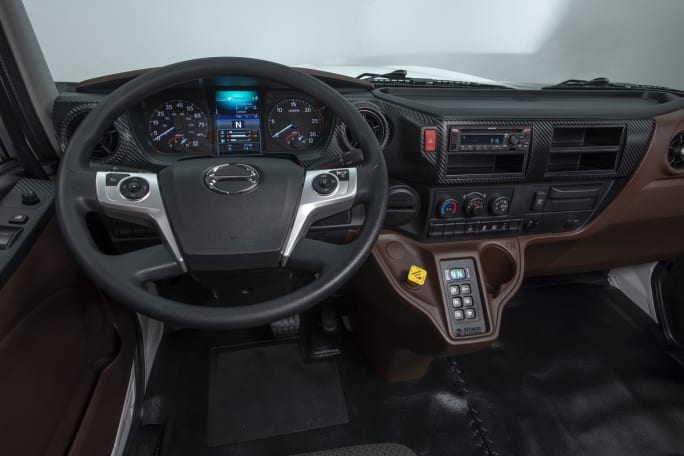
The dash in the XL8 is nicely styled, functional, and thoughtfully laid out, with everything the driver uses frequently placed front and center.
In the cab
The tall, squarish cab is a trademark of sorts with Hino’s conventional models, but the XL interior is a fresh design. It has an automotive style to it, and the driver command center is grouped with the priority instruments and controls front and center. The less-used bits are pushed off to the right but still well within reach. The speedometer and tachometer surround an LED driver display that offers a selection of menus, from current and historical fuel economy to various engine parameters. I found the display a bit dim, but it was extremely bright outside, so it might have just been a question of contrast.
The controls for the display menus are on the left side of the steering wheel for easy manipulation with your thumb. The cruise control switches are on the right side of the steering wheel. The steering wheel has some fore-and-aft and up-and-down adjustment, but it's fairly limited. Sitting high up in the seat as I do, I found the top of the tach and speedo were obscured by the wheel. Not a big deal, really.
And curiously, the primary and secondary air reservoir gauges are calibrated in 10-pound/square-inch increments, so when the tanks are at full pressure, the gauges read 12, rather than 120.
On the sides of the dash A-panel are two large heat/air conditioning vent openings, which provided terrific cooling airflow around the driver. Just to the right of the A-panel is a card slot that serves no purpose here in North America, but I suspect is a requirement in Europe and other markets where they use driver smart-cards with electronic tachographs.
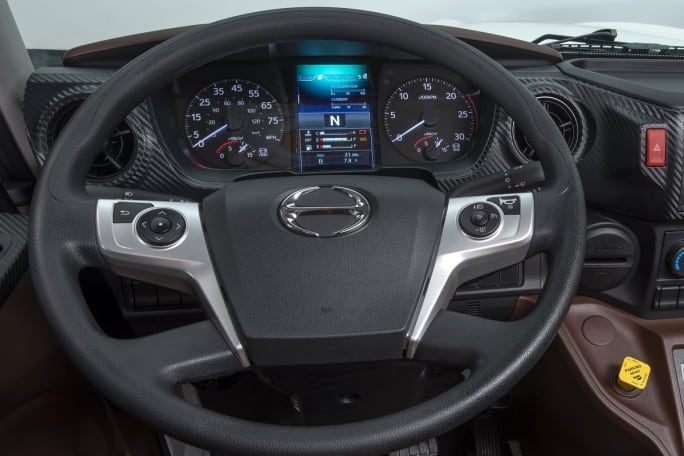
The LED driver display allows the driver to scroll through a series of menus to view current and historical fuel economy as well as engine parameters.
The near-side of the B-panel holds the radio and directly beneath that, the HVAC controls. Further out to the right is a space that could be fitted with any of several devices; our test truck had the controls for the reefer unit in that spot. It’s a more convenient location for those controls than outside on the front of the cargo box.
The test truck had a National air-ride driver’s seat with a right-hand arm rest. The passenger seat was a two-person bench seat. The cab upholstery is decent, and it did a good job of keeping engine and road noise out of the cab. I found it compared favorably to other city trucks I’ve driven recently, but it’s not as quiet as some of the newer on-highway trucks I've driven, which are now approaching passenger-car noise levels.
The two features I liked the most were the abundance of glass and the amazing door arm-rest and grab bar for pulling the door closed. The windshield is massive at 2,385 square inches, and the side windows are cut low at the front for astonishing visibility close-in around the truck. It was really the first thing I noticed when I climbed in: I sat up nice and high in the seat and I could see everything around the truck – definitely something you want in a truck that's working in the close confines of an urban environment.
The slope of the hood helped here, too. There was really nowhere for stray pedestrians to hide.
The doors boast an 80-degree opening, making it very easy to climb into. The steps and grab bars on the A- and B-pillars are well-placed. The steps are nicely engineered, especially the top step – it’s more like a landing platform. It’s big and square and flat, which is huge safety feature for drivers who will be entering and exiting the cab dozens of times a day.
Getting the hood open for the trip inspection is light work and the hood latches are big and easy to manipulate. Under the hood is the pretty tightly packed A09 engine. Fluid levels such as coolant and power steering fluid are easy to check, but the transmission fluid dipstick is a bit of a reach. The oil dipstick is tucked down low and nestled in amongst a bunch of pipes and hoses. It might be a bit hard to grab for a driver wearing big gloves, but it was easy enough to reach bare-handed. All these inspection points are on the left side of the engine compartment, while the windshield washer reservoir is on the right. (No big deal, since you have to walk around and inspect that side anyway.)
A couple of other points worth mentioning are the three-piece front bumper and the jump-start posts, which are located under the driver’s door beside a lockable battery lockout switch. Bumpers obviously can take a beating in the city, so Hino is helping to minimize repair costs with the three-piece design.
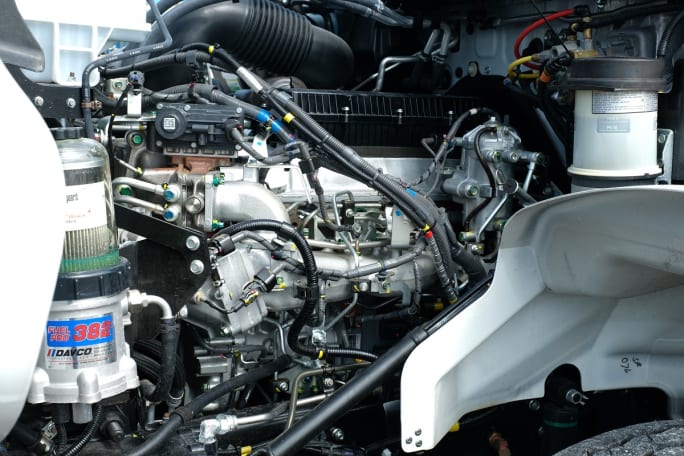
The A09 engine fits rather tightly under the hood. All the driver inspection points are on the left side. Reaching for the engine oil dipstick was a tight squeeze.
Driving the XL
A few features of the XL are immediately obvious as you climb aboard and strap in. First, the trip up into the cab is probably one of the best I have encountered. The steps are evenly placed, and they are big and grippy. The door opens wide enough for even the largest driver, and there’s a lot of belly room behind the wheel – way more than I needed. I didn’t measure anything, but I had the impression the XL is one of the tallest cabs (and driver positions) around.
The mirrors are well-placed and hardly compromise lateral visibility at all. They are mounted slightly forward, so you still have a clear view of traffic approaching from the right. The mirrors are door-mounted and jiggle a bit when you go over a good bump, but they do not vibrate at all when idling.
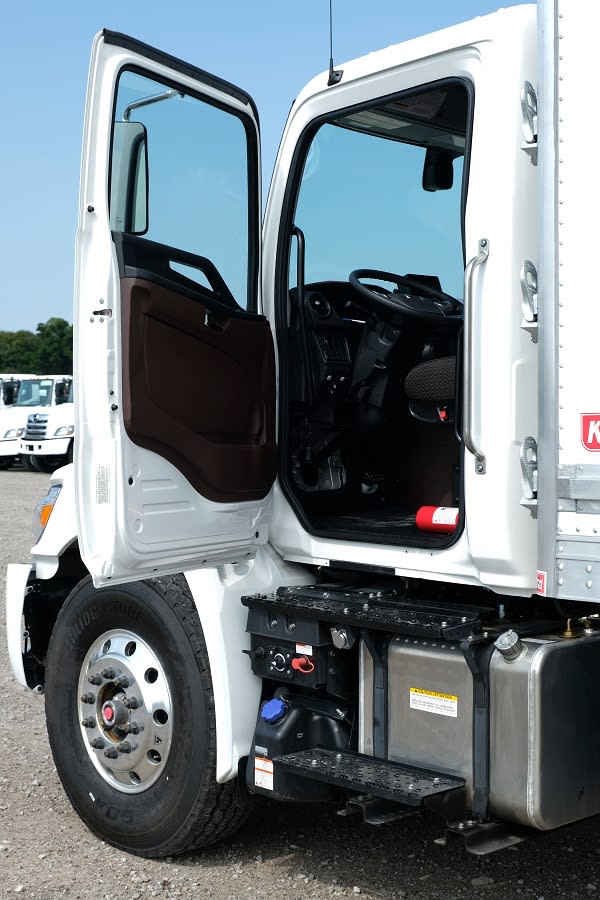
The driver's door opens a full 80 degrees, allowing easy cab entry and exit. The climb up is made safer with a pair of well-placed grab handles.
The 6-speed Allison 3000 RDS transmission was wired with Fuelsense 2.0, and that makes for much more comfortable, lower-rpm shifts, with a smoother launch and a quieter ride up through the gears.
Our test truck was equipped with a 24-foot box, tandem drive axles and a 14.6K front end, but it was surprisingly smooth and maneuverable for its size. The truck had a 50-degree wheel cut, making it possible to complete a right-hand turn from the right lane without crossing over into the next lane, except on some of the narrower streets on our route. Standard-width lanes posed no problems, right or left. The steering was firm, but not stiff, and just right on the highway.
We crossed over a really narrow bridge driving through Parkersburg, West Virginia, one that makes drivers watch both mirrors to make sure there’s a little space on the right and the left. The confident steering and the generally well-engineered feel of the truck let me cross the bridge without once feeling unnerved by the tight lanes.
I drove around Parkersburg for about an hour, negotiating the city streets, traffic lights, bridges and railroad tracks, and never felt the truck fighting back. We had about 10,000 pounds in the box, hardly a match for the A09, but it was enough to keep the drive wheels on the ground going over bumps. Even with that bit of weight, the beefy front suspension felt smooth and sturdy, not bone-jarring. And for a rubber-block drive axle suspension, the 40,000-pound Hendrickson Haulmaax was surprisingly unobtrusive.
I covered about 10 miles on Interstate 77 and about the same distance on some winding West Virginia back roads between Parkersburg and Mineral Wells. I give the XL top marks for handling in both these environments, with the added bonus of getting up to speed in the interstate pretty quickly. The Dana rear axles had a drive ratio of 5.29:1, so we were running at 1,700 rpm or so at 60 mph. That's a little fast for optimum fuel efficiency, but a ratio like that gives it the gradeability and startability you need in the city.
Hino trucks are often seen as pricier than some of the competitive models, but they come with an impressive list of standard features and warranty coverage that you pay extra for with other brands. For example, all conventional models, including the XL Series, come standard with 5-year/250,000-mile extended warranty coverage, including key components such as fuel injectors, the fuel injection supply pump, and the turbocharger. On top of that, Hino Class 6-8 trucks now come standard with a 5-year, unlimited-mileage transmission warranty on all Allison transmissions.
Hino will build all the XL Series trucks at the new Mineral Wells plant. Production began earlier this year, and the company say it plans to build 2,500 XL7 and XL8 trucks in the plant before year’s end.
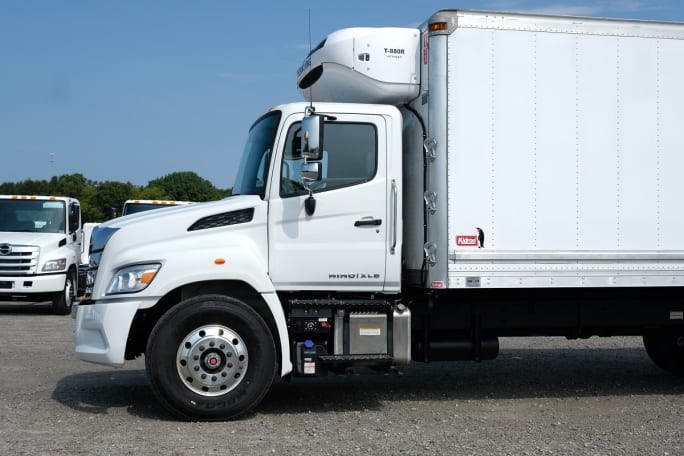
The XL 8 cab is tall, offering tremendous visibility out front and beside the truck.
Subscribe to Our Newsletter
More Equipment
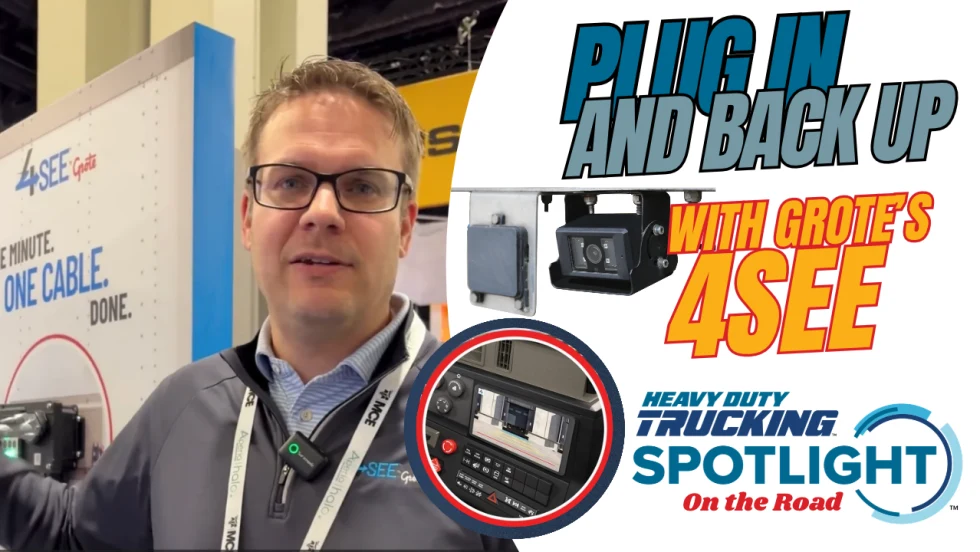
More Trailer Data Through the Same Seven-Way [Video]
Can trucking’s standard seven-way connector handle more cameras and trailer data? Grote’s Adam Slade shows HDT how the company is using new technology with its 4See trailer system, not only to add a new backup camera but also to expand other capabilities — without adding another connection.
Read More →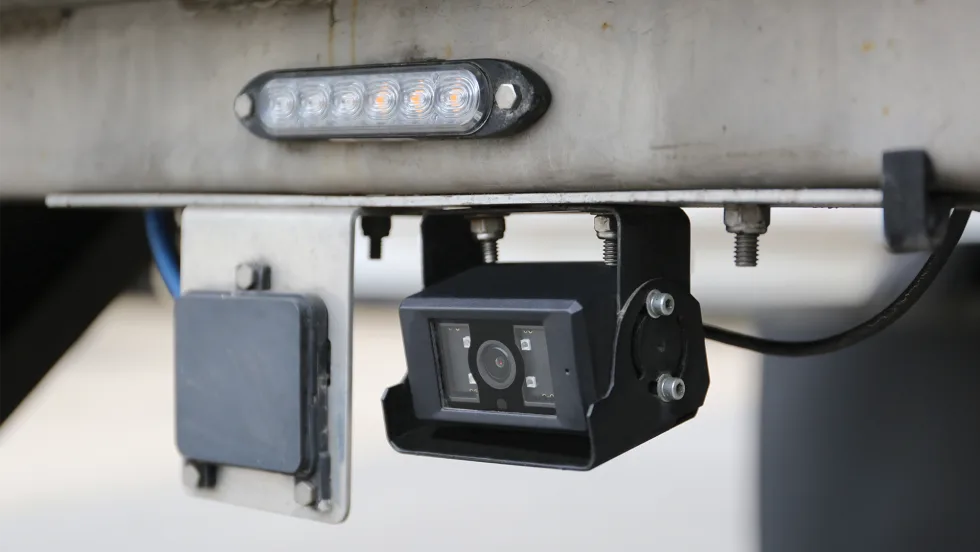
Grote: More Cameras, Same Seven-Way Connector
The next-generation 4See rear-view backup camera from Grote uses the standard seven-way connector and supports additional cameras and other trailer data.
Read More →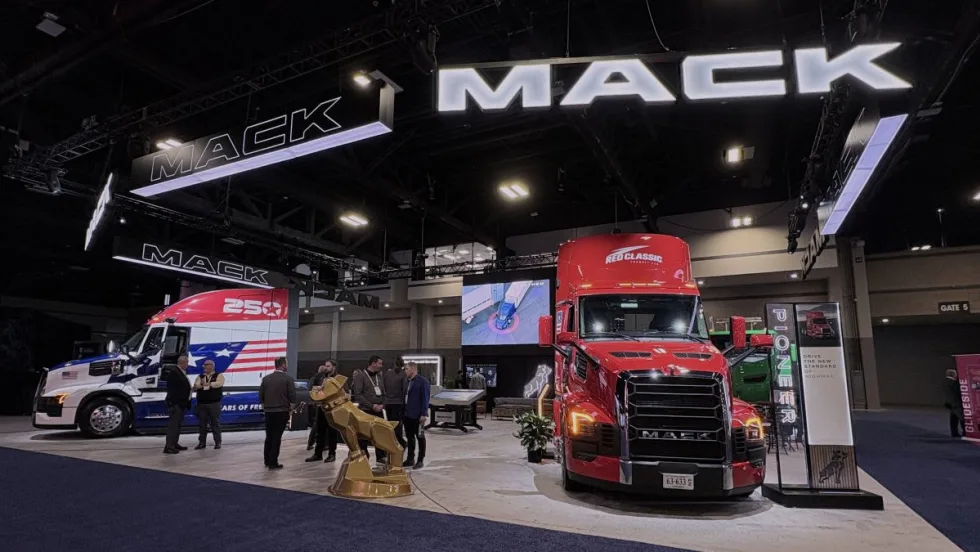
Trucks at ATA's 2026 MC&E in Charlotte, North Carolina [Photos]
From rigs decked out in patriotic America's 250 paint schemes to autonomous trucks and more, check out these photos from ATA's 2026 Management Conference & Exhibition.
Read More →
Help HDT Find Trucking’s Top Products
Have you come across a new product that could make a difference for trucking fleets? Nominate it for HDT’s 2027 Top 20 Products Awards by November 9.
Read More →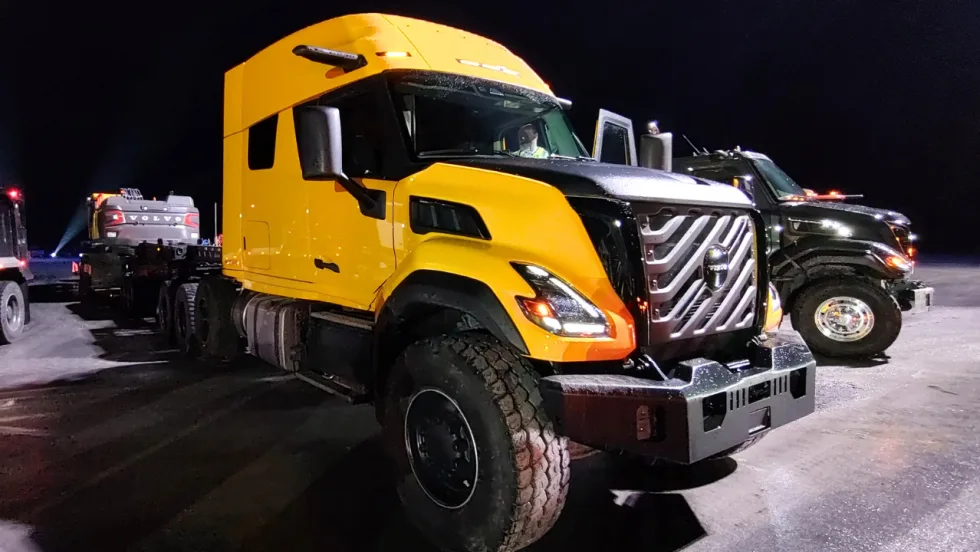
Volvo Unveils New VNX Heavy-Haul and Vocational Truck
Volvo Trucks has launched the VNX, a new vocational truck also available as a tractor in day cab and two sleeper configurations, with one heavy-haul model. The Volvo VNX is powered by Volvo's D13 platform, which delivers up to 540 horsepower and 1,950 pound-feet of torque and is EPA 2027-compliant.
Read More →
How GP Transco Cuts Trucking Fuel Costs, a Tenth of a Gallon at a Time
What’s another tenth of a mile per gallon worth? GP Transco shares how equipment upgrades and driver coaching turn small gains into meaningful fuel savings.
Read More →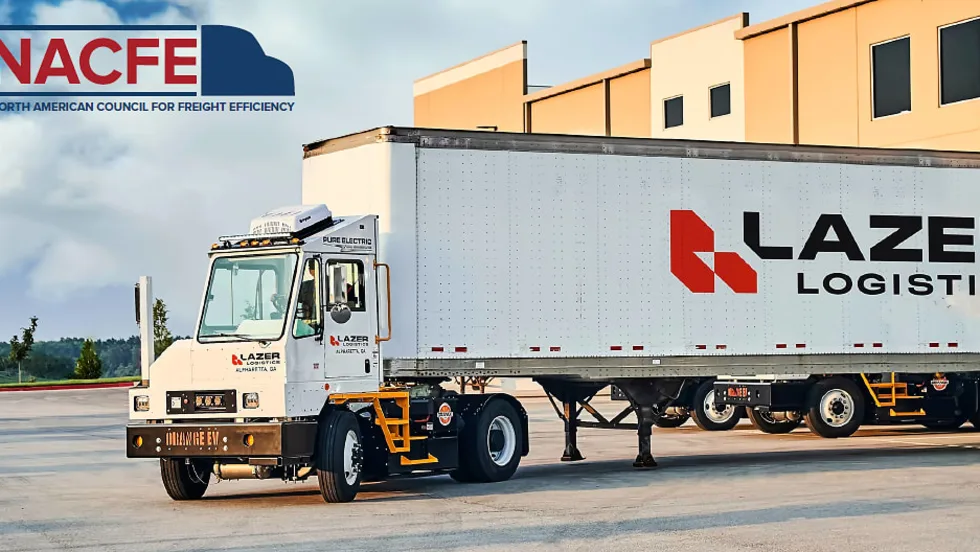
Electric Yard Tractors Move Beyond Pilots
Operating-cost savings have overtaken sustainability goals as the leading reason surveyed fleets are adopting battery-electric terminal tractors, according to new NACFE research.
Read More →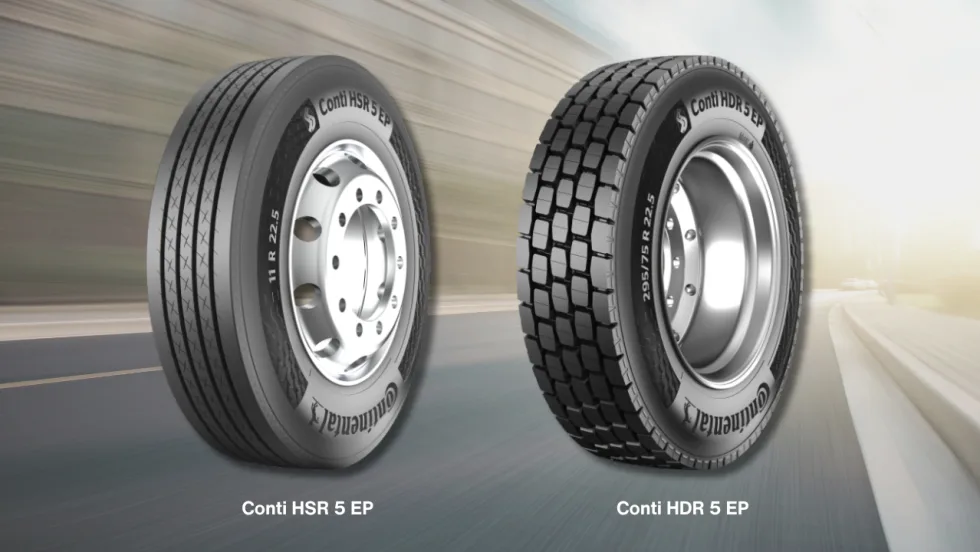
Continental Introduces New Regional Truck Tires
Continental says its new Generation 5 steer and drive tires for regional operations offer longer tread life, with estimated mileage gains of 22% and 19%, respectively.
Read More →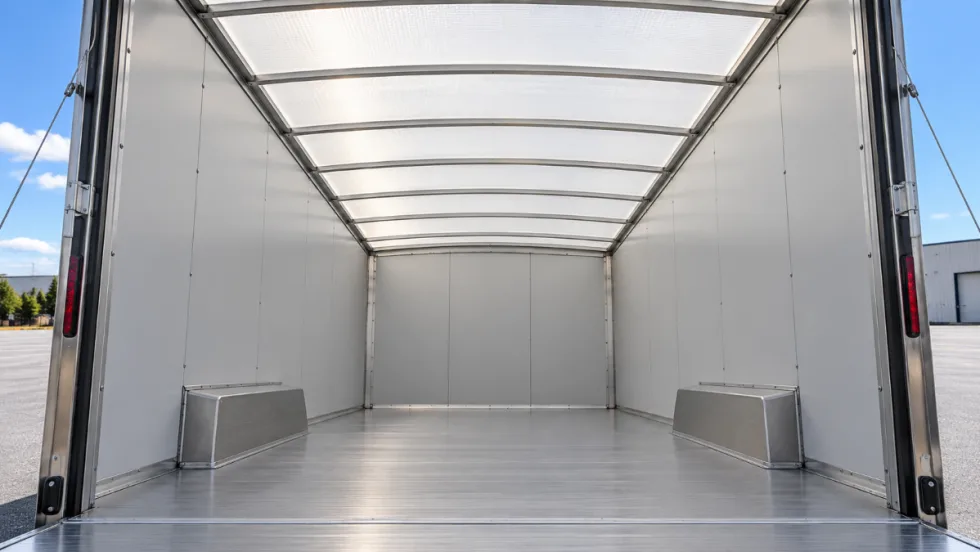
Tekmodo Introduces CargoBright Brand for Translucent Trailer Roofs
CargoBright is designed to diffuse daylight across the cargo area while performing as a working vehicle roof.
Read More →
Fleet Economics Shape Electric Truck Outlook
ACT Research expects costs, charging infrastructure, and technology improvements to drive zero-emission commercial vehicle adoption as federal regulations and incentives retreat.
Read More →