




Proterra Offers Turnkey Management for Battery-Electric Vehicles
Proterra Energy fleet solutions are a full suite of options that enable turnkey delivery of a complete energy ecosystem for heavy-duty electric fleets, including design, build, financing, operations, maintenance, and energy optimization.

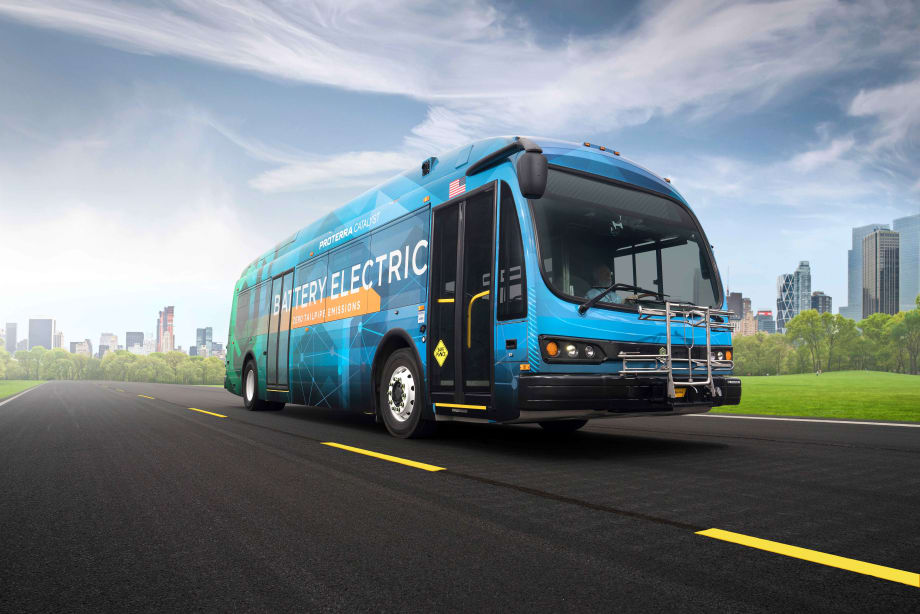
Proterra Energy services are designed to enable turnkey delivery of a complete energy ecosystem for heavy-duty electric fleets, including design, build, financing, operations, maintenance and energy optimization.
Photo: Proterra
As more fleet operators begin to consider, a transition to battery-electric vehicles, they are also facing new realities in implementing and maintaining a complex energy ecosystem along with new challenges and upfront costs.
To help fleets take on these new operational issues, Proterra, a developer and supplier of heavy-duty electric transportation systems and services, has announced the launch of Proterra Energy fleet solutions, a full suite of options that enable turnkey delivery of a complete energy ecosystem for heavy-duty electric fleets, including design, build, financing, operations, maintenance, and energy optimization.
With this solution, the company said, operators of medium- and heavy-duty vehicle fleets such as transit bus, school bus, truck and others can lower upfront cost, reduce risk, and simplify the transition to electric vehicles.
"Fleet operators are adopting heavy-duty electric vehicle technology because it's proven to meet daily route needs and provides economic and environmental benefits compared to fossil fuel vehicles," said Proterra CEO Ryan Popple. "As more fleet operators transition a larger percentage of their fleet to electric vehicles, they encounter a new set of challenges beyond simply buying new vehicles. We've taken our significant experience in designing, implementing and managing EV infrastructure projects for transit bus fleet operators throughout North America, and launched Proterra Energy fleet solutions to provide a customizable and comprehensive one-stop shop for customers transitioning to an electric fleet."
Customers deploying battery-electric vehicle fleets can work with Proterra experts in a detailed planning process, which includes high-fidelity route simulations, fleet modeling, and a detailed total cost of ownership analysis to determine the right vehicle, battery and charging configurations to meet individual route requirements.
Proterra also offers turnkey charging infrastructure installation for fleet depots and charging yards, including management of the entire build process from design to implementation.
Experienced Proterra engineers and project managers have implemented more than 45 charging infrastructure projects to date. Proterra also engages with utilities and electricity providers across the continent to install utility make-ready equipment, help its customers secure the best possible electricity rates, and identify clean, reliable electricity options.
The Proterra Energy fleet solutions program also offers smart energy management, which includes a charging-as-a-service model for management and maintenance of vehicle batteries and charging systems, as well as tools for energy optimization.
Because Proterra designs and builds its own proprietary, high-power battery and charging systems for heavy-duty vehicles, the company says this approach provides customers with an unprecedented opportunity for smart energy management and full-lifecycle management of energy storage assets.
The Proterra APEX connected vehicle intelligence system integrates the data streams from vehicles, batteries and charging systems, offering customers access to historical and real-time performance information about their electric vehicle fleet, to improve vehicle and charging operational efficiency. Further, the APEX system offers charge management features such as scheduled charging, monitoring and control of charging stations, to manage power demand and reduce electricity costs.
Proterra offers financing models to lower upfront costs and mitigate risk, the company said. Recently, Proterra announced a partnership with Mitsui & Co., Ltd. to create a $200 million credit facility to support and scale its battery lease program for transit buses, which enables electric buses to be competitively priced against diesel buses and introduces options for second life applications.
In addition, Proterra said it can retain ownership of the entire energy delivery system, further reducing the customer's risk and upfront cost. Customers can choose to invest upfront or "pay-as-you-go," paying for the infrastructure and batteries over time.
More Fuel Smarts

How Volvo Updated Its D13 for EPA 2027 [Watch]
Volvo’s updated D13 promises lower emissions without sacrificing performance or fuel economy. Take a closer look at what changed inside the engine in this HDT Spotlight video.
Read More →
Diesel Price Spike Shortens Payback for Natural Gas Trucks, Report Says
Energy Vision estimates fleets could recover the higher purchase price of an RNG-fueled Class 8 tractor in 1.3 to 2.8 years under current fuel-price scenarios.
Read More →
Calstart Becomes Catalyst Mobility, Reflecting Broader Focus
Calstart is now Catalyst Mobility, reflecting the nonprofit’s growing national role in clean transportation, including zero-emission trucks, infrastructure and incentive programs.
Read More →

Record Diesel Prices Squeeze Trucking Fleets
Average U.S. diesel prices have climbed to nearly $6 a gallon, surpassing the 2022 record as tight refinery capacity and Middle East disruptions keep fuel costs elevated.
Read More →
How Fuel Delivery Shapes Engine Performance
Fuel delivery depends on more than what happens at the injector. For fleet, maintenance and technical professionals, looking at the full path from pump to injector can provide useful context for understanding engine performance.
Read More →
East Coast Port Launches $45M Electric Truck Push
The Port Authority of New York and New Jersey announced millions in incentives for zero-emission drayage trucks, yard tractors, and new charging hubs near the port.
Read More →
California Bill Could Shed Light on Electric Truck Prices
Why do battery-electric Class 8 trucks remain so expensive? A California bill headed to Gov. Gavin Newsom would give fleets and state agencies more visibility into what manufacturers charge.
Read More →
Detroit Opens Orders for EPA 2027 Engines
Detroit isn’t starting from scratch to meet EPA 2027 diesel emissions standards. Its Gen 6 DD13 and DD15 engines keep much of today’s platform while updating the fuel and aftertreatment systems.
Read More →
Zero-Emission Truck Corridor Planned for West Coast
California, Oregon, Washington, British Columbia and Baja California are coordinating plans for truck charging and hydrogen fueling from Canada to Mexico.
Read More →
A Closer Look at Kenworth’s Electric T880E Vocational Truck [Video]
Learn more about Kenworth's T880E battery-electric vocational truck at the Paccar Technical Center, including its range, applications, upfitting considerations, and PTO options, in this HDT Spotlight video.
Read More →