





Related: Is Hydrogen Fuel the Future?
Nikola Unveils Nikola Two Hydrogen-Electric Hybrid Truck
At the Nikola World event in Scottsdale, Arizona, Nikola Motor Co. showed off two new vehicles, the Nikola Two hydrogen electric Class 8 truck and the Europe-bound Nikola Tre.
April 17, 2019
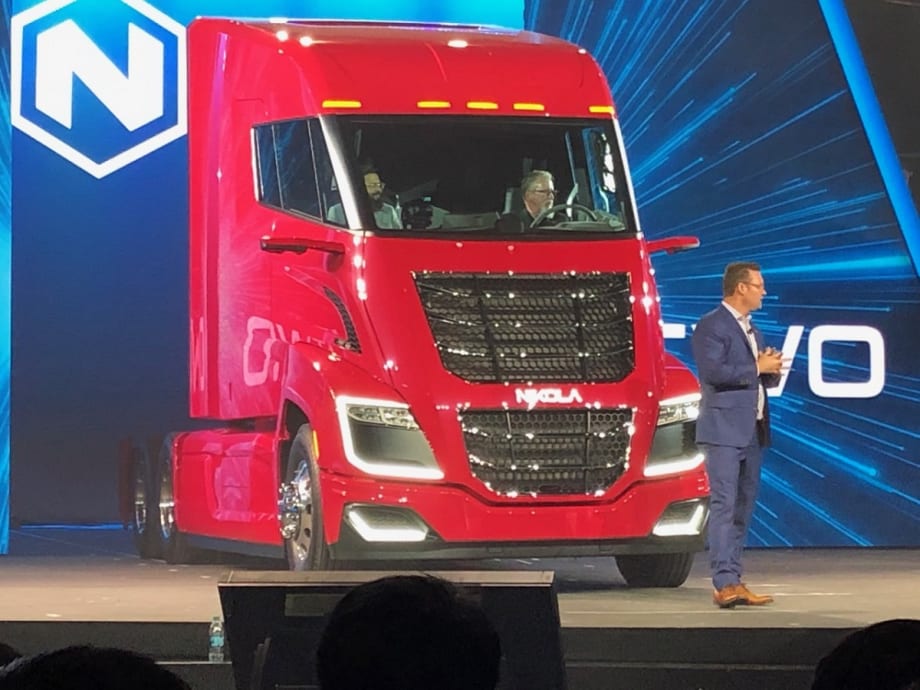
The Nikola Two truck will come in both hydrogen-electric hybrid and all-electric versions for long- and short-haul operations.
2 min to read
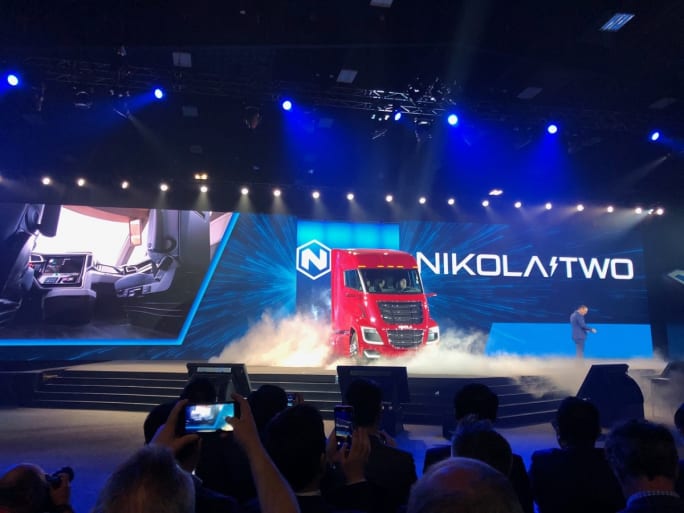
Nikola unveiled its Nikola Two truck at the Nikola World event in Scottsdale, Arizona.
Photos: Jim Park
At the Nikola World event in Scottsdale, Arizona, Nikola Motor Co. showed off two new vehicles, the Nikola Two hydrogen electric Class 8 truck and the Nikola Tre, designed for the European market.
The Nikola Two and Nikola Tre will be available with the company’s hydrogen-electric hybrid powertrain as well as all-electric versions for short-haul urban applications. The trucks feature up to 1,000 horsepower and 2,000 ft.-lbs. of torque. To accommodate the hydrogen-electric hybrid system, Nikola emphasized that the vehicles were built around the fuel cell.
All of Nikola’s products will also include autonomous driving hardware. The company says there are currently more than 13,000 Nikola trucks on order. Anheuser-Busch has ordered 800 of Nikola’s trucks alone, as part the company's strategy to convert its entire long-haul dedicated fleet to renewable power by 2025.
“I cannot wait to see your truck pull a load of Budweiser," said Ingrid De Ryck, vice president of procurement and sustainability with Anheuser-Busch, prior to the unveiling. "Give those Clydesdales a break," she said with a laugh.
Anheuser-Busch expects to integrate the Nikola trucks into its dedicated fleet beginning in 2020. The trucks will be able to travel between 500 and 1,200 miles and can be refilled in 20 minutes.
Nikola is currently building out a network of hydrogen fueling stations to support its vehicles. The company wants to build 100 hydrogen truck stations a year form 2020-2028 and plans to sell its trucks into routes or cities where they will be able to refuel. The company will start in areas with high concentrations of distribution centers.
"We recently opened our first hydrogen station at our Phoenix headquarters,” said Jesse Schneider, Nikola’s executive vice president of hydrogen. “We are leading the way and working with industry and other OEMs to develop hydrogen standards to enable fueling in less than 15 minutes. The goal is safety and interoperability, so that anyone can fuel at our station. This is a big deal.”
Nikola previously announced that the Tre will be put into production from 2022-2023. The first Tre will undergo testing in Norway in 2020.
At Nikola World, the company also unveiled two non-commercial hydrogen electric vehicles, the Nikola Reckless, an autonomous-capable military all-terrain vehicle, a redesigned NZT off-highway vehicle, and the Nikola Water Adventure Vehicle, a personal watercraft.
"We want to transform everything about the transportation industry," said Trevor Milton, Nikola CEO. "With Nikola's vision, the world will be cleaner, safer and healthier."
More Fuel Smarts

How Volvo Updated Its D13 for EPA 2027 [Watch]
Volvo’s updated D13 promises lower emissions without sacrificing performance or fuel economy. Take a closer look at what changed inside the engine in this HDT Spotlight video.
Read More →
Diesel Price Spike Shortens Payback for Natural Gas Trucks, Report Says
Energy Vision estimates fleets could recover the higher purchase price of an RNG-fueled Class 8 tractor in 1.3 to 2.8 years under current fuel-price scenarios.
Read More →
Calstart Becomes Catalyst Mobility, Reflecting Broader Focus
Calstart is now Catalyst Mobility, reflecting the nonprofit’s growing national role in clean transportation, including zero-emission trucks, infrastructure and incentive programs.
Read More →

Record Diesel Prices Squeeze Trucking Fleets
Average U.S. diesel prices have climbed to nearly $6 a gallon, surpassing the 2022 record as tight refinery capacity and Middle East disruptions keep fuel costs elevated.
Read More →
Sponsored•September 9, 2026
How Fuel Delivery Shapes Engine Performance
Fuel delivery depends on more than what happens at the injector. For fleet, maintenance and technical professionals, looking at the full path from pump to injector can provide useful context for understanding engine performance.
Read More →
East Coast Port Launches $45M Electric Truck Push
The Port Authority of New York and New Jersey announced millions in incentives for zero-emission drayage trucks, yard tractors, and new charging hubs near the port.
Read More →
California Bill Could Shed Light on Electric Truck Prices
Why do battery-electric Class 8 trucks remain so expensive? A California bill headed to Gov. Gavin Newsom would give fleets and state agencies more visibility into what manufacturers charge.
Read More →
Detroit Opens Orders for EPA 2027 Engines
Detroit isn’t starting from scratch to meet EPA 2027 diesel emissions standards. Its Gen 6 DD13 and DD15 engines keep much of today’s platform while updating the fuel and aftertreatment systems.
Read More →
Zero-Emission Truck Corridor Planned for West Coast
California, Oregon, Washington, British Columbia and Baja California are coordinating plans for truck charging and hydrogen fueling from Canada to Mexico.
Read More →
A Closer Look at Kenworth’s Electric T880E Vocational Truck [Video]
Learn more about Kenworth's T880E battery-electric vocational truck at the Paccar Technical Center, including its range, applications, upfitting considerations, and PTO options, in this HDT Spotlight video.
Read More →