





Related: Massachusetts Officials Debate Methods for Drugged Driving Tests
Panel Explores Legalized Marijuana Impacts on Trucking Industry
Trucking is caught between a rock and a hard place when it comes to marijuana, between public opinion and increasingly liberal state laws on cannabis use on one hand, and a federal government that classifies marijuana as one of the most dangerous illegal drugs on the other.
October 29, 2018
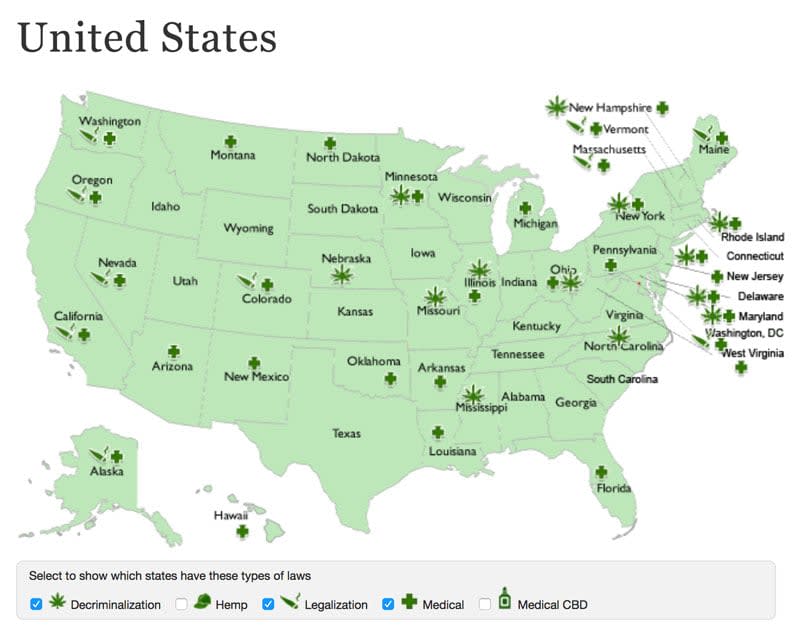
Increasing numbers of states are legalizing marijuana, but it's still against federal law.
4 min to read
Trucking is caught between a rock and a hard place when it comes to marijuana, between public opinion and increasingly liberal state laws on cannabis use on one hand, and a federal government that classifies marijuana as one of the most dangerous illegal drugs on the other.
Marijuana advocates have been very successful in getting states to legalize cannabis use, said Abigail Potter, ATA’s self-described “drug czar,” in an educational session Oct. 27 during the American Trucking Associations’ Management Conference & Exhibition in Austin, Texas. Already, 31 states and the District of Columbia have medical marijuana laws on the books. There are 13 that have decriminalized possession, which focuses on reducing fines and jail time for small amounts of marijuana. And nine states and DC have legalized marijuana for recreational use; regulating it and taxing it brings in needed revenue.
One of those states is Colorado. Greg Fulton, president of the Colorado Motor Carriers Association, said the state has brought in millions and millions of dollars in tax revenue. The state previously had legalized medical marijuana, but Fulton said the industry was surprised when the recreational law passed – and that the impact was more than they had expected. After all, he said, it was evident that a lot of people were getting marijuana prescriptions for medical use. “Little did we know how much pain our young people were in,” he said, tongue in cheek.
Meanwhile, Canada just this month became only the second country in the world to make recreational use of marijuana legal. Jonathan Blackham, director of policy and affairs for the Canadian Trucking Alliance and Ontario Trucking Association, said his group “pushed back” during the process of writing the actual regulations to address highway safety concerns, but there are still a lot of unknowns.

Because marijuana is a Schedule 1 controlled substance on the federal level, however, truck drivers are not allowed to use it; nor are trucking companies allowed to transport it.
Some of the areas of concern that the panel outlined were:
A recent study by the Insurance Institute for Highway Safety and the Highway Loss Data Institute found that in the first states to legalize the sale of recreational marijuana, there has been a 5.2% increase in crashes.
There’s no clear process at this point for how to measure driver impairment, as there is with alcohol. “We are transportation safety people; we want that kind of standard,” Potter said. Blackham said after the industry and highway safety groups pushing the issue, Canada scrambled and approved a portable device that tests oral fluids which could be used by enforcement, the Drager 5000, but he said few enforcement officials have it yet so it’s unclear how well that will work.
There are no neat charts showing how much alcohol’s in a glass of wine or a cocktail. In fact, the amount of THC in different strains of marijuana can vary greatly, a problem made more difficult by the growth of “edibles” for those who would prefer to eat their pot than smoke it.
In an industry facing a driver shortage, legal use of cannabis may cut into the available driver pool. Some drivers could even consume edible cannabis unawares and fail a pre-employment drug test. One Colorado fleet, Fulton said, tells people who re looking for a job to not even bother to apply if they have partaken of cannabis within a certain period of time – yet still was getting a 60% failure rate on its pre employment drug testing.
In Colorado, dispensaries and grow houses tend to be located by zoning and other factors in the same areas that trucking companies are. Because of the increased demand, the price of real estate for terminals and warehouses has doubled and even tripled.
When it comes to medical marijuana, companies need to be aware of potential implications under the Americans with Disabilities Act. Some states that have legalized marijuana for medical uses specifically say in their laws that employers do not have to make accommodations, but others are the opposite, and some are silent on the issue.
Companies in states with legalized marijuana need to make sure they have clear company policies regarding its use, but those policies are all over the map. For some, it’s basically, “don’t come to work stoned.” For others, there may be zero-tolerance policies.
Meanwhile, it’s likely the trend toward legalization will only continue. Potter pointed to a Pew Research Center poll released earlier in the month showing a huge shift over the past decade. Today, 62% of Americans support full legalization of marijuana. Younger Americans are even more supportive, with 74% of Millennials approving of legalization. Legalization and medical marijuana referendums are on the November ballot in several states.
Potter said at some point, it’s likely the federal government may move marijuana to a less-restricted category in the controlled substances list.
While the National Highway Traffic Safety Administration is focused on finding ways to identify people who are driving while impaired by marijuana, “I think the challenge is we want to prevent that person from getting behind the wheel in the first place. With alcohol it’s not under the influence is not our standard; you are out of service at .04, you are not allowed to drive at .02. As an organization, we need to start thinking about what are those levels.”
More Safety & Compliance

$604 Million Verdict Tests Broker Liability After Supreme Court Ruling
C.H. Robinson plans to appeal after a Texas jury found it bore the largest share of responsibility for a fatal 2021 crash, in a case that follows the Supreme Court's Montgomery decision allowing negligent hiring claims against freight brokers.
Read More →
How Fraley & Schilling Improved Logbook Compliance by Over 50%
Fraley & Schilling needed a way to close a compliance workflow gap in its ELD system without adding more work from driver training, reminders, and back-office follow-ups. It found the answer in a custom driver app.
Read More →
Farewell, CDL: Why I'm Giving Up My Commercial Driver's License
After more than 20 years as a CDL holder, HDT Executive Editor Jack Roberts is letting his commercial license expire. Not because he wants to — but because trucking's nuclear verdict crisis has made the risks of public-road test drives too great for editors, manufacturers, and everyone involved.
Read More →
Sponsored•July 1, 2026
Enhance Fleet Performance with High-Efficiency Auxiliary Power Units
Drive sustainable cost savings while increasing driver comfort during short- and long-haul logistics operations.
Read More →
Wabash Trailers Recalled for Improperly Installed Underride Guards
More than 900 Wabash dry van trailers may not comply with the Federal Motor Vehicle Safety Standard for rear impact guards.
Read More →
Why K&B Trucking Is Embracing AI and Driver Safety Technology
Crunching data and embracing artificial intelligence are key in K&B Trucking's safety efforts, says the company's safety director.
Read More →
The Hidden Problem Behind FMCSA's ELD Revocations
NMFTA researchers say dozens of registered ELDs may be built on the same software platforms, allowing compliance and security concerns to persist even after individual devices are removed from the market.
Read More →
ATRI Wants Motor Carriers for Driver-Facing Camera Study
In this new study, the American Transportation Research Institute will explore how driver-facing cameras can impact safety and operational metrics in trucking fleets.
Read More →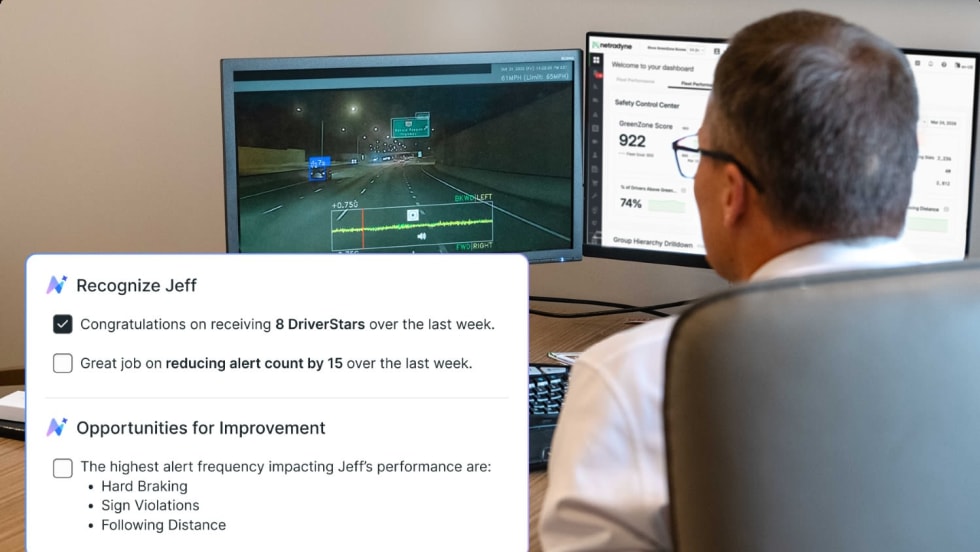
Netradyne Intelligence Uses New AI Agents to Automate Response to In-Cab Camera Data
The company called the next-generation in-cab camera safety platform "a fundamental shift from systems that report on what happened to systems that actively drive what should happen next."
Read More →Mack, Volvo Issue ‘Do Not Drive’ Recall on Possible Wheel-Offs
Owners will be sent advance notice not to operate their affected vehicles until the remedy is performed.
Read More →