





Related: Fleets are Chasing Drivers with Better Pay and Quality of Life
Truck Driver Pay and Fuel Prices on the Rise per ATRI Report
Operational costs increased to their highest levels since 2014, driven by rising fuel prices and pay and benefit increases for drivers, according to a new report from the American Transportation Research Institute.
October 2, 2018
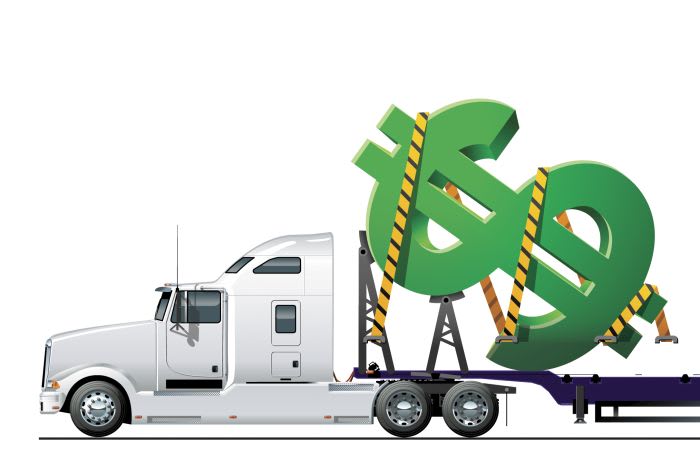
Increasing driver wages and benefits as well as rebounding fuel prices caused trucking operating costs to increase by 6% in the latest ATRI report.
2 min to read
Fleet operating costs increased to their highest levels since 2014, driven by rising fuel prices and pay and benefit increases for drivers, according to a new report from the American Transportation Research Institute.
The 2018 update to ATRI’s report, An Analysis of the Operational Costs of Trucking, shows that the average marginal cost per mile for fleets rose 6% in 2017 to $1.69. Over the nine years of ATRI research, costs have only topped that mark in 2011 and 2015, at around $1.70. ATRI also tracked the average hourly cost for fleets, totaling $66.65 per hour, which is up nearly $3 from 2016.
Over the three previous years, operating costs were trending downwards due to decreased fuel prices, which bottomed out in 2016. However, there has been a rebound in fuel prices since then. In 2017, fuel costs made up about 36 cents of the cost of every mile. That's an increase of a little more than 3 cents, but still well below the high of 64.5 cents per mile recorded in 2013.
Driver wages and benefits make up the largest chunk of fleet’s operational costs, representing 72.9 cents or 43% of the total average marginal costs. Responding to an increasing need for qualified truck drivers, driver wages and benefits have increased 33.6% in the past five years. The report found that benefits in particular have been increasing as fleets realize that increasing pay is not enough to recruit and retain new drivers.
Around 63% of the fleets participating in ATRI’s study offer drivers some type of financial incentive or bonus beyond wages, many of these based on safe driving and on-time delivery performance. ATRI expects pay and benefits to continue to rise due to booming freight demand this year and severe truck capacity constraints.
Fuel prices and drivers pay were not the only costs that increased in this latest report. In fact, every category aside from truck insurance premiums showed a measurable increase from the previous year. Notable increases were also seen in equipment leasing and purchasing, permits and licenses, tires, and tolls.
Fleets that participated in ATRI’s survey span a range of sizes and types and collectively operate nearly 179,000 tractors, 4,773 straight trucks, and over 360,000 trailers. The majority of the fleets are smaller carriers with truck counts of 250 or fewer while the rest, 44.7%, split evenly between carriers operating between 251 and 1,000 power units and fleets running over 1,000 power units.
The ATRI report includes graphs and detailed analysis of all costs and is available online at TruckingResearch.org.
More Fleet Management

Sponsored•September 1, 2026
How Telematics Improves Visibility, Control, and Performance in Refrigerated Fleets
Explore how telematics help refrigerated fleets improve visibility, uptime, efficiency, compliance, and cargo protection across connected cold chain operations.
Read More →
What the U.S.-Canada Trade War Means for Trucking
Escalating U.S.-Canada tariffs could disrupt cross-border freight, reduce truck volumes, raise costs, and create new uncertainty for carriers on both sides of the border.
Read More →
What Are Trucking’s Top Concerns for 2026?
The American Transportation Research Institute wants to know what's worrying trucking fleet managers, drivers, and other stakeholders in its annual Industry Issues survey.
Read More →

American Trucking Associations Looks for a New Leader
ATA President and CEO Chris Spear abruptly left his job at the association on August 21, at a pivotal time for the trucking industry.
Read More →
Public Wi-Fi Cybersecurity Risks: How Truck Drivers and Fleets Can Protect Their Data
Public Wi-Fi can expose truck drivers and fleets to credential theft, malware, and other cyber threats. Here’s how to reduce the risk on the road.
Read More →
For Nicky Cupp, Fleet Innovation Starts With Frustration
HDT Truck Fleet Innovator Nicky Cupp turns everyday pain points at Fraley & Schilling into opportunities for better technology and smarter processes.
Read More →
Adam Buttgenbach’s Approach to Electric Trucks: Start With Where They Fit
HDT Truck Fleet Innovator Adam Buttgenbach helped PepsiCo build one of North America’s largest EV fleets by focusing on where electric trucks make operational sense.
Read More →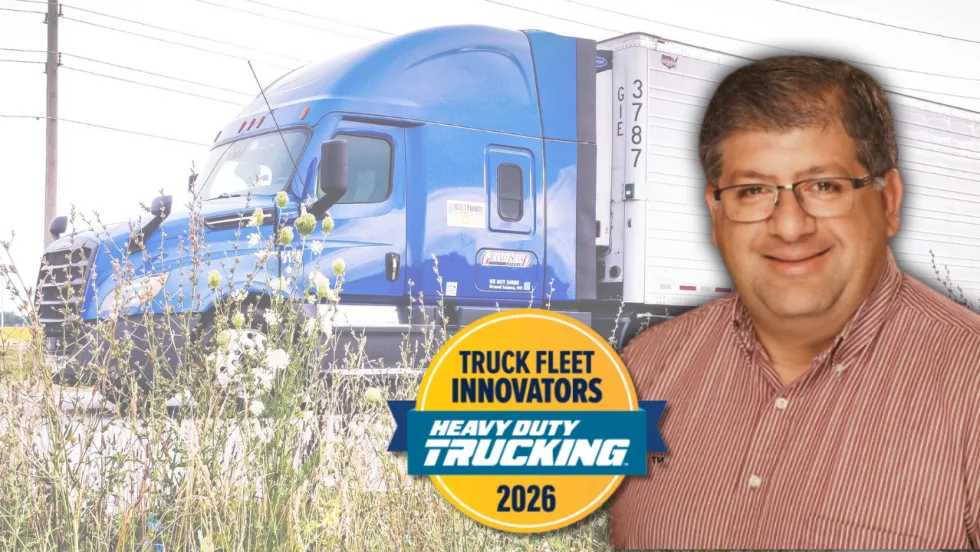
Deen Albert: Let Automation Do the Math, People Make the Decisions
HDT Truck Fleet Innovator Deen Albert makes sure people are still at the heart of operations at Grand Island Express, even while adopting artificial intelligence tools. AI-assisted dispatch helped boost revenue 25% with the same number of trucks.
Read More →
Trimble’s New AI Agent Takes Aim at Fleet Back-Office Busywork
Arc Agent works across Trimble TMS products to automate repetitive tasks such as freight orders, maintenance, invoices, fuel costs and more.
Read More →
How HDT’s 2026 Truck Fleet Innovators Are Rethinking Fleet Operations
Meet five trucking leaders who are challenging assumptions, solving operational problems, and putting innovative ideas to work.
Read More →