





Related: Daimler's Daum Talks Future Trucks and Current Business at IAA Show
Mercedes-Benz Shows Autonomous Van Concept for Freight, Passengers
Mercedes-Benz Vans showcased a concept of an autonomous, all-electric van in two variants, one for freight and one for passengers.
September 21, 2018
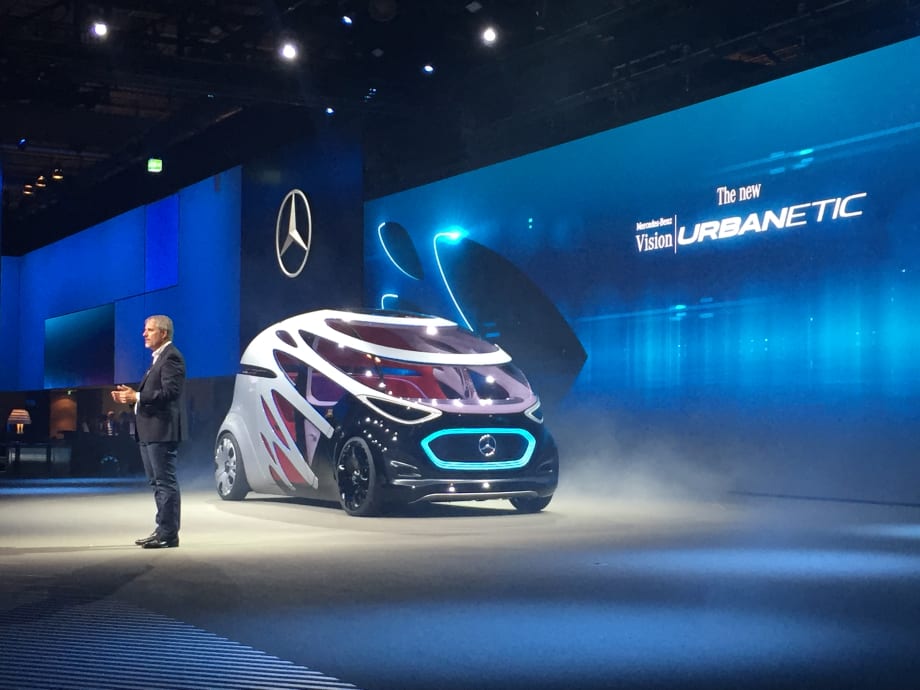
The passenger/rideshare version of the Vision Urbanetic concept.
Photo by Deborah Lockridge
2 min to read
Mercedes-Benz Vans unveiled a concept autonomous, all-electric van in two variants, one for freight and one for passengers at the IAA Commercial Vehicles Show in Hannover, Germany. The vehicle showcased the Vision Urbanetic autonomous driving platform — what the company calls a “revolutionary mobility concept” for urban areas.
The Vision Urbanetic mobility concept highlighted at the show is based on an autonomous, electrically powered driving platform that can carry different interchangeable bodies for people-moving or goods transportation.
Wilfried Porth, who heads up Mercedes-Benz Vans, told the crowd of assembled global journalists that innovative solutions are needed for the cities of the future, which will be larger and more densely populated. Quality of life issues, such as traffic, noise, and emissions, can be addressed with electrification and autonomous technologies, he noted. "Autonomous vans make transport and mobility solutions possible that we could hardly have imagined a few years ago, Porth said. "I'm convinced this will fundamentally change the rules of the game in our industry, both in passenger transport and freight transport.
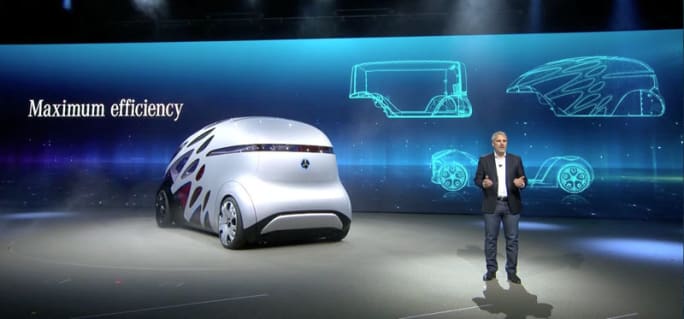
Slide shows the interchangeable cargo/passenger body concept of the Urbanetic as the people-moving version rotates on the stage in the foreground.
Screen capture from Mercedes-Benz video at IAA press conference
As a ridesharing vehicle, Vision Urbanetic could carry up to 12 passengers, while the cargo module can accommodate up to 10 Euro-pallets. It offers a load length of 3.70 meters in an overall vehicle length of 5.14 meters.
The vehicle on display at the show was the passenger-carrying version, a sleek futuristic pod. The cargo variant, shown on video, was a more boxy cargo pod.
Gordon Wagener, Mercedes-Benz design boss, used the term “holistic” in describing the Urbanetic concept, as well as bringing intelligence and emotion together. “Form follows function,” he noted.
The concept is also “part of a cloud-based system solution.” It incorporates an IT infrastructure that analyzes supply and demand, resulting in an autonomous fleet operating on routes planned flexibly and efficiently based on current transport needs.
“Vision Urbanetic is a mobility platform in the truest sense of the word,” said Volker Mornhinweg, head of Mercedes-Benz Vans, in a news release. “We have developed a vision that makes commercial sense for companies and that can make the city of the future more livable for its inhabitants.”
Daimler is working with customers to field-test various technology elements of the concept and is working with BASF and ViaVan. In a first step, BASF will introduce an on-demand ridesharing system at its Ludwigshafen facility. It features technology from ViaVan, a joint venture between Mercedes-Benz Vans and U.S. startup Via. Further projects are set to follow in the years ahead, including an electric, fully connected and autonomous shuttle on the factory site.
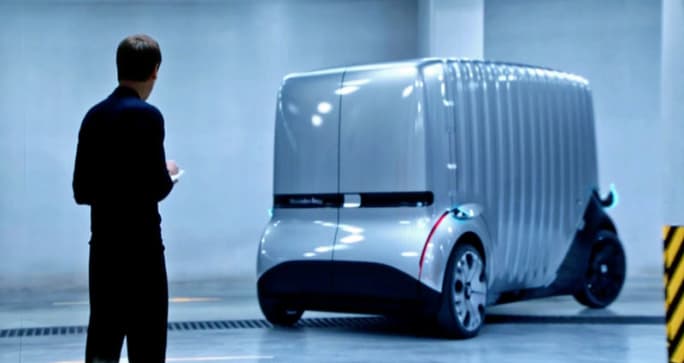
Using the same electrically driven, autonomous chassis with interchangeable passenger and cargo bodies, the Urbanetic concept could drop commuters off at work in the morning, spend the day delivering packages, then pick up commuters after work.
Screen capture from Mercedes-Benz video at IAA press conference
More Equipment
Trucks at ATA's 2026 MC&E in Charlotte, North Carolina [Photos]
From rigs decked out in patriotic America's 250 paint schemes to autonomous trucks and more, check out these photos from ATA's 2026 Management Conference & Exhibition.
Read More →
Help HDT Find Trucking’s Top Products
Have you come across a new product that could make a difference for trucking fleets? Nominate it for HDT’s 2027 Top 20 Products Awards by November 9.
Read More →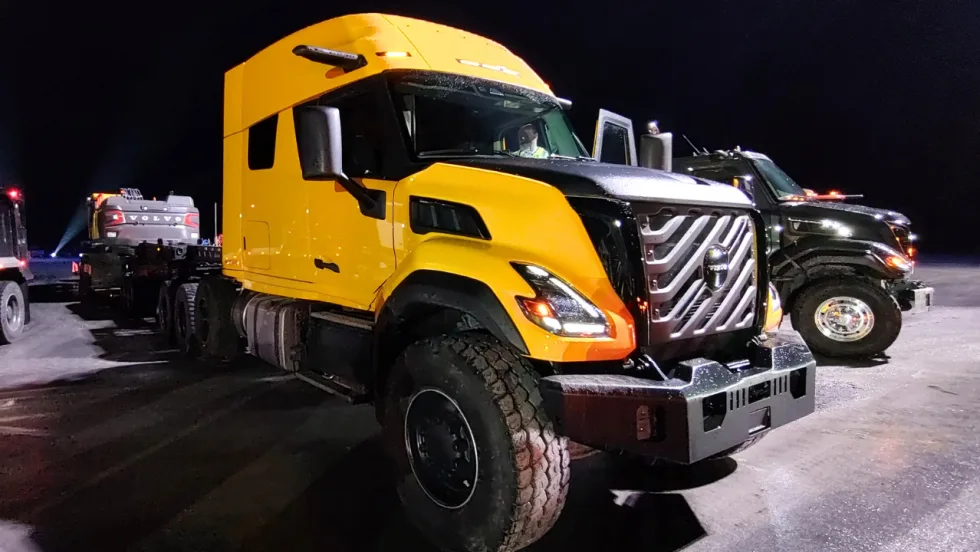
Volvo Unveils New VNX Heavy-Haul and Vocational Truck
Volvo Trucks has launched the VNX, a new vocational truck also available as a tractor in day cab and two sleeper configurations, with one heavy-haul model. The Volvo VNX is powered by Volvo's D13 platform, which delivers up to 540 horsepower and 1,950 pound-feet of torque and is EPA 2027-compliant.
Read More →
How GP Transco Cuts Trucking Fuel Costs, a Tenth of a Gallon at a Time
What’s another tenth of a mile per gallon worth? GP Transco shares how equipment upgrades and driver coaching turn small gains into meaningful fuel savings.
Read More →
Electric Yard Tractors Move Beyond Pilots
Operating-cost savings have overtaken sustainability goals as the leading reason surveyed fleets are adopting battery-electric terminal tractors, according to new NACFE research.
Read More →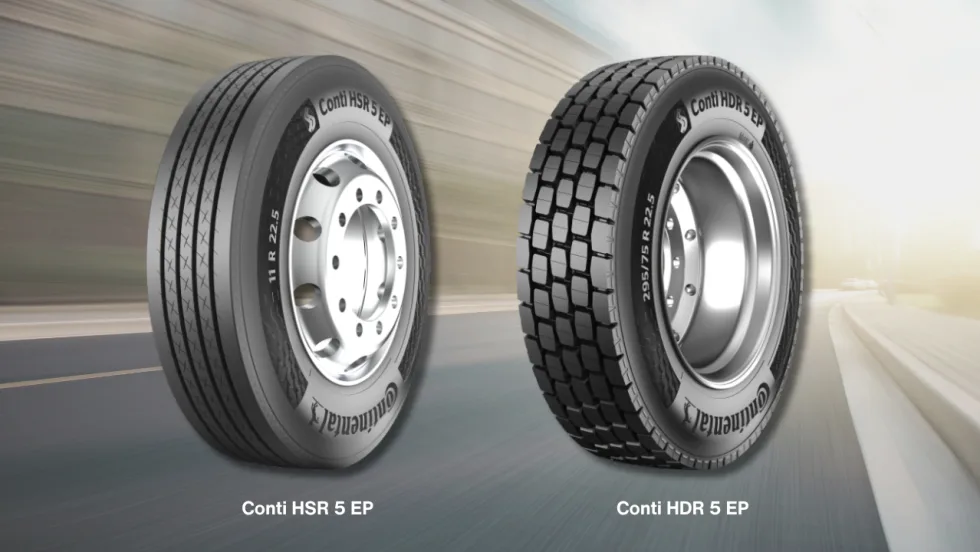
Continental Introduces New Regional Truck Tires
Continental says its new Generation 5 steer and drive tires for regional operations offer longer tread life, with estimated mileage gains of 22% and 19%, respectively.
Read More →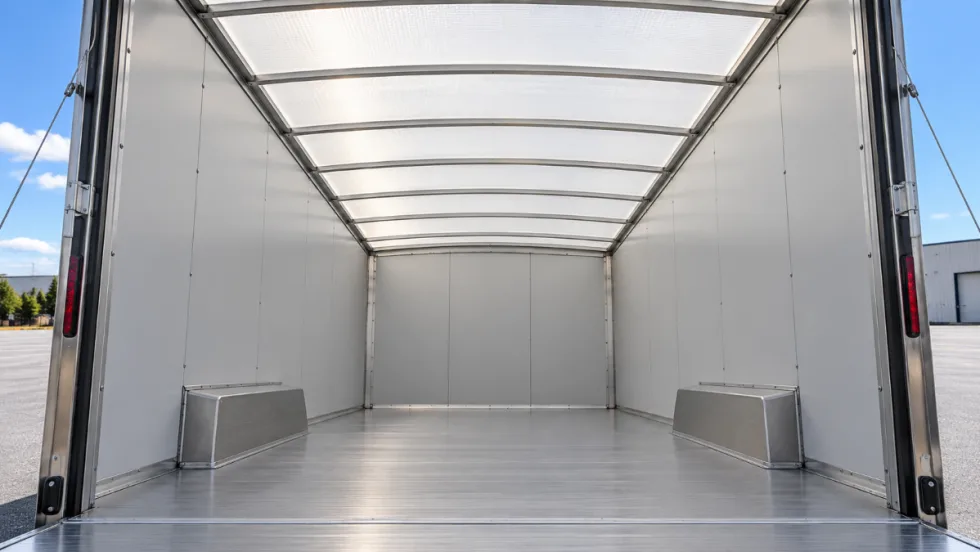
Tekmodo Introduces CargoBright Brand for Translucent Trailer Roofs
CargoBright is designed to diffuse daylight across the cargo area while performing as a working vehicle roof.
Read More →
Fleet Economics Shape Electric Truck Outlook
ACT Research expects costs, charging infrastructure, and technology improvements to drive zero-emission commercial vehicle adoption as federal regulations and incentives retreat.
Read More →
Kodiak Targets Dallas–Houston for Driverless Trucks
The company says its autonomous trucks are completing the I-45 run without a safety observer taking control. It plans to remove the observer by the end of 2026.
Read More →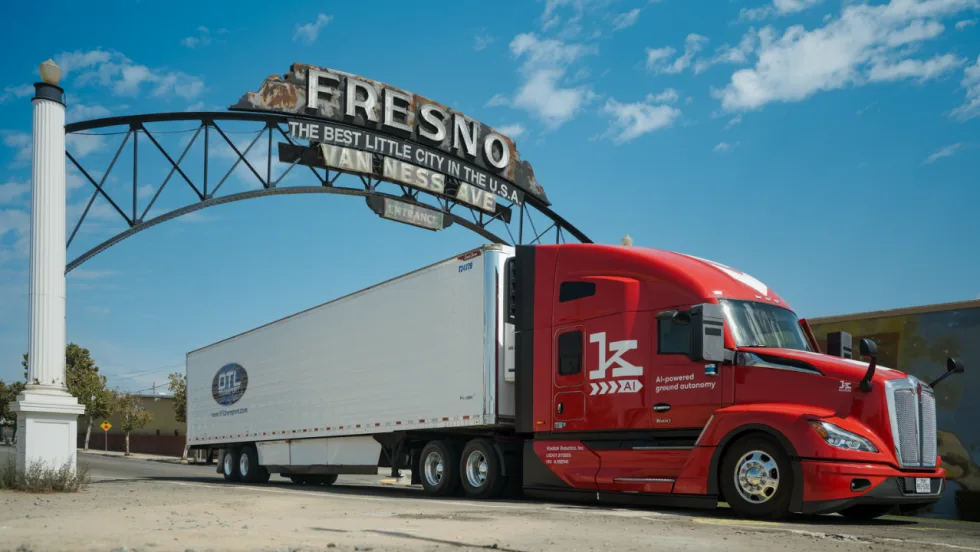
Kodiak Hauls Produce in California Autonomous Truck Pilot
Kodiak AI and DTL Transport have begun hauling produce between Fresno and Los Angeles under California’s new rules for testing heavy-duty autonomous trucks. A safety driver remains behind the wheel.
Read More →