Telematics Offer Room for Improvement Beyond ELDs, Survey Finds
With the electronic logging device mandate top of mind this year, other potential uses of in-cab telematics may be overlooked, indicates a survey by ELD and telematics provider Teletrac Navman, even as many fleets are expanding in a booming freight environment.
From Teletrac Navman's 2018 Telematics Benchmark Report
3 min to read
Credit:
From Teletrac Navman's 2018 Telematics Benchmark Report
With the electronic logging device mandate top of mind this year, other potential uses of in-cab telematics may be overlooked, indicates a survey by ELD and telematics provider Teletrac Navman, even as many fleets are expanding in a booming freight environment.
The survey, Telematics Benchmark Report: U.S. Edition, was conducted in January, shortly after the ELD mandate went into effect, and analyzed the responses of 2,400 fleet professionals.
Ad Loading...
At the time, 64% of fleets were using ELDs to track driver hours of service, but 31% were still using paper logs. It’s worth noting that at the time there was a phased-in enforcement period until April 1, where drivers were not being placed out of service nor fleets being assessed points against their scores in the federal Compliance, Safety, Accountability program. The survey found the ELD mandate to be the biggest compliance concern by far, at 75%, compared to 14% concerned about hourly/pay regulations, 14% about fuel taxes, 11% about hourly driver fraud, and 8% about highway transport.
Nevertheless, 72% said they perceived benefits from ELDs, with “less risk of compliance violations” at the top (28%), followed by “eliminating manual processes” (20%).
Telematics Beyond ELDs
ELDs, of course, are only one function of in-cab telematics. The survey found that while 77% of those responding are using telematics for vehicle tracking, there are other benefits they may be missing out on.
Respondents ranked “peace of mind/knowing where vehicles are” as the top benefit from telematics (46%), followed by “more efficient routing and dispatching” (32%). But several telematics features showed marked decrease in use since a similar survey in 2017, such as monitoring speeding (down 18% since 2017) and harsh braking (down 12%). In addition, 36% of respondents said fuel costs are their second largest expense, but only 29% reported using their telematics solution to monitor fuel usage. And 30% use telematics to track maintenance needs, down 10% from 2017.
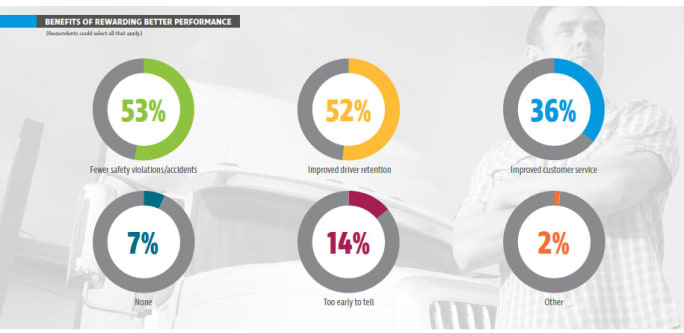
A key area where telematics could be used to improve fleet operations is in evaluating and rewarding drivers, says Teletrac Navman. But when asked if fleets were currently using telematics to measure driver performance, 43% said no. But 26% of those using telematics have seen reduced accidents as a result and, of those who benchmark and evaluate driver behavior, 57% say they reward their drivers for good performance. More than 50% of organizations said rewarding driver performance was directly responsible for reduced safety violations, and 52% said it improved driver retention.
Ad Loading...
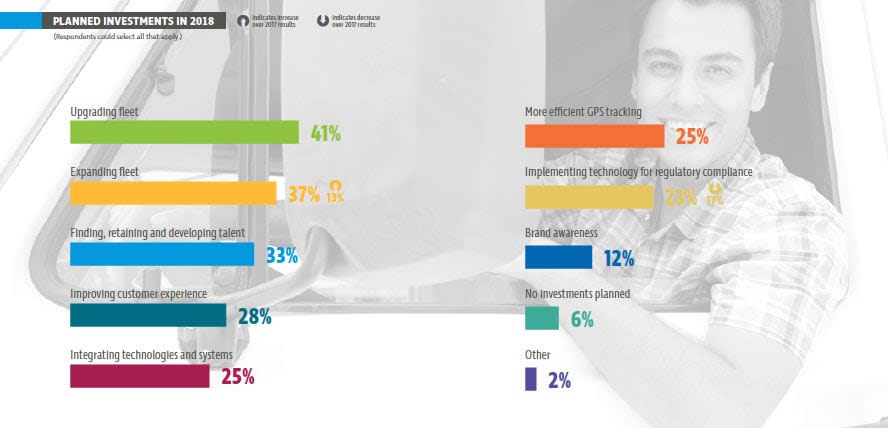
This is significant, because more than half of respondents said they are experiencing a talent shortage; 58% say they are increasing driver pay and 36% are improving benefits to recruit and retain new drivers. A significant portion, 41%, of respondents, said they planned to upgrade fleet equipment this year, and 37% said they’re expanding their fleets – up 13% from 2017.
There are several key areas where fleet respondents reported opportunities for growth, with the top one being short-haul delivery, cited by 49%, followed by long-haul freight at 48%. Small-package delivery was cited by 18% and oil and gas by 14%.
“We’re seeing more companies invest in telematics, but unfortunately many are only doing so to check the compliance box, not making the most of the technology to better their businesses,” said Sid Nair, senior director of transport and compliance, Teletrac Navman. “That’s likely due to tech fatigue, especially in the wake of regulations that demanded new technology, like ELDs. But in the long-term it will be a crippling hindrance, as we’re already seeing a widening gap between companies leveraging technology to drive fleet profitability and those who are merely reaping the benefits of the current high demand. Training everyone from drivers to fleet executives on how telematics data can boost operations is key, as the data alone won’t drive change.”
Cargo theft has shifted from parking-lot break-ins to organized international schemes using double brokering, phishing, and even spoofing tracking signals. In this HDT Talks Trucking video podcast episode, cargo-theft investigator Scott Cornell explains what’s changed and what fleets need to do now.
Daimler Truck’s David Carson sees early signs of tightening capacity — yet buyers remain wary, extending trade cycles and resisting a pre-2027 emissions surge.
The American Transportation Research Institute's annual analysis of truck speeds through congested interchanges yielded a new worst bottleneck this year.
From pricing intelligence and compliance tools to charging infrastructure, diagnostics, tires, and AI, HDT’s 2026 Top 20 Products recognize the new tools, technologies, and ideas heavy-duty trucking fleets are using to run their businesses.
Artificial intelligence is evolving faster than fleets can keep up, and telematics must evolve with it, Cawse said during Geotab Connect. The future? A single AI coordinating every system — and leaders who know how to guide it.
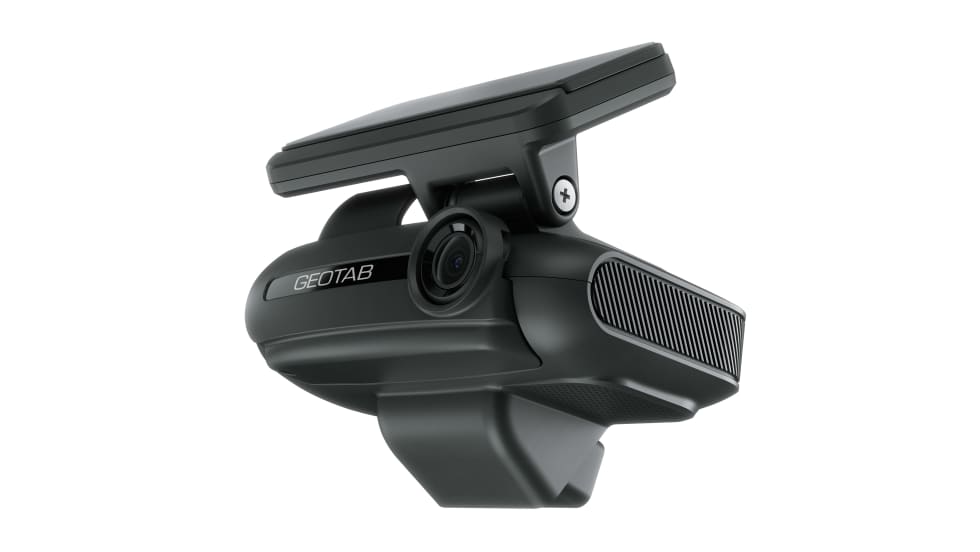
Geotab launches GO Focus Pro, an AI-powered 360-degree dash cam designed to reduce collisions, prevent fraud, and protect fleets from nuclear verdict risk.
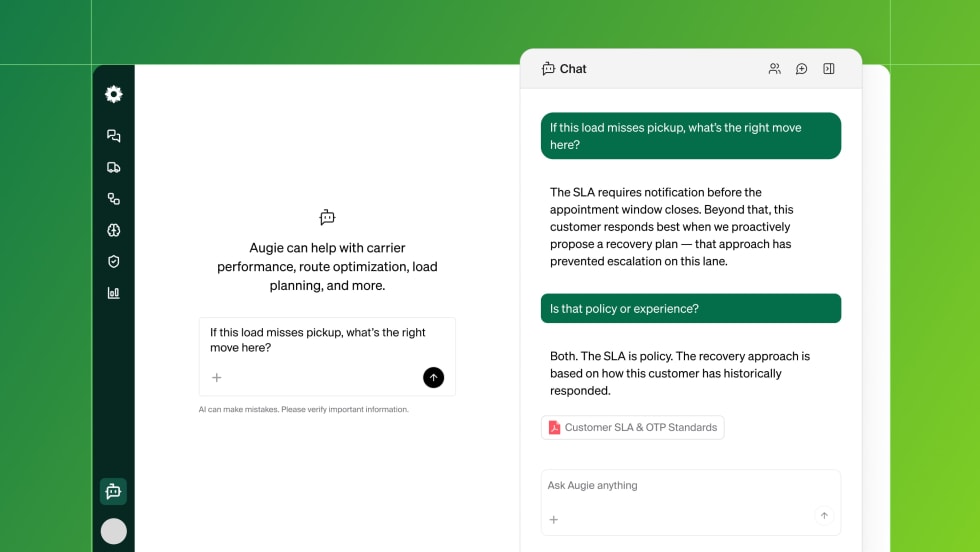
Knowledge Hub is designed to turn scattered tribal knowledge into execution-ready intelligence and help logistics teams make faster, more consistent decisions.
Quester’s AI-driven maintenance insights aim to help fleets reduce unplanned downtime, improve repair planning, and better understand the true cost of maintenance decisions.