





Related: Fleets are Chasing Drivers with Better Pay and Quality of Life
Q&A: Finn Murphy, Truck Owner-Operator and Author of 'The Long Haul'
Finn Murphy, author of "The Long Haul, a Trucker's Tales of Life on the Road," looks back over three decades of driving and the future of trucking.
August 16, 2018
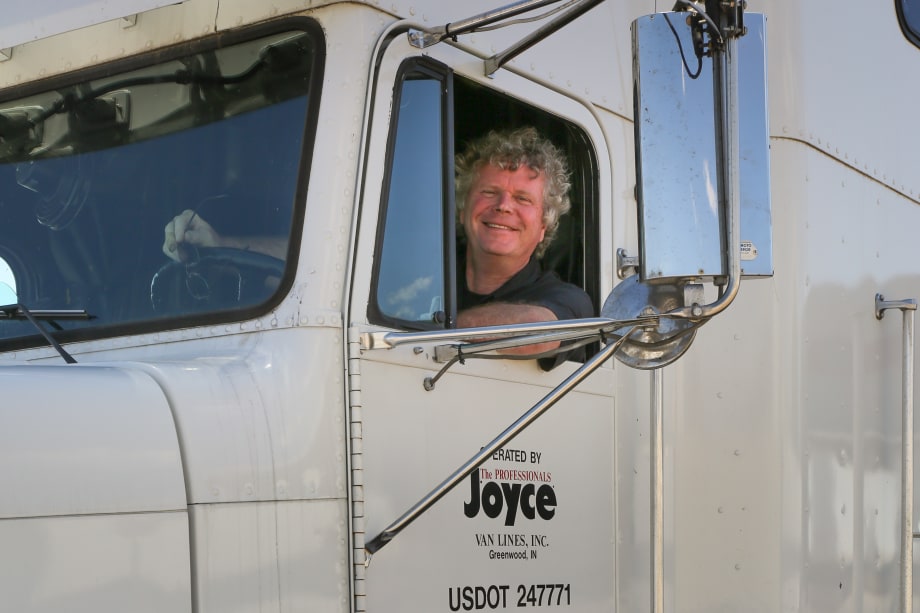
Finn Murphy was "seduced" by trucking at a young age and has written a book recalling his 30-plus years on the road. Photo: Finn Murphy
8 min to read
Finn Murphy has been around trucking and the moving van business since he was a teenager in Greenwich, Connecticut, in the 1970s. As soon as he was able, he was behind the wheel of a tractor-trailer relocating families all across the United States. He’s seen a lot of changes in his three decades behind the wheel. And a few years back, he decided to write a book about his experiences.
The Long Haul is the result of that decision, a gritty look at trucking and “bed bugging” that earned positive reviews from the New York Times and USA Today, among other publications. The book is partly a nostalgic memoir, partly a honest look at the hard lives truckers lead, and partly a commentary on a society and economy that either marginalize or ostracize the men and women that literally keep America rolling.
HDT recently caught up with Murphy in between trips to talk about his book, technology, and the state of trucking in the modern age.
HDT: What made you decide to write a book about your experiences as a trucker?
Murphy: It all started back in the 1980s. I carried this little cassette tape recorder around with me, and I started relaying interesting things that happened to me during the day as a kind of stress reliever. And then I started talking into it while I was driving. And eventually I was recording my interactions with shippers and my helpers. And one winter, I took a break and had all of these recordings transcribed. And I ended up with about 700 pages of stuff. And I started looking through it and realized I had a lot of good material for a book about life on the road. So I started writing.
HDT: When it was done and time to shop it around, was there interest in a mainstream book on trucking?
Murphy: I got an agent, and initially, he wasn’t interested. But after a lot of back and forth, I finally convinced him to shop it around. He pitched it to six different publishers – and they all wanted it! So that was nice. We finally went with Norton in New York. They put their top editor on the manuscript. Plus, they paid me in advance and set me up on a book tour. So it was nice.
HDT: What’s a book tour for a trucking book like?
Murphy: It was actually two book tours. We did the first one like you’d expect: Flying around the country, doing radio interviews and signing books. But then I had an idea: We covered my trailer with a vinyl wrap of my book cover and I went on a driving tour across the country for three months promoting the book in the usual way and at truck stops. And that was great because I got to talk to a lot of different people – but also more truck drivers.
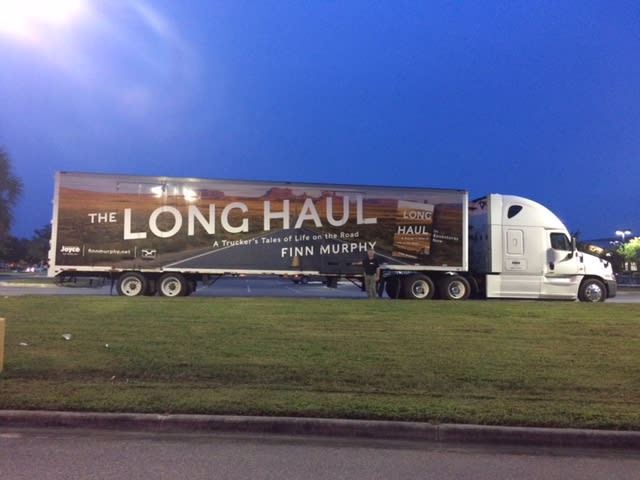
Murphy and his publishing company wrapped his trailer with his book's dust jacket for a three month book tour that included stops and truck stops around the country.Photo: Finn Murphy
HDT: After 30-plus years in this industry, what are your thoughts on where trucking has come from, and where it is today?
Murphy: Ah, man – that’s a huge question that we could talk about all day! But, the first thing I’d say is that trucking used to be a middle-class profession. That was the case when I started in 1980. And the industry was generally populated by men from the South and the Midwest who either grew up in towns with manufacturing jobs that didn’t pay very well, or on farms. In many cases, they grew up in trucking families. But they knew they didn’t want to work on a farm or in a factory and they saw trucking as a good way to support their families.
That’s one part of it. Then, things kind of get mythologized a bit. You had a two-tier industry in those days – regulated freight haulers, and unregulated ag haulers. And most of the ag haulers were owner-operators. So this trucking culture grew up based on those guys and the wildcat drivers in the 1940s and 1950s. They created this “Cowboy” myth of the American trucker. They hit the road, made decent money, supported their families and got to see the country.
Today, the average age of a long-haul driver is 55 years old. Very few young people want into trucking. To them, it just looks like a bad job. And the problem is, they’re right. Most truckers today make between $36,000 and $42,000 a year. Which is nothing. Moreover, most of them get paid by the mile. So they’re not getting paid waiting around truck stops for a load, waiting around a loading dock for freight, or when they’re sitting in traffic. All told, you’ve got drivers today who really work something like 3,000 to 4,000 hours a year. And when you break it down, that’s not even $15 an hour.
HDT: You’ve driven a lot of trucks in your career. What do you drive these days?
Murphy: I’m driving a new, 2018 Freightliner Cascadia Evolution with a 436-cubic-inch Detroit under the hood. I’ve got a double-loft sleeper, ‘fridge, microwave oven, Bluetooth – lots of little tweaks to make my life as comfortable as possible while I’m out. The Cascadia is a nice workhorse of a truck. If you’re a driver in business for yourself, it’s a great truck. Other companies build great trucks – they all do. But I’m not interested in paying for chrome and lights and things like that. I run household goods. So I’m usually running about 70,000 lbs. So I’m not super heavy. I do a lot of mountain driving, and that Detroit will take me right up those steep mountain grades at 55 mph without any trouble. I don’t speed. I don’t get paid by the mile, so I don’t need to. I haven’t had a ticket in 30 years.
HDT: What about fuel economy and safety features?
Murphy: I buy my own fuel. So fuel economy is important to me. My last truck got about 5.5 mpg. This Cascadia gets 7.7 mpg. So that’s a nice break. And I like all the safety features on the truck. Drivers don’t talk much about safety. But to tell the truth, I get scared out there a lot between sudden rainstorms, mountain grades, other cars and so forth. When I was on my book tour, I met this retired Walmart driver. He had 5 million accident-free miles. I asked him how he accomplished that. He said he always went slow and tried to anticipate what was going to happen around him, and what could go wrong if it did. I think that’s good advice for any driver.
HDT: What do you think about all the technology that’s coming into trucking now?
Murphy: I was talking to the safety director at the company I’m contracted to now, and he said that when the first GPS navigation systems came along, his drivers got lost three times more often than they did using a road atlas. And they got into more trouble too, going down one-way streets or getting caught in low overpasses – because they weren’t internalizing routes or really even paying attention. They were just following instructions. So technology can cut both ways, if you’re not careful. For me, those systems are incredibly valuable, because I go to private residences, and not just terminal to terminal.
HDT: What about autonomous vehicles – self-driving trucks?
Murphy: I talk to guys all the time who tell me it’ll never happen – or it’s 20 years down the way, or something. But I see Apple, Tesla, GM, Ford, Toyota and all these other companies spending billions of dollars and racing each other to be first with autonomous technology – there’s no it’s not going to happen. People don’t know it, but they’ve logged more than 22 million road miles on Class 8 trucks under autonomous control in this country already. So I think it’s imminent. I think we’ll start seeing the first models in under three years. I mean, we have 41,000 people killed in road accidents every year. And doesn’t include injuries and property damage. I think my grandkids will look back on us in amazement that we were allowed to drive automobiles and trucks. They will probably live in a world where it’s illegal to drive an automobile because they’re so dangerous. They’ll look at driving a car the way we look at driving a horse and buggy, or something.
HDT: What about electric trucks?
Murphy: I thought the Tesla Semi launch was pretty amusing. [Elon] Musk said he was directing that truck at owner-operators. And that’s hilarious: First, off they aren’t any owner-operators left. And among those that are still out there, who’s got $380,000 to buy a truck? And if you don’t have a fleet terminal to go to every night, where are you going to plug the thing in?
HDT: In your book I found your description of the little cliques and hierarchy that drivers have to be pretty interesting. For example, you’re a “bed bugger…”
Murphy: I was having a bit of fun with that. It’s not serious. But I get ribbed for being a “bed bugger,” and I’ll say that freight haulers just sit in truck stops and drink coffee all day. It’s fun. Humans in general have always sort of established hierarchies in groups. But if it’s 3 a.m. in the mountains and we’re on the side of the road thawing our brakes out with flares or trying to get chains on our tires, we’re all brothers.
HDT: Truck driver is the number one job in many states today. So many families depend on trucking for their livelihood, and the country depends on trucking to keep the economy going. And yet, truckers get no respect. Why do you think that is?
Murphy: Somebody said something the other day that really resonated with me: If you don’t like all these trucks crowding around you on the road, stop buying stuff! But you know, I wish people were more thoughtful about truck drivers. Every one of us represents the driving community out there. So if there’s a cowboy running loose out there, it reflects on all of us. But most of us aren’t like that. We’re just Americans with family lives, emotional lives and aspirations, just like anyone else. We want to be part of the economy. We’re not a bunch of crazy cowboys. We’re hard-working Americans doing a tough job – and many of us are making shit money for doing it.
HDT: What’s next for you?
Murphy: I’m writing another book. So that’s interesting. And I’m at home today in Colorado – but I’m out the door tomorrow; back out on the road on another trip.
Subscribe to Our Newsletter
More Drivers
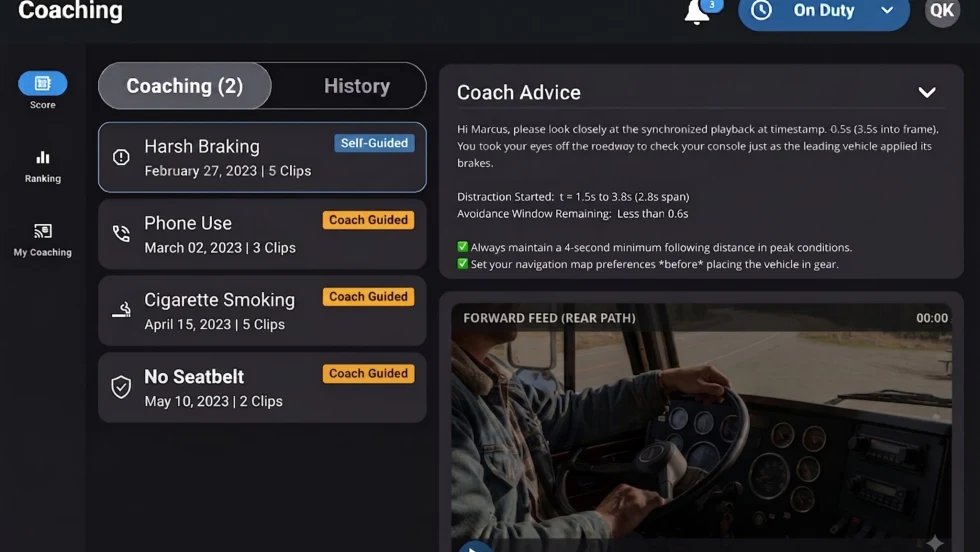
Platform Science Adds Dispatch and Safety Tools
Four additions to PS Fleet help fleets monitor loads, manage driver coaching, share truck locations and adjust video system settings.
Read More →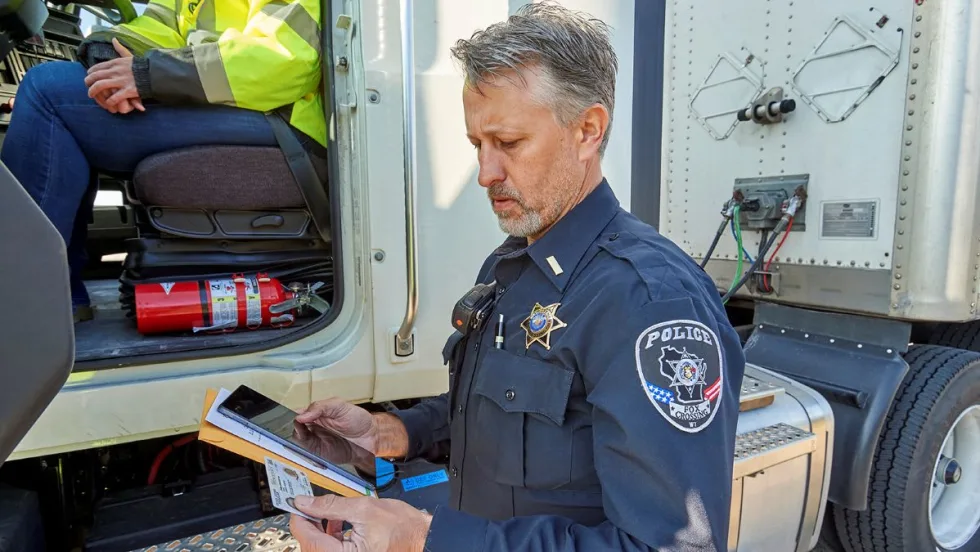
When Language Stops the Truck: The Return of ELP Out-of-Service Orders
English language proficiency rules for commercial drivers aren’t new, but renewed out-of-service enforcement has raised the stakes. Here’s what carriers need to know before a driver reaches a roadside inspection.
Read More →
Samsara Launches Custom AI Agent Builder
Agent Studio lets fleets create AI tools for hours-of-service monitoring, reporting and driver support, including agents that communicate by phone.
Read More →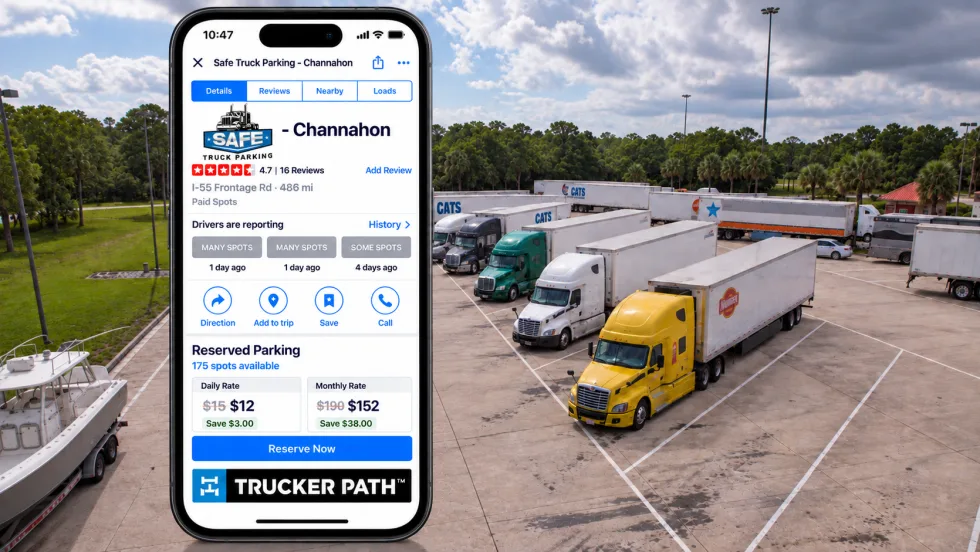
Trucker Path Expands Reserved Parking Network
Trucker Path has added close to 6,000 more truck parking spaces to its Trucker Path Reserved Parking Network with the addition of Safe Truck Parking.
Read More →
EEOC Sues Texas Trucking Company Over Driver Age Limits
The agency says Trancasa USA rejected applicants over 65 and applied tougher driving-record standards to those over 60.
Read More →
Nussbaum, Roehl Announce Second Driver Pay Increase This Year
This year has seen a swath of major truck driver pay increases as freight capacity has tightened.
Read More →
From One Generation to the Next: How Mentorship Builds Safer Truck Drivers
After three decades in trucking, Harold Perry shares what he's learned about driver safety, mentorship, and helping the next generation build confidence behind the wheel.
Read More →
Truck Drivers Need More Than Another Alert
Fleets have more visibility into truck health, safety events, and driver activity than ever. The next challenge is turning all that information into useful guidance for the person who has to decide what to do next.
Read More →
FMCSA Removes 110 Truck Driver Training Schools from Certified ELDT List
Federal regulators also are targeting more than 160 additional training providers and launching a nationwide audit of third-party CDL skills testers as part of a broader crackdown on trucking fraud.
Read More →
Hours of Service Pilot Programs: FMCSA Readies for 2027 Rollout
Two pilot programs could eventually reshape hours-of-service rules, giving truck drivers options to pause their 14-hour clock or use longer split sleeper rest periods.
Read More →