




Can Shorter Truck Lifecycles Save Fleets Money?
A recent whitepaper from Fleet Advantage suggests that getting rid of trucks before they need more maintenance is a good way to save fleets money.

With the high costs of maintaining a heavy duty truck it may be more economical to get rid of trucks before they wear out.
Want to save money on maintenance? Get rid of your trucks before they start costing you big bucks. A recently published white paper from Fleet Advantage suggests the longer you keep a truck, the more it costs in maintenance and repairs.
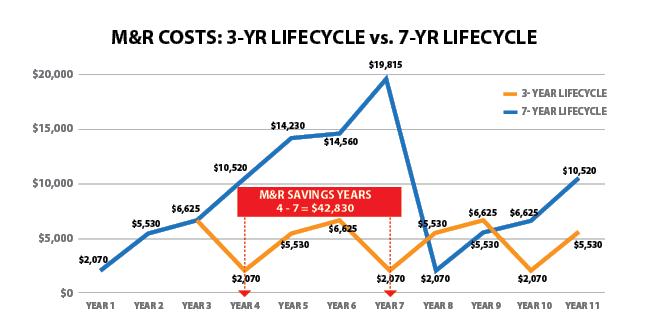
The whitepaper, “Mitigating Rising Maintenance & Repair Costs for Class-8 Truck Fleets: Effective data & strategies to leverage newer trucks to reduce M&R costs,” uses data culled from 5 billion miles of real-world fleet operations, including food service, grocery distribution and chemical tank. When you look at typical maintenance costs over a vehicle’s lifecycle in the accompanying graph, the first three years are fairly flat, but there’s quite a jump between years three and four and between years four and five. It levels out in year six, and then takes another jump in the seventh year.
According to Fleet Advantage, fleets adopting a three-year lifecycle, replacing with new equipment in year four, could see savings of $42,830 in maintenance and repair costs alone, compared to a fleet driving the same truck for a full seven years. Switching from a five-year to a three-year lifecycle would produce savings of $17,150.
“On a new tractor, there’s minimal maintenance expense – tires and PM, mostly – but a few corrective maintenance items are included, and that tends to vary with the make and model of the tractor,” says Matt Hendrix, director of fleet services at Fleet Advantage. “Based on the data we collected, we believe it’s beneficial to trade the asset some time in its third year of life, before the big costs appear. Starting with a new truck at that point keeps the maintenance costs as low as possible.”
Cost aside, the increased maintenance requirements of older equipment also put a strain on shop resources. Service bays and mechanics are tied up longer dealing with older equipment, and equipment is down longer, and ultimately less productive. On average, Hendrix says, a tractor requires 2.5 hours a month to maintain in its first year, but 4.5 hours in year three, nearly doubling the demand while the available resources remain the same.
“This will become an important consideration in the future with the shortage of qualified technicians and shop managers,” he warns. “It follows that as repairs costs go up, so too will labor costs, which is a proxy for labor hours. If you’re short of qualified technicians, how will you be able to keep up with the needed repair on the truck in the later years of its life?”
While some may take issue with the figures Fleet Advantage uses in the white paper, the upward trend in cost with age is undeniable. Fleets today have the advantage of data-driven analytics to see exactly what a vehicle costs to maintain in their own operation, and thus make better decisions about when a truck might become economically obsolete.
The whitepaper is available on request from Fleet Advantage, or it can be downloaded here.
Related: Avoid Headaches by Spec'ing the Right Truck
More Equipment
Trucks at ATA's 2026 MC&E in Charlotte, North Carolina [Photos]
From rigs decked out in patriotic America's 250 paint schemes to autonomous trucks and more, check out these photos from ATA's 2026 Management Conference & Exhibition.
Read More →
Help HDT Find Trucking’s Top Products
Have you come across a new product that could make a difference for trucking fleets? Nominate it for HDT’s 2027 Top 20 Products Awards by November 9.
Read More →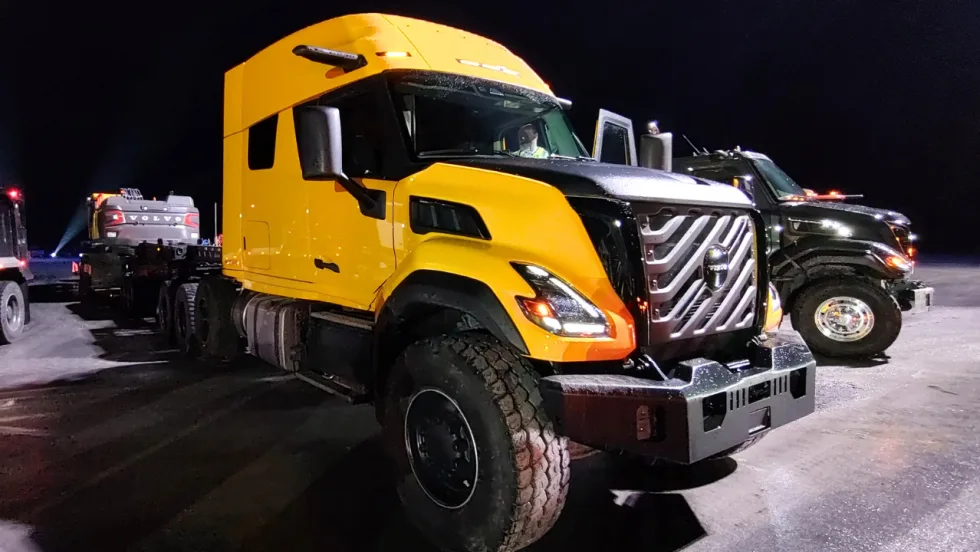
Volvo Unveils New VNX Heavy-Haul and Vocational Truck
Volvo Trucks has launched the VNX, a new vocational truck also available as a tractor in day cab and two sleeper configurations, with one heavy-haul model. The Volvo VNX is powered by Volvo's D13 platform, which delivers up to 540 horsepower and 1,950 pound-feet of torque and is EPA 2027-compliant.
Read More →
How GP Transco Cuts Trucking Fuel Costs, a Tenth of a Gallon at a Time
What’s another tenth of a mile per gallon worth? GP Transco shares how equipment upgrades and driver coaching turn small gains into meaningful fuel savings.
Read More →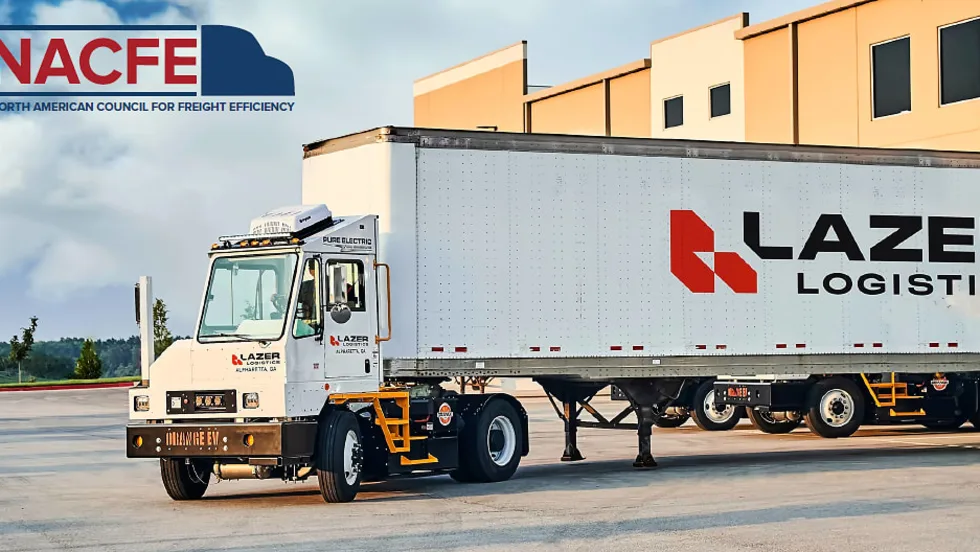
Electric Yard Tractors Move Beyond Pilots
Operating-cost savings have overtaken sustainability goals as the leading reason surveyed fleets are adopting battery-electric terminal tractors, according to new NACFE research.
Read More →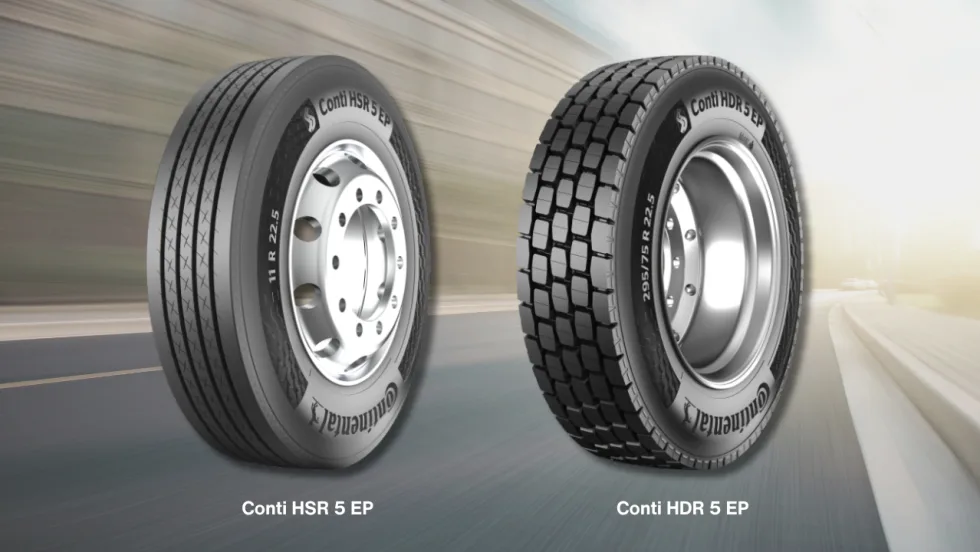
Continental Introduces New Regional Truck Tires
Continental says its new Generation 5 steer and drive tires for regional operations offer longer tread life, with estimated mileage gains of 22% and 19%, respectively.
Read More →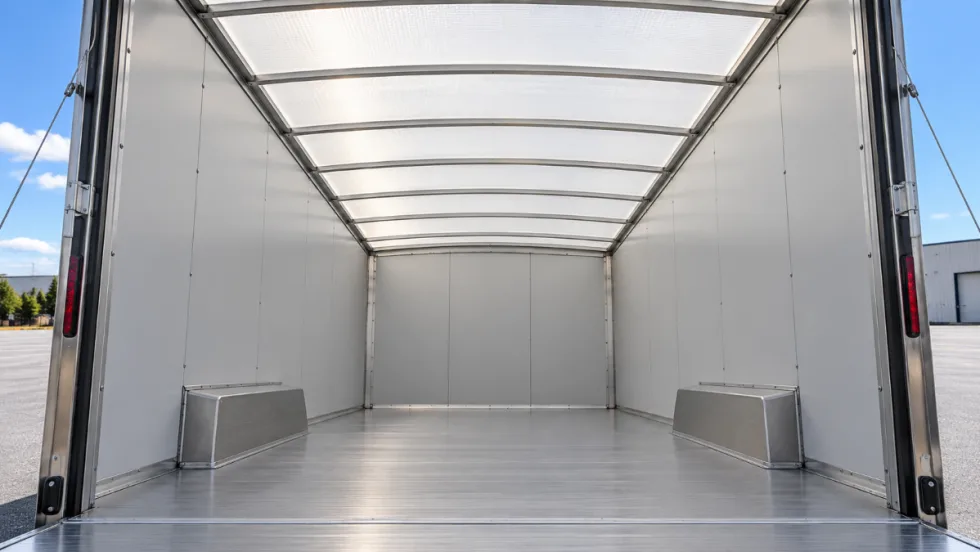
Tekmodo Introduces CargoBright Brand for Translucent Trailer Roofs
CargoBright is designed to diffuse daylight across the cargo area while performing as a working vehicle roof.
Read More →
Fleet Economics Shape Electric Truck Outlook
ACT Research expects costs, charging infrastructure, and technology improvements to drive zero-emission commercial vehicle adoption as federal regulations and incentives retreat.
Read More →
Kodiak Targets Dallas–Houston for Driverless Trucks
The company says its autonomous trucks are completing the I-45 run without a safety observer taking control. It plans to remove the observer by the end of 2026.
Read More →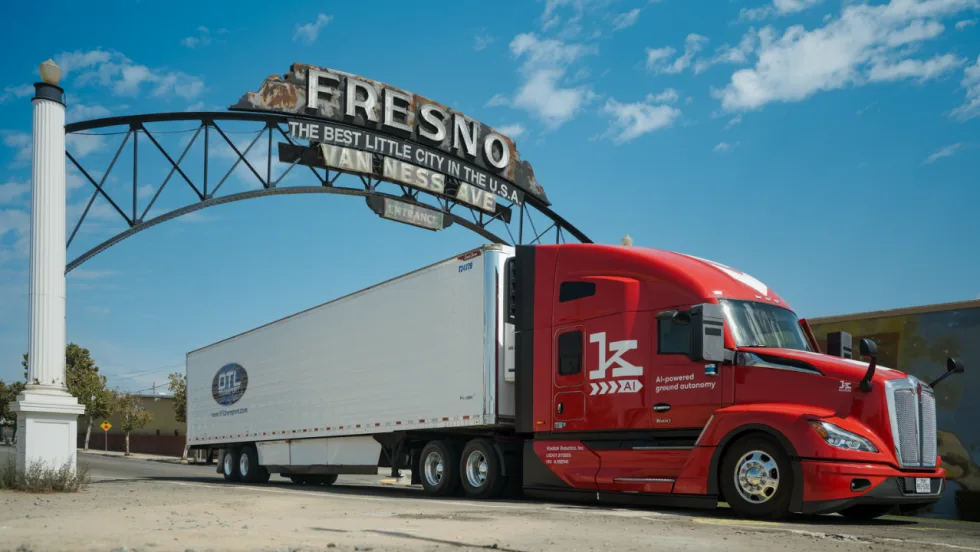
Kodiak Hauls Produce in California Autonomous Truck Pilot
Kodiak AI and DTL Transport have begun hauling produce between Fresno and Los Angeles under California’s new rules for testing heavy-duty autonomous trucks. A safety driver remains behind the wheel.
Read More →