




Michelin Unveils Energy Guard Tractor-Trailer Aerodynamic Solution
Michelin is getting into the trailer aero business. Its all-in-one Energy Guard aerodynamic system includes a patent-pending rear-facing Wake Reducer tab.
March 4, 2018

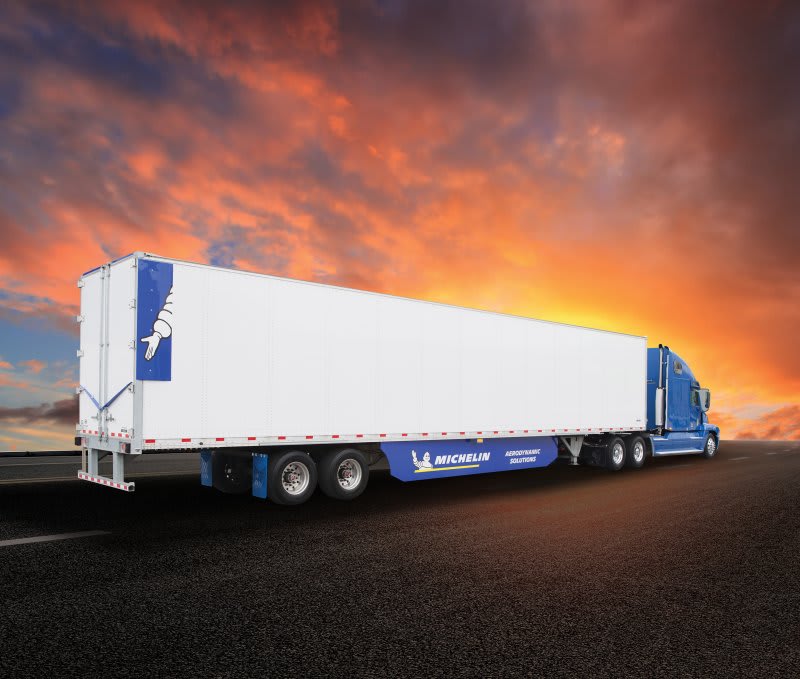
Michelin’s new Energy Guard tractor trailer aerodynamic system features a new, wake reducer tab that works like a spoiler and reduces the air recirculation zone behind a trailer at highway speeds. Photo: Michelin
3 min to read
Michelin’s new Energy Guard tractor trailer aerodynamic system features a new, wake reducer tab that works like a spoiler and reduces the air recirculation zone behind a trailer at highway speeds. Photo: Michelin
Michelin is one of the oldest legacy companies serving the global trucking industry today. But according to Adam Murphy, vice president of business to business marketing for Michelin, the company doesn’t so much view itself as a “tire” manufacturer today, as it does a supplier of integrated transportation systems.
Taken in that light, the launch today of Michelin’s new Energy Guard aerodynamic system for tractor-trailers doesn’t seem like quite the departure it would’ve just a few years ago. According to Murphy, speaking at the Technology & Maintenance Council's annual meeting in Atlanta, Michelin’s approach to tractor-trailer aerodynamics is a solution that increases fuel economy, decreases maintenance costs and requires no driver interaction.
Energy Guard consists of a trailer skirt, trailer-end fairings, aerodynamic mud flaps and a patent-pending wake reducer, which Michelin says eliminates the need for “boat tail” fairings or combining aerodynamic products from different suppliers.
Murphy said Energy One features several innovations in its patent-pending design, including a trailer skirt that fully integrates with other aerodynamic components. The skirts are made from resilient, modern composites that bend out of the way when striking a objects. The wake reducer is much smaller in size than “boat tail” fairings in use today, Murphy said, but still minimizes the effect of the air recirculation zone that creates drag behind a trailer. Even better, he said, both are systems automatically functioning once installed and always activated without any driver actions.
According to testing carried out by Michelin, Murphy said, the new Energy Guard aerodynamic system can deliver 7.4% fuel savings at 65 mph compared to tractor-trailers with no aerodynamic system. This works out to savings of $3,000 and 1,000 gallons of fuel per truck, per 100,000 miles run.
All-Weather X One Drive Tire offers 25% better traction in snow and ice
Michelin isn’t turning its back on its core business, of course, and drove that point home with the additional introduction of its new All-Weather X One Drive tire in Atlanta Sunday.
The tire features new, wide open shoulder grooves to deliver improved grip and traction in ice and snow, which was verified in the 3 Peak Mountain Snow Flake Certification testing carried out in an Arctic test facility. The 25% increase in grip is largely thanks to Michelin’s Matrix siping technology, Murphy said, which features interlocking sipes with zig-zag walls to provide thousands of biting edges for the portion of the tire in contact with the road to provide additional grip in adverse weather conditions.
The All-Weather X One tire is SmartWay certified, and features a top layer of dual compound tread to provide long tread life, while the bottom layer features dual compound treads designed to run cooler for longer casing life and retreadability.
More Fuel Smarts

How GP Transco Builds Fuel Savings a Fraction at a Time
Aerodynamic specs, solar panels, and driver incentives help GP Transco turn small efficiency gains into savings it can reinvest in its people.
Read More →
Trucking’s Diesel Squeeze Isn’t Letting Up
With diesel topping $6 a gallon nationally, ATA's Bob Costello explains why fleets should prepare for continued pressure at the pump.
Read More →
FlowBelow Redesigns Trailer AeroSlider to Cut Fuel Use
The lighter trailer aerodynamic system installs in less than 45 minutes, according to the company, with potential payback in under a year depending on fuel prices and trailer mileage.
Read More →
Why Diesel Price Relief Efforts May Fall Short
Diesel prices have eased from September’s record high, but doubts about additional Russian supply and limits on dyed-diesel tax relief mean trucking fleets still face expensive fuel. And prices could go higher.
Read More →
Why Small Fuel Savings Matter in Trucking
Can better fuel economy help pay for driver raises? In this podcast, GP Transco explains how small efficiency gains create room to reinvest in its people.
Read More →
How GP Transco Cuts Trucking Fuel Costs, a Tenth of a Gallon at a Time
What’s another tenth of a mile per gallon worth? GP Transco shares how equipment upgrades and driver coaching turn small gains into meaningful fuel savings.
Read More →
Electric Yard Tractors Move Beyond Pilots
Operating-cost savings have overtaken sustainability goals as the leading reason surveyed fleets are adopting battery-electric terminal tractors, according to new NACFE research.
Read More →
Geotab Links Fleet Card to Vehicle Data
The new card combines fuel discounts with telematics-based purchase controls. Geotab’s analysis also points to potential savings from choosing lower-priced fuel stops.
Read More →
Fleet Economics Shape Electric Truck Outlook
ACT Research expects costs, charging infrastructure, and technology improvements to drive zero-emission commercial vehicle adoption as federal regulations and incentives retreat.
Read More →
Wex Adds Cardless Fuel Payments for Over-the-Road Customers
A new fuel card feature for Wex customers offers convenience and security.
Read More →