





Related: FA-4 - Oil Worth Waiting For
Is the Right Oil Getting Into Your Engines?
You can spend a lot of time choosing the right oil, only to lose out on the benefits by not policing what actually goes into your tanks and trucks.
October 19, 2017
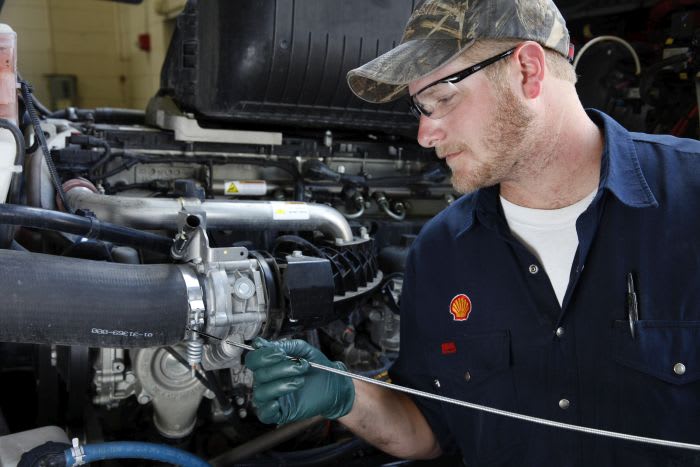
When you switch to new oils and don’t drain enough out of your bulk tank first, you may lose benefits such as longer oil drains. Photo: Shell
9 min to read
When you switch to new oils and don’t drain enough out of your bulk tank first, you may lose benefits such as longer oil drains.Photo: Shell
Choosing the best oil for your operation is only part of the equation when it comes to making sure you’ve got the right oil in your trucks. There are a lot of things that can happen between the order and the fill, including the distributor delivering the wrong oil or oil that’s accidentally mixed with other oil; having a bulk oil tank with a mishmash of oils that keeps you from getting the performance you need and expect; and contaminants getting into the oil before or during the fill.
First of all, when you’re choosing an oil and an oil supplier, the American Petroleum Institute (API) always cautions that “meets” is not the same as “licensed.”
“An oil marketer could say it ‘meets the standard,’ but the only way to verify it’s licensed is to check with API or look at our online directory to make sure it’s really licensed,” says Kevin Ferrick, who manages the API’s licensing program. “If it’s licensed, the maker is warrantying it meets the API standard. If it’s not, it doesn’t have that added assurance. So there’s a difference.”
Even if you choose the right licensed oil, that’s no guarantee that it’s the oil actually going into your truck engines.
Bruce Stockton, who’s now a fleet consultant under the company name Stockton Solutions, has worked for some of the country’s largest fleets. When he arrived to head up the maintenance department at one major carrier, he discovered that the brand of oil being spec’ed was not what was actually in the fleet facility’s bulk tanks.
“When we tested the bulk oil, which some people don’t think about testing — they assume if that’s what they ordered, that’s what the distributor is bringing — I was shocked in some cases to discover we were not getting what we had ordered. Either the viscosity, the weight, was off, or we were mixing it with a previous brand or viscosity, so we were throwing things off there.”
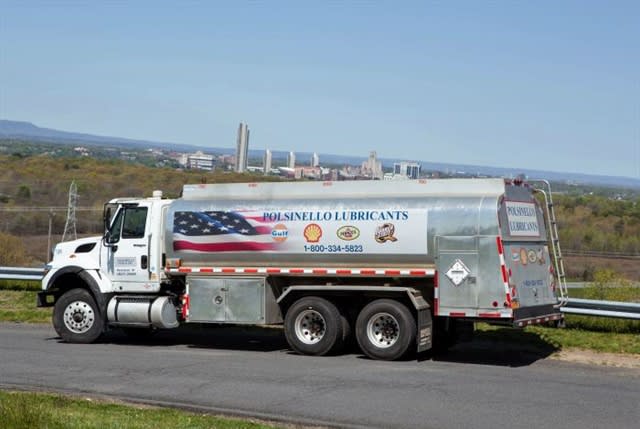
It’s important to choose a distributor that pays attention to its product quality during the distribution process. New York-based Polsinello Fuels, for instance, is a recipient of the Distributor Product Quality Assurance certification from Shell Oil.Photo: Olsinello Fuels
Getting what you ordered
“It’s crucial that fleet owners choose credible oil marketers who can demonstrate their credentials with concrete proof, such as OEM approvals and customer testimonials,” says Brian Humphrey, OEM Technical Liaison, Petro-Canada Lubricants. “The consequences of [using] the wrong viscosity grade can be serious, for example invalidation of warranty, increased wear, inefficient engine operation or unnecessary downtime.”
Viscosity issues can cause overheating, breakdown of the oil film, reduced power, oxidation, and fuel economy losses.
“Our experience shows that end users with internal quality control procedures do the best job at screening the oil delivered at their shop,” Humphrey says. “They keep small samples from previous deliveries in a cabinet away from UV light, which they can compare the current delivery against. If in doubt, they have material to submit to a third-party laboratory for confirmation.”
Stockton says fleets, “whether they’re buying it in bulk, or a 55-gallon drum or a tank in the ground or the shop, need a way to test what they’re actually putting in that truck.”
And if they have work done over the road or by third parties, it’s a good idea to have some sort of certification in writing from the third party as to what oil they’re actually putting in the truck — and then test it, he says.
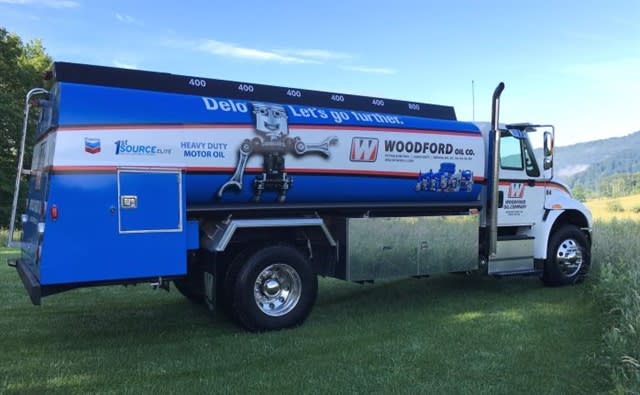
Woodford Oil, serving six states from its base in West Virginia, uses this International bulk oil hauler with six separate compartments to deliver the specific bulk lubricants to meet each fleet’s equipment needs.Photo: Woodford Oil
The problem with bulk deliveries
Bulk oils seem to be the biggest offender. API buys oils in the marketplace and tests them to make sure the oils that are claiming to be licensed actually match the oil that API licensed, and to make sure the oils meet the viscosity index and performance claimed.
“I will tell you from our experience that bulk oils do fail at a higher rate than packaged oil,” says API’s Ferrick. “So distributors, anyone with a bulk tank, needs to really pay attention to what’s going into those bulk tanks.”
Where do things go wrong? For instance, if the oil is delivered through a hose from a tanker truck, that hose may hold up to 20 gallons of oil from a previous delivery.
“An example would be if you’re delivering a 15W-40 oil and switch to a 10W-30,” Ferrick explains. “If that 20 gallons of 15W-40 goes into a tank that’s supposed to be 10W-30, it could adversely impact the viscosity. So companies need to be mindful when taking bulk delivery [that] it has to be handled a certain way.”
Ferrick recommends fleets talk to their distributors about practices and procedures they have in place to avoid these kind of issues, especially if they’ve had problems in the past.
Steve Phillips is president of Allied Oil & Tire in Omaha, Nebraska, a 59-year-old business with significant focus on the heavy-duty commercial truck market, and he says the API’s tank sampling statistics are alarming.
“When I first came into this business, about 18% of the tanks API sampled did not even meet the viscosity requirements,” he says. And then there were the tests that indicated that customers were not using the brand they thought they were. Phillips says 42% of the tank samplings did not meet the “thumbprint” on file with API of the brand of oil it was supposed to be.
“It all looks the same, so make sure your distributor has documented receiving procedures and delivery procedures in place,” Phillips says. “Additional factors related to quality management are related to the handling of the oil, ensuring dirt, water, or other contaminants are prevented from entering the system.”
Allied handles several national brands and also offers its own private-label line of oils, and it’s very stringent in its quality control procedures.
“We’ve found situations where we’ve been able to win business with customers [because] their distributor was not providing the brands they told them they were going to get.”
While Phillips wouldn’t say that unscrupulous distributors might be substituting cheaper oils than what the customer paid for, he did note that “there is a significant difference in price of oils, especially private label vs. brand name. Could a distributor benefit? Are they doing it? That’s something for the buyer to be aware of. Make sure you’re dealing with an integrity-based organization that has good controls in place. We literally sample oil from our customers and our vendors as a quality standard to make sure we don’t have issues ourselves, such as driver co-mingles, and if we have had one we immediately resolve the issue. And we have procedures to understand whether or not that has happened.”
While oil makers such as Shell and Valvoline audit their distributors, Allied audits itself every month, Phillips says, and every quarter has a quality compliance auditor come in. “Some may consider this excessive, but our reputation and the quality of our customer’s oil is the most critical thing we do, especially given the statistics from API.” In fact, the company became API Motor Oil Matters (MOM) Certified as a distributor, where API audits Allied.
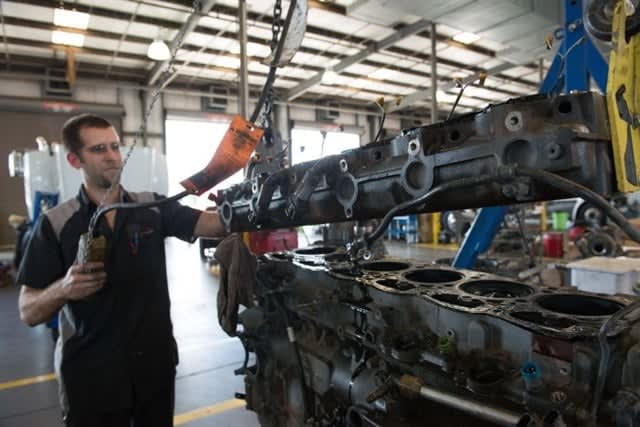
Oil companies do extensive testing to make sure their oils protect engines properly. Make sure you’re actually putting that oil into your engines.Photo: Chevron
Changing oil with a bulk tank
One fleet Stockton worked with had an 8,000-gallon bulk oil tank — a full tanker load worth. “That’s a lot of bulk oil, and depending on how frequently they turn that oil, use that oil, they probably should never have filled it up to the brim. It was over engineered for what they needed,” he says. Because of the size, draining it down low enough when changing oils was not practical. “So they’re faced with this blend they’ve created over time by having too large of a tank.”
Oil makers, distributors, and API all recommend drawing a bulk tank down to 5% to 10% before changing oils, or even draining it altogether.
“For the most part, engine oils are compatible with one another,” says Shawn Whitacre, Chevron senior staff engineer - engine oil technology. “We typically guide customers to draw tanks down as much as is reasonable before filling a tank with a different oil. This is most important when transitioning from one viscosity grade to another.”
He says draining the tank entirely “would be overkill. If you really think about it, in a given engine, often even when you do an oil change some of the old oil still is around. So we have to make sure oils are compatible with each other.”
However, Paul Cigala, commercial vehicle lubricant applications engineer for ExxonMobil, says the problem is not really compatibility — it’s performance. If you’re switching to the new API CK-4 or FA-4 categories, he says, and don’t drain enough of the old oil out of the tank first, “you dilute the new formulations, and you lose the benefits of the better oxidation stability, better viscosity control and the improved air release that was in the specifications. If you’re moving directly to FA-4, then you lose that extra fuel economy benefit of the product too. You wouldn’t be able to go to those extended oil drains [possible with the new oils], and you could dilute it down enough to affect the oxidation.”
If you’re transitioning from CJ-4 to CK-4, API recommends you draw down the CJ-4 product to as little as possible, as difficult as it may be, says API’s Ferrick. “A small amount of comingling would probably be OK, but more than that would reduce performance.
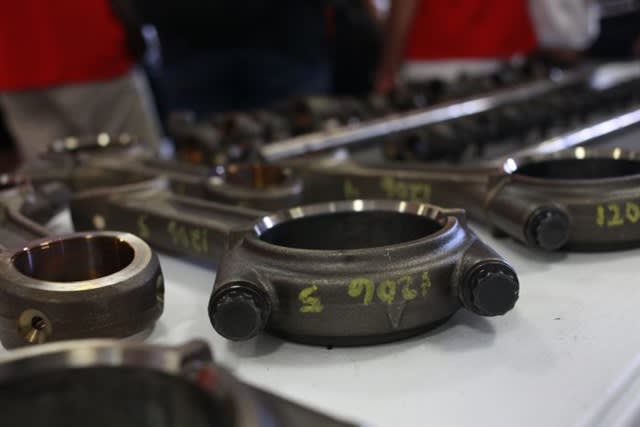
Engine parts at teardown during testing of CK-4 and FA-4 oils by Shell.Photo: Shell
“For FA-4 you absolutely have to draw down to practically nothing, because if there’s a significant amount of an older oil and you’re mixing in the FA-4, you’re going to at minimum impact the viscosity.”
And keep in mind that a CJ-4 or CK-4 10W-30 oil is not the same as an FA-4 10W-30 oil. “So if you think you have an FA-4 10W-30 and mix it with a CJ-4 10W-30, from an API perspective you’re probably adversely affecting the viscosity.”
If you’re switching oils in your bulk tank, there’s another good reason to drain the tank, says Stede Granger, Shell OEM technical services manager. “We find fleets using bulk tanks over a period of time can accumulate water, especially if they are outside where you get larger temperature swings. We think when you’re upgrading to CK-4, that’s probably a real good time to check the tank and make sure there’s not water in the bottom. As you draw a tank down you pull air into it, and that air has some level of water in it, and temperature swings cause that water to condense on the inside of the tank.” Get too much water in the oil, and you can run into problems with abnormal wear and even rusting in the engine.
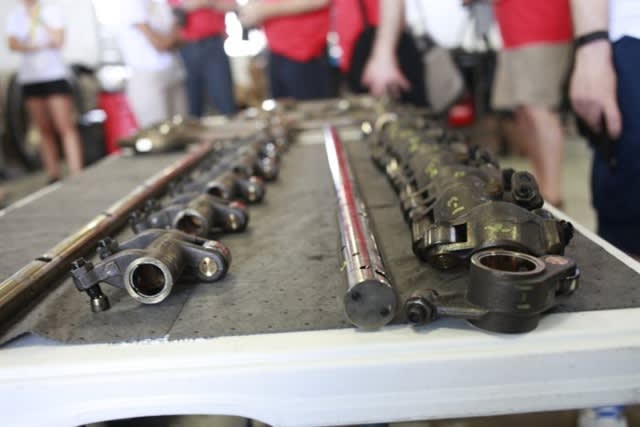
Photo: Shell
But in real life, draining tanks doesn’t often happen, Stockton says.
“I can’t remember anybody ever completely draining and flushing a bulk oil tank before they took a new shipment,” he says, which means fleets are continually mixing different brands and even different viscosities or API specs.
“And if they’re underground tanks, who knows if they have contamination getting into them,” Stockton adds. “I think a lot of fleets practicing standard or best practices pay pretty close attention to their fuel tanks but not their oil tanks.”
Subscribe to Our Newsletter
More Maintenance
Shell Prepares Rotella Oils for 2027
New CL-4 and FB-4 formulations will begin arriving in early 2027, with improved protection against oil breakdown, wear and deposits, according to Shell.
Read More →
Mack Expands Extended Coverage With Four Chassis System Plans
Mack Trucks' new system-specific coverage options allow heavy-duty fleets to select protection for driveline, cab, HVAC, electronics, and advanced safety components.
Read More →
What an Out-of-Service Order Really Costs, and How to Plan for One
The repair invoice is the first number you see — and often one of the smallest. Here’s what else an out-of-service order can cost a fleet, and how planning can reduce the damage.
Read More →
International Launches Online Truck Parts Store
Fleetrite.com lets fleets and repair shops find OEM and all-makes parts, check prices and availability, and order without calling a parts counter.
Read More →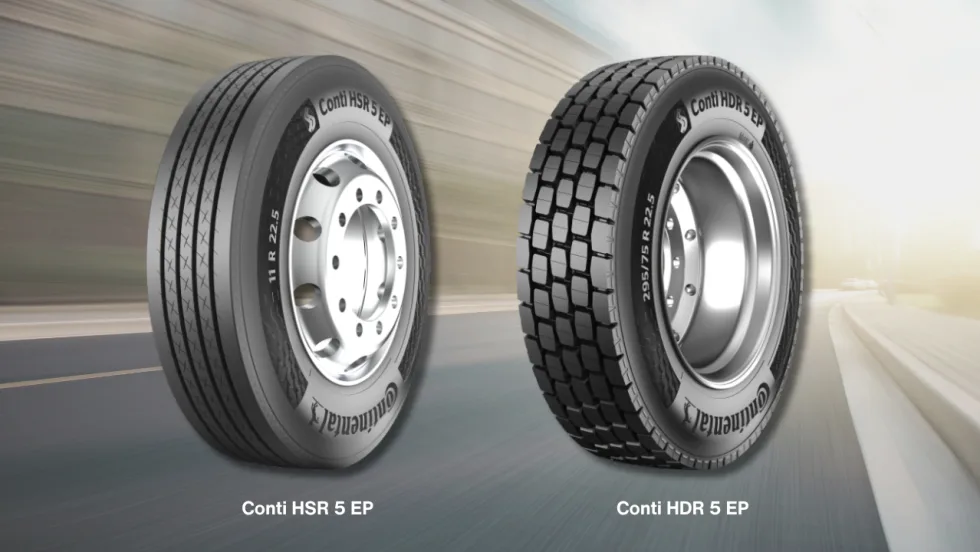
Continental Introduces New Regional Truck Tires
Continental says its new Generation 5 steer and drive tires for regional operations offer longer tread life, with estimated mileage gains of 22% and 19%, respectively.
Read More →
Sponsored•October 1, 2026
How AI Can Help Your Techs’ Efficiency
The technician shortage isn't going away, and no single fix can close the gap on its own. Trent Broberg makes the case that AI's real job in the shop is protecting the billable hours and job satisfaction of the techs you already have, not asking them to work faster.
Read More →
Color Match Smarter: Tools That Restore & Perform
For fleet managers and collision repair professionals keeping heavy-duty trucks on the road, getting the color right the first time isn't just about appearance — it's about efficiency, turnaround time, and bottom-line results. Discover how today's digital color tools are transforming the repair process from guesswork to precision.
Read More →
Wrong Repair Prompts Recall of Freightliner, Western Star 4x2 Trucks
DTNA is recalling more than 2,400 trucks that received an incompatible software fix instead of the hardware repair required to address brake valve corrosion.
Read More →
Truck Drivers Need More Than Another Alert
Fleets have more visibility into truck health, safety events, and driver activity than ever. The next challenge is turning all that information into useful guidance for the person who has to decide what to do next.
Read More →
The Maintenance Checks Trucking Fleets Should Prioritize Before Fall Freight Picks Up
Making it through August isn’t the same as being ready for the next several months of operation. Find out what systems may have suffered from summer heat and need to be checked out before fall.
Read More →