




4 Tips to Get the Bypass Green Light
If your safety scores aren’t where you would like them to be, you’re probably not getting weigh-station bypass green lights as often as you wish. But there are ways to improve.
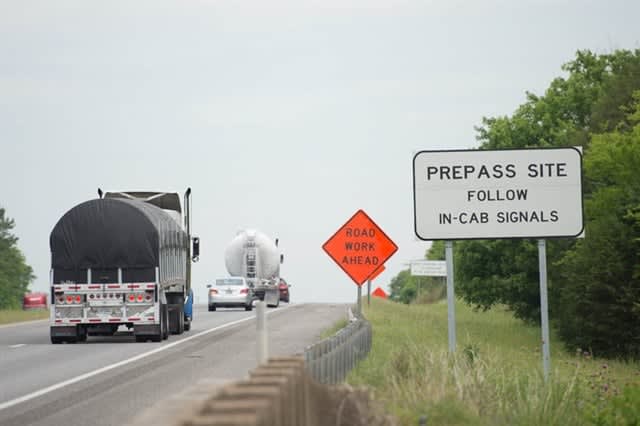
Photo: Help Inc.
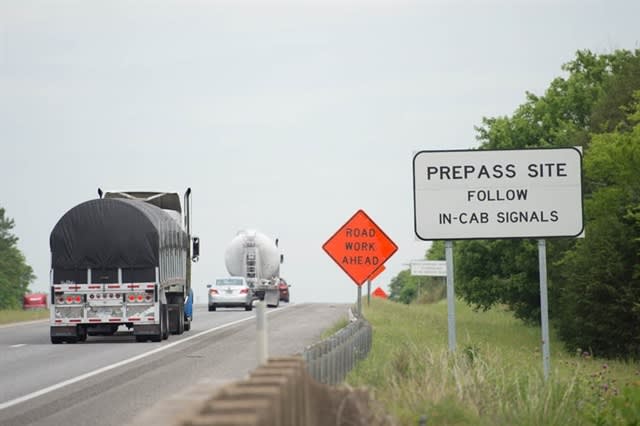
Photo: Help Inc.
Whether you’re a trucking fleet executive, safety director, company driver or an owner-operator, if your safety scores aren’t where you would like them to be, you’re probably not getting bypass green lights as often as you wish. But there is a solution – and it’s nearly as close as your backyard.
Commercial vehicle enforcement agencies, especially at the state level, say they are often readily available to help trucking operations improve their level of safety, with real-world advice from the men and women who enforce the rules and regulations every day.
We talked to one current truck safety officer as well as two former ones, who suggested a number of ways truck fleets and owner-operators can work with law enforcement to find out what they need to do to improve safety.
1. Get Involved in Your State Trucking Association
Every state has a trucking or motor carrier association. Most, if not all, have at least one or two major events each year, attended by not only people in trucking, but also frequently by those in commercial enforcement. In many cases, these events focus on truck and driver safety.
Greg Kindle, a former major with the Missouri State Highway Patrol, said his agency frequently sent officers to events hosted by the Missouri Trucking Association. He’s now a regional director for Help Inc., the non-profit parent of PrePass, overseeing PrePass operations in Illinois, Indiana, Michigan, Mississippi, Tennessee, and Wisconsin.
“We made ourselves available to the trucking industry if they had questions about what they needed to do to improve their fleet safety,” Kindle says.
According to Help Inc. regional director Jennifer Brown, who spent more than a decade as a lieutenant with the Arizona Department of Transportation’s Enforcement and Compliance Division, attending state truck driving championships and fleet safety award events can have similar benefits.
She said at such events enforcement agencies will often explain to participating companies what enforcement officers are looking for when it comes to truck inspections.
“I think this is a big benefit for carriers, because everybody is on the same page with those communication lines. Because ultimately safety is everyone’s number one priority,” says Brown, who oversees PrePass site operations in seven western states.
2. Ask for Truck Inspections
Whether you’re a new trucking operation with little safety history or one with a past that might not what you would like it to be, one easy way to improve safety scores is to get more “clean” inspections. But how?
According to Lt. Tracy Barker, an enforcement officer with the Motor Vehicle Division of the Iowa Department of Transportation, it’s not uncommon for drivers to come into a scale house and ask for a truck inspection.
Keep in mind, however, that if an officer is willing to do this, you do run the risk of getting bad marks on an inspection if problems are found. In other words, you want to be sure your truck is in tip-top shape before asking for an inspection at a weigh station or other inspection facility.
But that’s not the only way to get more inspections.
Some law enforcement agencies will pay a visit to your fleet, if invited, and perform inspections. If problems are found, they can tell a fleet what’s wrong without there being a penalty. While this won’t improve a fleet’s Inspection Selection System (ISS) score, which is one factor used to determine whether or not a truck gets a bypass at a weigh station or a highway inspection site, it can help you develop a plan of action so you get better inspection results in the future.
Other states, such as Iowa, specifically reach out to new carriers, but there is no enforcement penalty for not passing a voluntary inspection, according to Barker.
“Officers look at how [the carriers] are operating, what they are doing, how they’re running their logbooks, how much their people are working, and basically break down their whole system and guide them,” he says. “If we find something they’re doing wrong, we don’t write tickets, but rather we guide them to help improve their business model so they are doing things accurate and consistent.”
3. Take Advantage of Outreach Programs
Barker says fleets can ask about free outreach programs from law enforcement, which he describes as being “big” in Iowa.
“If you’re a carrier and call up and say, for instance, ‘Hey, we want a load securement program. Can you guys come in and from an enforcement officer’s perspective, go through load securement, deliver an instruction message to the drivers and other members of the carrier so that we know exactly what you’re looking for?’ that can be done at no cost to the carrier,” he says.
Kindle says enforcement officers can address many issues when meeting with trucking companies and drivers. Sessions can cover topics such as being more aware of four-wheelers and moving around them, brake adjustments, pre-trip inspections, and hours of service.
Brown believes that fleets using such programs can identify where they’re running into problems during truck inspections. “They could pinpoint whether it was the driver or whether it’s mechanical and make improvements.”
4. Use Data to Begin Discussions
Fleets can also take safety data from inspections as a point to begin discussions with law enforcement about items that are getting their attention during inspections of the carrier’s trucks, Kindle says.
This can come from what is recorded in the Federal Motor Carrier Safety Administration’s Safety and Fitness Electronic Records (SAFER) System. Or, PrePass customers have access to free data in the InfoRM Safety Intelligence system, which provides carriers with information about their ISS scores that impact bypass rates.
“If companies would take the time and look at that and see where their trucks are being inspected and noticing what those deficiencies are….they are going to improve their ISS score and are more apt to get a bypass at a truck inspection site,” Kindle says.
The ultimate goal of any of these steps is to prevent safety issues at the terminal and take care of them before the truck leaves the premises. As Kindle says, “It’s a lot better than handling it out on the road.”
Steve Vaughn is the national director of field operations at Help Inc., providers of the PrePass pre-screening and bypass service. This article was authored and edited according to the standards of HDT's editors to provide useful information to our readers.
More Fleet Management

Geotab Links Fleet Card to Vehicle Data
The new card combines fuel discounts with telematics-based purchase controls. Geotab’s analysis also points to potential savings from choosing lower-priced fuel stops.
Read More →
How MFA Helps Protect Trucking Fleets
Multi-factor authentication adds protection when passwords are stolen. Here’s how it works and where fleets should start.
Read More →
How Better Freight Data Helps Trucking Teams Get Ahead of Disruption
Trucking and logistics teams have plenty of data. The problem is getting the right information in front of the right people soon enough to act. Better-connected data can help teams spot trouble earlier and make smarter decisions before small problems become big ones.
Read More →

Trimble: Taking Artificial Intelligence in Trucking Beyond Faster Tasks
At Insight 2026, Trimble executives argued that fleets may need to redesign workflows to get more from AI as it introduced new products and enhancements. AI’s value will depend on how fleets combine automation with their people's knowledge.
Read More →
Build a bulletproof fleet: Uniting ELDs and dash cams for total compliance
An ELD can prove compliance, but it cannot always prove what happened on the road. Discover how uniting accurate ELD data with AI-powered dash cam video can help your fleet strengthen compliance, defend against liability, protect drivers and reduce operational costs.
Read More →
Nominations Open for HDT Emerging Leaders
Heavy Duty Trucking is looking for accomplished trucking fleet professionals under 40 who are making an impact and helping lead the industry forward.
Read More →
Why Private Fleets Are Taking More Freight
Private fleets are putting their own trucks on demanding customers and high-cost lanes as companies seek greater control over service, costs, and capacity.
Read More →
Color Match Smarter: Tools That Restore & Perform
For fleet managers and collision repair professionals keeping heavy-duty trucks on the road, getting the color right the first time isn't just about appearance — it's about efficiency, turnaround time, and bottom-line results. Discover how today's digital color tools are transforming the repair process from guesswork to precision.
Read More →
FMCSA Pauses Biennial-Update Enforcement Amid Motus Transition
Carriers whose updates were due on or after June 1 have more time, while FMCSA works to stabilize its new registration system and warns of phishing sites impersonating its new carrier registration system, Motus.
Read More →
2026 Blueprint for Countering Smarter Supply Chain Theft
Cargo theft is no longer just the cost of doing business. It's a multi-billion-dollar criminal enterprise exploiting vulnerabilities across your fleet, drivers, and supply chain.
Read More →