




Proper Inflation is Elementary
Keeping tires properly inflated is elementary to good maintenance, and products that aid in that quest can be valuable.

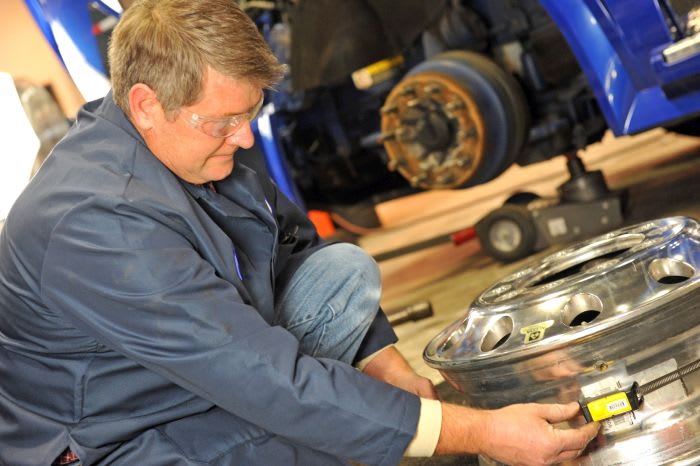
Bendix SmarTire monitoring system’s sensors are installed on the wheel, inside the tire, where they’re protected from road damage – something appreciated at Boyle Transportation. Photo: Bendix Commercial Vehicle Systems
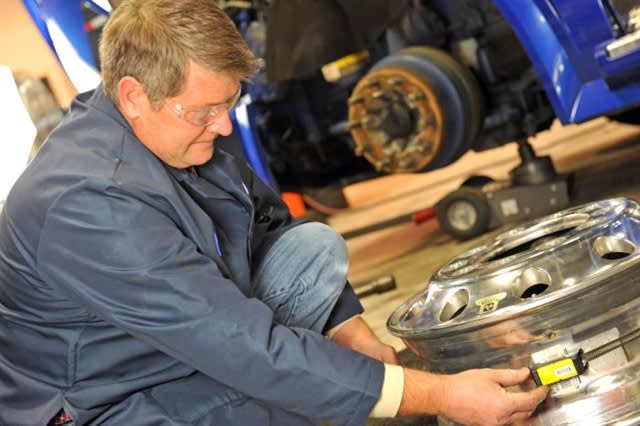
Bendix SmarTire monitoring system’s sensors are installed on the wheel, inside the tire, where they’re protected from road damage – something appreciated at Boyle Transportation.Photo: Bendix Commercial Vehicle Systems
Keeping tires properly inflated is elementary to good maintenance, and products that aid in that quest can be valuable.
“In tractors, anything that keeps air in the tires makes tires last longer and stay on the road” is a plus, explains Ben Curtis, fleet manager at Boyle Transportation, Bellerica, Massachusetts, which transports security-sensitive and hazmat cargo. “And trailers are often ignored.” That’s why Boyle has used tire inflation systems on trailers since 2001 and a monitoring system on tractors since 2009.
Curtis tends to order the Hendrickson TireMaax Pro on trailers with Hendrickson axles and suspensions, and the Meritor Tire Pressure Inflation System by P.S.I. on others. He likes the fact that the Meritor/P.S.I. system can alert you to a hot wheel end. While noting that the latest TireMaax systems are relatively trouble-free and that he gets great support from the company, he’s not as wild about the fact that TireMaax reduces air pressure when tires get hot. “I don’t want it to let air out,” he says. “It lets out about 10 pounds. I don’t know how much of an advantage that gives you.”
The advantage, Hendrickson explains, is longer tire life. Over-inflation can happen when hot air expands inside the tire.
“Over-inflated tires are harder than properly inflated tires, making them more susceptible to tread surface cutting, punctures and impact breaks,” explains Tiona Campbell, a program manager at Hendrickson. “Over-inflation also changes a tire’s footprint, which can affect tire traction and lead to irregular wear patterns. TMC Recommended Practice RP 219B, Radial Tire Wear Conditions and Causes, indicates that the probable cause of excessive wear found on both shoulder ribs of trailer tires in the study was likely over-inflation. This accelerated tread wear can cost 7% to 15% of the tire life.”
Boyle Transportation also uses Bendix’s SmarTire monitoring system on tractors. “The Bendix’s transducer is internal so is protected from everyday scrapes and cuts. It’s a monitor only, but it’s valuable. It’s in the cab, it’s telling the professional driver that everything’s OK,” and if not, he can see that a problem is corrected. “It pays attention to the temperature and pressure relationship. That’s far more than I want the driver to get into. If the pressure is OK, the temperature will stay in the proper range. Inflation is the primary goal here.”
According to Curtis, Freightliner installs SmarTire at the factory, which is a major advantage, but he notes it does have to be spec’d that way. “The owner of our company’s biggest complaint is that a tire pressure monitoring system is something you have to ask for,” he says. “It’s standard on cars; but not in Class 8 trucks, where tires are so important to carry the load.”

PressurePro’s sensor screws onto the valve stem, and sends data through a repeater under the trailer to an in-cab receiver. R&J Trucking uses an Omnitracs portal and screen to alert managers and drivers of low tire pressure.Photos: Advantage PressurePro
Running in rough stuff
“Flats are a fact of life,” says R&J Trucking tire manager Ryan Llewellyn. The fleet, based in Youngstown, Ohio, hauls trash, scrap and other rough commodities, and tires run over lots of sharp debris that can injure them. R&J has 650 power units, mostly tractors, and 1,200 trailers, and Llewellyn has been getting a good picture of their tires’ health with a tire pressure monitoring system he’s been testing: Advantage PressurePro, which monitors inflation pressure on every tire of a rig and transmits the psi and other values to an in-cab screen for the driver.
“It works through the Omnitracs,” which provides in-cab alerts and telemetry. “It has two levels of alerts: ‘cautionary,’ which means a tire is a little underinflated, and ‘critical’ – hey, the tire’s legally flat. And it’ll alert the driver, the terminal manager and me through the Omnitracs portal. It sends me an alert to my computer and my phone in an email.”
As a result, Llewellyn says, “We see fewer flats and road service calls. I do a chart every month and you can see which way it’s going,” which is down for tire trouble and up for reliability.
Llewellyn says it takes about 25 minutes to set up a 10-tire vehicle. This requires screwing a PressurePro sensor-transmitter onto each valve stem, then installing a monitor, repeater and antenna under the vehicle. A monitor screen goes in the tractor or, like R&J, can tie into another in-cab display already being used by the fleet.
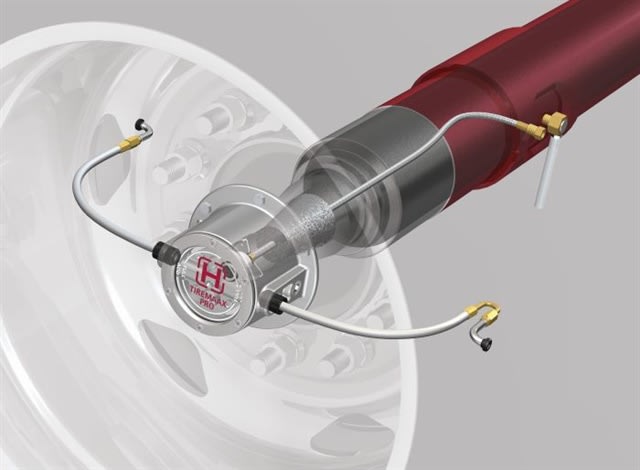
The TireMaax Pro assembly monitors pressure and adds or reduces pressure when needed. Reduction happens when high ambient temperatures raise pressure and make tires too hard, Hendrickson says.Photo: Hendrickson
Saving labor cost
Dave Clark, fleet manager at Dutch Valley Foods in Myerstown, Pennsylvania, is adopting Stemco’s Aeris tire inflation system to reduce labor cost. “Every 30 days we used to check tire pressures,” he explains. “It was part of preventive maintenance. We now rely on the systems. We’re not paying a guy to check air pressure.”
Dutch Valley distributes dry foodstuffs, meat and cheese, pickled beets, sugar, flour, and soup and snack mixes to grocery stores with 90 refrigerated trailers and 72 tractors. The Aeris and an automatic lubrication system meant “we went from 30 days to 90 days on service” on the rigs, he says. “Along with that, the driver must do more thorough maintenance check on his pre-trip inspection, though.”
The fleet has been testing the device for several years and is going into its third winter. Clark says he’s learned enough to begin making it standard on the fleet’s new trailers.
About the only task with the Aeris is occasional replacement of O-rings on the valve stems, where it connects tires with the operating part of the system, he says. It monitors pressure and replenishes air when needed. Stemco advertises that it uses a patented air sealing system and doesn’t pressurize the wheel end, which should reduce complications with oil and grease seals in those critical items.
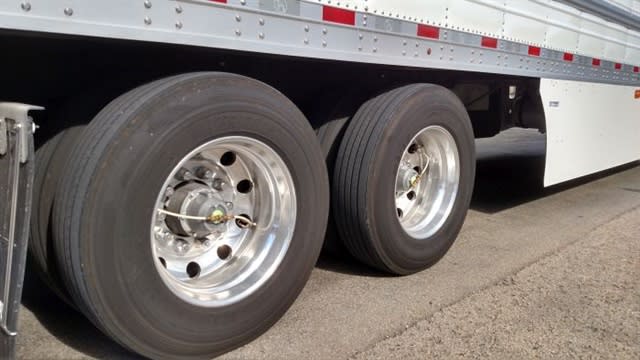
The Meritor Tire Pressure Inflation System by P.S.I. is standard at Werner Enterprises and other fleets. It’s especially helpful in drop-and-hook operations where tires on parked trailers can run down.Photo: Tom Berg
Big fleet’s decision
For Nebraska-based truckload giant Werner Enterprises, before tire pressure inflation systems came on the scene, “trailers coming out of yards was one of our biggest expenses,” because too often their tires had lost air pressure, recalls Dwayne Haug, an industry consultant who retired last fall from Werner. The Meritor P.S.I. tire inflation system the fleet adopted senses this and begins re-inflating them to a preset point as soon as a tractor has backed onto a trailer and air and electrical lines are hooked up.
Nearly all Werner’s 20,000 trailers now have the system. But it took testing of this product and others in the late 1990s and early 2000s before Haug decided to go with P.S.I. “By the time we got up to 500, 750 on the road, we decided to retrofit it on the entire fleet. It’s now on the new builds.”
Tim Musgrave, P.S.I.’s founder and president, recalls Haug calling during that testing period and ordering him to Omaha. “I wondered, what’s wrong?” He and others hastily journeyed from San Antonio and reported to Haug’s office. With little preamble, Haug told them that Werner was going standard on their system. “All that travel for eight minutes with Dwayne,” he says with a laugh. “But it was great news.”
“It’s low-cost and reliable,” Haug says in summary. “It does what it’s supposed to do and has a very low failure rate. I talked to a lot of other people about it, and it’s something that’s good for the industry.”
More Maintenance
The Maintenance Checks Trucking Fleets Should Prioritize Before Fall Freight Picks Up
Making it through August isn’t the same as being ready for the next several months of operation. Find out what systems may have suffered from summer heat and need to be checked out before fall.
Read More →
What Three Fleets Are Doing Differently When Buying Truck Parts in 2026
With freight improving but costs still climbing, fleet maintenance executives explain how they're balancing price, quality, and supplier relationships.
Read More →
Paccar Recalls 2027 Trucks Built This Summer for Possible Electrical Problem
The nearly 6,000 Kenworth and Peterbilt trucks in the recall could potentially lose engine power, among other things.
Read More →
Will API PC-12 Oil Change Trucking Fleet Maintenance?
The new API PC-12 heavy-duty engine oil category reflects the changing demands of modern diesel engines. But fleets like Foodliner are looking to getting their own data before making decisions on adopting the new oils and questions such as extending oil drain intervals.
Read More →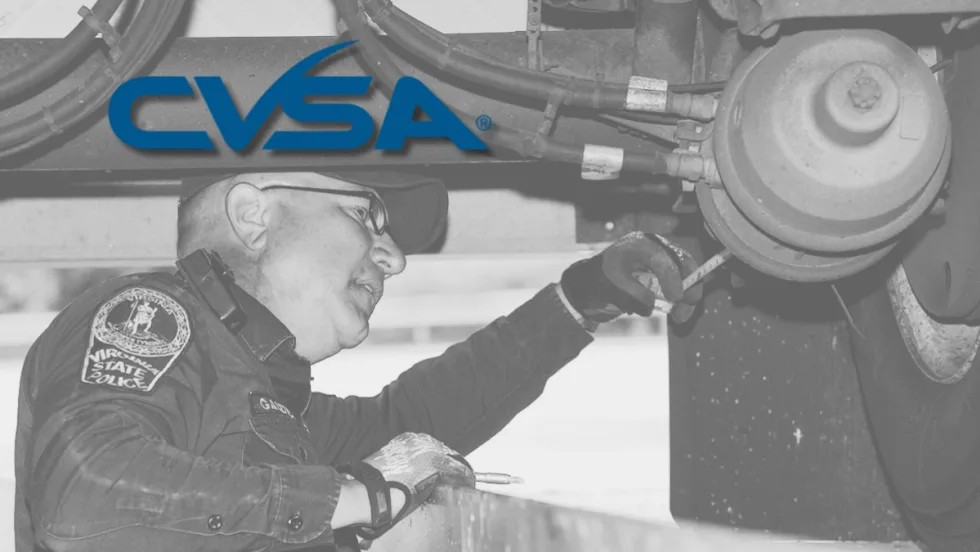
Brake Safety Week to Focus on Drums and Rotors
Commercial vehicle inspectors are focusing on truck brakes during CVSA's Brake Safety Week, August 23-29.
Read More →
Possible Battery-Cable Fires Prompt Recall of 15,000+ International MV and HV Trucks
On the recalled vehicles, manufacturing variations can cause the battery interconnect cable to contact the auxiliary stud and hold down the bracket.
Read More →
Rush, MCT Team Up to Grow Refrigeration Service Network
The joint venture will operate MCT's network of Carrier Transicold dealerships and mobile service locations, with the companies promising greater service capacity and uptime for refrigerated fleets.
Read More →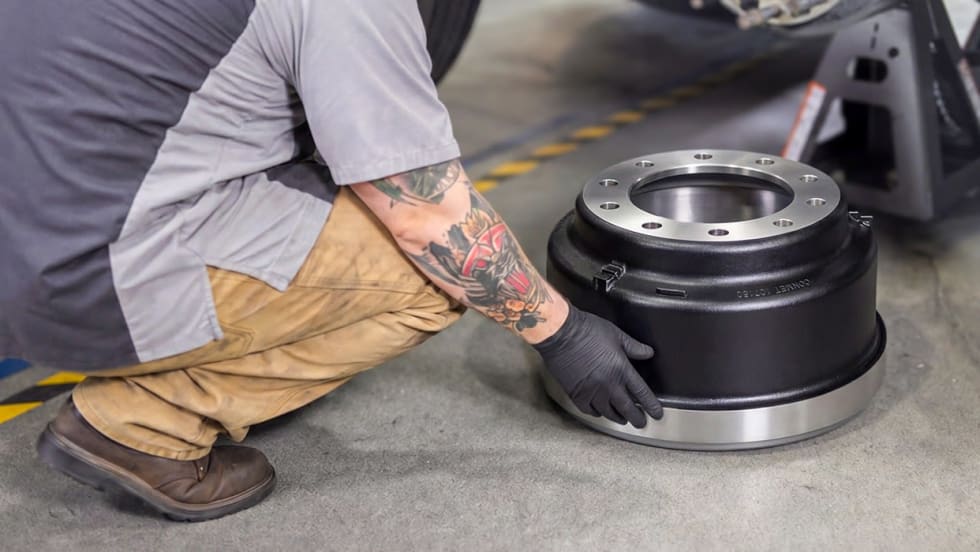
ConMet Expands Aftermarket Brake Drum Lineup With TruCast
A new heavy-duty truck brake drum option in the aftermarket gives customers more flexibility within the ConMet product family.
Read More →
Mack Expands Premium Service Contract Coverage to Medium-Duty MD
With a service contract, inspections, preventive maintenance and repairs can be handled in a single visit instead of multiple ones.
Read More →
Maintenance in the Messy Middle Part 5: Battery-Electric Trucks
No oil changes. No diesel exhaust fluid. No exhaust aftertreatment. But NACFE battery-electric trucks still require specialized maintenance procedures.
Read More →