




The $75K Freight Broker Bond Increase in a Nutshell
Freight brokers, like trucking companies, have traditionally represented the American spirit of independence and entrepreneurship. Some people, however, fear that the changes brought about by the Moving Ahead for Progress in the 21st Century Act (MAP-21), which recently took effect, are about to change this.


Freight brokers, like trucking companies, have traditionally represented the American spirit of independence and entrepreneurship. Some people, however, fear that the changes brought about by the Moving Ahead for Progress in the 21st Century Act (MAP-21), which recently took effect, are about to change this.
What is MAP-21 about?
On July 6, 2012, President Barack Obama signed MAP-21, dealing with funding for surface transportation programs. One of the important -- and controversial -- changes was the more than seven-fold increase in the freight broker bond.
All freight brokers who wish to have their license renewed will now have to post a $75,000 freight broker bond, as opposed to the $10,000 in effect since the 1970s. A freight broker bond is required as a guarantee that freight brokers will pay carriers and will not use unethical business practices in dealings with their clients.
What were the reactions?
The increase led to a large public outcry. A lot of small and mid-sized freight brokers were afraid they would lose their business or be forced to join larger operations. Some organizations filed complaints, others even lawsuits, but that didn’t lead to a reduction in the price of the bond.
It did lead, however, to a grace period of two months. Even though the law was effective from Oct. 1, freight brokers have until Dec. 1 to decide whether they want to renew their license and come up with the money for it. After this date, brokers who fail to comply with the bond requirement will have to cease all operations.
It’s inadvisable for brokers (and this includes trucking companies who also have brokerage divisions) to wait until the last moment to renew the freight broker bond. If you do, your bond will have to be backdated. The surety industry is usually apt to do it within up to 30 days, however, as once the end of the grace period approaches, some of the previously available options might be inaccessible.
Are all the fears groundless?
It’s too early to give definitive predictions about the future of small and mid-sized freight brokers. But recently revealed data on the number of newly registered freight brokers shows an increase for the month of September. That’s true even when you account for the fact that some of these new registrations were made by motor carriers, listed as brokers.
It will take some time before we can accurately measure the impact on the industry.
There are more reasons to be optimistic, though. In the months following the adoption of MAP-21, the freight broker bond market became much more permissive. Previously, it was harder to get bonded without collateral. Working with a variety of surety bonds companies, companies such as Bryant Surety Bonds can now provide a freight broker bond without requiring collateral or information about net worth, financial statements and business financials.
What is the scope of the new regulations?
Another important implication of the new law is the end of the practice of "double brokering." In other words, a trucker can no longer receive freight from another trucker or broker, mainly for transparency reasons. A client should know exactly which carrier is currently handling their cargo. At the same time, brokers are denied physical contact with the freight and violations may be levied fines as high as $10,000.
But freight brokers shouldn’t feel singled out. The freight broker bond requirement now extends to freight forwarders as well.
Additionally, MAP-21 heightens authority and control of the Federal Motor Carrier Safety Administration over motor carriers. Effective Oct. 1, the FMCSA can order carriers using unregistered vehicles to discontinue operations. Under the old law only the unregistered vehicle would be affected.
Svetlana Guineva is a contributor to the Bryant Surety Bonds blog. She is a graduate of Metropolitan State University of Denver and is an expert in the field of surety bonds and licensing. She has written several articles on the topic of freight broker bonds.
More Fleet Management

How Telematics Improves Visibility, Control, and Performance in Refrigerated Fleets
Explore how telematics help refrigerated fleets improve visibility, uptime, efficiency, compliance, and cargo protection across connected cold chain operations.
Read More →
What the U.S.-Canada Trade War Means for Trucking
Escalating U.S.-Canada tariffs could disrupt cross-border freight, reduce truck volumes, raise costs, and create new uncertainty for carriers on both sides of the border.
Read More →
What Are Trucking’s Top Concerns for 2026?
The American Transportation Research Institute wants to know what's worrying trucking fleet managers, drivers, and other stakeholders in its annual Industry Issues survey.
Read More →

American Trucking Associations Looks for a New Leader
ATA President and CEO Chris Spear abruptly left his job at the association on August 21, at a pivotal time for the trucking industry.
Read More →
Public Wi-Fi Cybersecurity Risks: How Truck Drivers and Fleets Can Protect Their Data
Public Wi-Fi can expose truck drivers and fleets to credential theft, malware, and other cyber threats. Here’s how to reduce the risk on the road.
Read More →
For Nicky Cupp, Fleet Innovation Starts With Frustration
HDT Truck Fleet Innovator Nicky Cupp turns everyday pain points at Fraley & Schilling into opportunities for better technology and smarter processes.
Read More →
Adam Buttgenbach’s Approach to Electric Trucks: Start With Where They Fit
HDT Truck Fleet Innovator Adam Buttgenbach helped PepsiCo build one of North America’s largest EV fleets by focusing on where electric trucks make operational sense.
Read More →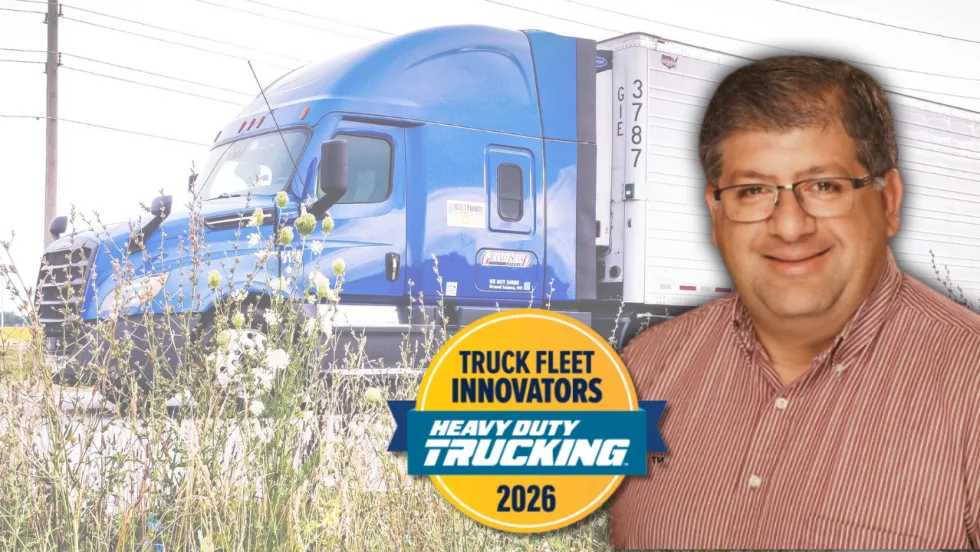
Deen Albert: Let Automation Do the Math, People Make the Decisions
HDT Truck Fleet Innovator Deen Albert makes sure people are still at the heart of operations at Grand Island Express, even while adopting artificial intelligence tools. AI-assisted dispatch helped boost revenue 25% with the same number of trucks.
Read More →
Trimble’s New AI Agent Takes Aim at Fleet Back-Office Busywork
Arc Agent works across Trimble TMS products to automate repetitive tasks such as freight orders, maintenance, invoices, fuel costs and more.
Read More →
How HDT’s 2026 Truck Fleet Innovators Are Rethinking Fleet Operations
Meet five trucking leaders who are challenging assumptions, solving operational problems, and putting innovative ideas to work.
Read More →