




EPA's SmartWay Looks for a Smarter Way
In this era of complaining about heavy-handed government, here's one federal program that gets cheers all around


In this era of complaining about heavy-handed government, here's one federal program that gets cheers all around.
SmartWay, the truck fuel economy and sustainability program run by the Environmental Protection Agency, is "a government program that works," says Dan Kieffer, director of emissions compliance for Paccar.
"[SmartWay works] because it is cooperative and based on common sense," Kieffer said at a recent Freight Sustainability Summit in Washington, D.C.
The program was launched in 2004 by EPA, American Trucking Associations, a group of global corporations called Business for Social Responsibility, and a number of shippers and carriers, including Schneider National, Swift Transportation and UPS.
Its aim has been simple: to spread the word on fuel efficiency technologies and strategies and to make it easier for carriers and shippers to adopt the practices of sustainability.
The results have been impressive. According to a 2010 report by SmartWay's 2,900 participants, 50 million barrels of oil have been saved, and 16.5 million tons of carbon dioxide, 235,000 tons of oxides of nitrogen and 9,000 tons of particulate matter pollution have been prevented.
The question at the recent summit was, "How can we take that sustainability effort to the next level?"
The answer will, in part, come from the work of a SmartWay work group that is preparing recommendations on issues such as identifying data gaps, growing the program and measuring success, said Glenn Kedzie, vice president and environmental counsel at ATA, in remarks at the summit.
Many trucking companies of all types have taken advantage of the SmartWay approach, which offers help on benchmarking, fuel-saving technologies, equipment specifications and financing. The majority of the industry, however, has not yet made this commitment to sustainability.
"One of the goals of EPA and its partners is to one day make the SmartWay brand name more universally recognized," Kedzie said.
Other changes are already in the works. The program's partners are beginning to shift away from the specific technology-based fuel economy measurement to a performance-based yardstick that tracks key emissions such as CO2, NOx and particulate matter.
The next generation of SmartWay will offer carriers a way to compare their performance against similar operations - flatbed-to-flatbed or tank-to-tank, for example.
But SmartWay will continue to provide verification of fuel-saving equipment, Kedzie noted.
ATA relies on SmartWay technology verification to sort what works from what doesn't, he said. "Believe me, when I get vendors calling me on a daily basis trying to sell me the 'next great thing' to improve fuel efficiency and reduce emissions, I am thankful that I can pass these folks on to the SmartWay verification staff."
Dave Berry, vice president of Swift Transportation, said he expects that the next big gains in fuel efficiency and emissions reductions will come from the way the truck is run, rather than the truck itself.
"The future starts with the driver," he said. Training and coaching are key to efficient handling of the accelerator and the transmission.
But the best way to reduce greenhouse gas emissions will be through route optimization, Berry said.
Matching 25 trucks to 25 loads produces 15 septillion possible combinations, he said. That's 15 times 10 to the 24th power - a lot of choices that need to be analyzed for efficiency.
"As sophisticated as we are, we're just on first base," he said.
Kedzie raised an issue that is a sign of the times in Washington: money, and the shortage of it.
"The program's resources have not kept up with its phenomenal 200-fold growth since inception," he said. He urged SmartWay partners to get the message out to their congressional representatives.
"We need to identify Congressional SmartWay champions on both sides of the aisle, and we need these champions to appreciate and help protect this industry-supported program."
From the February 2012 issue of HDT.
More Fuel Smarts

A Closer Look at Kenworth’s Electric T880E Vocational Truck
Learn more about Kenworth's T880E battery-electric vocational truck at the Paccar Technical Center, including its range, applications, upfitting considerations, and PTO options.
Read More →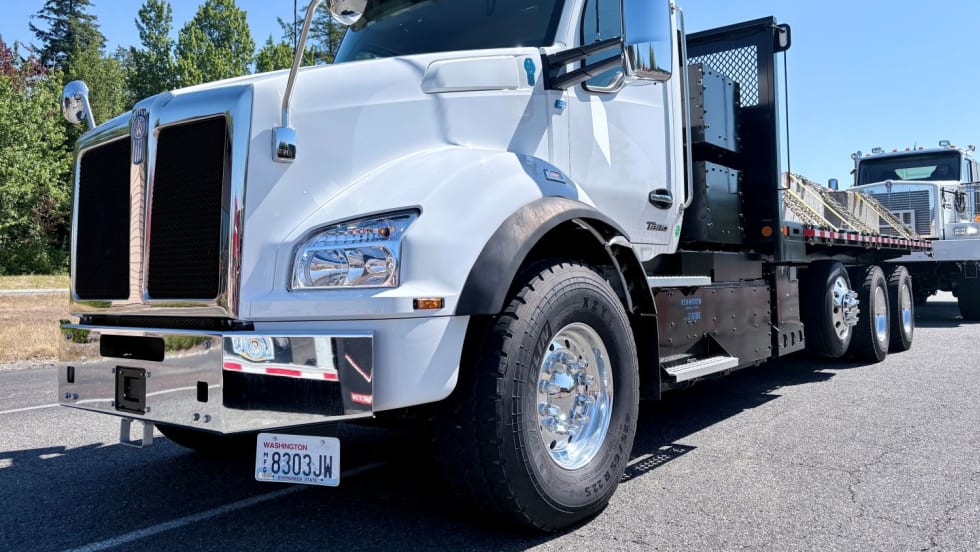
Kenworth T880E Brings EV Power to Vocational Trucks
A closer look at the Kenworth T880E’s range, charging, powertrain and upfit options — and where fleets are showing the most interest.
Read More →
Jennie Abarca Is Proving Electric Trucks Can Do the Job
HDT Truck Fleet Innovator Jennie Abarca is building confidence in fleet electrification one load at a time while openly sharing the challenges she encounters along the way as a small-fleet owner.
Read More →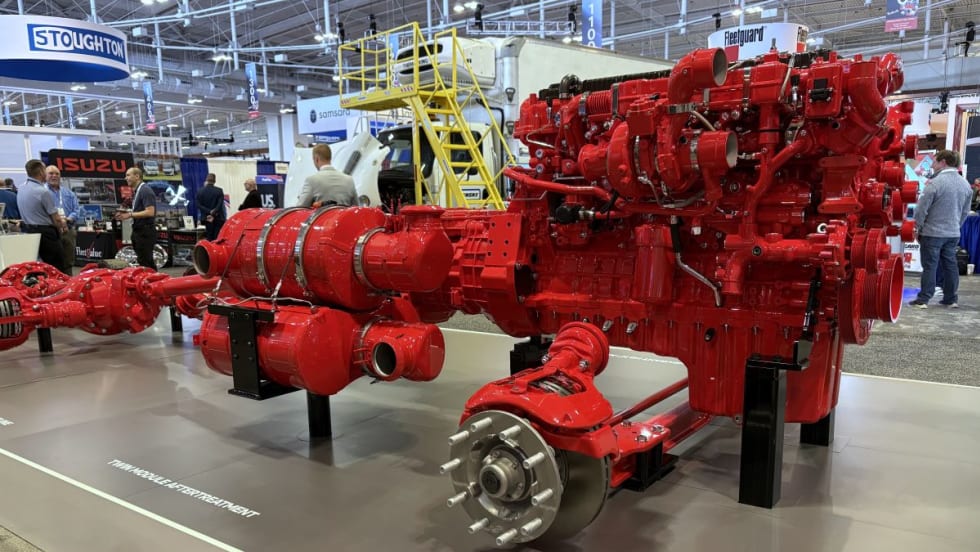
Cummins Adjusts 2027 Engine Rollout After EPA Proposal
The engine maker will gradually introduce its new Model Year 2027 diesel engines while continuing to offer current models during the transition, citing the EPA's proposed emissions rule changes.
Read More →
EPA Proposal Could Ease 2027 Truck Costs and Buying Uncertainty
The proposal doesn't change the tougher NOx standard, but it would revise key implementation requirements that manufacturers say have driven up costs and complicated fleet purchasing decisions.
Read More →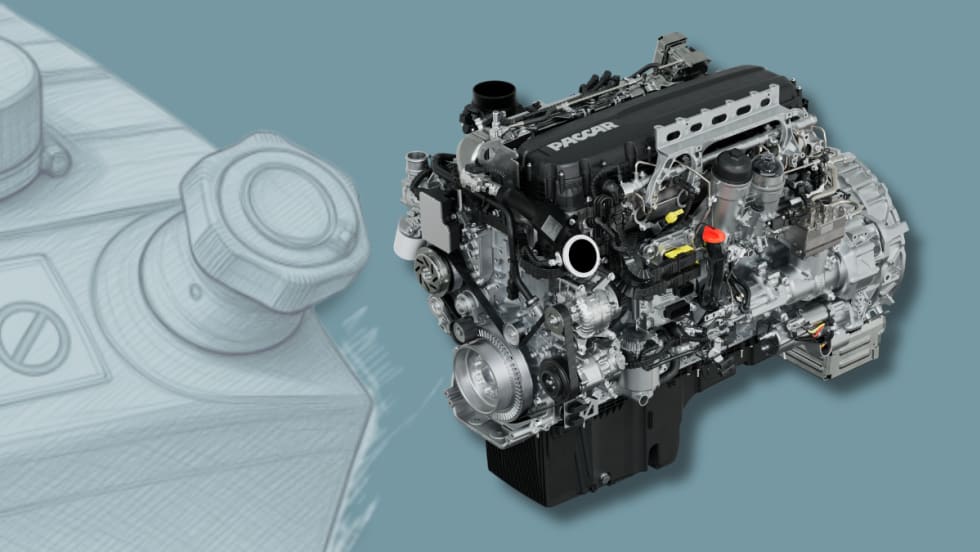
Cummins, Paccar Ease DEF Derates After EPA Guidance
Updated diesel engine software gives truck operators more time to address emissions-system issues while staying compliant with EPA emissions standards.
Read More →
Maintenance in the Messy Middle Part 3: Biodiesel
Biodiesel can reduce emissions, improve fuel-system lubricity and use existing diesel infrastructure. But NACFE’s Messy Middle maintenance report says fleets must actively manage storage, cold-weather operation, filters and oil drain intervals to avoid problems.
Read More →
Enhance Fleet Performance with High-Efficiency Auxiliary Power Units
Drive sustainable cost savings while increasing driver comfort during short- and long-haul logistics operations.
Read More →
Maintenance in the ‘Messy Middle’ Part 2: Renewable Diesel Fuel
NACFE's latest Messy Middle Powertrain Service & Maintenance report says renewable diesel gives fleets an opportunity to reduce carbon emissions without changing trucks, fueling infrastructure or maintenance practices. But technicians still need to understand several important operational differences.
Read More →
The Diesel Engine Enters NACFE’s ‘Messy Middle’
NACFE’s new Messy Middle Powertrain Service & Maintenance report says keeping modern diesel engines running now depends as much on software, diagnostics and data as traditional mechanical service.
Read More →