




Tire Pressure Monitoring Systems: No One-Trick Pony
Okay, we know that optimized tire pressure improves tread and casing life (and value too) and can contribute to improved fuel economy.

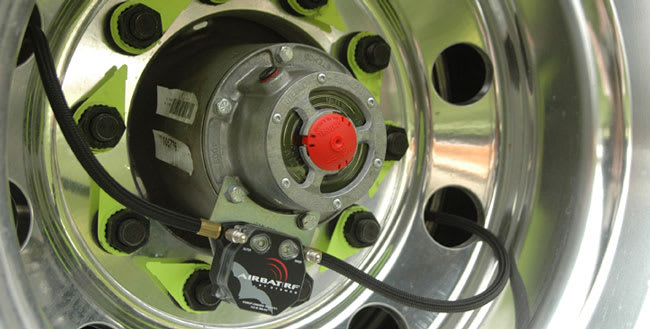
Okay, we know that optimized tire pressure improves tread and casing life (and value too) and can contribute to improved fuel economy.
Tire pressure monitoring systems have their fans and their critics, their advantages and their shortcomings, but one thing is undeniable: They make identifying an inflation problem much easier. What happens after the proverbial red light comes on is another story.
TPMS is just that - monitoring. It doesn't address the obvious problem of re-inflating a low tire, and that's something the critics of these systems like to point out in a discussion. You still need someone to get to an air compressor and add air to the tire.
Automatic tire inflation systems, however, are available only on trailers so far, which leaves 10 tires on most combinations unprotected.
Carl Tapp, vice president of maintenance at P.A.M. Transport in Tontitown, Ark., uses automatic tire inflation on his trailers. He's more than happy with the system's performance. The problem is trying to identify the leaking tire when bringing the truck in for service.
The inflation system, Tapp says, keeps the tire up, so it's hard to identify which tire is leaking unless the inflation system is active, or the leak is substantial. "I often can't tell which of the tires is bad, and waiting for the tire to go down takes time, time I haven't got when I send a truck to a shop for repair."
A monitoring system would help if it could detect the leaking tire, but often the pressure thresholds are at odds. The inflation systems kick in at the first sign of pressure loss. Most TPMS warning thresholds are set for a differential of 5 to 10 PSI below normal.
Keeping the tire inflated is only part of the solution.
"You can't let the tire go, leaving the inflation system to keep it pressured up. There's a hole in that tire and water will get in. That'll wreck the tire as sure as running it flat," Tapp says.
The first step
Identifying a bad tire is the first step in saving it. TPMS can alert both the driver and the office to a low-pressure condition, and if equipped, the system's GPS can locate the truck and guide it to the nearest tire service center. If the tire is too low for safe operation, exact coordinates can be sent to the service technician to expedite his arrival.
Some systems, such as Advantage PressurePro, and SmartTire from Bendix CVS, display individual tire pressures on an in-cab monitor, with advice on the severity of the pressure drop. Others, such as Stemco's BatRF system and TireStamp's TireVigil, simply indicate a fault to the driver, and either transmit the information to the terminal for a go/no-go decision, or instruct the driver to call for further guidance.
Stemco uses a wheel-end sensor with single or dual LED indicators to alert the driver to the bad tire. A red light on the dash-mounted Driver Alert System draws attention to the problem.
"Observing lights is a great deal easier than sticking 18 tires. Plus, the blinking lights are pretty low-key, and we purposefully give the driver only an alert," says Bob Montgomery, vice president of Bat RF. "We don't display actual pressure because we don't want drivers making decisions on the fate of the tire."
Currently, only Bat RF and PressurePro offer direct communication with TPMS-equipped trailers. Bat RF uses radio transmitters, and PressurePro uses PLC tractor-trailer links. SmartTire offers a wireless stand-alone trailer system with a warning lamp on the nose of the trailer. TireVigil will offer a trailer system in the near future.
PressurePro and TireVigil can go a step further and send the alert to the terminal as well. PressurePro does this with the help of an integrated telematic provider, and TireVigil via a cellular uplink. Stemco says they are close to announcing a deal with an in-cab communications service to provide similar real-time alerts.
Insights
So all this gets you what, exactly?
A glimpse into your operation you've never had before. You know only too well the cost and aggravation associated with tire failures, the possibility of a missed delivery appointment, and possible damage to the truck caused by a catastrophic tire failure. TPMS provides an early warning of potential tire problems by alerting you and/or the driver to low-pressure conditions that can lead to a run-soft situation that not only reduces the fuel efficiency of the tire, or threatens its longevity, but which could cause the tire to blow apart on the highway.
"Roadside downtime has become a much larger interest to truck fleets for several reasons. Expense is first - both the cost of the downtime and the cost of the repair, which can go as high as $700 to $900," says Phil Zaroor, president of Advantage PressurePro. "And not making a dock time means more than just lost time; it could cause a loss of customer confidence."
The ability to foresee potential tire problems, or in the case of systems equipped with wheel-end temperature sensors, a potential wheel-end failure, puts the fleet into a proactive position rather than a reactive one.
And then there's CSA 2010. There are four pressure-related violations the driver and the company can be cited for under the Federal Motor Carrier Safety Administration's new enforcement system. Two carry eight-point penalties and two carry three-point penalties.
Standardization
With several tire pressure monitoring systems on the market delivering essentially the same thing but by somewhat different means, there's a system to suit most needs. Stemco, for example, has scaled the Bat RF system so customers can roll out a complete tire management system, including a gate reader and the WebBat interface, or can still get some value from just the pressure sensors on the vehicle, notes Product Manager Chris Steph.
"And if they want manual collection with a handheld reader, that's available too. The handheld can also be used to upload data to the Web application, and then there's the automated route, which is popular with larger fleets. We offer a fixed location reader they can install at a gate or a fuel island. With this approach, data automatically flows into the Web application, so it's totally hands-free," Steph says.
PressurePro, on the other hand, provides tire pressures and info across the PLC to a proprietary receiver in the cab, which hands off to a telematics provider for upload to a fleet's office-based management system. PressurePro is currently working with the DOT on the development of a wireless roadside inspection. That, at some point, could require some degree of standardization.
So far, that's not the case, except to a limited degree in TireStamp's TireVigil system. Unlike most other TPMS systems, TireVigil is non-proprietary. It can read other suppliers' sensors (including Advantage PressurePro's). This allows the user some flexibility in choosing brands of pressure sensors.
"TireVigil TPMS will communicate with a couple of different TPMS sensors on the same vehicle, but these sensors have to be 'certified' by TireStamp to operate with our system," says TireStamp President Peggy Fisher. "The problem is that the various brands and types of sensors all have their own protocols, which do not automatically work with other systems unless these other systems are taught their language."
So far, little work has been done in this area. No one seems to be asking for it, Fisher says, but the ATA's Technology and Maintenance Council has developed engineering guidelines to list the operational parameters of TPMS in an effort to help alleviate some obstacles to implementation and to promote broader acceptability among OEMs.
Paying for it
TPMS now offers much more than simple alerts to a failing tire. The data handling capability of the various systems gives fleets perhaps the best tool ever for evaluating tire performance. Still there are
More Equipment
Autonomous Truck Testing Moves Ahead in California as Teamsters Challenge Rules
California has begun permitting heavy-duty autonomous truck testing, with Aurora and Kodiak among the first to receive approval, as the Teamsters sue the DMV over the new regulations.
Read More →
Behind the Wheel of the New Mack Anthem [Video]
HDT takes the new Mack Anthem around Mack’s Pennsylvania test track to see how its driver-focused design, technology, visibility and handling perform from behind the wheel.
Read More →
DTNA Plans New U.S. Truck Plant as Manufacturing Footprint Shifts
Daimler Truck North America is evaluating sites for a new assembly plant expected to open in 2029 while winding down operations at its longtime Portland manufacturing facility.
Read More →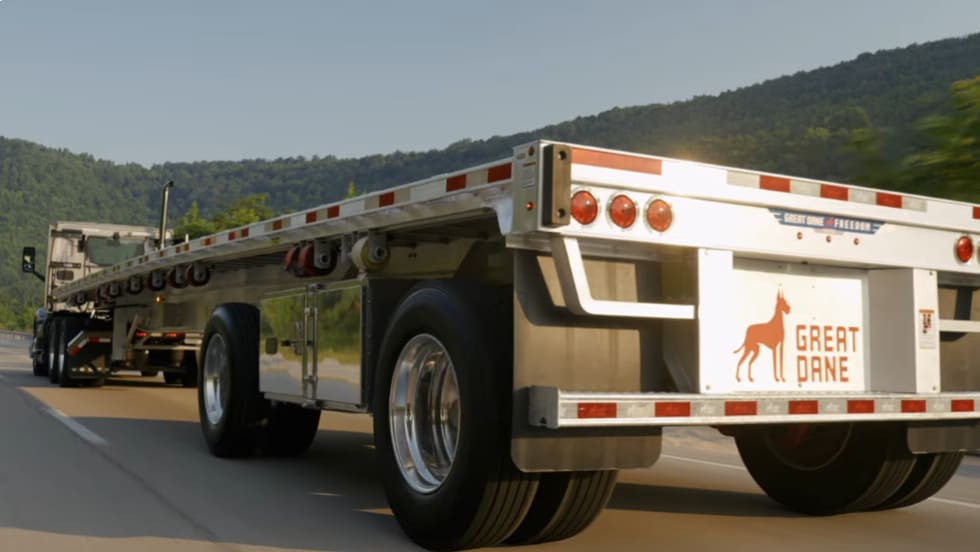
Great Dane Flatbed Trailer Offers Light Weight and Strength
Freedom Ultra is designed for a wide range of open-deck applications, including building materials, lumber, machinery, steel products, industrial freight, and coil hauling.
Read More →
What It's Like Inside this Custom 2025 Peterbilt 589?
Take a driver's-eye tour of this customized 2025 Peterbilt 589 in this video, as longtime driver Ingrid Brown explains its features, compares it to previous models, and shares plenty of personality along the way.
Read More →
Drivers Put Western Star Trucks to the Test at Star Nation Experience
Watch to get an inside look at the Western Star trucks, technology, and community behind the Star Nation Experience 2026!
Read More →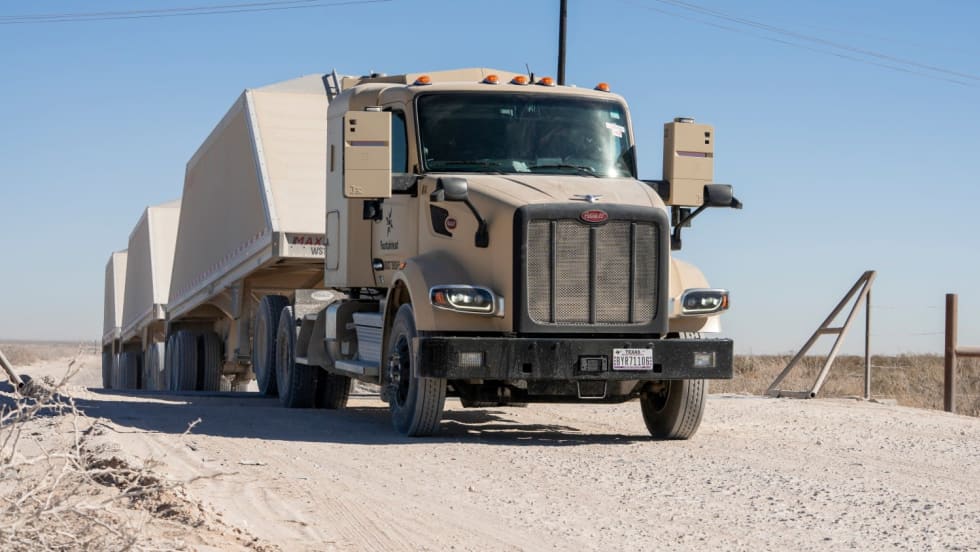
Atlas Expands Kodiak Driverless Truck Fleet in Permian Basin
Atlas Energy Solutions is expanding autonomous frac sand hauling in the Permian Basin with a second load-out location and plans for 100 driverless trucks by mid-2027.
Read More →
Putting Mack’s Command Steer to the Test
A test drive of Mack’s Command Steer active steering system evaluates how it can make truck driving easier and less tiring.
Read More →
Mack, Volvo Expand DEF Derate Software Updates
The updated software gives Mack and Volvo truck owners more time to address DEF-related issues before the engine derates or the vehicle goes into reduced-speed inducement, following new EPA guidance.
Read More →
Rush, MCT Team Up to Grow Refrigeration Service Network
The joint venture will operate MCT's network of Carrier Transicold dealerships and mobile service locations, with the companies promising greater service capacity and uptime for refrigerated fleets.
Read More →