




Related: Trump Comments on Fuel Taxes for Highway Infrastructure
U.S. Mayors Push For Infrastructure Task Force
The U.S. Conference of Mayors has formed a task force on infrastructure aimed at working with President Trump and Congress to develop and pass a major infrastructure package. The task force will be headed by L.A. Mayor Eric Garcetti.
by Staff
May 5, 2017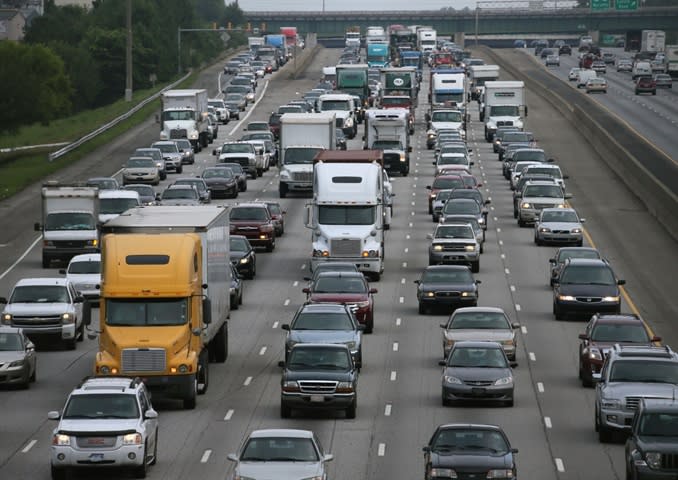
Photo: U.S. Department of Transportaion
2 min to read
Photo: U.S. Department of Transportaion
The U.S. Conference of Mayors has formed a task force on infrastructure aimed at working with President Trump and Congress to develop and pass a major infrastructure package.
The Task Force on Infrastructure will be chaired by Los Angeles Mayor Eric Garcetti, who was appointed by USCM’s president, Oklahoma City Mayor Mick Cornett.
“Mayor Garcetti leads a city that has been at the forefront of so many infrastructure initiatives from a massive build out of the city and region's transit system, smart and connected lighting, an accelerated deployment of renewable energy technologies, and substantial port and freight improvements, among others,” said Cornett. “I am pleased to welcome him to this post."
The task force will work with the leadership in Washington to guide the passage of an infrastructure package. It will be comprised of mayors interested in various infrastructure sectors, including transportation, water, ports, energy, broadband and other priorities.
USCM has been actively engaged in infrastructure reform since the election and the organization’s top four officers along with CEO and executive director Tom Cochran met with then President-elect Trump on Dec. 15 to discuss issues related to infrastructure. In January, Vice President Pence attended USCM’s Winter Meeting and explained plans the president has to deliver a major infrastructure investment for the country.
Recently, the group met with top infrastructure leaders, including Transportation Secretary Elaine Chao, House Transportation and Infrastructure Committee Chair Bill Shuster, House Transportation and Infrastructure Committee Ranking Member Peter DeFazio, Senate Majority Leader Mitch McConnell, House Democratic Leader Nancy Pelosi, and many others.
“The path to economic prosperity runs through our investments in America’s infrastructure,” said Garcetti. “That means upgrading our roads and rail systems, modernizing our airports and ports of entry to better compete on the global stage, strengthening our water systems, and creating partnerships in telecommunications to better connect our communities.”
More Fleet Management

Sponsored•September 16, 2026
Color Match Smarter: Tools That Restore & Perform
For fleet managers and collision repair professionals keeping heavy-duty trucks on the road, getting the color right the first time isn't just about appearance — it's about efficiency, turnaround time, and bottom-line results. Discover how today's digital color tools are transforming the repair process from guesswork to precision.
Read More →
FMCSA Pauses Biennial-Update Enforcement Amid Motus Transition
Carriers whose updates were due on or after June 1 have more time, while FMCSA works to stabilize its new registration system and warns of phishing sites impersonating its new carrier registration system, Motus.
Read More →
Sponsored•September 14, 2026
2026 Blueprint for Countering Smarter Supply Chain Theft
Cargo theft is no longer just the cost of doing business. It's a multi-billion-dollar criminal enterprise exploiting vulnerabilities across your fleet, drivers, and supply chain.
Read More →


Sponsored•September 1, 2026
How Telematics Improves Visibility, Control, and Performance in Refrigerated Fleets
Explore how telematics help refrigerated fleets improve visibility, uptime, efficiency, compliance, and cargo protection across connected cold chain operations.
Read More →
What the U.S.-Canada Trade War Means for Trucking
Escalating U.S.-Canada tariffs could disrupt cross-border freight, reduce truck volumes, raise costs, and create new uncertainty for carriers on both sides of the border.
Read More →
What Are Trucking’s Top Concerns for 2026?
The American Transportation Research Institute wants to know what's worrying trucking fleet managers, drivers, and other stakeholders in its annual Industry Issues survey.
Read More →
American Trucking Associations Looks for a New Leader
ATA President and CEO Chris Spear abruptly left his job at the association on August 21, at a pivotal time for the trucking industry.
Read More →
Public Wi-Fi Cybersecurity Risks: How Truck Drivers and Fleets Can Protect Their Data
Public Wi-Fi can expose truck drivers and fleets to credential theft, malware, and other cyber threats. Here’s how to reduce the risk on the road.
Read More →
For Nicky Cupp, Fleet Innovation Starts With Frustration
HDT Truck Fleet Innovator Nicky Cupp turns everyday pain points at Fraley & Schilling into opportunities for better technology and smarter processes.
Read More →
Adam Buttgenbach’s Approach to Electric Trucks: Start With Where They Fit
HDT Truck Fleet Innovator Adam Buttgenbach helped PepsiCo build one of North America’s largest EV fleets by focusing on where electric trucks make operational sense.
Read More →