



State and local moving violations were the most common citations given to commercial vehicle drivers during the Commercial Vehicle Safety Alliance’s Operation Safe Driver Week.
 MENU
MENU SEARCH
State and local moving violations were the most common citations given to commercial vehicle drivers during the Commercial Vehicle Safety Alliance’s Operation Safe Driver Week.
State and local moving violations were the most common citations given to commercial vehicle drivers during the Commercial Vehicle Safety Alliance’s Operation Safe Driver Week.
The recently released results from the week-long enforcement event, which took place from Oct. 16 to 22, show that more than half of all the citations and warnings given were moving violations. Speeding was the top violation handed out to passenger vehicle drivers.
Safety enforcement officials issued warnings and citations to 20,648 commercial vehicle and passenger vehicle drivers during Operation Safe Driver Week. Unsafe driving behaviors including speeding, failure to use a seatbelt, and distracted driving instances were also among the top results collected by more than 3,000 law enforcement officials.
“This year, the Operation Safe Driver Week campaign specifically targeted the unsafe driving behaviors that are more often the cause of crashes,” said Julius Debuschewitz of Yukon Highways and Public Works and CVSA President.
Of the total number of violations, 11,182 were issued to commercial vehicle drivers, who often differed in the types of violations cited compared to those driving passenger vehicles.
When broken down as a percentage of the total number of violations, the top-five warnings and citations issued to commercial drivers were:
State and Local Moving Violations – 56.7%
Speeding – 19.6%
Failure to Obey Traffic Control Device – 7.6%
Failing to Use Seatbelt While Operating CMV – 7.1%
Using a Handheld Phone – 2.4%
CVSA holds this annual week-long campaign because unsafe driving behavior is at the root of most roadway crashes. Driver behavior was found to be the leading cause of large truck crashes, according to the Federal Motor Carrier Safety Administration’s Large Truck Crash Causation Study.
In more specific instances, commercial drivers tended to be cited less often for speeding and inattentive driving. Eight citations were related to a commercial vehicle driver’s failure to stop at a railroad crossing and 7 drivers received a citation for operating a vehicle while ill or fatigued, though 38 were given warnings.
Though not a major issue, 1.4% of commercial drivers were cited for following too closely while passenger vehicle drivers were cited less than 1% of the time. Passenger vehicle drivers were also more likely to not wear a seatbelt at 11.7%, compared to 7.1% for commercial drivers.
“Through a variety of high-visibility and covert driver traffic enforcement initiatives, in addition to driver education and outreach activities, law enforcement agencies capitalized on the opportunity the weeklong campaign provided to continue their work toward making sure the drivers on our nations’ roadways are sharing and navigating those roadways safely,” said Debuschewitz.
Operation Safe Driver was launched in 2007 by CVSA to combat the number of deaths resulting from crashes involving large trucks, buses, and cars by improving the behavior of all drivers operating in an unsafe manner.

Heavy Duty Trucking's Top 20 Products awards recognize the best new products and technologies. Check out the award presentations at the 2026 Technology & Maintenance Council annual meeting.
Read More →
The Detroit® Gen 6 engine platform proves that real progress doesn’t require a complete redesign. Built on 20 years of trusted technology, these engines are designed for efficiency, stronger performance, and greater reliability than before. And they do it all while complying with 2027 EPA standards on every mile.
Read More →
The 2026 ACT Expo is focusing heavily on what organizer Erik Neandross calls trucking's digital frontier. This interview excerpt dives into artificial intelligence, zero-emission vehicles, and tips to make sense of it all.
Read More →
There's an amazing amount of new technology for trucking out there. For fleets, the challenge is figuring out what’s real, what’s hype, and what’s worth investing in.
Read More →
Artificial intelligence, the software-defined vehicle, telematics, autonomous trucks, electric trucks and alternative fuels, and more in this HDT Talks Trucking interview
Read More →
ACT Research data shows volumes hitting a four-year high and supply-demand balance strengthening, but higher oil prices are undercutting tariff relief and tempering optimism.
Read More →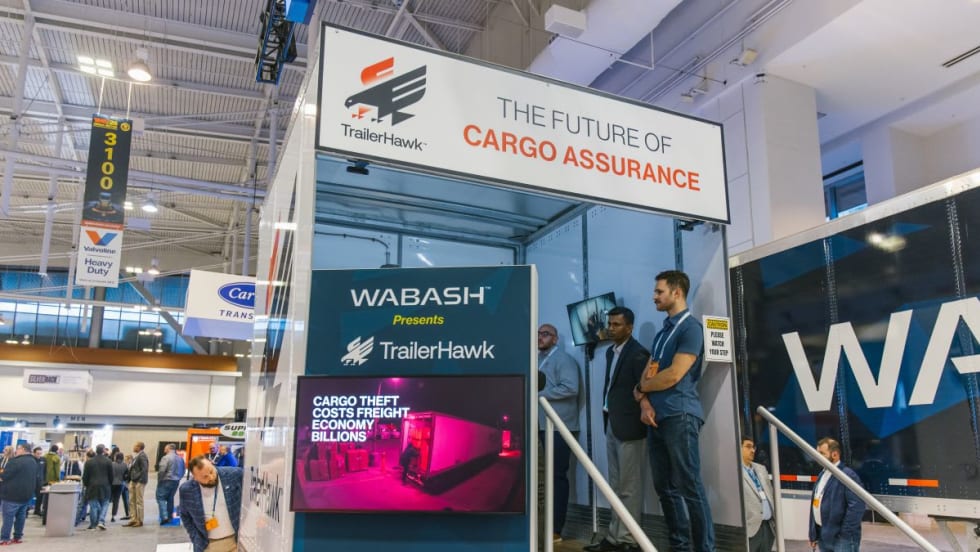
The patent-pending cargo solution integrates a digitally connected cargo door and an intelligent locking system with the TrailerHawk.AI technology platform.
Read More →
The impact of the Iran conflict extends beyond fuel costs, bringing more fraud and cybersecurity risks to the trucking industry.
Read More →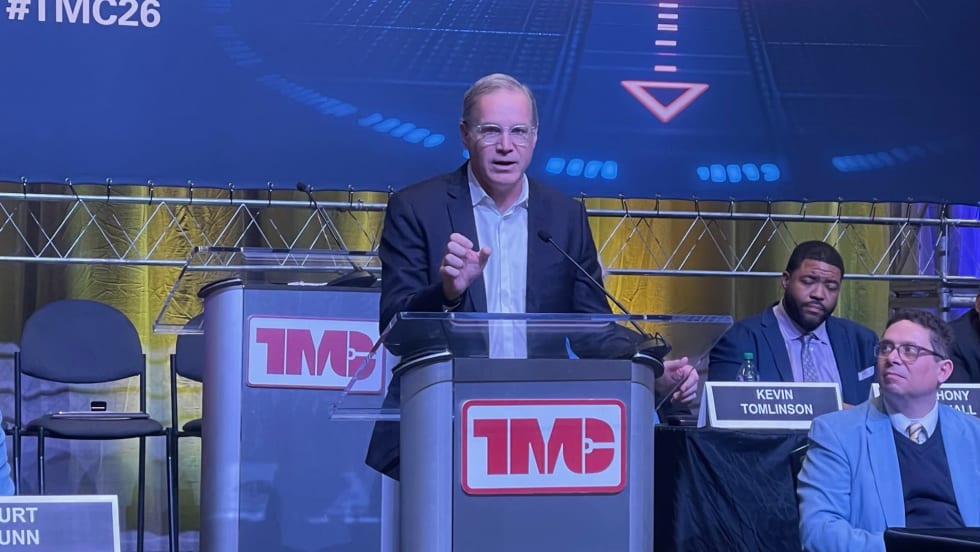
Speaking at the TMC Annual Meeting in Nashville, ATA President Chris Spear said trucking faces mounting pressure from rising fuel prices, geopolitical instability, and uncertainty around trade policy.
Read More →
More than 100,000 new trucking companies enter the industry each year, but regulators manage to audit only a fraction of them. That churn creates opportunities for inexperienced startups — and for “chameleon carriers” that shut down after safety violations and reappear under new identities. Read more from Deborah Lockridge in this commentary.
Read More →