





Related: Nikola One Fuel Cell Electric Truck Promises High Fuel Economy, Low Maintenance
Daycabs, Vocational Trucks Are Priorities for Nikola
A daycab version of Nikola Motor Co.’s hydrogen-electric heavy-duty tractor will probably be the first one to enter production, said the firm’s founder and CEO, Trevor Milton.
December 2, 2016
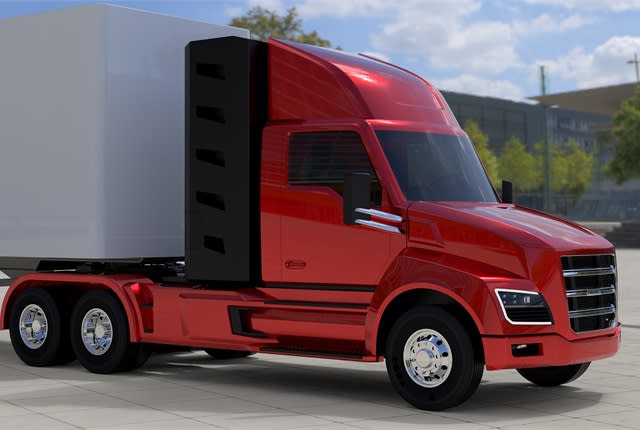
Photo: Nikola Motor
2 min to read

Photo: Nikola Motor
A daycab version of Nikola Motor Co.’s hydrogen-electric heavy-duty tractor will probably be the first one to enter production, said the firm’s founder and CEO, Trevor Milton, at the conclusion of a series of technical briefings on the products on Friday morning. And vocational straight trucks might be close behind.
An unveiling of a Nikola One, a streamlined sleeper-cab tractor, the previous evening put nearly all emphasis on the long-haul model. But short and regional hauling is as important and the daycab Nikola Two is simpler, he told HDT at the event’s conclusion. Daycab tractor versions would share most operational benefits – low maintenance and operating costs along with zero emissions – with the over-the-road sleeper model.
Vocational markets will include refuse, and Milton said he and his engineers are already planning a chassis for trash collection. Dump and mixer trucks are likewise probable, and all-wheel drive would make them valuable in some on/off-road duties.
An earlier discussion of a Nikola’s likely lifespan included observations that the electric motors and battery “don’t need air to operate,” and the motors, anyway, could be driven into water and emerge undamaged.
Milton said he’s planning 6x6 and 6x4 versions of the fuel cell electric drive chassis; without front-driving gear, steer-axle wheels could cut sharper, aiding maneuverability in a number of applications.
Engineers initially designed the Nikola with a gas-fueled turbine-electric powertrain, but decided to go to hydrogen fuel cells because they’re much quieter and cleaner, and require no emissions certification. A turbine version is still possible “for sale into markets where we can’t get hydrogen to,” he said.
The company’s plans to build hundreds of hydrogen fueling stations will include parking and shopping areas, and facilities will be “awesome -- they will be destinations,” Milton said. Existing truck stops were considered to be part of the network, but his team didn’t think their facilities were of the quality that Nikola wants for its customers and their drivers.
Production is three years away because durability testing must go through three winter seasons, and safety-related testing of braking systems and other components will also take time. As announced the night before, Fitzgerald Gliders will build the first 5,000 units and Nikola Motor will erect a factory to assemble subsequent vehicles.
Ryder System will handle sales and service for most Nikolas at its 800-plus facilities in the United States and Canada. Thompson Machinery, a Caterpillar dealer in Kentucky and Tennessee and an early investor in Nikola Motor, will have rights to handle Nikolas in those states.
More Fuel Smarts
Trucking’s Diesel Squeeze Isn’t Letting Up
With diesel topping $6 a gallon nationally, ATA's Bob Costello explains why fleets should prepare for continued pressure at the pump.
Read More →
FlowBelow Redesigns Trailer AeroSlider to Cut Fuel Use
The lighter trailer aerodynamic system installs in less than 45 minutes, according to the company, with potential payback in under a year depending on fuel prices and trailer mileage.
Read More →
Why Diesel Price Relief Efforts May Fall Short
Diesel prices have eased from September’s record high, but doubts about additional Russian supply and limits on dyed-diesel tax relief mean trucking fleets still face expensive fuel. And prices could go higher.
Read More →
Why Small Fuel Savings Matter in Trucking
Can better fuel economy help pay for driver raises? In this podcast, GP Transco explains how small efficiency gains create room to reinvest in its people.
Read More →
How GP Transco Cuts Trucking Fuel Costs, a Tenth of a Gallon at a Time
What’s another tenth of a mile per gallon worth? GP Transco shares how equipment upgrades and driver coaching turn small gains into meaningful fuel savings.
Read More →
Electric Yard Tractors Move Beyond Pilots
Operating-cost savings have overtaken sustainability goals as the leading reason surveyed fleets are adopting battery-electric terminal tractors, according to new NACFE research.
Read More →
Geotab Links Fleet Card to Vehicle Data
The new card combines fuel discounts with telematics-based purchase controls. Geotab’s analysis also points to potential savings from choosing lower-priced fuel stops.
Read More →
Fleet Economics Shape Electric Truck Outlook
ACT Research expects costs, charging infrastructure, and technology improvements to drive zero-emission commercial vehicle adoption as federal regulations and incentives retreat.
Read More →
Wex Adds Cardless Fuel Payments for Over-the-Road Customers
A new fuel card feature for Wex customers offers convenience and security.
Read More →
New California Law Could Shed Light on Electric Truck Prices
Why do battery-electric Class 8 trucks remain so expensive? A California bill signed by Gov. Gavin Newsom would give fleets and state agencies more visibility into what manufacturers charge.
Read More →