




CAT Faces Fresh Litigation over Repeated C13, C15 ACERT Emissions Failures
Plaintiffs in the latest class-action lawsuit allege Caterpillar hid details of defects and performance issues from customers that the engine maker knew about.

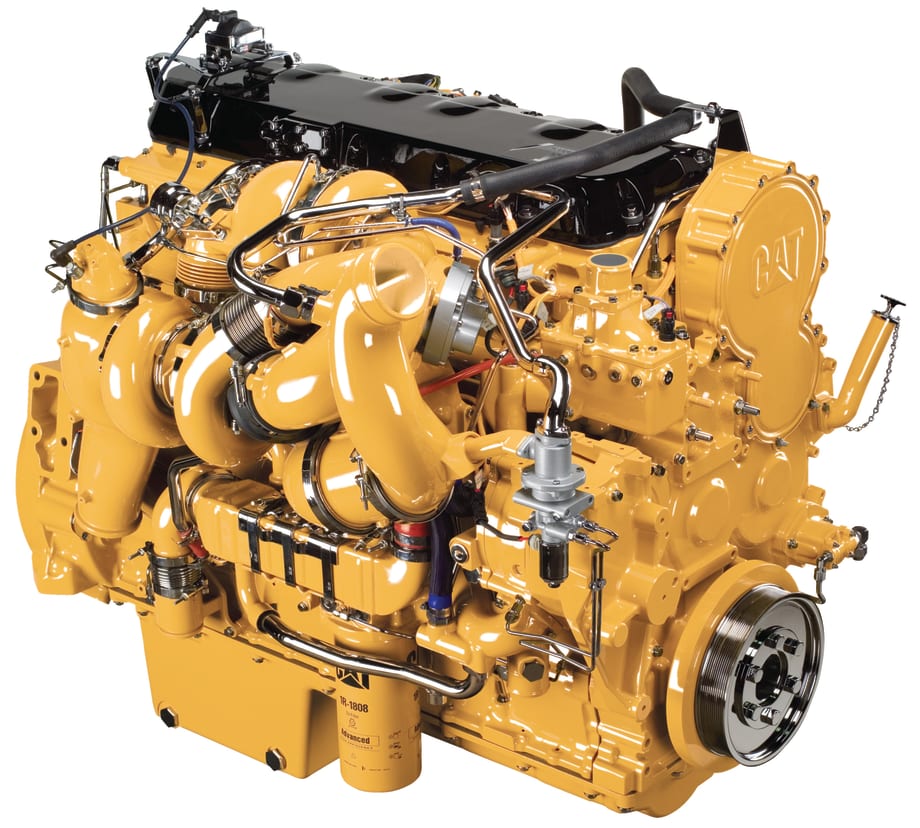
Owners of Caterpillar C15 (shown) and C13 engines claim the manufacturer downplayed defects and performance issues with the engines.

A sixth proposed class-action has been has been filed against Caterpillar alleging emission-control systems on its model-year 2007 thru 2010 C13 and C15 engines are defective and that Cat was aware of the problem, but kept producing the engines before eventually withdrawing entirely from the on-road heavy-duty diesel engine market.
The latest class-action involving alleged failures of Caterpillar's Advanced Combustion Emissions Reduction Technology, also known as ACERT, was filed on April 30 in U.S. District Court for the District of Minnesota by Scenic Boundaries Trans.
The Scenic Boundaries case specifically alleges that the exhaust emission control system, known as the Caterpillar Regeneration System “is defective in material and/or workmanship causing the vehicle to not function as required under all operating conditions, on a consistent and reliable basis, even after repeated emissions warranty repairs and replacements. These repeated warranty repairs and replacements failed to repair or correct the CRS defect resulting in damages, including diminished value of the vehicles powered by model-year 2007 CAT Engines, and the costs to re-power the vehicles with diesel engines that are compliant with the 2007 EPA Emission Standards.”
The suit also notes that because the trucks could only be repaired at Caterpillar-authorized repair shops using proprietary tools and software, owners had no choice but to tow the trucks to dealers at tremendous cost. The website, law.com notes that the plaintiffs also accuse Caterpillar of breach of express and implied warranties, fraudulent concealment, and violations of Minnesota’s deceptive trade practices and consumer fraud acts.
One of the attorneys representing Scenic Boundaries, Paul Weiss of Complex Litigation Group in Highland Park, Ill, says there are dozens of previous cases on record, all alleging the identical problem.
It's the same case, the same issue, the same problem," Weiss told truckinginfo.com. "Cat will try to tell us each case is different or that various owners didn't properly service the truck or ignored the warnings, but it's all the identical problem. There are already class-actions pending in Florida, California, Georgia, Pennsylvania, Louisiana and New Jersey, and we're planning on bringing more, though they are all likely to wind up in one court."

Caterpillar has already asked to have this latest case and five other class actions alleging the same defects in the company’s C13 and C15 engines consolidated and transferred to federal court in the Southern District of Florida, Weiss says.
Other actions against Caterpillar date back to March of 2010, and those claim essentially the same problems were occurring with 2007 and 2008 model-year C13 and C15 engines. In those suit, plaintiffs Thomason Trucking, Paul Trucking, and Tapley Forestry Service, all based in Oklahoma, say they bought a total of 90 trucks with C15 engines in 2007 and 2008, but were not warned of the engines' defects.
Thomason Trucking has since settled with Caterpillar, but declined to discuss the terms of the settlement when contacted by truckinginfo.com.
Caterpillar was sued again in the spring of 2013 by BK Trucking which alleged that Caterpillar has known for years that its Caterpillar C13 and C15 Advanced Combustion Emission Reduction Technology diesel engines were defective, yet concealed the problems while still touting the engines’ high quality and reliability. That action was filed in New Jersey.
Weiss says many large fleets have already settled the claims with Caterpillar, but the terms of those agreements remain confidential.
"Several large fleets and owners sued Caterpillar back in 2010," Weiss says. "It appears that Cat resolved all the lawsuits where they were sued by somebody that had money. These well-financed companies like Western Star and Walgreen's Company, to name a couple, sued CAT but the settlements were all confidential."
Weiss says even the judges do not know the terms of the earlier settlements.

"The settlements were confidential and I don't know the terms," he says. "The judges in the cases we are bringing will certainly be aware that there have been settlements, but the terms haven't been disclosed. I have heard from my sources that they run into the tens of thousands of dollars per engine, but I don't know that to be true from first hand information."
Results of previous settlements, however, will not set a precedent for the pending litigation.
"All the cases were settled confidentially," says Weiss. "But do I think a judge would look at that and raise her eyebrows? I'd say yes. I think the judge knows CAT has already settled with one group."
Weiss believes Caterpillar has already settled claims on a couple of thousand engines, but estimates there were as many as 40,000 of those engines produced -- many of them owned by small fleets or independents without the wherewithal to take on a company like Caterpillar.
"The bigger fleets could afford to take on Caterpillar, but for small fleets, the 1 to 5 truck operator, those kinds of failures meant huge expenses which eventually led to bankruptcy for a lot of them," he suggests. "Most folks could never afford to take on a company like Caterpillar on an hourly basis. We take these cases on a contingency basis and only collect a fee if we win."
Weiss estimates the diminution of value to be around $50,000 per engine. He reckons it will cost the C13 and C15 owners close to that to replace those engines -- if they can be replaced.
"Now that the market knows the value of those engines, owners will never get a fair residual on the trucks," he maintains. "If they had tried to sell the trucks in 2008, before everyone knew them to be lemons, it might have been different."
Weiss said he expects his case will go to trial by the end of the year.
Truckinginfo.com contacted Caterpillar for comment, but the company has not responded.
Representing the plaintiffs (Scenic Boundaries Trans) are:
Richard Burke and Jamie Weiss of Complex Litigation Group, Highland Park, Ill.
Garrett Blanchfield and Roberta Yard of Reinhardt Wendorf & Blanchfield, St. Paul, Minn.; and
Jonathan Shub of Seeger Weiss, Philadelphia.
More Fleet Management

Volvo Trucks Adds Unattended Over-the-Air Software Update Capabilities
The latest evolution of Volvo’s over-the-air update technology allows software updates to run while trucks are parked, helping fleets keep vehicles current without disrupting operations.
Read More →
How Waste Connections is Using Data, Telematics, and AI
How do you manage and maintain more than 18,000 connected trucks? Data. Lots of it.
Read More →
Why Fleet Data Matters More Than Ever at Waste Connections [Watch]
Waste Connections' Chuck Palmer explains how telematics, predictive maintenance, safety analytics, and AI help keep vehicles on the road and drivers safe in this episode of HDT Talks Trucking.
Read More →
NMFTA Launches Free, Anonymous Cybersecurity Threat Report Portal
Organizations are encouraged to anonymously report freight fraud, cargo crime, and cyber threats while gaining visibility into incidents reported across the transportation sector.
Read More →
AI Can Optimize a Fleet. Can It Replace Human Judgment?
Fleets fear falling behind if they don’t adopt AI quickly enough. They also fear what happens if the technology makes the wrong decision.
Read More →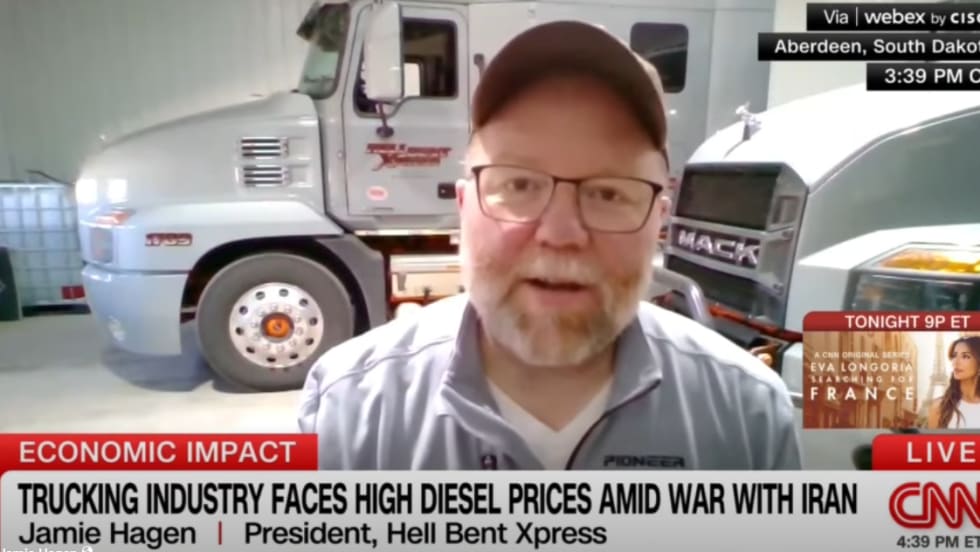
Jamie Hagen Gets Real About Running a Small Fleet in an Uncertain Economy
Small fleet owner Jamie Hagen says new legal risks, volatile fuel prices, and a changing freight market are forcing small carriers to rethink how they operate — and what they can afford.
Read More →
Jamie Hagen Gets Real About Freight, Fuel Prices, Safety, and Small-Fleet Survival
Running a small trucking fleet right now isn’t easy, especially right now. And Jamie Hagen doesn’t sugarcoat it.
Read More →
Jamie Hagen Gets Real About Freight, Fuel Prices, Safety, and Small-Fleet Survival
Running a small trucking fleet right now isn’t easy, especially right now. And Jamie Hagen doesn’t sugarcoat it.
Read More →
Data Lock‑In or Integration Lock‑Out?
Data fragmentation is costing dealerships, OEMs, fleets, and upfitters millions. Here’s why interoperability may be the fix the trucking industry needs.
Read More →
What Trucking Fleets and Brokers Need to Know About This Supreme Court Case
In May, the U.S. Supreme Court ruled that freight brokers can be held liable for damages if a truck they have contracted with is involved in an accident. Listen as this transportation attorney breaks down the ruling and its implications for the trucking industry.
Read More →