




Mercedes-Benz Initiates Megawatt Charging and Long-Haul EV Truck Trials
Mercedes-Benz has begun a new series of tests in Europe to validate vehicle compatibility with megawatt chargers and assess charging performance, thermal management, and usability on long-haul duty routes.

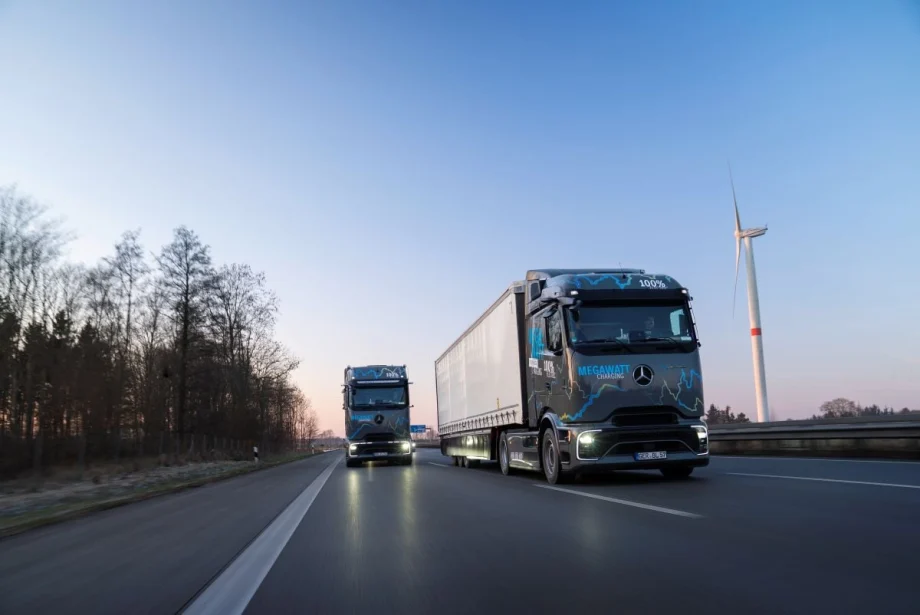
Mercedes-Benz recently completed a 2,400-kilometer long-distance field test using two MCS-compatible eActros 600 battery-electric tractors.
Photo: Mercedes-Benz
Mercedes-Benz Trucks is taking another step toward making battery-electric long-haul trucking practical, according to the company.
The OEM is putting megawatt charging technology through real-world testing across Northern Europe.
Long-Distance Field Trials
Mercedes-Benz recently completed a 2,400-kilometer long-distance field test using two MCS-compatible eActros 600 battery-electric tractors.
The runs were aimed at evaluating how the emerging Megawatt Charging System (MCS) performs under real operating conditions.
The route ran from Mercedes-Benz’s Wörth am Rhein plant in Germany through the Netherlands, Belgium, Denmark, and into southern Sweden. It included charging stops at both public and private MCS truck charging locations.
The goal of the test was twofold: to validate vehicle compatibility with megawatt chargers from multiple infrastructure providers and to assess charging performance, thermal management, and usability in long-haul duty cycles, including winter conditions.
“The key challenges in megawatt charging lie in harmonizing the vehicle with various charging systems,” said Peter Ziegler, head of e-charging components for Mercedes-Benz Trucks. “At the same time, the extreme charging currents place high demands on thermal management. This test run allows us to evaluate those factors under real-world operating conditions.”
Cutting Charging Time for Long-Haul Operations
MCS is widely viewed as a critical enabler for battery-electric long-haul trucking, the OEM said. This is area it said vehicle utilization and downtime remain major concerns for fleets.
With charging power levels of up to 1,000 kW, Mercedes-Benz said MCS significantly reduces recharge times compared with today’s Combined Charging System (CCS) standards.
The eActros 600 can recharge from 20% to 80% state of charge in about 30 minutes using megawatt charging. That window aligns closely with mandatory driver rest breaks, allowing fleets to add range without extending dwell time.
For freight operators, faster charging opens the door to higher daily utilization and more flexible route planning -- provided infrastructure keeps pace.
While public MCS locations remain limited in Europe today, Mercedes-Benz sees the technology as a cornerstone for making battery-electric trucks economically viable in long-haul transport. The company is actively working with charging providers and standards bodies to accelerate deployment.
Standardization Key to Infrastructure Buildout
The MCS standard is being developed through CharIN, the global charging interface initiative, in collaboration with truck OEMs and charging suppliers.
Mercedes-Benz Trucks said uniform interfaces between vehicles and chargers are essential to building a pan-European fast-charging network for heavy-duty commercial vehicles.
For fleets, standardization reduces risk when investing in electric trucks by ensuring vehicles can access charging infrastructure from multiple providers without compatibility issues.
The long-distance test also allowed engineers to study charging curves, average charging power, and overall system performance across different MCS installations. That data will feed directly into production validation and customer readiness.
eActros 600 Designed for Long-Haul Duty
The eActros 600 is Mercedes-Benz Trucks’ flagship battery-electric long-haul tractor.
It is equipped with three lithium iron phosphate (LFP) battery packs, each rated at 207 kWh, for a total installed capacity of 621 kWh. LFP chemistry allows more than 95% of usable capacity, supporting longer range without increasing battery size.
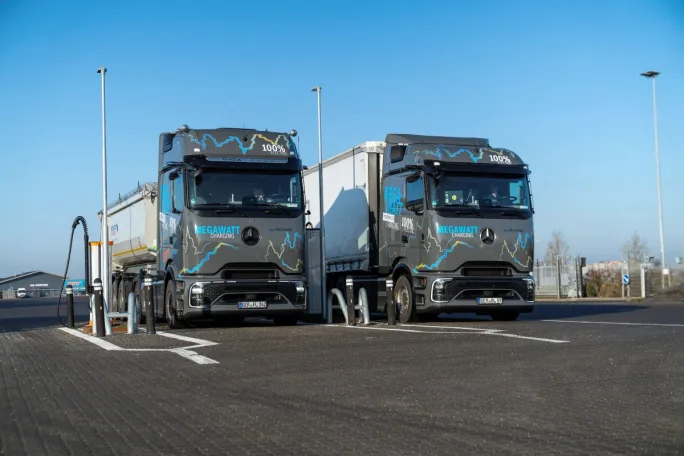
Mercedes-Benz said uniform interfaces between vehicles and chargers are essential to building a pan-European fast-charging network for heavy-duty commercial vehicles.
Photo: Mercedes-Benz
Mercedes-Benz Trucks rates the eActros 600 for a range of approximately 500 kilometers (about 310 miles) without intermediate charging at a gross train weight of 40 tons.
With opportunity charging during legally required driver breaks, the truck is designed to cover more than 1,000 kilometers per day on suitable routes.
The vehicle is engineered for a combined gross train weight of up to 44 tons and offers a payload of roughly 22 tons with a standard semi-trailer under EU regulations; higher payloads are possible depending on national rules.
Infrastructure Still the Limiting Factor
While the technology demonstration highlights the promise of megawatt charging, Mercedes-Benz Trucks acknowledged that infrastructure availability remains the determining factor for fleet adoption.
Only a small number of public MCS truck charging sites are currently operational in Europe, though multiple corridor-based buildouts are underway.
For fleets evaluating battery-electric long haul, the company sees MCS as a necessary bridge between vehicle capability and real-world operations—one that could ultimately make electric trucks competitive with diesel in high-utilization freight lanes.
As infrastructure expands, Mercedes-Benz Trucks believes megawatt charging will play a central role in accelerating the transition to zero-emission long-haul transport.
More Fuel Smarts
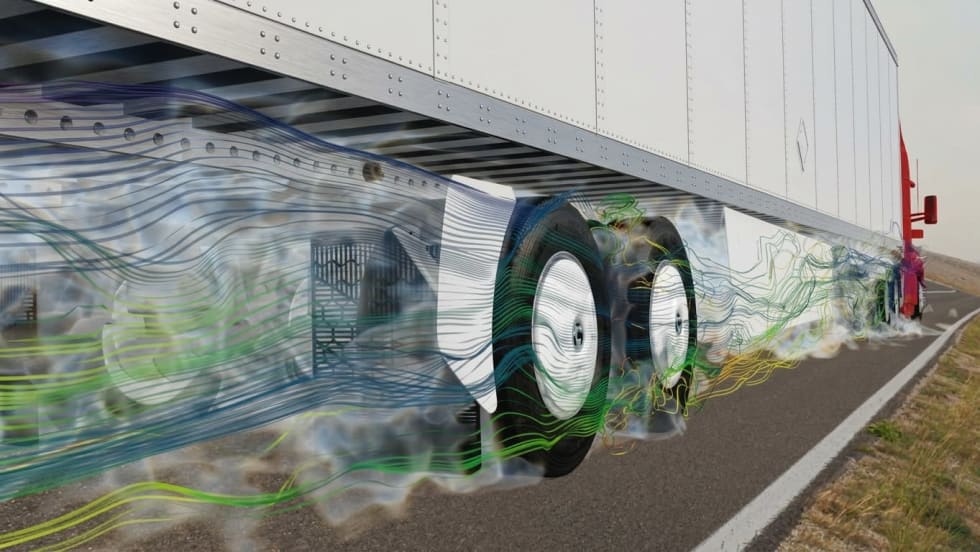
FlowBelow Redesigns Trailer AeroSlider to Cut Fuel Use
The lighter trailer aerodynamic system installs in less than 45 minutes, according to the company, with potential payback in under a year depending on fuel prices and trailer mileage.
Read More →
Why Diesel Price Relief Efforts May Fall Short
Diesel prices have eased from September’s record high, but doubts about additional Russian supply and limits on dyed-diesel tax relief mean trucking fleets still face expensive fuel. And prices could go higher.
Read More →
Why Small Fuel Savings Matter in Trucking
Can better fuel economy help pay for driver raises? In this podcast, GP Transco explains how small efficiency gains create room to reinvest in its people.
Read More →
How GP Transco Cuts Trucking Fuel Costs, a Tenth of a Gallon at a Time
What’s another tenth of a mile per gallon worth? GP Transco shares how equipment upgrades and driver coaching turn small gains into meaningful fuel savings.
Read More →
Electric Yard Tractors Move Beyond Pilots
Operating-cost savings have overtaken sustainability goals as the leading reason surveyed fleets are adopting battery-electric terminal tractors, according to new NACFE research.
Read More →
Geotab Links Fleet Card to Vehicle Data
The new card combines fuel discounts with telematics-based purchase controls. Geotab’s analysis also points to potential savings from choosing lower-priced fuel stops.
Read More →
Fleet Economics Shape Electric Truck Outlook
ACT Research expects costs, charging infrastructure, and technology improvements to drive zero-emission commercial vehicle adoption as federal regulations and incentives retreat.
Read More →
Wex Adds Cardless Fuel Payments for Over-the-Road Customers
A new fuel card feature for Wex customers offers convenience and security.
Read More →
New California Law Could Shed Light on Electric Truck Prices
Why do battery-electric Class 8 trucks remain so expensive? A California bill signed by Gov. Gavin Newsom would give fleets and state agencies more visibility into what manufacturers charge.
Read More →
How Volvo Updated Its D13 for EPA 2027 [Watch]
Volvo’s updated D13 promises lower emissions without sacrificing performance or fuel economy. Take a closer look at what changed inside the engine in this HDT Spotlight video.
Read More →