





The Freight Recession Isn’t Over: Why Trucking’s Recovery Remains Elusive
Tonnage, Trucking Conditions Indexes Show Continued Stagnation
The murky outlook for a recovery in the freight market remains murky, according to industry indexes released this week.
August 21, 2025
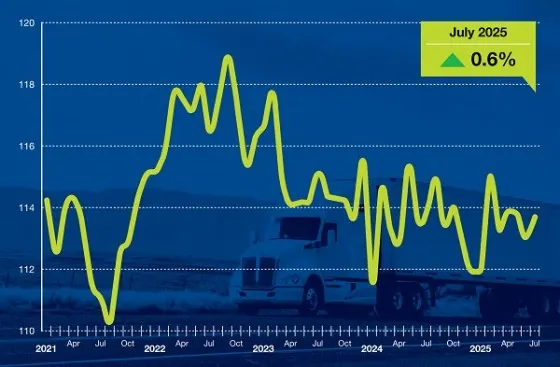
Some of the usual economic drivers of truck tonnage were mixed in July, with housing starts and retail sales up, while manufacturing output was flat to down.
Source: ATA
4 min to read
The outlook for a recovery in the freight market remains murky, as the American Trucking Associations says in its latest tonnage index that there’s been no clear trend for truck freight in recent months.
In addition, FTR’s Trucking Conditions Index was the lowest so far this year.
ATA Tonnage Index
Trucking activity in the United States increased slightly in July, but activity has been fairly flat since March, based on ATA’s tonnage numbers.
Specifically, truck freight tonnage rose 0.6% after falling 0.7% in June, according ATA’s advanced seasonally adjusted For-Hire Truck Tonnage Index.
“July truck tonnage increased sequentially, but did not erase the 0.7% decline in June,” said ATA Chief Economist Bob Costello in a news release.
“Since March, truck tonnage has been in a tight range. The good news is truck freight volumes haven’t fallen much over that period, but we are not seeing many increases either.”
Some of the usual economic drivers of truck tonnage were mixed in July, with housing starts and retail sales up, while manufacturing output was flat to down.
In July, the ATA advanced seasonally adjusted For-Hire Truck Tonnage Index equaled 113.7, up from 113.0 in June.
The index, which is based on 2015 as 100, slipped 0.1% from the same month last year after falling 0.4% in June. Year-to-date, compared with the same period in 2024, tonnage was unchanged.
ATA also said June’s seasonally adjusted tonnage index decline was larger than first reported in ATA’s July tonnage report.
The not seasonally adjusted index, which calculates raw changes in tonnage hauled, equaled 116.8 in July, 1.9% above June’s reading of 114.6.
Both indices are dominated by contract freight, as opposed to traditional spot market freight.
The tonnage index is calculated on surveys from ATA’s membership.
Big Swings in FTR’s Trucking Conditions Index
FTR’s TCI swung to -1.83 in June from a strong 3.56 reading in May, which was the strongest since October 2022.
The big drop in June was due primarily to freight rates and fuel prices. The expectation is for trucking conditions to be much closer to neutral during most of the second half of 2025, according to FTR.
The TCI tracks the changes representing five major conditions in the U.S. truck market: freight volumes, freight rates, fleet capacity, fuel prices, and financing costs.
"We still forecast a steadily but only modestly more favorable market for carriers next year,” said Avery Vise, FTR’s vice president of trucking, in a news release.
“However, swings in freight volume and fuel prices — and to a lesser extent, freight rates — continue to generate volatility in trucking conditions.
“Capacity utilization has been the most stable factor, but it has been only marginally beneficial to trucking companies. So far, the economy is weathering tariffs and other stresses better than anticipated, and our latest freight outlook is not as weak as it was previously.
“At least in the near term, though, we still believe forecast risks are weighted more to the downside than the upside.”
Tariff-ying Forecast?
Another trucking and freight analysis company, ACT Research, said in a LinkedIn post that a key takeaway from a market update and forecast on Day 2 of its Market Vitals Seminar was: "In a nutshell, the freight situation is tariff-ying. Carrier profits remain weak. Freight rate traction is nonexistent. Private fleets are pulling back."
And, it said a key takeaway from an economic panel was that the commercial vehicle industry faces an economy currently marked by weaker growth, rising inflation, and slower/unbalanced job gains, coupled with a lengthy freight recession and the early innings of tariff impacts.
Some Good News?
ITS Logistics in its August ITS Supply Chain Report said the trucking sector saw modest expansion in July despite larger global economic uncertainty and rising industry costs.
In addition, the drayage sector experienced the second-highest volume of U.S. imports ever recorded, coming in just 555 TEUs shy of the all-time high in May 2022.
“While capacity has tightened with ongoing carrier exits, the real story is that cost pressures remain significant and freight rates, broadly, are still challenged — just barely covering the bills,” said Josh Allen, Chief Commercial Officer at ITS Logistics, in a news release.
“This isn’t broad-based recovery. The opportunities that exist are selective, shaped by tariff volatility and a shifting regulatory environment.”
Updated 3:40 EDT to add information from ACT Research and ITS Logistics.
More Fleet Management
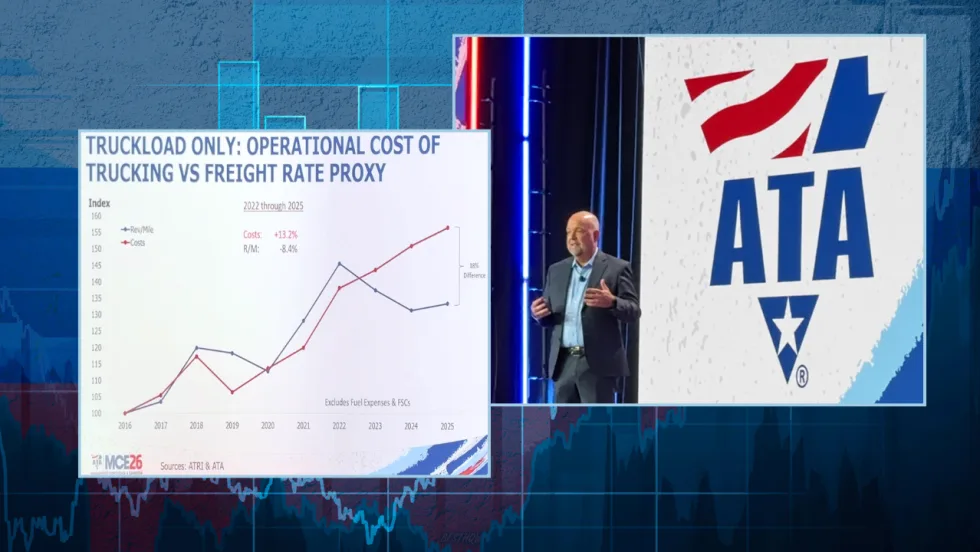
Why This Trucking Recovery Is Different
Freight demand remains sluggish, but rising costs and tougher enforcement have taken enough capacity out of the market to change the outlook for motor carriers.
Read More →
Platform Science Adds Dispatch and Safety Tools
Four additions to PS Fleet help fleets monitor loads, manage driver coaching, share truck locations and adjust video system settings.
Read More →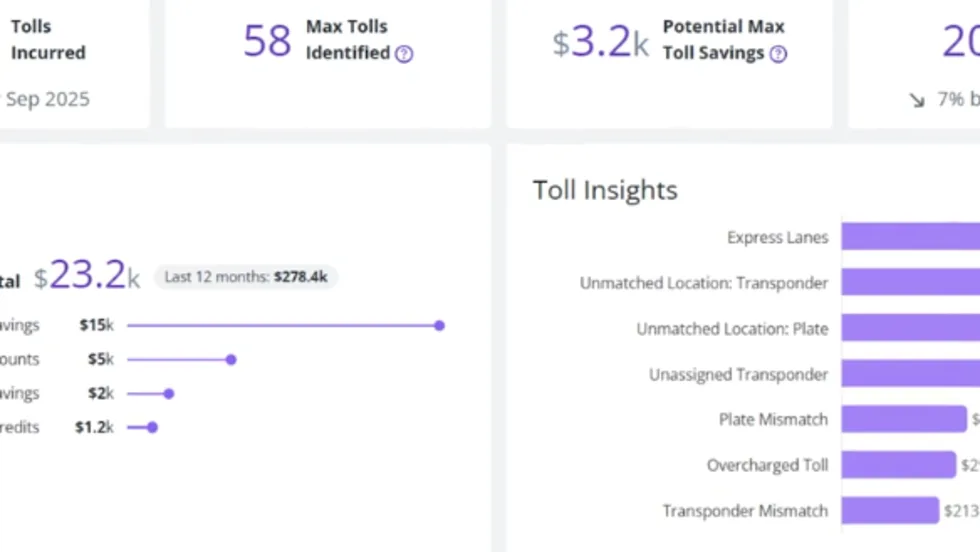
PrePass Intelligence Mines Fleet Bypass, Toll and Safety Data
PrePass Intelligence helps fleets measure bypass savings, flag potential toll overcharges, and spot suspicious transactions by combining data from separate systems.
Read More →
Motive Adds AI Agents for Fleet Operations
New tools automate follow-up on fleet data, from maintenance work orders to driver alerts, with two-way voice conversations planned for later this year.
Read More →
Can You Beat Our Trucking Trivia Challenge?
Test your truck knowledge with 19 trivia questions from Heavy Duty Trucking Exchange. Can you keep up with the fleet pros?
Read More →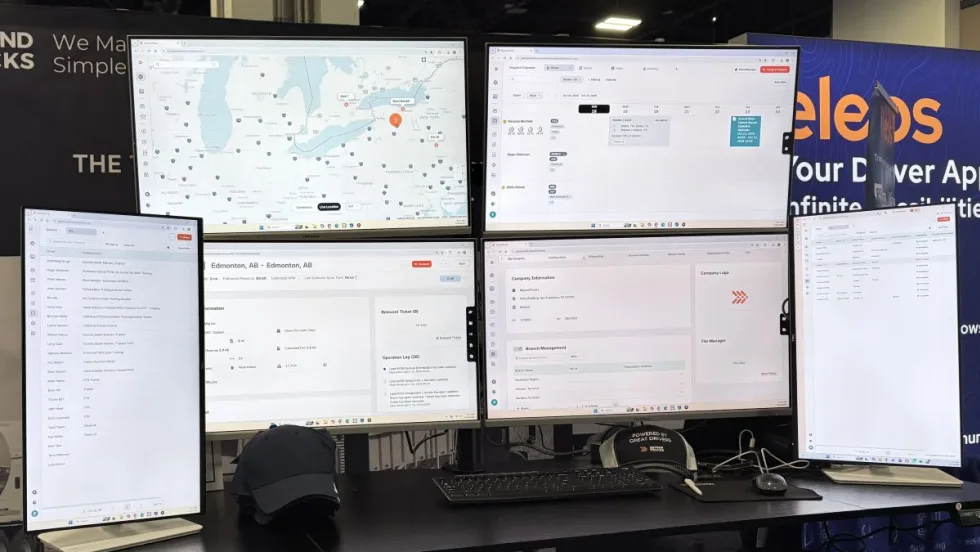
BeyondTrucks Adds Rules Checks to Dispatch
New Compatibility Engine checks driver qualifications, equipment requirements and fleet policies before loads are dispatched.
Read More →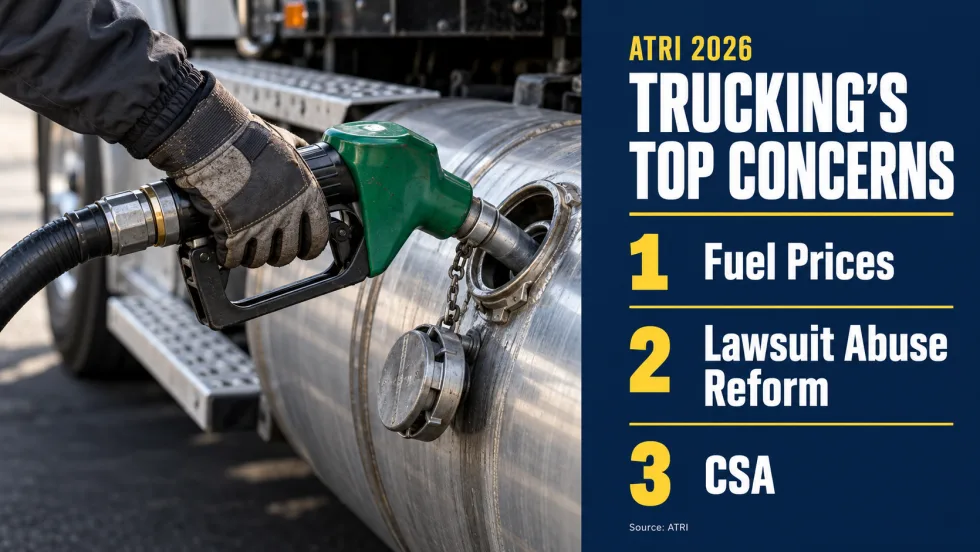
Diesel Prices Hijack Trucking’s Worry List
ATRI’s annual survey finds cautious optimism about freight, but diesel costs, litigation, and insurance continue to squeeze fleets. Drivers have different priorities on several issues.
Read More →
Nomination Deadline Extended for HDT Emerging Leaders
Just a few more days to nominate accomplished trucking fleet professionals under 40 who are making an impact and helping lead the industry forward for the HDT Emerging Leaders award. Deadline extended to October 20!
Read More →
What Will ATA’s New Leader Bring to Trucking's Table?
Incoming President and CEO Mark Colson’s record in Alabama offers clues about his priorities and approach following Chris Spear’s abrupt departure as the head of the American Trucking Associations.
Read More →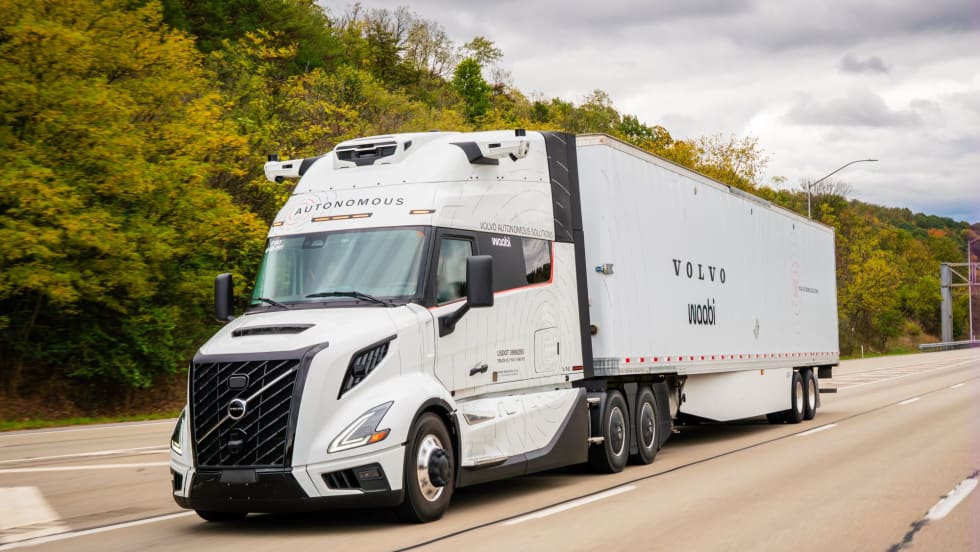
Volvo, Waabi Start Commercial Autonomous Operations in Texas
Volvo VNL Autonomous trucks, powered by the Waabi Driver, are hauling freight directly to third-party facilities for a customer in Texas.
Read More →