




Plus Touts Driverless Safety Maneuver Testing Milestone
The Plus SuperDrive autonomous control system recently successfully completed a series of tests involving advanced safety maneuvers with no human driver onboard the truck.

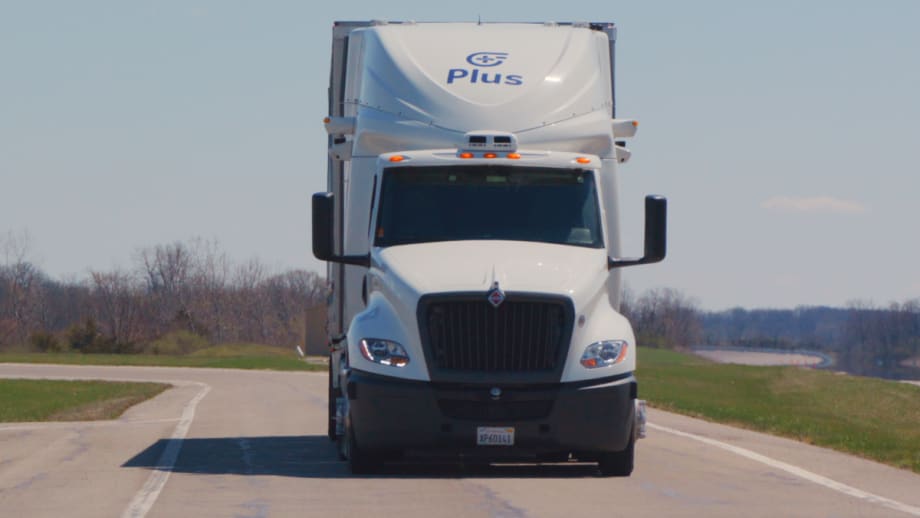
“This is the first time we've done operations with literally nobody in the truck."
Photo: Plus
Plus announced the latest milestone in its commercialization plan. The autonomous technology developer’s SuperDrive vehicle control system recently completed validation testing of advanced safety measures on a closed track.
These tests involved fully autonomous operations and handling of advanced safety maneuvers.
Plus said this breakthrough highlights how the company is continuously enhancing the safety, reliability and maturity of its AI-based self-driving software.
First Driver-Out Autonomous Truck Tests
The company is now preparing for the commercial launch of factory-built driverless trucks integrated with SuperDrive, according to Tim Daly, senior software engineer, Plus.
The tests took place in Ohio on a 7.5-mile closed course.
“This is the first time we've done operations with literally nobody in the truck,” Daly explained.
“We tested the ability of the truck to do lots of important safety maneuvers that it might have to do on the highway, such as pulling over the shoulder, stopping in lane, navigating construction zones and other unexpected situations.”
The validation of a SuperDrive truck with fully redundant sensors and computers is a major milestone on the roadmap to start factory production of driverless trucks, Daly said.
SuperDrive operated the truck without a human driver in the cabin or remote intervention. The driverless truck relied entirely on Plus’s self-driving technology to make complex real-time driving decisions.
SuperDrive is also trained using end-to-end AI models to dynamically handle unexpected situations where it is no longer safe for the truck to continue on the road.
SuperDrive’s Autonomous Fallback System (AFS) is designed to ensure that the hardware and software in the self-driving system are resilient and capable at all times.
Testing How the Autonomous Truck Reacts to Failures
Plus also conducted multiple tests simulating autonomous control system failures to make sure safe operations were maintained at all times, Daly said.
“Our repeated driverless tests validated that once the AFS identifies and confirms an issue, such as a sensor failure, software module fault, or road closure, it reliably directs SuperDrive to the safest path,” he explained.
That could mean bringing the truck to a slow stop in its lane or to pull over to the side and stop the vehicle.
“The stringent tests, a culmination of years of safety validation and rigorous testing using simulations, closed courses, and public roads, are a testament to the system’s performance and the effectiveness of the AFS,” he added.
The upshot is that the testing confirms to Plus engineers that their structure they’ve developed for SuperDrive is safe, Daly said.
Artificial Intelligence and Autonomous Trucks
“Autonomous trucks are among the most transformational applications of Physical AI,” added said David Liu, CEO and Co-founder at Plus.
“When it comes to launching driverless trucks commercially, it is critical for our self-driving software to be able to handle the expected and unexpected complexities of driving and interacting with the physical world. Safety is and always will be a priority at all times.
"We are taking deliberate steps to test, validate and deliver safe and scalable factory-built autonomous trucks with SuperDrive that meet the rigorous demands of the freight industry.”
Plus has accumulated more than 5 million miles of real-world driving using its autonomous driving system, Liu noted.
Additional public road testing is underway in Texas and Sweden as part of its development and preparation for the commercial launch of SuperDrive.
For safe and scalable deployment, Liu said that Plus has partnered with the world’s largest truck makers including Traton Group’s Scania, MAN, and International brands, Hyundai, and Iveco to bring factory-built driverless trucks to Europe and the U.S.
Plus is also partnering with Tier IV to launch driverless trucks in Japan to address the country’s critical driver shortage.
More Safety & Compliance

FMCSA Removes 110 Truck Driver Training Schools from Certified ELDT List
Federal regulators also are targeting more than 160 additional training providers and launching a nationwide audit of third-party CDL skills testers as part of a broader crackdown on trucking fraud.
Read More →
Beyond DOT Compliance: What Makes a Trucking Fleet Truly Safe?
A trucking fleet can follow every rule and still make unsafe decisions. The real test comes when safety conflicts with freight, productivity, or cost.
Read More →
Hours of Service Pilot Programs: FMCSA Readies for 2027 Rollout
Two pilot programs could eventually reshape hours-of-service rules, giving truck drivers options to pause their 14-hour clock or use longer split sleeper rest periods.
Read More →
New Guide Offers Pet Safety Tips for Truck Drivers
Hundreds of thousands of pets travel in truck cabs. A new safety guide from Volvo Trucks and the Center for Pet Safety offers practical advice for truck drivers who bring dogs and cats along for the ride.
Read More →
Medical Cards, English Proficiency Reshape Roadcheck Violations
Medical-card violations jumped to the top of the driver out-of-service list during CVSA’s 2026 International Roadcheck, while English-language proficiency violations appeared among the leading violations for the first time.
Read More →
How Lance Evans Turns Enforcement Experience Into Better Fleet Safety
HDT Truck Fleet Innovator Lance Evans brings lessons from law enforcement to K&B Transportation’s approach to safety technology, data, driver coaching, and compliance.
Read More →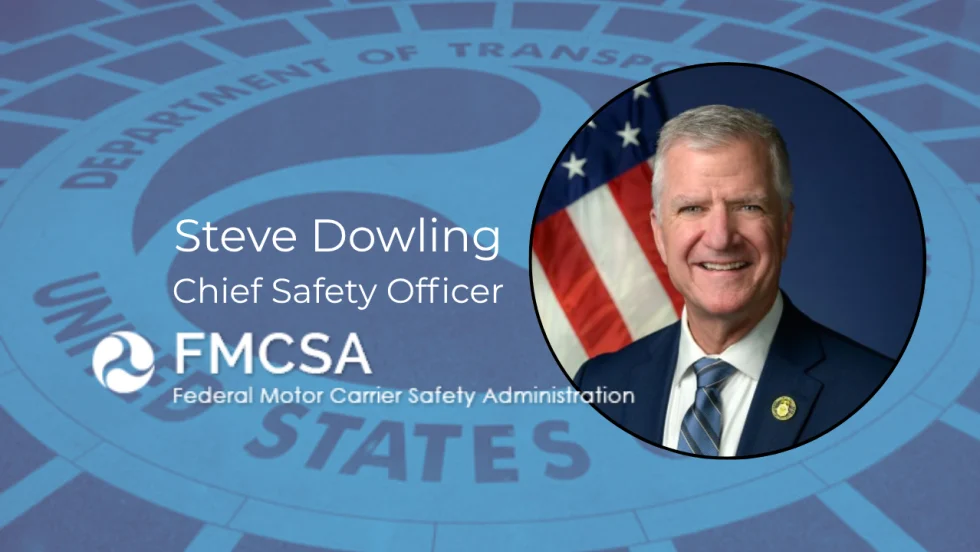
New FMCSA Chief Safety Officer Has Trucking Industry and Law Enforcement Experience
Steve Dowling joins FMCSA after serving as senior director of safety at Covenant Logistics and in leadership roles in commercial motor vehicle industry organizations.
Read More →
Driver Trust Can Make or Break the Success of Fleet Safety Technology
New Teletrac Navman research suggests that onboarding, transparency about driver data, and positive feedback can play a significant role in how commercial drivers respond to safety and coaching technology.
Read More →
FMCSA: Stop Using These 15 Electronic Logging Devices
Fleets and drivers must replace the revoked ELDs with ones on the FMCSA's registered device list of electronic logging devices.
Read More →
How HDT’s 2026 Truck Fleet Innovators Are Rethinking Fleet Operations
Meet five trucking leaders who are challenging assumptions, solving operational problems, and putting innovative ideas to work.
Read More →