




Tank Truck Carriers Applaud Bill to Help Dry Bulk Haulers
A bipartisan bill in the U.S. House of Representatives would give dry bulk haulers a little more flexibility at the scales.

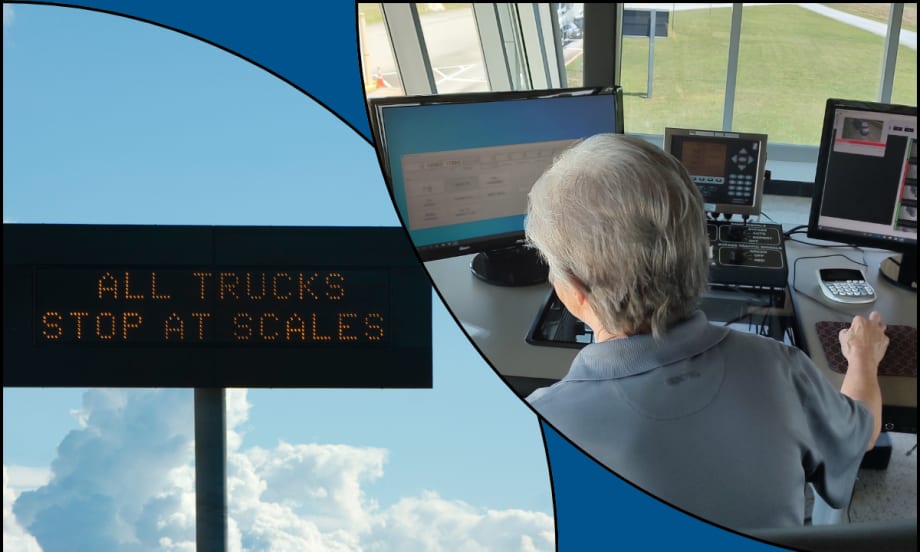
Weigh stations wouldn't be as nerve-wracking for drivers pulling dry bulk tankers under a proposed law.
Image: HDT Graphic/Canva/Wayne Parham
A bipartisan bill in the U.S. House of Representatives would give dry bulk haulers a little more flexibility at the scales.
Rep. Rick Crawford, a Republican from Arkansas, and Rep. Salud Carbajal, a Democrat from California, introduced the VARIANCE Act, which allows for a 10% shift in weight variance along the axles of tank trucks carrying dry goods, without any increase in the overall federal gross vehicle weight (GVW) limit.
Under current law, when stopped at a weigh station, a truck’s weight must be “evenly” distributed among each of the axles. However, with dry bulk goods, even when packed properly, the material often moves around in the tank, causing the weight on each axle of the vehicle to be different.
How Does Proposed Law Help Dry Bulk Tank Haulers at the Scale?
The VARIANCE Act allows for a shift in variance, as long as the overall weight of the tank truck does not exceed 80,000 pounds. This will ensure trucks don’t have to unnecessarily reduce their loads, according to the congressmen.
The National Tank Truck Carriers applauded the bill, which has been a legislative priority for the association.
“This simple, commonsense solution that allows carriers to maximize payloads of materials such as grains, feeds, and plastics, without raising the federal maximum laden weight or disrupting the bridge formula,” saidRyan Streblow, NTTC president and CEO.
“By accounting for product shift during transit, this legislation acknowledges the operational realities of dry bulk carriers and represents a significant step toward a more efficient transportation network. It will help reduce stress on the supply chain, alleviate highway congestion, and enhance safety and efficiency.”
Why Bulk Loads Result in Overweight Axles
The bill's sponsors explain that bulk loads of dry goods rarely exceed the overall weight limits but they regularly shift during transport and cause the front trailer axle to exceed its maximum 34,000 pounds.
The force generated when braking compacts the cargo at the front end of the trailer, but the relatively weaker forces from acceleration and forward movement fail to evenly redistribute the weight across axles. Even when the cargo is properly loaded, the truck’s natural motions cause the load to become improperly distributed.
“Providing this variance standard will give trucks more flexibility to transport critical products while ensuring they are still meeting safe weight limits,” said Rep. Carbajal. “The VARIANCE Act is a bipartisan solution that will go a long way toward lowering costs for consumers and reducing congestion on our highways.”
“These dry goods will inevitably shift in the transport process,” said Rep. Crawford, “and current law must account for the unique characteristics of the goods being transported. This legislation is a commonsense solution for truckers transporting dry bulk by giving more flexibility.”
More Safety & Compliance

FMCSA Pauses Biennial-Update Enforcement Amid Motus Transition
Carriers whose updates were due on or after June 1 have more time, while FMCSA works to stabilize its new registration system and warns of phishing sites impersonating its new carrier registration system, Motus.
Read More →
ZF Expands Commercial Vehicle Push in North America
ZF is expanding its North American commercial-vehicle presence with new transmission applications, electrification, trailer technology and autonomous-driving systems.
Read More →
Truck Drivers Need More Than Another Alert
Fleets have more visibility into truck health, safety events, and driver activity than ever. The next challenge is turning all that information into useful guidance for the person who has to decide what to do next.
Read More →
Tesla Wants a Self-Driving Semi. Are Cameras Enough?
Could Tesla’s camera-only autonomous driving technology work on an 80,000-pound Semi? In this commentary, HDT's Deborah Lockridge takes a look at Tesla, Cybercab, and how autonomous trucks see the road.
Read More →
What DOT’s Automated Vehicle Strategy Means for Trucking
The U.S. Department of Transportation issued a new automated-vehicle strategy that outlines plans for driverless-truck regulations, cross-state freight corridors, and federal safety standards.
Read More →
NYC Expands Speed, Pedestrian Safety Tech Across Fleet
New York City is expanding intelligent speed assistance and pedestrian-alert systems across its municipal fleet, moving the technologies from pilot programs into vehicle procurement and retrofit requirements.
Read More →
FMCSA Removes 110 Truck Driver Training Schools from Certified ELDT List
Federal regulators also are targeting more than 160 additional training providers and launching a nationwide audit of third-party CDL skills testers as part of a broader crackdown on trucking fraud.
Read More →
Beyond DOT Compliance: What Makes a Trucking Fleet Truly Safe?
A trucking fleet can follow every rule and still make unsafe decisions. The real test comes when safety conflicts with freight, productivity, or cost.
Read More →
Hours of Service Pilot Programs: FMCSA Readies for 2027 Rollout
Two pilot programs could eventually reshape hours-of-service rules, giving truck drivers options to pause their 14-hour clock or use longer split sleeper rest periods.
Read More →
New Guide Offers Pet Safety Tips for Truck Drivers
Hundreds of thousands of pets travel in truck cabs. A new safety guide from Volvo Trucks and the Center for Pet Safety offers practical advice for truck drivers who bring dogs and cats along for the ride.
Read More →