




Kenworth to End W900, T800, and C500 Production
Kenworth has announced that it will end production of its W900, T800 and C500 models next year.

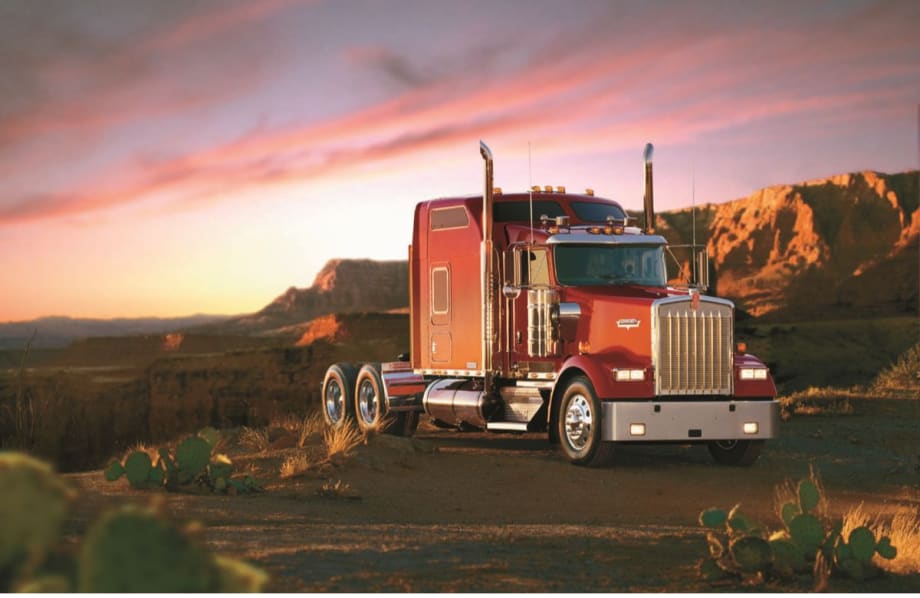
It's the end of an era as Kenworth announces that production of its beloved W900 model will cease in 2026.
Photo: Kenworth
In a move that industry observers have been predicting for years, Kenworth announced it will end production of its legacy 1.9-meter cab Class 8 trucks.
This includes the OEM’s W900 (W900L and W900B models, T800W (wide-hood), and the C500 models.
Production will cease in 2026.
Kenworth said the decision is due to evolving emissions regulations and component constraints. The trucking industry is moving forward with new, more efficient, and better integrated technologies and products.
A final call for truck orders will be announced later in 2025.
“We know these legacy Kenworth models are an integral part of our history here at Kenworth, which makes this decision a difficult but necessary one as we enter the next era of trucking,” said Kevin Haygood, Kenworth’s assistant general manager for sales and marketing.
“As we transition to future products, we remain committed to honoring the spirit of these iconic trucks by delivering innovation, efficiency, and the same level of craftsmanship that our customers and drivers have trusted for generations.”
W900 Series: A Timeless Classic
Kenworth called the W900 one of the most iconic trucks in North America’s trucking history.
The model is known for its classic long hood, conventional design, rugged durability, and driver-focused comfort and style.
HDT recently featured the W900 in its Greatest American Trucks historic series.
Since the W900’s introduction in 1963, it quickly became a favorite among owner operators and fleet drivers.
The W900’s versatility and customizable platform made it a reliable choice for long-haul, heavy-haul, logging, dump, and other vocational and on-highway applications.
Since the W900’s inception, Kenworth has incorporated advancements in technology, styling, and performance into four iterations that have proven essential for different jobs while maintaining the iconic look:
The W900A provided improved cooling for optimal engine operation.
The W900B debuted with a cab update and additional cooling innovations
The W900S was designed for ready mixed concrete-specific applications
The W900L brought a long-hood variation for performance and appearance.
“The W900 is truly historic in that it’s helped shape North American trucking culture and tradition as we know it today,” said Haygood. “Often seen at truck shows, featured in movies and on TV, and shown at other events, it’s an iconic truck that’s cherished for its classic styling by our customers and truck aficionados. While production of these trucks is coming to an end, we look forward to seeing them on our roads and at truck shows for many years to come.”
T800: A Vocational Workhorse
Since its introduction in 1986, Kenworth said the T800 has set a high bar for the standard in vocational trucks by blending durability, performance, and jobsite versatility.
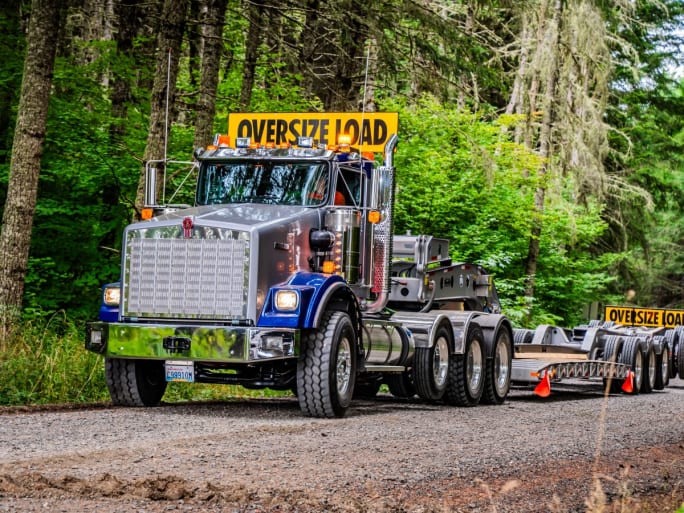
The Kenworth T800W is deigned for heavy-haul and off-road applications
Photo: Kenworth
The T800W has remained a favorite among operators in heavy-haul and off-road applications, according to the OEM. It is built to accommodate large engines with increased cooling capacity and rugged components. And Kenworth said the tried-and-true toughness of the T800W has made it ideal for specialized heavy-haul, oilfield work, logging, and other demanding jobs.
C500: For the Most Rugged Terrain
First produced in 1972, Kenworth called the C500 one of the toughest and most rugged vocational trucks ever built.
Kenworth specifically designed the C500 for extreme heavy-haul, oilfield, logging, mining, and off-road applications where weight capacity, durability, power, and reliability are critical.
Unlike more mainstream Kenworth models like the W900 or T800, Kenworth said the C500 is a purpose-built truck made to handle the harshest conditions worldwide, offering a gross combination weight rating of up to one million pounds in specialty heavy-haul applications and operating in remote locations and difficult operating conditions.
Comprehensive Transition Support
To ensure a smooth transition, Kenworth will be providing comprehensive support and guidance to dealers and customers.
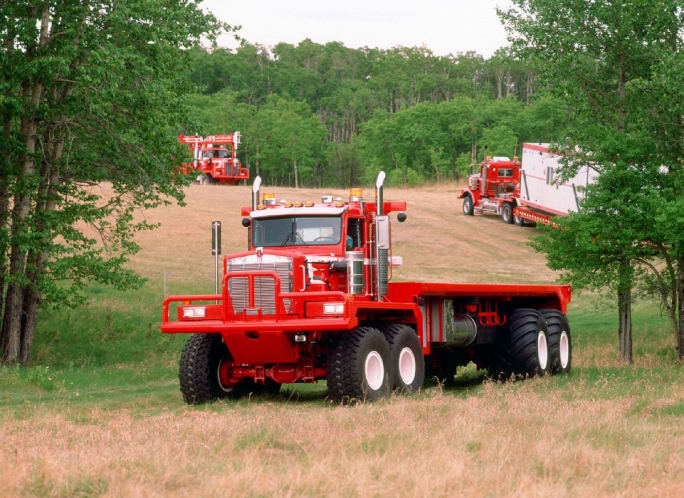
The Kenworth C500 features a GCWR of up to one million lbs.
Photo: Kenworth
The OEM said its W990 and T880 models are “well-positioned” to continue Kenworth’s levels of driver comfort, efficiency, and reliability.
Kenworth noted that the latest T880S features a newly designed performance hood. It also offers high horsepower engines and increased cooling capacity.
The T880S Performance Hood is compatible with large displacement engines including the Cummins X15, rated up to 605 hp and 2,050 lb.-ft. of torque, making it a viable option for T800W applications.
As part of the phase-out process for its legacy trucks, Kenworth is advising dealers and customers to place final orders as soon as possible.
For the latest regarding timelines during this transition, contact your local Kenworth dealer.
More Equipment

How Volvo Updated Its D13 for EPA 2027 [Watch]
Volvo’s updated D13 promises lower emissions without sacrificing performance or fuel economy. Take a closer look at what changed inside the engine in this HDT Spotlight video.
Read More →
Michelin Tire Improves Efficiency and Durability for Regional Fleets
The Michelin X Multi Energy D2 is a regional haul drive tire engineered to help fleets improve fuel efficiency, durability and traction in demanding stop-and-go operations.
Read More →
ZF Expands Commercial Vehicle Push in North America
ZF is expanding its North American commercial-vehicle presence with new transmission applications, electrification, trailer technology and autonomous-driving systems.
Read More →
Tesla Wants a Self-Driving Semi. Are Cameras Enough?
Could Tesla’s camera-only autonomous driving technology work on an 80,000-pound Semi? In this commentary, HDT's Deborah Lockridge takes a look at Tesla, Cybercab, and how autonomous trucks see the road.
Read More →
Kodiak: Driverless Long-Haul Truck Launch on Track for 2026
Kodiak AI says its driverless long-haul safety case is 93% complete and it remains on track to begin commercial operations by year-end 2026.
Read More →
What DOT’s Automated Vehicle Strategy Means for Trucking
The U.S. Department of Transportation issued a new automated-vehicle strategy that outlines plans for driverless-truck regulations, cross-state freight corridors, and federal safety standards.
Read More →
East Coast Port Launches $45M Electric Truck Push
The Port Authority of New York and New Jersey announced millions in incentives for zero-emission drayage trucks, yard tractors, and new charging hubs near the port.
Read More →
PlusAI Going Public to Fund Autonomous Truck Launch
A SPAC deal could provide PlusAI with up to $300 million as it works toward a 2027 commercial launch of factory-built autonomous trucks.
Read More →
NHTSA Moves to Rewrite Truck Fuel-Economy Rules
The National Highway Traffic Safety Administration says it lacks authority to regulate medium- and heavy-duty truck engines separately from complete vehicles, but the existing standards have not yet been eliminated.
Read More →
Detroit Opens Orders for EPA 2027 Engines
Detroit isn’t starting from scratch to meet EPA 2027 diesel emissions standards. Its Gen 6 DD13 and DD15 engines keep much of today’s platform while updating the fuel and aftertreatment systems.
Read More →