Liability Nightmare: Your DOT Medical Exam Forms Probably Have Errors
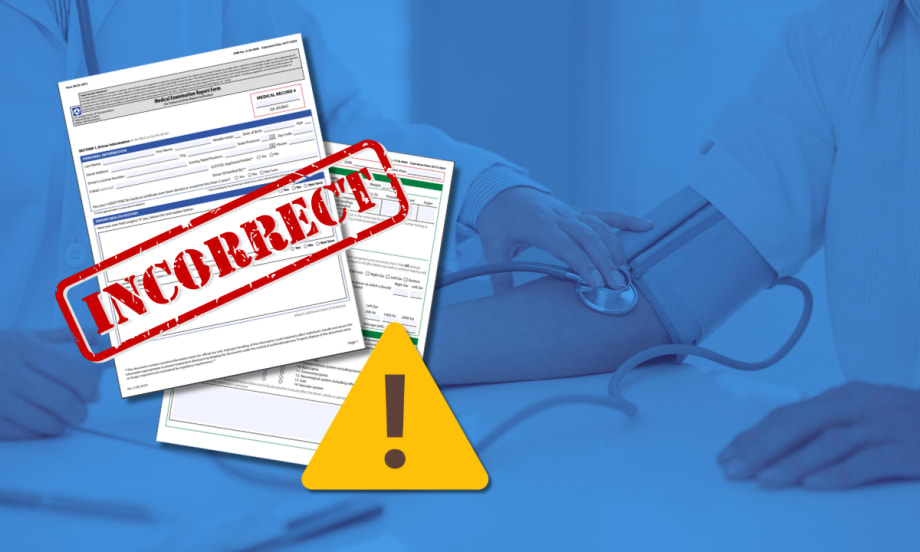
A questionable medical certification decision made from bad information on a truck driver's exam form doesn't relieve motor carriers from potential liability for a crash.
If a truck driver is in a crash and a lawyer determines his or her medical form is inaccurate, your company could be liable.
Image: HDT Graphic
3 min to read
Almost 56% of commercial driver medical exams showed medical history errors by either drivers or certified medical examiners, according to a recent study by the American Journal of Industrial Medicine.
This statistic should raise concerns for motor carriers — especially since any questionable certification decision made from bad information doesn't relieve them from potential liability for a crash.
Ad Loading...
What Did The Study Reveal About DOT Driver Medical Forms?
Its review of 1,603 examination forms from exams conducted by 367 certified medical examiners in 2019 also found that:
Certified medical examiners completed the MER incompletely or incorrectly in 30% of examinations.
Drivers inconsistently filled out their health history with elaborations 39% of the time.
Drivers failed to elaborate when a driver indicated “yes” on the health history, indicating that they have or had the condition, in 29% of examinations.
Both drivers and certified medical examiners made errors in the same exam in 13% of cases.
Other types of errors were found, as well.
Why Accurate Driver Medical Exam Forms Are So Important
Inaccurate or inadequate medical exam documentation may understate the risk of a medical condition or treatment. This could negatively affect:
Ad Loading...
The quality of care and monitoring for current conditions.
Future medical certifications for the affected driver.
Accurate exam forms are also essential given these points:
The average age of drivers in the trucking industry hovers around 50 years old and chronic medical conditions can worsen with age.
The 2024 update of the Medical Advisory Board’s CME Handbook stressed that nearly all certification decisions are based on the driver’s circumstances and CME discretion.
FMCSA can review exam results and disqualify drivers who should not have been certified.
Recent Federal Motor Carrier Safety Administration data showed that 40% of medical certifications are issued for one year or less to monitor serious conditions that can lead to a crash, such as cardiovascular disease, high blood pressure, diabetes, and obstructive sleep apnea.
How Can Motor Carriers Reduce the Risk of Inaccurate Driver Medical Exams?
Motor carriers are accountable for crashes caused by a medical condition, so it’s important to reduce the risk posed by inaccurate medical exams.
Ad Loading...
Here are three ways carriers can lower the risk of errors and omissions made during exams:
Require drivers to use a preferred CME organization for exams instead of accepting a driver’s current medical certification at hire.
Consider paying for or subsidizing the cost of new hire and recertification exams at a preferred provider.
Review long forms for irregularities only after obtaining driver consent and following applicable medical privacy laws.
About the Author: Lucero Truszkowski joined safety and compliance consulting firm J.J. Keller & Associates as an associate editor in 2022. Her expertise includes process documentation, plain-English writing, and translating complex concepts for customers across a spectrum of subjects, including transportation, human resources, and driver training.This article was authored and edited according to Heavy Duty Trucking’s editorial standards and style to provide useful information to our readers. Opinions expressed may not reflect those of HDT.
In today’s cost-conscious market, fleets are finding new ways to get more value from every truck on the road. See how smarter maintenance strategies can boost uptime, control costs and drive stronger long-term returns.
Two Canadian fleets earned the Grand Prize in the Truckload Carriers Association’s 2025 Fleet Safety Awards, recognizing the industry’s top safety performance based on accident frequency and safety programs.
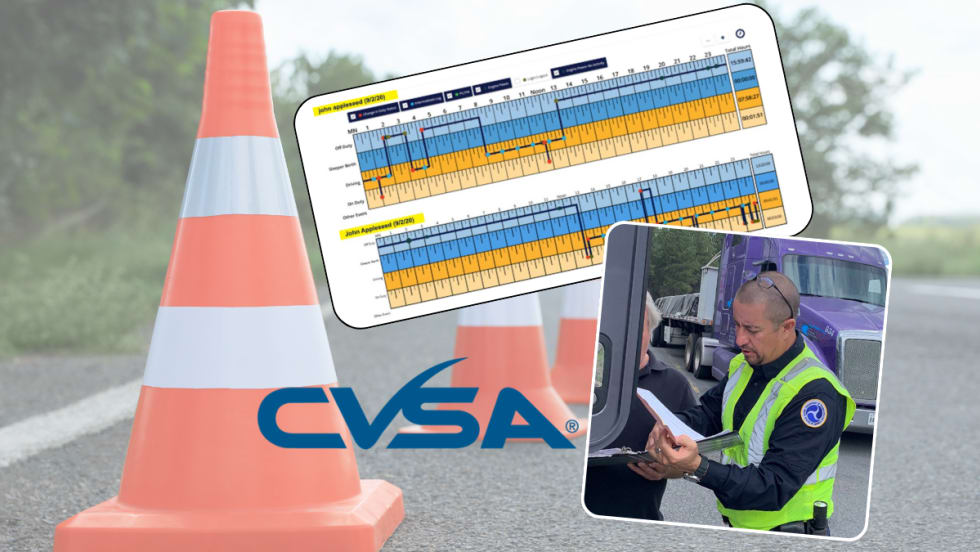
New guidance for commercial vehicle inspectors distinguishes between more traditional logbook violations and tampered ELD data that can result in mandatory 10-hour out-of-service orders.
Daimler’s new factory-installed system integrates side and forward-facing cameras with in-cab touchscreen to improve jobsite visibility and reduce upfit complexity.
Kodiak has integrated HAAS Alert’s Safety Cloud platform into its autonomous vehicle control system to send real-time digital hazard alerts to nearby motorists.
Cargo theft has shifted from parking-lot break-ins to organized international schemes using double brokering, phishing, and even spoofing tracking signals. In this HDT Talks Trucking video podcast episode, cargo-theft investigator Scott Cornell explains what’s changed and what fleets need to do now.
After pushback from states and industry groups, FMCSA is proposing to reverse a 2023 rule change and lengthen the duration of state-issued emergency exemptions for disaster relief.
After reports of corrosion and thermal events on trucks already repaired under a prior campaign, DTNA is recalling nearly 27,000 Western Star 47X and 49X models to address a battery junction stud defect.