




Biodiesel and Renewable Diesel Use on the Rise
According to the Clean Fuel Alliance, the use of both biodiesel and renewable diesel fuels grew rapidly in 2024.

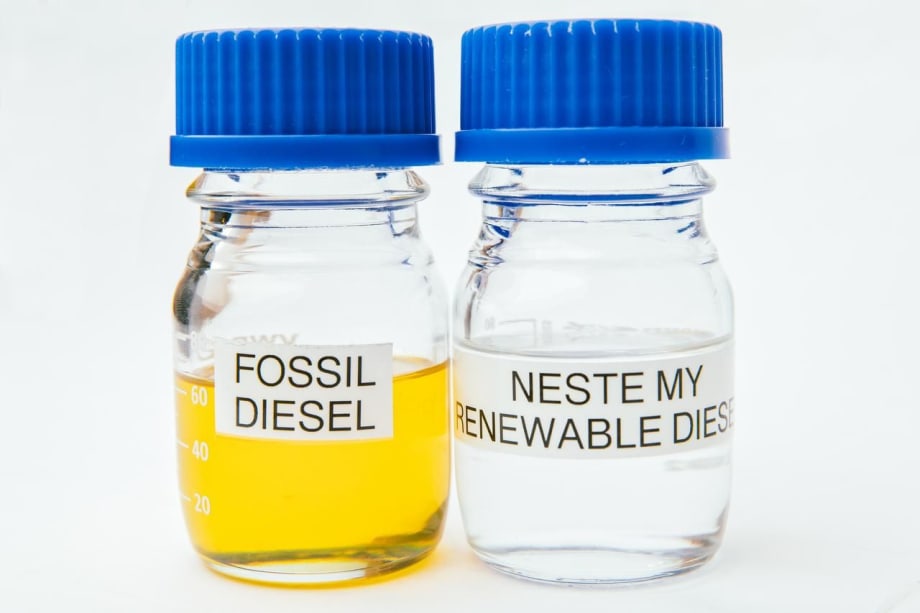
Increased awareness and new policies are driving record use of biodiesel and renewable diesel fuels.
Photo: Neste
The U.S. is on pace to surpass 5 billion gallons of biodiesel and renewable diesel consumption for the first time ever.
According to the Clean Fuels Alliance, 2024 saw increased efforts from states to drive adoption, updates to technical standards, growth in soybean crush capacity and growing public support for clean transportation fuel.
The result, according to Clean Fuels Alliance America CEO Donnell Rehagen, is that a strong 2024 has set the industry up well for further growth in air, marine, rail and heavy-duty transportation use.
“Consumers and corporations are demanding more clean fuel, and they are increasingly turning to biodiesel and renewable diesel to meet those demands,” Rehagen said. “Our industry has become a central force in the global effort to curb greenhouse gas emissions.”
More State Clean Fuel Policies
State policy in 2024 helped grow clean fuel use, according to the Clean Fuels Alliance.
Notable examples include:
New Mexico, which became the fourth state to implement a Clean Transportation Fuel Standard.
Nebraska expanded its biodiesel retail program to allow for more participation from state fuel retailers. Nebraska also became the latest state to pass incentives for the in-state production of sustainable aviation fuel (SAF).
California saw both biodiesel and renewable diesel grow under the state’s Low Carbon Fuel Standard. The two fuels are now 75% of California’s diesel fuel supply, and they generate more credits (45%) than any other fuel type.
Iowa reached a record 486.5 million gallons of biodiesel sales in 2023, nearly triple the 2007 volume. This growth was driven by state incentives like tax credits and infrastructure investments. This results also solidify Iowa's leadership in renewable energy, benefiting the agricultural sector, boosting local economies, and making biodiesel a key player in the state’s diesel market, now accounting for 58.7% of sales.
Updated Fuel Specs and New Opportunities
Thanks to the work of the Clean Fuels technical team and other industry experts, 2024 brought new market opportunities with updated fuel specifications and growing compatibility with manufacturers.
These include:
ASTM D6751 standard (specifications for Biodiesel Fuel Blendstock for Middle Distillate Fuels) was updated to ensure that higher biodiesel blends can meet the stringent requirements of modern engines and after-treatment systems by including lower limits for metals content.
Global rail technology leader Wabtec conditionally approved B20 biodiesel blends for their locomotive engines after extensive testing.
ISO 8217:2024 specification for marine fuels was adopted, allowing use of up to B100 in nearly every grade of marine fuel applications for both distillates and residual fuels.
Making Farms Stronger
According to the Clean Fuel Alliance, clean fuel production uses more than a billion pounds of soybean oil per month and increasing amounts of soybean meal for feed markets.
This is driving a 30% increase in crush capacity across the United States.
More than 20 new processing plants or expansions are underway that will add 650 million bushels of capacity, representing an investment in rural America of more than $6 billion.
This also represents growth in feedstock diversity, as over 20% of the new U.S. crush capacity will process soft seeds like canola.
Taken as a whole, 2024 laid the groundwork for even more growth in the year ahead, Rehagen said.
“The rail and marine sectors are poised for growth, and airlines are ready to start using more sustainable aviation fuel,” he said. “We’ve only just begun to meet the growing needs for clean fuel in the U.S. and around the world.”
More Fuel Smarts

How Volvo Updated Its D13 for EPA 2027 [Watch]
Volvo’s updated D13 promises lower emissions without sacrificing performance or fuel economy. Take a closer look at what changed inside the engine in this HDT Spotlight video.
Read More →
Diesel Price Spike Shortens Payback for Natural Gas Trucks, Report Says
Energy Vision estimates fleets could recover the higher purchase price of an RNG-fueled Class 8 tractor in 1.3 to 2.8 years under current fuel-price scenarios.
Read More →
Calstart Becomes Catalyst Mobility, Reflecting Broader Focus
Calstart is now Catalyst Mobility, reflecting the nonprofit’s growing national role in clean transportation, including zero-emission trucks, infrastructure and incentive programs.
Read More →

Record Diesel Prices Squeeze Trucking Fleets
Average U.S. diesel prices have climbed to nearly $6 a gallon, surpassing the 2022 record as tight refinery capacity and Middle East disruptions keep fuel costs elevated.
Read More →
How Fuel Delivery Shapes Engine Performance
Fuel delivery depends on more than what happens at the injector. For fleet, maintenance and technical professionals, looking at the full path from pump to injector can provide useful context for understanding engine performance.
Read More →
East Coast Port Launches $45M Electric Truck Push
The Port Authority of New York and New Jersey announced millions in incentives for zero-emission drayage trucks, yard tractors, and new charging hubs near the port.
Read More →
California Bill Could Shed Light on Electric Truck Prices
Why do battery-electric Class 8 trucks remain so expensive? A California bill headed to Gov. Gavin Newsom would give fleets and state agencies more visibility into what manufacturers charge.
Read More →
Detroit Opens Orders for EPA 2027 Engines
Detroit isn’t starting from scratch to meet EPA 2027 diesel emissions standards. Its Gen 6 DD13 and DD15 engines keep much of today’s platform while updating the fuel and aftertreatment systems.
Read More →
Zero-Emission Truck Corridor Planned for West Coast
California, Oregon, Washington, British Columbia and Baja California are coordinating plans for truck charging and hydrogen fueling from Canada to Mexico.
Read More →
A Closer Look at Kenworth’s Electric T880E Vocational Truck [Video]
Learn more about Kenworth's T880E battery-electric vocational truck at the Paccar Technical Center, including its range, applications, upfitting considerations, and PTO options, in this HDT Spotlight video.
Read More →