




Hyzon Board to Dissolve Company
Citing an unsustainable cash burn and an inability to establish reliable revenue streams, hydrogen fuel cell truck OEM Hyzon's board of directors has voted to dissolve the company.

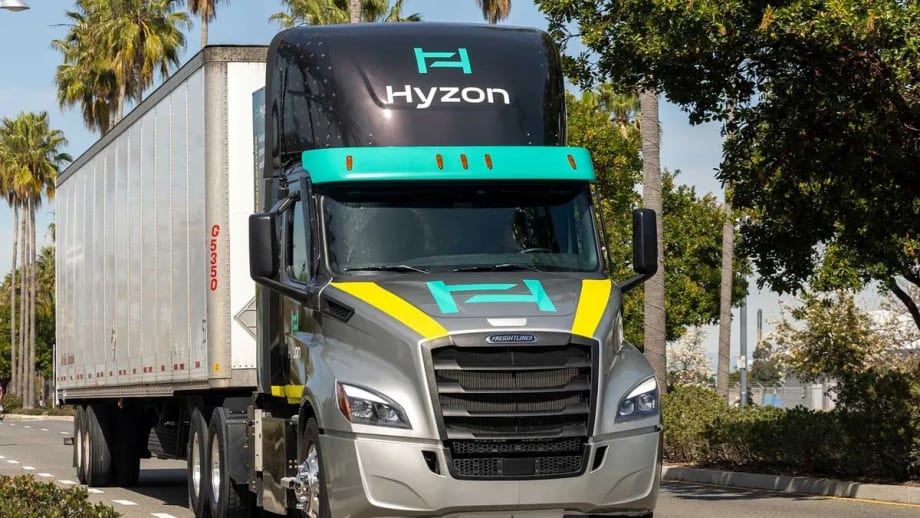
An unsustainable cash burn and an uncertain zero-emission truck market have caused Hyzon's board of directors to dissolve the company.
Photo: Hyzon
Hydrogen truck maker Hyzon announced the company is being dissolved.
Hyzon’s board of directors voted to dissolve the company, subject to shareholder approval, according to news reports on Friday, December 20, 2024.
On that day, Hyzon issued a Worker Adjustment and Retraining Notification Act (WARN Act) notice to its employees at the Company's Bolingbrook, Illinois and Troy, Michigan facilities, as well as to substantially all of its remaining employees in the states of Illinois and Michigan.
Hyzon cited its inability to raise funding as the primary reason for the dissolution. It also cited the future uncertainty relating to the availability of government subsidies, most notably the California Hybrid and Zero-Emission Truck and Bus Voucher Incentive Project.
Hyzon officials said they believe this uncertainty has caused some of its customers to slow down or suspend their zero emission purchasing decisions.
If the Company cannot raise funds or find a buyer, it is expected that the reduction in force will be completed in February 2025.
Unsustainable Cash Burn
The first inklings of trouble for Hyzon appeared in 2023.
In 2020, Hyzon said it could deliver thousands of fuel cell trucks and buses by 2023.
But by late 2022, Hyzon had only delivered a handful of vehicles and admitted it had failed to report its financial results from the past two quarters, resulting in a risk of expulsion from the Nasdaq stock exchange.
More problems surfaced in March of last year.
The company had limited capital on hand. And company officials noted at the time that it lacked the finances to support operations for another 12 months without an infusion of cash.
According to reports, in the third quarter of 2024, Hyzon had $30.4 million in cash and cash equivalents. At the time, the company was seeking to reduce its monthly spending down to $6.5 million per month by the end of the year.
According to reports, the company still spent almost $25 million in Q3 of 2024.
“The company intends to call a special meeting of its stockholders to seek approval of a plan of dissolution and expects to file proxy materials relating to the special meeting with the Securities and Exchange Commission as soon as practicable,” Hyzon said in a filing with the U.S. Security and Exchange Commission.
More Fuel Smarts

A Closer Look at Kenworth’s Electric T880E Vocational Truck
Learn more about Kenworth's T880E battery-electric vocational truck at the Paccar Technical Center, including its range, applications, upfitting considerations, and PTO options.
Read More →
Kenworth T880E Brings EV Power to Vocational Trucks
A closer look at the Kenworth T880E’s range, charging, powertrain and upfit options — and where fleets are showing the most interest.
Read More →
Jennie Abarca Is Proving Electric Trucks Can Do the Job
HDT Truck Fleet Innovator Jennie Abarca is building confidence in fleet electrification one load at a time while openly sharing the challenges she encounters along the way as a small-fleet owner.
Read More →
Cummins Adjusts 2027 Engine Rollout After EPA Proposal
The engine maker will gradually introduce its new Model Year 2027 diesel engines while continuing to offer current models during the transition, citing the EPA's proposed emissions rule changes.
Read More →
EPA Proposal Could Ease 2027 Truck Costs and Buying Uncertainty
The proposal doesn't change the tougher NOx standard, but it would revise key implementation requirements that manufacturers say have driven up costs and complicated fleet purchasing decisions.
Read More →
Cummins, Paccar Ease DEF Derates After EPA Guidance
Updated diesel engine software gives truck operators more time to address emissions-system issues while staying compliant with EPA emissions standards.
Read More →
Maintenance in the Messy Middle Part 3: Biodiesel
Biodiesel can reduce emissions, improve fuel-system lubricity and use existing diesel infrastructure. But NACFE’s Messy Middle maintenance report says fleets must actively manage storage, cold-weather operation, filters and oil drain intervals to avoid problems.
Read More →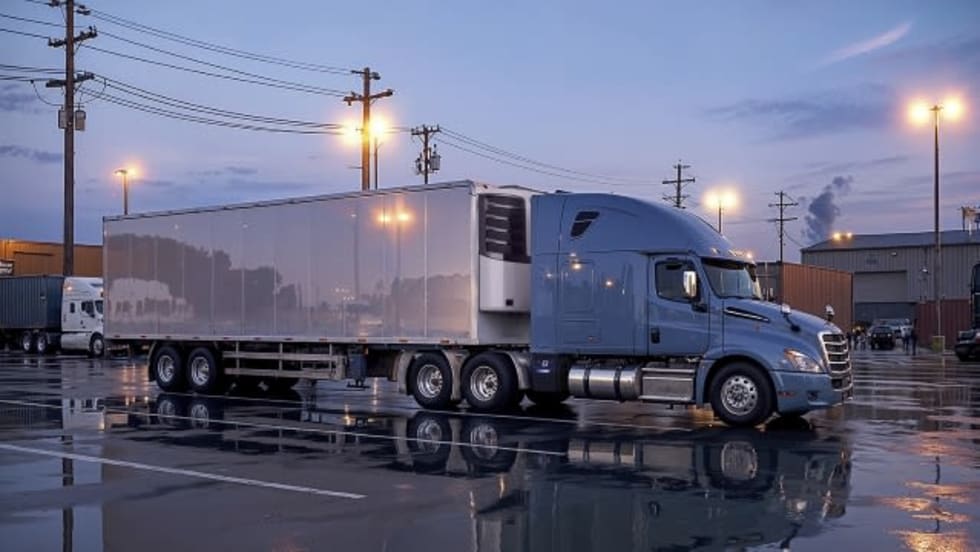
Enhance Fleet Performance with High-Efficiency Auxiliary Power Units
Drive sustainable cost savings while increasing driver comfort during short- and long-haul logistics operations.
Read More →
Maintenance in the ‘Messy Middle’ Part 2: Renewable Diesel Fuel
NACFE's latest Messy Middle Powertrain Service & Maintenance report says renewable diesel gives fleets an opportunity to reduce carbon emissions without changing trucks, fueling infrastructure or maintenance practices. But technicians still need to understand several important operational differences.
Read More →
The Diesel Engine Enters NACFE’s ‘Messy Middle’
NACFE’s new Messy Middle Powertrain Service & Maintenance report says keeping modern diesel engines running now depends as much on software, diagnostics and data as traditional mechanical service.
Read More →