




Southwest Research Institute Looks to Boost Hydrogen Fueling Infrastructure
A new joint industry project headed by the Southwest Research Institute is aiming at developing and advancing hydrogen fueling infrastructure and technologies in North America.

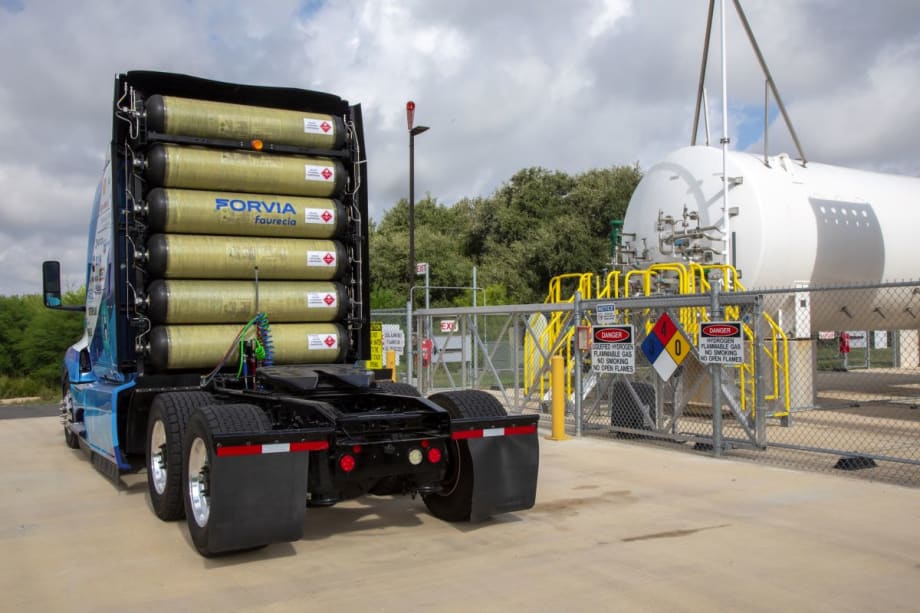
Southwest Research Institute is home to several hydrogen-energy-related initiatives, including the H2-ICE consortium, which completed the construction of a hydrogen internal combustion engine-powered heavy-duty vehicle and an on-site liquid hydrogen storage tank capable of holding up to 17,000 gallons of liquid hydrogen.
Photo: SwRI
The Southwest Research Institute has announced a new joint industry project (JIP). This project aims to help spur the growth and innovation of fueling technologies and infrastructure for hydrogen-powered heavy-duty vehicles.
Strengthening Hydrogen Infrastructure
SwRI’s H2HD REFUEL (Hydrogen Heavy Duty Refueling Equipment and Facilities Utilization Evaluation Laboratory) JIP will strengthen the acceptance of hydrogen fuel use by heavy-duty vehicles, the group said.
The goal is to help the mobility industry meet its decarbonization and zero-emissions goals by advancing hydrogen refueling station (HRS) technologies.
Over the next four years, SwRI researchers will use hands-on experiments, system modeling and theoretical studies to strengthen existing HRS equipment and procedures and explore potential alternatives.
“There are less than sixty hydrogen refueling stations in the U.S., but only one or two currently exist that can meet the specific needs of heavy-duty hydrogen-powered vehicles,” said Dr. Thomas E. Briggs, Jr., Institute engineer with SwRI’s Powertrain Engineering Division. “Many light-duty hydrogen stations face significant technical challenges, including supply chain issues, mechanical failures, and lack of infrastructure. Considering the multimillion-dollar investment per station, these issues reflect a significant technology gap that industry and government must bridge before building additional heavy-duty refueling stations.”
A Four-Year Program
The H2HD REFUEL JIP hopes to address these issues by connecting hydrogen vehicle manufacturers, original equipment manufacturers (OEMs) and refueling station operators to develop innovative, dependable and compatible HRS technologies.
The four-year program will investigate a broad range of HRS-related topics to help solve existing technical challenges, such as discovering the best onboard hydrogen storage method: liquid, H70 gas or cryo-compression, and comparing the performances of refueling station flow components. The JIP also plans to study hydrogen losses from cryogenic systems that occur from boil-off and system inefficiencies.
“Connecting industry stakeholders is vital to developing compatible and reliable hydrogen refueling technologies and associated infrastructure,” said Angel Wileman, the JIP’s project manager from SwRI’s Mechanical Engineering Division. “H2HD REFUEL’s comprehensive approach will ensure that the industry can meet the growing demand for heavy-duty hydrogen vehicles efficiently and safely. This JIP is another example of how SwRI is leading the way when it comes to hydrogen energy research.”
H2HD REFUEL members will benefit from access to SwRI-led cutting-edge research and hydrogen storage system models. Members can also participate in interactive workshops and bi-annual meetings for networking and knowledge sharing and gain valuable economic and performance insights for different hydrogen storage systems.
More Fuel Smarts

Trucking’s Diesel Squeeze Isn’t Letting Up
With diesel topping $6 a gallon nationally, ATA's Bob Costello explains why fleets should prepare for continued pressure at the pump.
Read More →
FlowBelow Redesigns Trailer AeroSlider to Cut Fuel Use
The lighter trailer aerodynamic system installs in less than 45 minutes, according to the company, with potential payback in under a year depending on fuel prices and trailer mileage.
Read More →
Why Diesel Price Relief Efforts May Fall Short
Diesel prices have eased from September’s record high, but doubts about additional Russian supply and limits on dyed-diesel tax relief mean trucking fleets still face expensive fuel. And prices could go higher.
Read More →
Why Small Fuel Savings Matter in Trucking
Can better fuel economy help pay for driver raises? In this podcast, GP Transco explains how small efficiency gains create room to reinvest in its people.
Read More →
How GP Transco Cuts Trucking Fuel Costs, a Tenth of a Gallon at a Time
What’s another tenth of a mile per gallon worth? GP Transco shares how equipment upgrades and driver coaching turn small gains into meaningful fuel savings.
Read More →
Electric Yard Tractors Move Beyond Pilots
Operating-cost savings have overtaken sustainability goals as the leading reason surveyed fleets are adopting battery-electric terminal tractors, according to new NACFE research.
Read More →
Geotab Links Fleet Card to Vehicle Data
The new card combines fuel discounts with telematics-based purchase controls. Geotab’s analysis also points to potential savings from choosing lower-priced fuel stops.
Read More →
Fleet Economics Shape Electric Truck Outlook
ACT Research expects costs, charging infrastructure, and technology improvements to drive zero-emission commercial vehicle adoption as federal regulations and incentives retreat.
Read More →
Wex Adds Cardless Fuel Payments for Over-the-Road Customers
A new fuel card feature for Wex customers offers convenience and security.
Read More →
New California Law Could Shed Light on Electric Truck Prices
Why do battery-electric Class 8 trucks remain so expensive? A California bill signed by Gov. Gavin Newsom would give fleets and state agencies more visibility into what manufacturers charge.
Read More →