




Red ICE and Blue: The Hunt for a Hydrogen Truck Engine Part 2
Bosch and the Southwest Research Institute are at the spearpoint of an industry-wide effort to develop a liquid-fuel hydrogen truck engine that can deliver clean, green, diesel-like performance.

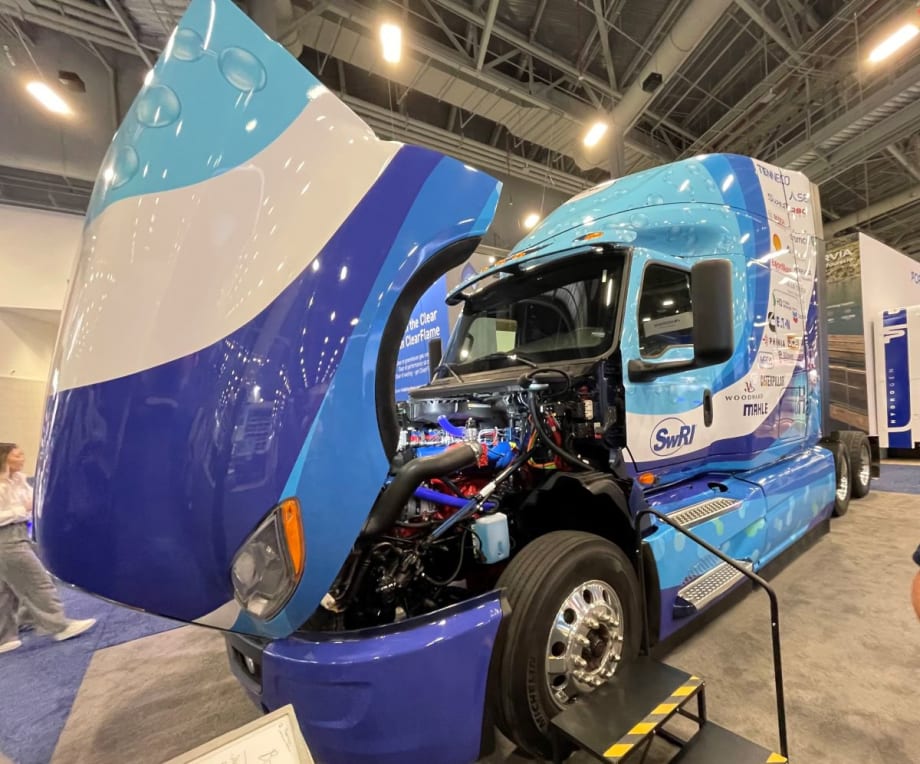
In terms of performance, early tests confirm that hydrogen internal combustion engine performance is very similar to a natural gas truck engine.
Photo: Jack Roberts
In Part 1 of this two-part look at the race to develop a hydrogen-fuel truck engine before the end of the decade begins on the show floor at ACT Expo in Las Vegas on May 22. There, Peter Tadros, regional president for power solutions at Bosch and Ryan Williams, spark-ignited engine research and development for SwRI walked journalists over to an International RH tractor fitted with an experimental, liquid-hydrogen engine. And Williams began a deep dive into the details of hydrogen ICE technology, and why it holds so much promise for green fleet operations in the near future.
SwRI worked with Bosch on a new ignition system, as well as increased crankcase ventilation, Williams said. The final piece of the puzzle is an all-new air system for the engine.
“A traditional hydrocarbon air-to-fuel ratio is about 14 to one,” Williams said. “In other words, you need 14 molecules of air to one molecule of fuel to burn and have complete combustion. With hydrogen, that ratio is 40 to one. S we need significantly more air coming into the engine to initiate combustion.”
To do that, SwRI developed a new, advanced turbocharging systems atop the engine to get the better air boosting required for efficient combustion and power.
The engine runs on pure hydrogen and air, Williams went on to explain. There is no need for a pilot ignition of diesel, or any other fuel to initiate combustion. “The engine is controlled by the spark plug ignition system,” he added, “which needs very little energy in relation to -- say a gasoline engine -- because hydrogen really likes to light off.”
Diesel-Like Vehicle Range
In actual use, Williams said the hydrogen engine is very similar in overall performance to today’s compressed natural gas-powered engines. And using that knowledge, the SwRI team has worked with automated transmission calibrations and other settings to make the hydrogen engine feel more like a diesel vehicle with similar performance characteristics.
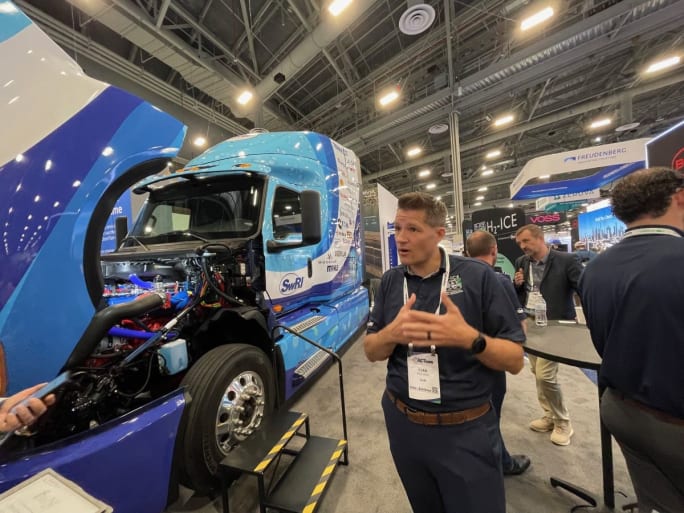
Ryan Williams, spark-ignited engine research and development for SwRI talks about liquid-hydrogen ICE technology at ACT Expo 2024.
Photo: Jack Roberts
And that includes vehicle range performance figures that will make diesel truckers breathe a sigh of relief.
Williams said that in general terms, one kilogram of hydrogen translates to about eight or nine miles of vehicle range. A figure that is very much in line with a gallon of diesel fuel.
So then, range all comes down to how much fuel storage capacity that’s available,” Williams said “Our demonstrator truck is equipped with a 350-bar tank. And that equates to about 30 kilograms of hydrogen.”
Using simple math, Williams said the SwRI International RH gets roughly 250 miles from the 350-bar tank. However, he added, hydrogen fuel system developer Phinia, which is a partner in the hydrogen ICE project, is working on its next-generation fuel storage system, which will enhance range significantly.
“Phinia has a prototype 700-bar storage system nearly ready that can hold 82 kilograms of hydrogen,” Williams said. “That will put the truck in the 600- to 700-mile range on a single tank of hydrogen. And that is performance that is very much in line with heavy-duty diesel engines today.”
An Industry-Wide Effort
Both Tadros and Williams stressed that although Bosch and SwRI are taking the point on hydrogen engine development, the effort is one that will benefit the entire trucking industry. The more than 20 high-profile industry companies that are partners on the project prove that they added. These companies are all investing money or expertise to help develop viable liquid hydrogen engine technology for trucking and other important industrial applications.
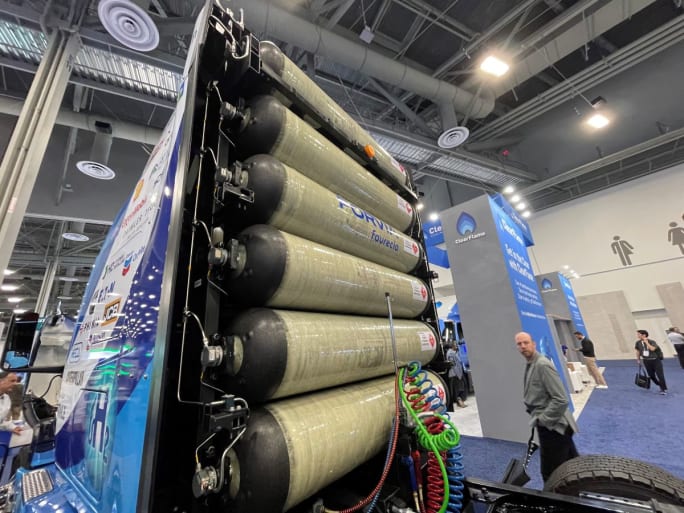
The current fuel tanks on SwRI's test truck only hold about 30 kilograms of hydrogen. But larger tanks are coming.
Photo: Jack Roberts
“We don’t look at this as a competitive issue,” Tadros said. “This is more of a kind of a rising tide lifts all boats concept. We think cooperating with our industry peers is more important than advertising our specific technology or our specific products.”
“This project isn’t about developing an engine for one single company to sell,” Williams stressed. “This is really about demonstrating the technology. We want to look at the viability of hydrogen engines as an alternative or a parallel opportunity or option for zero emissions vehicles.”
Williams cited a 2015 U.S. Department of Energy study that said it will take a variety of clean-fuel and powertrain options to successfully transition trucking to a carbon neutral industry. “We need technologies we can implement now,” Williams continued. “And that's really what we're trying to tell people with this project: Here's what it looks like. This is almost production-ready technology. This isn't something that's way out in the future. It's not 10 years away. We've got existing manufacturing base and we've got an existing supplier base. We also have a huge wealth of experience and knowledge from the last 100 years of making engines. So, we can ramp this technology up pretty quickly and get these engines into production and start reducing emissions now, rather than waiting 10 years.”
More Fuel Smarts

How Volvo Updated Its D13 for EPA 2027 [Watch]
Volvo’s updated D13 promises lower emissions without sacrificing performance or fuel economy. Take a closer look at what changed inside the engine in this HDT Spotlight video.
Read More →
Diesel Price Spike Shortens Payback for Natural Gas Trucks, Report Says
Energy Vision estimates fleets could recover the higher purchase price of an RNG-fueled Class 8 tractor in 1.3 to 2.8 years under current fuel-price scenarios.
Read More →
Calstart Becomes Catalyst Mobility, Reflecting Broader Focus
Calstart is now Catalyst Mobility, reflecting the nonprofit’s growing national role in clean transportation, including zero-emission trucks, infrastructure and incentive programs.
Read More →

Record Diesel Prices Squeeze Trucking Fleets
Average U.S. diesel prices have climbed to nearly $6 a gallon, surpassing the 2022 record as tight refinery capacity and Middle East disruptions keep fuel costs elevated.
Read More →
How Fuel Delivery Shapes Engine Performance
Fuel delivery depends on more than what happens at the injector. For fleet, maintenance and technical professionals, looking at the full path from pump to injector can provide useful context for understanding engine performance.
Read More →
East Coast Port Launches $45M Electric Truck Push
The Port Authority of New York and New Jersey announced millions in incentives for zero-emission drayage trucks, yard tractors, and new charging hubs near the port.
Read More →
California Bill Could Shed Light on Electric Truck Prices
Why do battery-electric Class 8 trucks remain so expensive? A California bill headed to Gov. Gavin Newsom would give fleets and state agencies more visibility into what manufacturers charge.
Read More →
Detroit Opens Orders for EPA 2027 Engines
Detroit isn’t starting from scratch to meet EPA 2027 diesel emissions standards. Its Gen 6 DD13 and DD15 engines keep much of today’s platform while updating the fuel and aftertreatment systems.
Read More →
Zero-Emission Truck Corridor Planned for West Coast
California, Oregon, Washington, British Columbia and Baja California are coordinating plans for truck charging and hydrogen fueling from Canada to Mexico.
Read More →
A Closer Look at Kenworth’s Electric T880E Vocational Truck [Video]
Learn more about Kenworth's T880E battery-electric vocational truck at the Paccar Technical Center, including its range, applications, upfitting considerations, and PTO options, in this HDT Spotlight video.
Read More →